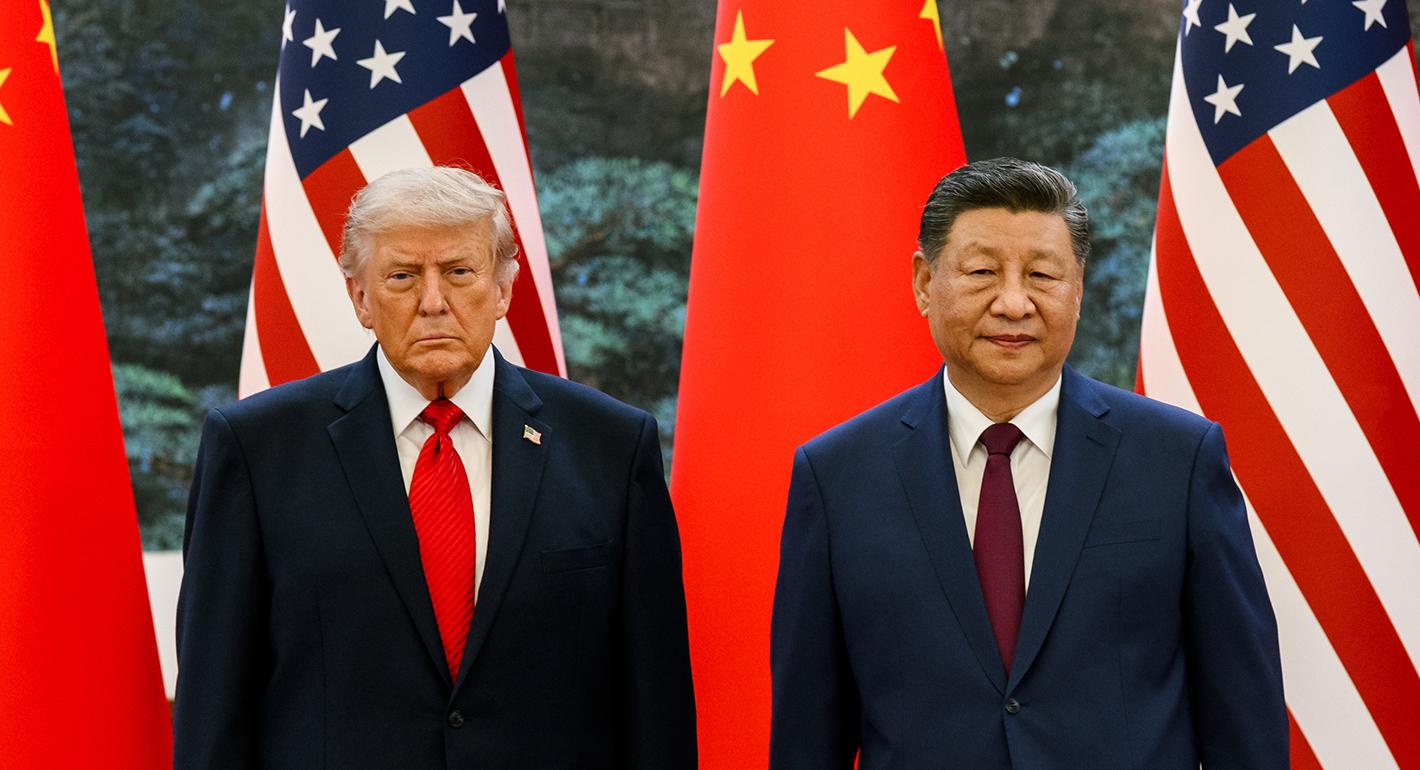

Previous dialogues ended in failure. This time could be different.
Scott Singer
This book examines how the region’s major powers are building their national power as geopolitical competition intensifies.
Source: National Bureau of Asian Research
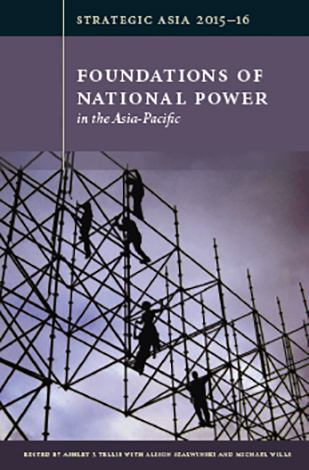
Co-edited and introduced by Ashley J. Tellis, Strategic Asia 2015-16: Foundations of National Power in the Asia-Pacific examines how the region’s major powers are building their national power as geopolitical competition intensifies. In each chapter, a leading expert analyzes a country’s economic, technological, human, and natural resources and assesses how well its political system translates those capabilities into military and diplomatic power.
Order this book, or read the introduction by Ashley J. Tellis for free.
Ashley J. Tellis is a senior associate at the Carnegie Endowment for International Peace and research director of the Strategic Asia Program at the National Bureau of Asian Research (NBR), served in the U.S. Department of State as senior adviser to the Undersecretary of State of Public Affairs, and previously as senior adviser to the Ambassador at the U.S. Embassy in India. He also served on the National Security Council Staff as special assistant to the President and senior director for Strategic Planning and Southwest Asia. He is the author of India’s Emerging Nuclear Posture (2001) and co-author of Interpreting China’s Grand Strategy: Past, Present, and Future (2000), as well as the co-editor of the eleven most recent volumes of Strategic Asia, published by NBR.
Alison Szalwinski is a project manager at NBR.
Michael Wills is senior vice president of research and operations at NBR.
Former Senior Fellow
Ashley J. Tellis was a senior fellow at the Carnegie Endowment for International Peace.
Alison Szalwinski
National Bureau of Asian Research
Alison Szalwinski is assistant director for political and security affairs at NBR.
Michael Wills
National Bureau of Asian Research
Michael Wills is senior vice president for strategy and finance at NBR.
Carnegie does not take institutional positions on public policy issues; the views represented herein are those of the author(s) and do not necessarily reflect the views of Carnegie, its staff, or its trustees.
Previous dialogues ended in failure. This time could be different.
Scott Singer
Why the outcomes of the U.S.-China meetings may be limited.
Aaron David Miller, David Rennie
The Iran war is unique in the scope and scale of asymmetric warfare and AI-enabled conflict. These will test the limits of protecting civilians.
Steve Feldstein
AI in warfare has numerous impacts, including how they shape human responses to target recommendations and how they increase the speed at which lawful targets can be recommended.
Yahli Shereshevsky
Governments in Estonia, Latvia, and Lithuania want to ensure that a U.S. military withdrawal would not leave them dangerously exposed to a Russian attack.
Sergejs Potapkins