

Commentary
Japan’s long-term security policy is driven by concerns about China, and there is little appetite for (or interest in) pursuing a confrontation with Moscow.
James D.J. Brown
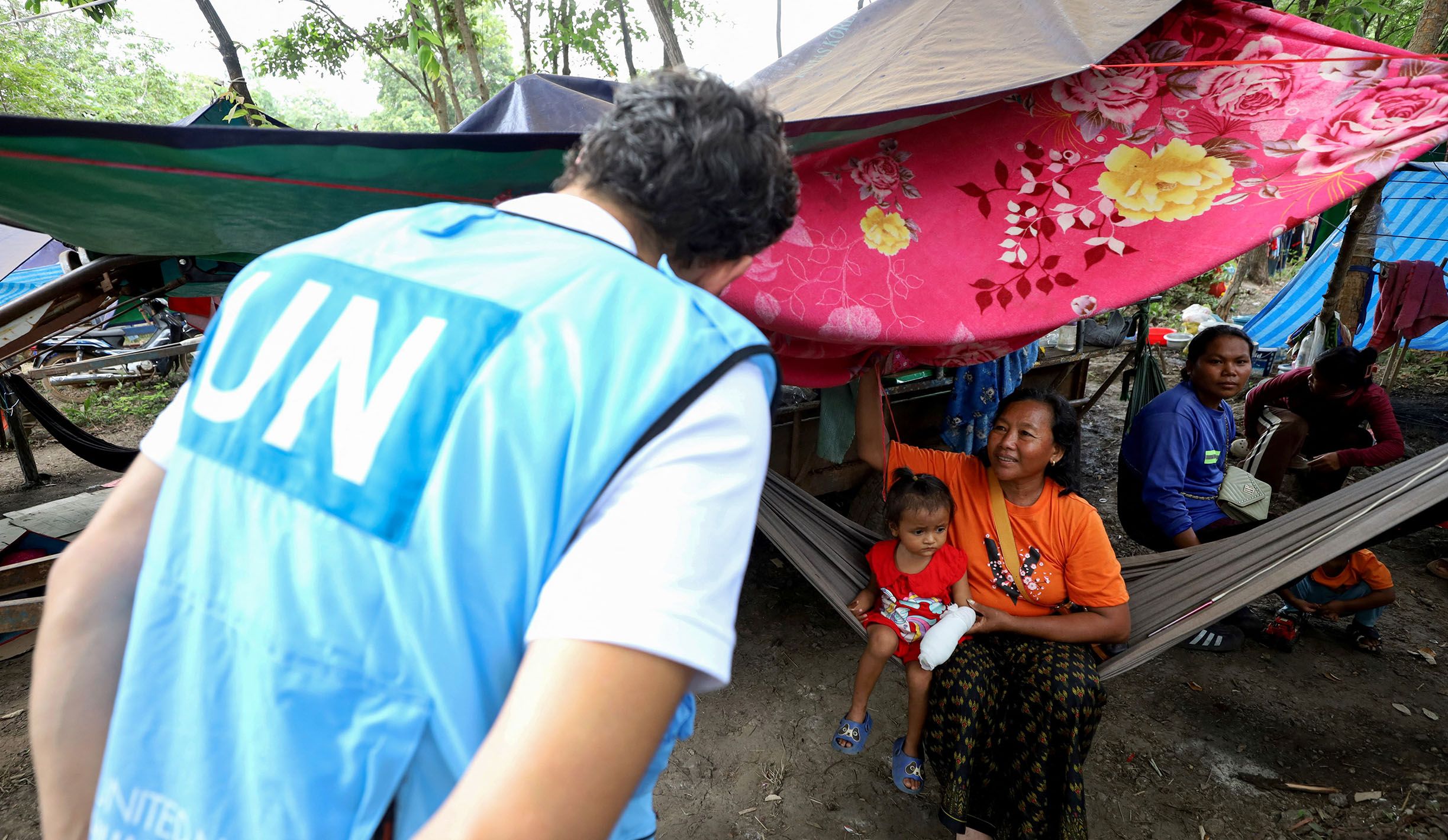
Source: Getty
In the face of the United States’ aid pullback, UN member states must seize this opportunity to reimagine and renovate an outmoded global humanitarian system.
The chasm between global humanitarian needs and available funding was already yawning in January 2025 when the United States, the world’s largest donor, suddenly paused its foreign assistance. In the previous year, the world met half (50.6 percent) of the requirements the United Nations identified in its coordinated humanitarian appeals, leaving a shortfall of $24.4 billion—one of the largest on record. U.S. President Donald Trump’s administration’s subsequent decision to slash U.S. contributions to life-saving assistance have turned this humanitarian budget crisis into a full-blown emergency, the costs of which will be borne by the world’s most vulnerable.
This is a moment of truth for the nations of the world, one that will indicate whether the vaunted “international community” is anything but an empty phrase. Beyond rediscovering their common humanity, UN member states must seize this opportunity to reimagine and renovate an outmoded global humanitarian system whose shortcomings have long been apparent. Priorities for its reform and reconstruction include empowering local actors, exploring innovative financial mechanisms, leveraging the entrepreneurial energies of displaced populations, and reaffirming foundational principles of humanitarianism.
The scale of global humanitarian need is staggering. In 2024, nearly 300 million people required aid and protection for their survival. The United Nations, which remains the linchpin of multilateral cooperation on the delivery of life-saving assistance, prioritized the needs of 198 million of those. Yet, by the end of 2024, international aid only reached about 115.7 million people, deserting at least 82 million of the world’s most desperate people.
Such large numbers are inherently abstract, and their significance can be hard to fathom. It helps to imagine just one of those millions of stories. Say, the hungry five-year old in South Sudan, living in a tent in a crowded refugee camp, not knowing when they will eat next. Now imagine those 300 million people form a country. It would be the world’s fourth-most populous nation, behind the United States and just ahead of Indonesia.
For decades, the United States has been by far the largest humanitarian donor. Its provision of emergency aid has seen a massive and sustained increase—more than seven-fold over the first quarter of the century, driven by wars in Afghanistan and Iraq, natural disasters in Haiti and other countries, famine in the Horn of Africa, the COVID-19 pandemic, and protracted crises and resulting refugee flows in Syria and Venezuela, and more recently Ukraine, Sudan, and Gaza. Bipartisan support and supplemental budgets from Congress have boosted these voluntary contributions.
By 2024, the United States was responsible for 38 percent of total emergency assistance tracked by the UN. This $14.1 billion outlay—although equivalent to just 0.048 percent of U.S. GDP that year—was the highest on record. At the same time, this generosity concealed a big risk: It produced a UN response system overly dependent on U.S. largesse, leaving aid flows vulnerable to sudden shifts in U.S. policy.
The cost of this unnatural dependency became clear when Trump assumed the U.S. presidency for a second time and quickly moved to slash U.S. foreign assistance as part of his “America First” agenda. The damage began shortly after Inauguration Day, when the White House abruptly froze all new foreign aid spending, albeit with a waiver for emergency food assistance. The sudden suspension and related stop-work orders interrupted U.S. humanitarian activities and shipments of in-kind supplies, putting hundreds of millions of dollars of aid at risk of diversion and spoilage. The abrupt shift reverberated throughout the humanitarian ecosystem, wreaking havoc in the budgets of local service providers in partner countries, forcing many to dismiss staff as they curtailed and, in many cases, ceased operations. After an initial period of confusion, the Trump administration did restart some life-saving programs, including by adding money to older contracts for implementing partners working in Sudan, Gaza, Haiti, Yemen, Somalia, the Democratic Republic of the Congo, and elsewhere. But the overall scope and implementation of U.S. humanitarian action remained drastically reduced and nontransparent, with painful consequences for countries least equipped to fill the gap. According to the International Rescue Committee, ten of the thirteen countries hardest hit by U.S. shortfalls in humanitarian funding have been in Africa, including some of the world’s poorest countries.
The overall scope and implementation of U.S. humanitarian action remained drastically reduced and nontransparent, with painful consequences for countries least equipped to fill the gap.
In short, U.S. humanitarian aid has stalled, and the forecast for next year is significantly worse. Total U.S. funds committed in 2025 are down significantly, from $14.1 billion in 2024 to $6.4 billion (see figure). The administration has done this largely without fanfare and publicly announced only a handful of modest, new funding initiatives, including $30 million for the Gaza Humanitarian Foundation (GHF); minor assistance to Druze, Christian, and Bedouin communities in southern Syria; and, in November, $24 million to countries in the Caribbean following Hurricane Melissa.
In May 2025, Secretary of State Marco Rubio reassured the House Foreign Affairs Committee that:
Now, we will still remain the largest contributor of foreign aid and humanitarian assistance on this planet, by far. The United States, even under the budget that’s before you today and the changes we have made, will still contribute more in foreign aid than the next 10 countries combined, than the entire OECD or the next closest country. It’s not China. It’s Germany, and it’s way behind us even now. But that foreign aid has to be geared towards our foreign – to our national interests.
The Trump administration’s proposed FY26 budget, however, reveals new limits to American generosity. Its new International Humanitarian Assistance account would cut U.S. funding for humanitarian aid by a whopping 70 percent.
The institutional infrastructure of U.S. humanitarian action has also been severely disrupted, and in many cases destroyed. With 83 percent of USAID programs closed and foreign assistance dramatically scaled back, critical programs that reduce the need for life-saving aid by providing disaster prevention, health system strengthening, democracy promotion, conflict prevention, and food security and resilience have all vanished. Perhaps most importantly, many programs intended to bridge the divide between humanitarian relief and longer-term development—such as initiatives to provide livelihoods for those displaced by conflict and disaster—have been terminated, making protracted dependency on emergency aid all but inevitable. Without such transitional programs, providing relief is like pouring water into a leaky bucket.
Without such transitional programs, providing relief is like pouring water into a leaky bucket.
As the administration moved to close USAID this summer, the U.S. government’s capabilities to respond to humanitarian disasters took a significant hit. One of the biggest casualties was the institutional knowledge and subject matter expertise within the U.S. government. Of the more than 1,000 humanitarian experts once employed at USAID, only about 100 were moved over to the State Department, and the large pool of contract staff, rapid contracting mechanisms, and intensive oversight mechanisms were abandoned. The administration did deploy a Disaster Assistance Response Team to Jamaica, but it has disbanded other large teams previously deployed to implement and monitor U.S. aid in Afghanistan, Gaza, Sudan, and Ukraine.
The administration has made clear by words and deeds that it will no longer shoulder an outsized burden for global humanitarian action. It has pulled back from UN partner agencies that rely entirely on discretionary funding to carry out life-saving humanitarian work, including the World Food Programme (WFP), the United Nations Children’s Fund (UNICEF), the International Organization for Migration (IOM), and the UN Refugee Agency (UNHCR). The United States cut its funding for WFP by more than 90 percent, for UNICEF from $1 billion to $168 million, and for IOM by 65 percent. At the same time, the administration has taken dramatic steps to curtail refugee admissions to the United States—capping these at 7,500 for the fiscal year that started in October, down from a historic high of 125,000.
For years, “the U.S. really was the financial backbone of the global humanitarian system,” observes Jeremy Konyndyk, president of Refugees International. “And that backbone has now been basically ripped out of the body.” Exacerbating the UN’s financial crisis, the administration has not fully paid its legally binding, assessed dues to either the UN generally (which funds many UN agencies, departments, and programs) or peacekeeping specifically. Under a burden-sharing formula painstakingly negotiated among UN member states, the United States is responsible for 22 percent of the UN’s regular budget and 25 percent of its peacekeeping budget, sums that are roughly in line with the U.S. share of global GDP (slightly above 26 percent). The Trump administration’s FY26 budget request to Congress, however, envisions dramatic, unilateral cuts zeroing out U.S. support for both the UN’s regular and peacekeeping budgets, in blatant violation of U.S. obligations under the UN Charter.
The Trump administration insists that the United States can no longer afford to shoulder a disproportionate burden for humanitarian action and declares, not unreasonably, that it is high time for other nations to do their part. Unfortunately, other UN member states seem unlikely to pick up the tab, at least in the short term. While a handful of Western countries, including Germany, the United Kingdom, and Norway, in addition to the European Commission, continue to provide high levels of emergency relief, overall European giving has been trending downward. Wealthy Arab states also do not seem prepared to bolster the traditional UN aid system. Despite years of efforts to engage them, Gulf donors, like the UAE and Saudi Arabia, prefer to direct such aid through bilateral channels, when they choose to give. China, for its part, provides shockingly little humanitarian assistance, and does so primarily through its development finance programs and Belt and Road Initiative. Despite paying 22 percent of the UN’s regular budget, China does not even rank in the top twenty UN voluntary humanitarian donors. In 2024, for example, it clocked in at thirty-ninth among donors to the WFP, with a paltry contribution of $11.2 million.
Mobilizing new donors has been an urgent priority for years. And in a world that annually generates $115 trillion dollars in GDP, the resources are clearly there. What is missing is solidarity, and the political will to act.
Mobilizing new donors has been an urgent priority for years. And in a world that generates a collective annual GDP of $115 trillion dollars, the resources are clearly there. What is missing is solidarity, and the political will to act on it. Given this reality, the global humanitarian system, and particularly the United Nations, must be prepared to do “less with less.”
The global humanitarian ecosystem is overstretched, underfunded, and under attack. To rescue what remains, UN Secretary-General António Guterres has proposed, as part of the broader UN80 initiative, a “New Humanitarian Compact.” The scheme would integrate the back-office functions and supply chains of the more than ten UN agencies involved in humanitarian operations. In the meantime, relevant agencies have been forced to make severe layoffs—cutting 20 to 25 percent of staff immediately. But these across-the-board cuts, taken in haste to preserve the UN’s solvency and signal budgetary discipline to Washington, have been neither strategic nor well thought out, suggesting that they may undermine rather than improve humanitarian impact.
Under the leadership of Emergency Relief Coordinator Tom Fletcher, the UN Office for the Coordination of Humanitarian Affairs (OCHA) in June launched a “hyper-prioritized” appeal for $29 billion. This plan focuses only on the most critical, life-saving needs for 114 million people, in a scaled-down version of the original $44 billion Global Humanitarian Overview for 2025. OCHA, says Fletcher, will need to make “brutal choices” over who receives aid, and it has already begun cutting specific programs (for example, clean water initiatives for South Sudanese refugees in Ethiopia). Seeking to wrest some positive change from this tragedy, Fletcher has also proposed a “humanitarian reset” to advance long-needed reform in the system in this new period of austerity. It would prioritize funding for local and national organizations, as well as use new funding models like pooled funds.
More dramatically, Fletcher notes that OCHA’s $29 billion appeal represents only about 1 percent of what the world spent on defense in 2024. “This isn’t just an appeal for money – it’s a call for global responsibility, for human solidarity, for a commitment to end the suffering.” Despite his efforts, the UN seems unlikely to obtain even half of the funding it secured last year, and the human toll will be devastating, placing millions at risk of perishing from hunger, disease, exposure, and violence, and forcing countless others to go without health, education, sanitation, and other basic social services and safety nets.
When millions of people are suffering and dying, talk of turning crisis into opportunity can sound both callous and trite. But beyond applying a tourniquet to stop the bleeding, both financial and real, those seeking to revive a functioning humanitarian system should use this moment to finally address several of its long-standing shortcomings that have hitherto seemed impervious to reform.
Such a call may elicit cynicism in some quarters, and understandably so. As Konyndyk observes, the past thirty years have witnessed repeated efforts to reform the humanitarian system. The most recent, the so-called Grand Bargain of 2016, called for less bureaucracy, more local ownership, more private sector involvement, and more efficient delivery. But despite this and other efforts, misaligned donor incentives have continued to promote approaches over-reliant on Western contractors, centralized UN implementing partners, donor earmarks, and bureaucratic paperwork. The magnitude of current financial stress, however, may present an inflection point by placing a greater premium on the effective expenditure of every dollar. It is a potentially malleable moment to reset the humanitarian system, by adopting bold new approaches and policy directions that are urgently needed, if not straightforward to implement.
A few clear priorities stand out:

Allison Lombardo
Senior Associate (Non-resident), Humanitarian Agenda and Human Rights Initiative, Center for Strategic and International Studies
Allison Lombardo served as deputy assistant secretary for international organization affairs at the U.S. Department of State, with a focus on human rights and humanitarian affairs during the Biden administration from 2021 to 2025. Prior to this appointment, Ms. Lombardo was a strategy consultant at Deloitte.

Senior Fellow and Director, Global Order and Institutions Program
Stewart Patrick is a senior fellow and director of the Global Order and Institutions Program at the Carnegie Endowment for International Peace. His primary areas of research focus are the shifting foundations of world order, the future of American internationalism, and the requirements for effective multilateral cooperation on transnational challenges.
Carnegie does not take institutional positions on public policy issues; the views represented herein are those of the author(s) and do not necessarily reflect the views of Carnegie, its staff, or its trustees.

Japan’s long-term security policy is driven by concerns about China, and there is little appetite for (or interest in) pursuing a confrontation with Moscow.

James D.J. Brown

In many ways, Russia’s 2022 invasion of Ukraine was a watershed moment for accountability for aggressive wars. The invasion energized the international community’s will to re-commit to the prohibition against aggression as one of the most foundational tenets of global order.
Federica D’Alessandra

International law has a PR problem.


Federica Du Pasquier, Oona A. Hathaway, Stewart Patrick

Russia’s AI-driven propaganda campaigns operate in a fragmented, chaotic, and often illogical manner. That’s not necessarily a problem for the Kremlin, though: It’s much easier to mimic genuine public debate that way.

Ilya Klishin

While the EU and European governments are embracing the much-lauded middle-power moment, this entails three difficult conundrums.

Richard Youngs