

Commentary
The books, podcasts, and films that explain the world it made.
Andrew Leber
Source: Getty
As Washington reduces its presence in the country, the success of its withdrawal and continued containment of the Islamic State will hinge on adopting an approach of flexible oversight built around three priorities, as well as balancing Turkish and Israeli red lines.
The Assad regime’s downfall in December 2024 marked the emergence of a new security order in Syria. The United States reduced its presence in the country, adopting an approach of flexible oversight in the east, organized around detaining Islamic State prisoners, keeping supply routes open, and securing sensitive sites. The success of a U.S. withdrawal depends on pursuing these priorities while balancing Turkish and Israeli red lines. Failure on either front risks reopening spaces for conflict, including a potential Islamic State revival.
The fall of Bashar al-Assad’s regime on December 8, 2024, led to a new phase in Syria’s security order. The Iranian presence, which had greatly shaped the Syrian conflict after 2011, receded and a new central authority, albeit one limited in reach, emerged in Damascus under Ahmad al-Sharaa, the leader of Hay’at Tahrir al-Sham and now Syria’s president after his appointment by the Military Operations Administration that ousted Assad.1 This coincided with the United States’ intent to reduce its military presence in eastern Syria. The nature of the security arrangements previously overseen by the Americans changed, as what had been a static form of deterrence gave way to an ad hoc approach focused on day-to-day risk management of developments on the ground.
There are three major poles of power in northern and eastern Syria today. There is the new central authority in Damascus, Türkiye-backed structures in the north, and the Kurd-dominated Syrian Democratic Forces (SDF) in the east. Not all the parties are seeking to unify institutions under the authority of Damascus, though that is the intention of the Syrian government and Türkiye, but they do want to reduce friction through working arrangements that keep passages open so that all sides can benefit. In this environment, the United States has been focused on managing their interaction by using the limited tools at its disposal—calibrated deterrence, discrete mediation, and monitoring—to initiate a gradual drawdown of its forces without creating a security vacuum.
Regional dynamics have played a major role in shaping this situation. For instance, Israeli freedom of military action has raised the cost of entrenchment by Israel’s rivals, above all Türkiye, affecting the military situation nationwide, including in the east. Türkiye previously targeted the SDF’s military structure, forcing constant adjustments in how vital communication channels, such as roads, are managed and important sites protected. In this context, the success of a U.S. drawdown will have less to do with troop numbers and more with enforceable daily guidelines or procedures carried out by local actors in facilities for detaining members of the Islamic State group, at checkpoints, and along communication lines in the region. These rules will determine whether the current arrangements hold or whether they create new openings for an Islamic State revival.
In the past decade, the United States’ role in Syria has been shaped by three overlapping developments. The first was the campaign against the Islamic State, which dismantled the group’s territorial caliphate by 2019, but did not end the possibility that it might revitalize itself. The second was the growing bipartisan sentiment in Washington, amplified by President Donald Trump, that the United States needed to avoid open-ended foreign conflicts. The third was the establishment of a small but strategic U.S. base at Tanf, near the Syrian-Jordanian-Iraqi border, which gave the United States geopolitical leverage beyond the campaign against the Islamic State. These dynamics together defined the limited and security-driven U.S. mission in Syria prior to the Assad regime’s collapse.
The U.S. role in Syria emerged as a functional response to the Islamic State’s expansion in 2014. Washington separated the Iraq and Syria theaters operationally and built on local partnerships under an advise-assist-enable model backed by airpower. The near-term aim was narrow—reversing the Islamic State’s territorial control and disrupting its command-and-control structures—even as the Americans recognized that the group’s brand and pathways toward regeneration would outlast its physical caliphate.2 Once the Islamic State lost all its territory, the U.S. mission shifted to managing risk. This involved containing still-active Islamic State cells, professionalizing partner forces that had helped fight the group, and institutionalizing deconfliction among the parties active in the east so that local antagonism would not lead to escalation that might undermine the new reality.
The U.S.-led coalition to defeat the Islamic State, which was formed in 2014, became the centerpiece of Western involvement in Syria.3 At its height, it coordinated the actions of over eighty states and institutions, relying on airstrikes, intelligence, and a partnership with the SDF. By 2019, when the Islamic State lost its territorial holdings, the coalition’s mission narrowed to preventing the group’s resurgence by detaining thousands of captured fighters and maintaining a residual U.S. presence in northeastern Syria and Tanf.
Today, the Islamic State no longer poses the threat it once did, but it remains active. Sleeper cells continue to engage in ambushes, assassinations, and bombings, mainly in the northeast. These operations, though limited, demonstrate the dangers of a broader security breakdown if left unchecked. The incarceration of Islamic State fighters in SDF-run facilities adds another layer of instability, with its unresolved legal and humanitarian consequences. Preventing the group’s resurgence remains one of Washington’s justifications for its deployment, but the urgency of the mission has clearly diminished. As the U.S. footprint narrows, the coalition’s value is increasingly being measured by how the complex ties between the actors involved in northern and eastern Syria are managed.
As of early 2025, the imprisonment of Islamic State prisoners remained one of the most sensitive questions for the coalition formed to fight the group. According to a March 2025 study by the International Centre for Counter-Terrorism, roughly 8,500 male Islamic State affiliates are being held across more than two-dozen SDF-run detention centers. Among them are 5,400 Syrians and 3,100 foreign nationals, including about 1,600 Iraqis.4
In parallel to the detention system are the massive camps that house the families of suspected Islamic State members. The two largest, Al-Hol and Roj, together hold an estimated 38,000 people, including some 23,000 foreign nationals, more than 60 percent of whom are children, most under the age of twelve.5 Their conditions remain dire: humanitarian access is limited, governance is precarious, and the camps have at times served as spaces of radicalization and informal justice. Amnesty International estimates that up to 46,500 people, the majority of whom are women and children, are being held across this network of camps and prisons, most without formal charges being leveled against them.6
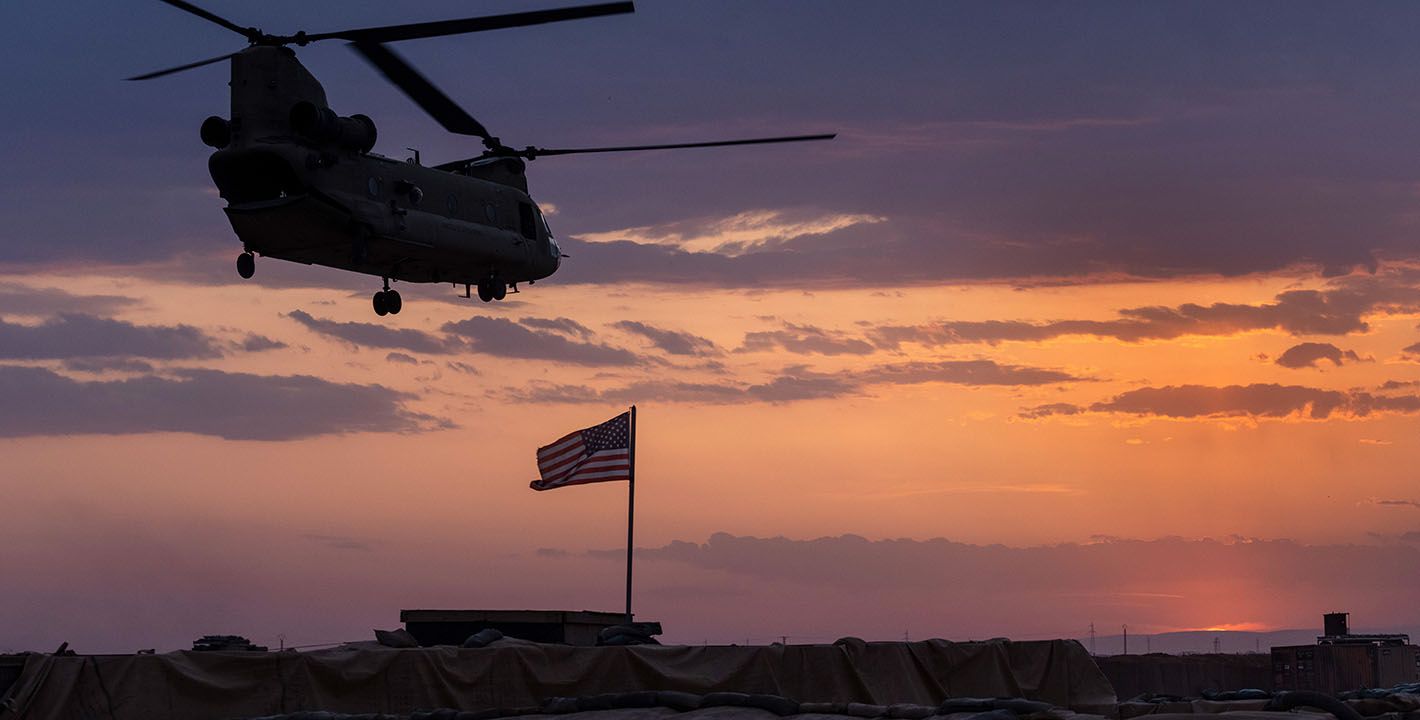
The U.S. military presence that underwrites this fragile order has steadily contracted. As of late 2024, the Pentagon reported roughly 2,000 U.S. troops deployed in Syria under the Combined Joint Task Force–Operation Inherent Resolve mandate.7 While exact figures fluctuate, Washington has signaled its intention to reduce its forces, and did so in 2025, concentrating them in a handful of strategic sites around Hasakeh and Deir Ezzor Governorates.8 Thus far, the presence of these troops, though limited in number, remains critical for the maintenance of secure detention conditions, aerial surveillance, and the deterrence of a renewed Islamic State insurgency in Syria’s northeast.
A second factor shaping Syria policy is the deepening skepticism in the United States toward foreign military interventions abroad. Trump’s return to office in 2025 only reinforced this trend.9 Within his administration, two broad camps are competing for influence. On the one side are advocates of restraint, who argue that Syria exemplifies one of the “forever wars” in regions that are peripheral to vital U.S. interests. Many of Trump’s close allies, including Vice President J. D. Vance and Director of National Intelligence Tulsi Gabbard, lean toward this view.10 Their arguments emphasize the drain on resources of such interventions, as well as the endless nature of entanglements in local rivalries, which leads to limited strategic payoffs.
On the other side are national security hawks, such as Secretary of State Marco Rubio and Senator Lindsey Graham, who though not a member of the administration has the presidents’ ear and is a member of influential congressional committees, including the Senate Foreign Relations Committee. They warn that a U.S. withdrawal from Syria risks allowing a jihadi resurgence as well as renewed Iranian influence and Russian meddling. Their argument is that even a small U.S. footprint offers outsized benefits in terms of deterrence, intelligence gathering, and regional leverage.11
Trump treats these divisions less as a doctrinal matter than as bargaining leverage.12 His approach to Syria is transactional and shaped by regional alignments. The U.S. decision in May 2025 to lift some sanctions on the Sharaa government, taken partly at Saudi Arabia’s behest, illustrates this flexibility.13 Disengagement from Syria is not straightforward, but is folded into calculations over the possibility of normalization between Syria and Israel, an understanding between Türkiye and Iran in Syria, as well as Iran’s containment.14 In this light, the ongoing U.S. withdrawal from Syria is not a strategic pivot so much as the culmination of shifting priorities and domestic pressures. It reflects the exhaustion of the Islamic State mission, the transformation of Syria’s political landscape, and the influence of restraint-oriented voices in Washington.
In November 2025, the United States took several steps toward engaging with the Damascus leadership under Sharaa. During the Syrian president’s visit to the White House (the first by a Syrian head of state), Washington announced that Syria would join the U.S.-led coalition against the Islamic State and that the Caesar Syria Civilian Protection Act of 2019—U.S. legislation sanctioning the former Assad regime, but still in place—would be suspended for 180 days.15 The administration also confirmed that Syria would be allowed to reopen its embassy in Washington, restoring diplomatic relations for the first time since 2012. Sharaa, who until recently had been designated a global terrorist, was formally removed from U.S. sanctions list. Trump publicly endorsed the new Syrian leader, framing the relationship as the beginning of a “new era” of cooperation.16
Such cooperation notwithstanding, public opinion polls both reflect and help drive the Trump administration’s efforts to identify an appropriate framework for disengagement from Syria and the broader Middle East. A Pew Research Center survey conducted in March 2025 found that 52 percent of Americans believed it was better if the United States paid less attention to the affairs of other nations.17 This reflected broader doubts about military engagements, specifically in the Middle East. For instance, a Quinnipiac University poll conducted in June 2025 revealed that 51 percent of voters opposed the United States joining Israel in conducting military strikes against Iran’s nuclear sites, with 42 percent in favor.18
This reluctance is not necessarily rooted in isolationism but is often coupled with a heightened focus on countering China’s growing international influence. A July 2025 Chicago Council on Global Affairs survey indicated that, since 1998, when the council began polling attitudes toward critical threats to the United States and its interests, there has been a decline in the percentage of respondents who consider international terrorism a critical threat, even if 55 percent still regard it as such. Meanwhile, other issues have become more salient, including the emergence of China as a world power (50 percent) and the global economic downturn (49 percent).19 The historical context illuminates this shift. The conflicts in Afghanistan and Iraq, which together resulted in over 7,000 U.S. military deaths and cost trillions of dollars, left lasting impacts on public sentiment. They led to a reevaluation of U.S. military commitments, particularly in regions where critical U.S. national interests were not seen to be at stake. This is having a major effect on the Trump administration’s desire to ensure that its footprint in Syria remains very limited.20
A third factor defining U.S. behavior in Syria is the establishment of the Tanf base in the country’s southeast, which the United States has transformed into a strategic asset.21 Established in 2016, the base sits astride the Baghdad-Damascus highway, once a vital Iranian supply route to Hezbollah in Lebanon. Tanf potentially allows the U.S. to monitor and disrupt Iranian logistics, protect Jordan from instability in Syria, and project surveillance and rapid-reaction capabilities across the volatile Syria-Iraq-Jordan triborder area.22 Though the Tanf garrison hosted fewer than 500 troops as of December 2024, its value far outweighs its size.23 As late as April 2025, the Americans were still training a small Syrian force there, now called Division 70 of the Syrian army.24
Together, the anti-Islamic State mission and presence in Tanf reflect Washington’s preference for a calibrated engagement in Syria, one that is security-focused and deliberately limited. This has allowed the United States to retain leverage in the country without becoming entangled in the details of political life or large-scale reconstruction. Such an attitude, in turn, has aligned with domestic pressures to minimize overseas commitments. These priorities continue to shape Washington’s attitudes toward Syria. However, the emergence of a new political order in Damascus, backed by Türkiye but opposed by the SDF and certain minority communities that feel threatened, has introduced a new triangular relationship overshadowing older concerns. The future of U.S. strategy in Syria, in particular the feasibility of a withdrawal from the country, will hinge on how successfully Washington manages this multifaceted arrangement.
After 2014, the U.S. security model in eastern Syria relied on limited local partnerships, a network of small military outposts, and the presence of the Tanf base.25 This model served a dual purpose: containing the Islamic State and interdicting Iran’s land routes to Hezbollah across the Syrian desert. But with the collapse of the Assad regime, Iran’s exit from Syria, and the rollback of Russian involvement in the country, the continued pursuit of such an approach was both logistically and politically untenable.26 Washington now faces an entirely new geopolitical landscape, one defined by wide open spaces, not internal boundaries as during the Syrian conflict. What is in place is a fragmented security environment attractive to jihadi actors and characterized by fluid local alliances, all this overseen by a relatively new, institutionally weak, Syrian central authority.
The U.S. security architecture in Syria after 2014 was, paradoxically, predicated on the continued existence of the Assad regime and the limited stabilizing, albeit also brutal, roles played by Russia and Iran. The United States, for its part, opted to operate from relatively secure zones on Syria’s geographical periphery, such as areas east of the Euphrates and at the Tanf base, while maintaining a military partnership with the SDF. Even as Washington supported local stabilization programs in select opposition-held areas, it did not commit to permanent governance or state-building efforts nationally.27
However, this model was never designed to withstand the changes that followed the regime’s collapse. After the partial U.S. withdrawal in 2018, triggered by Türkiye’s Operation Peace Spring, Washington’s room for maneuver has shrunk significantly. The political and strategic factors that had given the U.S. model its semblance of legitimacy, namely the Russian and Iranian presence in Syria, began to erode and the situation in the country has now radically shifted. Consequently, since Trump took office in January 2025, U.S. operations have been suspended at four bases, with overall troop levels falling to below 1,000 soldiers.28 The American military saw a transformation in its role from direct actor to mediator and observer.29
In this context, for the United States stability in eastern Syria depends on keeping three functions in balance: managing the detention, transfer, and repatriation of combatants mainly of the Islamic State group; ensuring the safe movement of people, goods, and services on key roads; and protecting sensitive sites, such as military and intelligence centers as well as detention sites for Islamic State militants, and energy facilities. If any one of these priorities breaks down, it may create spaces for a revival of the Islamic State, while also exacerbating regional tensions and local sensitivities. Indeed, Washington’s main goals are to ensure that nothing undermines the status quo in eastern Syria in a way that threatens U.S. interests, while it also seeks to prevent an Islamic State resurgence and ensure that local incidents do not escalate into broader conflagrations.
This repositioning reflects a conscious shift from the previous static form of deterrence, meaning operations launched from permanent sites using fixed military capabilities, toward more flexible oversight, denoting a more dynamic U.S. posture emphasizing monitoring, deconfliction, and mediation among parties on the ground. The Americans in eastern Syria are redefining their role from that of a military guarantor to being a political broker, where they are now facilitating dialogue between the SDF and the new authorities in Damascus, as well as between Türkiye and the SDF.30 But what is needed is the careful construction of a more durable security model. It remains to be seen what this might look like, however, as the unraveling of the previous security order has opened the door to a volatile security environment in which actors old and new are now vying for influence.
Since December, Syria has faced a new form of security fragmentation. Across the country’s now open geography, from the eastern desert to Raqqa to the southern border regions around Daraa and Suwayda, there are no longer lines of control. Absent a single actor able to manage competing factions or enforce coherent territorial boundaries, the political landscape has created potential spaces for jihadi mobilization, particularly among Islamic State remnants and unaffiliated militants seeking an opportunity to reemerge.
The Islamic State has seized on this transformation, recalibrating its rhetoric and messaging. By mid-2025, Al-Naba’, one of the group’s official media outlets, was publishing weekly editorials targeting Sharaa, branding him a traitor and an apostate.31 Once a member of the Islamic State, Sharaa later led Jabhat al-Nusra, an earlier rendition of Hay’at Tahrir al-Sham, a battlefield rival of the Islamic State in Deir Ezzor. He is now seen as the face of a new political order in Damascus, an outcome viewed by many jihadis as an ideological betrayal.32 The reason is that Sharaa has shifted from jihadi militancy to political leadership, which requires compromise and engagement with countries in the region—such as Türkiye and Saudi Arabia—and internationally.33
In response to Sharaa’s November visit to Washington and Syria’s formal declaration of joining the international coalition to fight the Islamic State, Islamic State media outlets framed the development as a betrayal of Sunni interests, arguing that Sharaa, like Türkiye under Mustapha Kemal Atatürk, had abandoned Islam and joined with the West, effectively becoming an instrument of an international order hostile to Islam.34 The group sought to delegitimize any Western-friendly Sunni political project in Syria, reserving all religious and ideological authority for itself. In contrast, Syrian Justice Minister Mazhar al-Wais, himself a former Hay’at Tahrir al-Sham member, defended Syria’s alignment with the coalition. He framed the agreement as a form of cooperation that strengthened Syrian state sovereignty and oversight while targeting the residual threat posed by the Islamic State, asserting that such coordination did not constitute military subordination to outside powers or a breach of religious law.35
For Türkiye, the primary objective in the northeast is to dismantle the military architecture of the SDF and ensure it is not normalized.36 A major component of the SDF is the Kurdish People’s Protection Units, or YPG, which Ankara regards as an extension of the Kurdistan Workers Party, or PKK, which it considers a terrorist organization. The Turkish aim is to eliminate the PKK’s cross-border influence, integrate any residual SDF structures into Syria’s state security hierarchy, and preclude the emergence of a semi-autonomous security order.37 Turkish officials have signaled that the YPG’s eradication is their aim, and that Ankara will intervene to prevent any arrangement that preserves the group’s de facto autonomy, especially if diplomatic tracks stall.38 In practice, its calibrated strikes, pressure through Turkish-backed factions, and political efforts to influence the decisions of the Syrian government with regard to the SDF are all aimed at keeping the SDF’s leadership off balance, until a post-SDF security configuration can be put in place.
The United States, in turn, treats Syria first and foremost as a counterterrorism sphere. Its immediate objective is to employ small but mobile U.S. forces to prevent the Islamic State from reviving, while at the same time keeping an eye on other jihadi groups, for example the Turkestan Islamic Party, made up of Uyghurs, which has ties to the current Syrian regime. This means participating in targeted raids against jihadis, dismantling active cells, in addition to other undertakings, such as engaging in routine deconfliction to prevent local incidents from escalating and creating an environment that allows the Islamic State in particular to reinforce itself.39 While the United States supports the idea of one Syrian nation, one army, and one government,40 it has been mainly focused on managing the situation on the ground and neutralizing threats, not in engaging in nation building or holding territory. This is a position that can be sustained even as the numbers of U.S. ground forces in Syria and Iraq continue to decline.
One dimension of this counterterrorism concern is the detention and repatriation of Islamic State prisoners. U.S. Central Command, or CENTCOM, has announced a Joint Repatriation Cell in northeast Syria to speed lawful returns to home countries from Al-Hol and Roj and reduce the pool of prisoners who might pose a risk though their continued imprisonment. In parallel, the meeting between Sharaa and CENTCOM Commander Brad Cooper in September 2025 highlighted the existence of a practical channel for coordinating on the repatriation of displaced persons and detainees from Islamic State-controlled camps, as well as maintaining oversight of remaining threats from the group. This mechanism helps prevent security vacuums as the U.S. footprint in Syria decreases.41
U.S. actions are taking place in an atmosphere of instability across post-Assad Syria, driven primarily by sectarian violence. Pro-government armed factions and local coalitions have established de facto control in sections of the country’s coastal areas and in Suwayda, amid state weakness.42 These developments have reignited longstanding tensions and grievances, particularly among rural Sunnis who once formed the backbone of the Islamic State’s support base. The June 2025 suicide bombing at St. Elias Church in Damascus, carried out during mass, was emblematic of this escalation.43 It followed weeks of incitement on jihadi Telegram channels, which are increasingly stigmatizing Syria’s minority communities and accusing the Sharaa regime of protecting them in order to pander to Western countries.44 Similarly, in April–May 2025, fighting broke out between government-affiliated forces and Druze gunmen in the suburbs of Damascus before spreading to Suwayda, which led to Israeli intervention in defense of the Druze, an influential community inside Israel. Since then, there has been widespread mistrust of the government among the Druze, undermining short-term prospects for reconciliation.
Meanwhile, the Arab-Kurdish relationship in eastern Syria has sparked renewed tensions. In October, clashes in the Kurdish-majority neighborhoods of Sheikh Maqsoud and Ashrafieh in Aleppo led to fighting between SDF-aligned security units and government forces, before Sharaa and the SDF commander Mazloum Abdi concluded a new truce, in the presence of the U.S. envoy to Syria and the commander of U.S. forces.45 Despite years of coordination between the SDF and the Americans, the gradual U.S. withdrawal and Washington’s attempts to facilitate the political incorporation of the SDF into the Syrian state within a formal reconciliation framework have revived old sensitivities. The August 8, 2025, Hasakeh Conference, organized by the SDF with the participation of minority communal representatives, presented a vision for a decentralized, democratic Syria, but was not welcomed by the authorities in Damascus.46 Kurdish leaders, in turn, fear that a reduction in U.S. backing will strip them of the gains they made after 2015 and leave them isolated in a political transition that they too profoundly distrust.47
Among the Arab tribes of Deir Ezzor and Raqqa, many feel they were used to support a Kurdish-led project that did not represent them. The rise of a governing structure with an Islamic character in Damascus, supported by Turkish influence in the north, has revived their fear of renewed marginalization under a new Syrian central authority. However, it has also heightened political ambitions among Sunni tribal elites, who see an opportunity to entrench their influence in Syria’s emerging security sector. Dozens of influential security officials hail from Deir Ezzor, and specifically from the Aqidat tribe and the town of Shuhail, a stronghold of Hay’at Tahrir al-Sham’s predecessor Jabhat al-Nusra.48 For example, Hussein al-Salama from Deir Ezzor, who is director of the General Intelligence Service, and Youssef al-Hijr, from Shuhail, who is the former head of Hay’at Tahir al-Sham’s Politburo and was named director of foreign affairs in the office of the foreign minister in May, hold sway over new security networks and are increasingly viewed as kingmakers. Ahrar al-Sharqiya, a Turkish-backed Syrian National Army faction rooted in Deir Ezzor’s tribal networks, has also become a central pillar in the military structures of the Syrian government. The faction originated as a tribal formation that then merged into a broader Islamist coalition, and it is now part of the Liberation and Construction Movement. Many tribal actors have come to see themselves, rightly or wrongly, as part of a new Syrian “deep state,” and this has increased Arab tribal mobilization against Kurdish political actors, raising the likelihood of open-ended cycles of communal violence.
The fragility of the institutions of the Syrian state has exacerbated existing risks. Although Sharaa has become the state’s public face, the operative structures of governance remain deficient. The absence of vetting and accountability mechanisms has opened gateways for former jihadi elements to penetrate burgeoning security institutions, directly or through tribal intermediaries. This raises the possibility that the present Syrian state, intentionally or unintentionally, could become a channel for the reabsorption of extremist elements under a new political guise, through well-known social and tribal channels. This is similar to what happened during the years of Islamic State control, when local tribal populations were subjected to a centralized Islamic authority through tribal networks.
As the United States has moved toward a new security framework to replace the one that collapsed with the downfall of the Assad regime, it has dealt with the different actors in the east on the basis of their functions and limitations. The SDF is its operational anchor in containing the Islamic State: it collaborates with the United States in combating the group, detains prisoners, and helps to dismantle Islamic State cells. Türkiye-backed groups, in turn, have prioritized inhibiting the SDF, which has compelled the Americans to intervene and ensure that the ensuing tensions do not detract from containing the Islamic State. As for the Syrian regime, it seeks instruments of control and political recognition, and has allowed limited security coordination when it aligns with preventing an Islamic State resurgence. Washington has maintained an equilibrium within this uneasy triangle.
Nor is this the only role the Americans are playing. In the Syria-Iraq-Jordan triborder area, the Tanf garrison is engaged in surveillance, the disruption of Islamic State cells, and the interdiction of infiltration attempts by these cells and by Iran-backed groups. The local U.S. partner, Maghawir al-Thawra (Commandos of the Revolution), organizes patrols and engages in quick-reaction tasks under tight rules of engagement, coordinating with Jordan and with U.S. deconfliction channels.49 The red lines imposed by the Americans are explicit, namely to protect personnel and sites of the anti-Islamic State coalition and prevent any cross-border threats into and from the area. In this way, Tanf complements the SDF’s role in the east and preserves the counterterrorism priority.
Tanf also functions as a regional control node in the emerging security framework. The primary aim here is to monitor and prevent Iran-backed militias from using Iraqi territory to establish a logistical corridor across the Syrian desert toward the Jordanian border, the Golan Heights, and Lebanon.50 Therefore, for the United States and the coalition, Tanf coordinates in real time with Jordanian air defenses and engages in deconfliction with Baghdad. This effectively places the base outside any process of integration into the Syrian government’s command structure, linking it to regional interests. These interests are centered on border-security coordination involving Amman, Baghdad, Ankara, and the regime in Damascus, while Tanf provides the operational capacity to organize patrols, interdict hostile actions, and engage in rapid response actions. 51 As a result, the base remains a vital hinge in the transition toward a new security framework in Syria, with its ability to deter and neutralize threats in the southeast, thereby filling a gap the Syrian government, the SDF, and Türkiye-backed forces cannot fill on their own. Complicating the picture, southern Syria is an arena in which Israel has enforced two conditions: demilitarization and protection of the Druze. This has yielded an environment that has restricted the Syrian government’s force posture and lowered the odds of a spillover of Syrian dynamics into Jordan and the occupied Golan Heights—allowing Washington to maintain its primary focus on the situation in eastern Syria.
This transitional framework in Syria is, therefore, being defined by two broad forms of external constraints: Turkish pressure in the north to curb the SDF’s expansion and an Israeli ceiling in the south that has blocked the area’s remilitarization. Between the two, Washington has managed to accept Israel’s airstrikes in the south as a reality to be dealt with and pursue its balancing act in the east, while imposing enforceable rules of behavior in the latter built around three priorities: maintaining Islamic State detention facilities, keeping major roads open, and securing sensitive infrastructure.
However, the tripartite arrangement in Syria’s east is characterized by structural constraints and intertwined risks. Turkish-Israeli competition has defined the limits of Türkiye’s and Israel’s influence. At the same time, the Syrian regime’s power structure, which is built on a narrow Sunni rural base and an Islamist ideology, might at any moment trigger identity-based mobilization. Over time, and in the absence of understandings between Türkiye and Israel, their rivalry will impede Syria’s transition process in two ways. First, it will perpetuate Turkish and Israeli spheres of influence—a Turkish north where movement and rules of engagement are set by Ankara and its factions; and an Israeli-dominated south structured by Israel’s conditions and its continued freedom to conduct military strikes. This will prevent the emergence of a national Syrian framework, through which the government can reimpose its authority throughout its territory. And it will mean that the situation in the east will continue to be characterized by conflict and division, therefore fragility, where ad hoc understandings rather than national institutions are employed to resolve issues. This will undercut security arrangements there, opening a window for an Islamic State resurgence, but more broadly, making the east a barometer of the fragmentation and rivalries nationally.
That is why the effectiveness of the nascent security model in the east depends on a harmonization of Turkish and Israeli stakes in Syria—on aligning Israel’s declared freedom of action with Ankara’s red lines—as well as on Washington’s operational posture at Tanf. It also depends on the ability of the Syrian government and its local partners to deliver a consensual political transition in the country. However, Syrian state institutions have been depleted and day-to-day security often relies on short-term understandings. Sectarian tensions are rising, therefore the security test for the current government is straightforward. It involves preserving neutrality in enforcing security throughout the country and preventing mobilization of segments of society along identity lines. The reality, however, is that the authorities in Damascus, to fill gaps in professional policing, have relied on mobilizing combatants along ethnosectarian lines, in the guise of local auxiliaries, mostly made up of its Sunni supporters. The result has been to delegate control to these formations without a clear legal mandate, creating parallel lines of command.
In the Suwayda clashes of July 2025, for example, this took the form of tribal call-ups of forces. Earlier, in March, when intense clashes along the Syrian coast escalated into attacks against civilian Alawite communities, the government’s mobilization of forces took place through mosques.52 The immediate outcome was that the authorities were not seen as being neutral, and there was no consistency in the orders passed down to units on the ground, allowing for violence against segments of the population. This had a very damaging impact on social cohesion. If this pattern is replicated in the east through tribal mobilization against the Kurds, the security triptych there—detention, road protection, and site protection—will be degraded, allowing adversaries of the government to regain the initiative. If security is based on group loyalty rather than laws applicable to all, the outcome invariably will undermine Syria’s transition and reinforce fragmentation.
In such a tenuous environment, eastern Syria remains the principal place where local shocks have the capacity to cause regional spillover. Any failing, such as an uprising inside a detention facility, a confrontation between Kurdish and Arab communities, or a breakdown in guarding critical stretches of roads, raises the likelihood of spreading and even encouraging cross-border intervention. The two most likely parties exploiting such a situation are Türkiye and Iran. On the Turkish side, Ankara’s hostility to the SDF’s expansion could lead to Turkish strikes, the disruption of operating hours at border crossings or of the passage of humanitarian convoys, and looser discipline among local Arab Sunnis along and around the M4 highway stretching from Aleppo to Raqqa and beyond. As for Iran, it could seek to exploit instability by using its Iraqi allies to take advantage of reduced Syrian control over the Qa’im-Bukamal corridor. This, in turn, would create more room to maneuver for Iraqi militias familiar with the geography of the area stretching from Anbar Governorate in Iraq to the eastern desert in Syria, known as the Badia, allowing the Iranians to regain a foothold in the country. And as a result, this could also provoke an Israeli response that leads to regional hostilities.
In practical terms, anything that diverts attention in eastern Syria away from counterterrorism and escalates clashes among communities because of identity questions, sectarian or ethnic, would recreate the conditions in place prior to 2013. At the time, the Badia was easily traversable, the infrastructure for detaining jihadi prisoners was limited and subject to breaches, and groups tended to be activated based on a perception of group threat. Replicating such an environment today would facilitate the revival of jihadi groups in a more decentralized context, only reinforcing the need to guard against any undermining of the three security priorities mentioned earlier.
All parties acknowledge the risks, but U.S. policy in eastern Syria focuses on keeping them in check. Two tracks run in parallel. Track one involves the ties between the SDF and Damascus and includes pilot security understanding to integrate and cooperate on specific matters. Track two is a working template among the Syrian authorities, Türkiye, and the SDF to lock in measurable “small packages.” These include formulating clear detention protocols, protecting specific road segments, and establishing mechanisms for deconfliction of tensions in the area. The United States can mediate between Damascus, the SDF, and Türkiye, but it cannot police daily compliance. The behavior of the parties at checkpoints, the discipline of units on the ground, sensitivities at the village and tribal levels, and the neutrality of government forces in enforcing decisions all play out locally, and local calculations usually prevail over top-down decisions coming from Damascus.
In the end, dynamics at the local level will determine whether the model in place survives and can be consolidated. These local dynamics will unfold between two fixed security zones: a Turkish-managed north, including the M4 corridor, and an Israeli-monitored south where the freedom to attack is maintained. For as long as these two zones of influence are in conflict, the government in Damascus will be unable to unify Syria under its authority, while this situation will only ensure that fragmentation persists in the east, with the likelihood that the region will remain a zone of tension.
That is why four elements are necessary for the parties to maintain a balance in eastern Syria and a measure of stability: a unified hierarchy of command down to the lowest levels; professional, non-selective practices at checkpoints; rapid accountability that imposes visible costs for violations; and early-warning channels linking local police to known coordination hubs. Where these elements do not exist, control will tend to revert to forces mobilized in an ad hoc manner that can morph into identity-based conflicts creating spaces for a variety of actors to threaten Syria’s stability: the Islamic State, Iran and its allies, Türkiye, and Israel, among others.
The collapse of the Assad regime in December 2024 ushered in a period of uncertainty in Syria, where the old U.S. security architecture—built around containing and degrading the Islamic State and maintaining a presence at the Tanf base—was no longer viable. In its place, a pragmatic, tripartite arrangement is emerging, centered on the authorities in Damascus, Turkish-backed structures in the north, and the SDF east of the Euphrates. It remains to be seen whether this arrangement will create a unified security order, but it has managed risk, reduced friction, and maintained essential operating norms in competing zones of control.
Washington’s approach has reflected this reality. The Americans have been involved in low-cost mediation, targeted deterrence, and incremental, measurable interventions, which they have prioritized over institution-building or sponsoring a comprehensive Syrian political settlement. Integrating the Syrian government into the anti-Islamic State coalition also provides an opportunity to assess the government’s capacity to manage security and maintain territorial stability. Success depends less on external power projection and more on local execution, such as neutral enforcement of decisions at checkpoints, adherence to detention protocols, and the continuity of critical services. The most acute risks remain sectarian mobilization, tribal and communal disputes, and gaps in security oversight, particularly in the east, where small lapses could trigger broader instability and facilitate a jihadi resurgence.
Looking ahead, Syria’s transition is likely to remain fragile and localized, with the United States and regional actors functioning primarily as risk managers rather than architects of a durable order. The strength of this framework will hinge on whether the tripartite arrangement can sustain day-to-day coordination, prevent identity-driven escalation, and adapt to the shifting dynamics of a post-Assad Syria. In short, the Syrian security landscape is no longer defined by clear territorial control or central authority but by the ability of local actors, with external support, to maintain a tenuous balance amid persistent volatility. Yet even this minimalist outcome hinges on one tentative premise: that the leadership in Damascus can depart from a pattern of maximalist coercion. For now, Washington must be clear-eyed about both the risks and leverage it holds.

Nonresident Scholar, Malcolm H. Kerr Carnegie Middle East Center
Kheder Khaddour is a nonresident scholar at the Malcolm H. Kerr Carnegie Middle East Center in Beirut. His research focuses on tribal structures in the Levant, civil-military relations in Syria, and the role of borders in shaping local and national identities across the Middle East.

Research Analyst, Malcolm H. Kerr Carnegie Middle East Center
Issam Kayssi is a research analyst at the Malcolm H. Kerr Carnegie Middle East Center.
Carnegie does not take institutional positions on public policy issues; the views represented herein are those of the author(s) and do not necessarily reflect the views of Carnegie, its staff, or its trustees.

The books, podcasts, and films that explain the world it made.

Andrew Leber
U.S. trading partners in Asia are closely watching the dispute for signs of how it may affect their own interests.
Barbara Weisel

The aftermath of the Ceuta crisis shows Europe has drawn the wrong lessons. Rather than doubling down on failed migration policies, the EU needs to address the underlying roots of such episodes.

Richard Youngs
By abandoning past U.S. pro-democracy policies and adopting several lines of pro-autocratic action, the Trump administration has fundamentally repositioned the United States vis-à-vis democracy in the world.

Thomas Carothers
Chinese strategists are once again debating whether American power is declining and whether U.S. hegemony is experiencing irreversible decay.
Wu Xinbo