

Commentary
Funding Ukraine remains a priority for European leaders. As Russia’s war of aggression heads into another winter, two feasible options to mobilize support for Kyiv should be fast-tracked.
Vladyslav Rashkovan, Gregory P. Wilson
Source: Getty
The Trump administration is erasing gains in anti-corruption made under previous presidencies. Despite the harsh disruption, sources of domestic and international resilience still exist.
Donald Trump’s second administration is moving quickly across many fronts to reverse policies advanced by former president Joe Biden (and other prior administrations). One domain that has seen an especially sharp reversal is U.S. policies relating to fighting corruption at home and abroad.
Around the world, corruption warps financial markets and contributes to immense economic losses and inequality. It undermines effective and responsive governance and delegitimizes institutions in the eyes of the public. It is a particularly thorny issue to unravel, blending domestic and transnational elements and often undermining the very structures of accountability that are supposed to hold it in check. Over the past three decades, international efforts to fight corruption at the transnational level, led by governments, multilateral institutions, and nongovernmental organizations, have grown and often productively combined with domestic anti-corruption campaigns in diverse countries. The United States was long a core player in this increasingly coherent and effective international effort.
During the Biden presidency, the United States stepped up even further in fighting corruption abroad and at home. It did so through measures to fortify anti-corruption institutions, bolster relevant financial regulations, and advance innovative enforcement techniques. But with startling determination and decisiveness, the second Trump administration has rapidly dismantled the long run of progress on U.S. anti-corruption policy. It has closed numerous governmental offices and even one entire department where anti-corruption initiatives were housed, eliminated many aid programs and policies targeting corruption, and ceased to enforce a range of anti-corruption regulations. Furthermore, it has modeled behavior within the U.S. government that undermines anti-corruption norms. These reversals are dealing a body blow to the wider anti-corruption field, with major potential negative effects in the years ahead for the integrity of governance in many countries, for global financial markets, and for numerous other areas of common international concern.
With startling determination and decisiveness, the second Trump administration has rapidly dismantled the long run of progress on U.S. anti-corruption policy.
Successive U.S. administrations from the mid-1990s to the mid-2010s increasingly viewed anti-corruption as an international policy priority. They believed that it would contribute to advancing democracy globally, given corruption’s destabilizing effects on democratic systems and frequent use as a tool by authoritarian regimes. They saw it as a valuable part of efforts to boost economic development in poor countries. And they believed that it would be good for the United States domestically, strengthening and securing its own governance and financial markets.
The Biden administration, determined to reverse what it believed to be a negative drift in U.S. anti-corruption policy during the first Trump administration, moved quickly to upgrade U.S. international and domestic anti-corruption efforts.
In June 2021, Biden released the Memorandum on Establishing the Fight Against Corruption as a Core United States National Security Interest. The memorandum identified corruption as a significant threat to the rule of law and committed the United States to advancing anti-corruption measures at home and abroad. It was a precursor to the December 2021 United States Strategy on Countering Corruption, the first-ever whole-of-government U.S. anti-corruption strategy. In that document, the administration laid out the core lines of proposed action, including coordinating anti-corruption initiatives across the government, strengthening multilateral anti-corruption architecture, and leveraging diplomatic and foreign assistance resources to support anti-corruption goals. The strategy directed specific agencies to incorporate tailored anti-corruption approaches across their operations, including within the Treasury Department and the Department of State.
The Strategy on Countering Corruption set the stage for the Biden administration’s efforts on anti-corruption over the ensuing years. Progress occurred in three main categories—institutional development, rulemaking and implementation, and targeted international anti-corruption initiatives. Beyond these core achievements, the administration also advanced anti-corruption elements across a range of other domains, from foreign aid programs to internal ethics guidelines.
The Biden administration made a major push to strengthen U.S. institutional capacity to design and implement anti-corruption policies and programs. While earlier administrations had incorporated anti-corruption elements into some initiatives, those efforts had often been piecemeal and spread across different agencies or folded into other topic areas. Without a focal point, there was often a lack of coordination and political will to tackle pressing corruption issues. The Biden team centralized these efforts, both through the designation of the first director for anti-corruption at the National Security Council and through the establishment of new anti-corruption units at key agencies.
The Biden administration made a major push to strengthen U.S. institutional capacity to design and implement anti-corruption policies and programs.
Within the Department of State, the administration established the Office of the Coordinator on Global Anti-Corruption (CGAC) in December 2021. CGAC unified the department’s disparate anti-corruption efforts and assumed responsibility for corruption-related issues that had previously fallen into the gaps between regional bureaus. Under Biden, CGAC elevated the focus on anti-corruption globally, advancing the department’s understanding of the impact corruption has on national security and prosperity. It led efforts to select points of contact within each U.S. embassy abroad to advance anti-corruption work on the ground, and to deploy anti-corruption advisers to strategic locations globally, especially those experiencing a window of opportunity for progress. More broadly, the expansion of anti-corruption personnel—led by a senior official who reported directly to the secretary of state—fortified U.S. policymaking.
As plans were developing for the establishment of CGAC, the United States Agency for International Development (USAID) was also taking action. Then administrator Samantha Power stood up a task force on anti-corruption in 2021, which led to the establishment of the Anti-Corruption Center (ACC) the following year. The ACC acted as an internal advocate for anti-corruption efforts within USAID, expanding the agency’s focus beyond administrative corruption to tackle issues of transnational kleptocracy and integrating an anti-corruption lens across USAID’s work on health, education, and other development domains. Together, the CGAC and the ACC provided energy and expertise for the Biden administration’s expanded anti-corruption efforts, building up infrastructure and collaborating on initiatives in places ranging from Guatemala and Paraguay to Liberia, the Western Balkans, and Zambia.
Biden’s administration also made important progress in domestic anti-corruption rulemaking and implementation. These developments addressed an array of risks, like the harboring of stolen assets on U.S. soil and the abuse of U.S. markets by drug traffickers, kleptocrats, and others engaged in money laundering.
The administration moved forward on implementing the Corporate Transparency Act (CTA). Congress enacted the CTA in early 2021 to combat illicit financial activity by requiring that companies report information about their owners to the federal government. Biden’s Treasury Department developed a system for businesses to submit their beneficial ownership reports to the department’s Financial Crimes Enforcement Network, facilitating government efforts to thwart corrupt business activity in the United States.
Biden’s Treasury Department also spearheaded the creation of new rules to target money laundering and stolen assets. In August 2024, the department issued a rule requiring certain investment advisers to incorporate safeguards for anti–money laundering and countering the financing of terrorism into their work—such as reporting suspicious financial activities and implementing internal anti-corruption protections. That same month, the department issued a rule that required real estate agents to report suspicious transactions to the federal government. These were important measures to identify and combat instances of illicit transnational financial activity within U.S. markets and to close existing regulatory gaps.
Other significant anti-corruption rules and restrictions were enacted during Biden’s tenure. For example, in December 2023, Biden issued a proclamation to suspend entry permission into the United States for individuals found to have participated in “significant corruption.” The restriction marked the first time, globally, that a country had created a class of visa restrictions focused on the professionals who facilitate money laundering—sending a powerful signal to lawyers, accountants, and others whose industries can enable corruption. That same month, Congress passed the Foreign Extortion Prevention Act (FEPA), which Biden signed into law. While existing anti-corruption laws already restricted U.S. actors from participating in acts of bribery, the FEPA strengthened this “statutory framework by criminalizing the ‘demand side’ of foreign bribery,” making it illegal for foreign officials to solicit or receive bribes from U.S. entities.
The final hallmark of the Biden administration’s anti-corruption work was its focus on kleptocracy and stolen asset recovery. Among these efforts, the administration’s use of anti-corruption tactics to respond to the Russian invasion of Ukraine was particularly noteworthy.
As the war unfolded in early 2022, isolating Russia from global markets by enforcing financial punishments on Russian oligarchs became increasingly high-priority for the United States. The Department of Justice launched Task Force KleptoCapture in March 2022, dedicated to enforcing sanctions and export restrictions imposed by the United States and other countries on corrupt Russian actors. It provided a bulwark against the smuggling of technologies and materials into Russia and achieved indictments against key Russian actors. By early 2024, the task force had “brought actions to forfeit more than $700 million in assets and against more than 70 individuals for violating international sanctions and export controls.”
More broadly, the Biden administration strengthened general anti-corruption infrastructure within Ukraine. It helped develop the Ukrainian National Agency on Corruption Prevention and High Anti-Corruption Court, organizations dedicated to pursuing domestic anti-corruption investigations and prosecutions. With U.S. backing for whistleblower protections and transparency protocols, “Ukrainian anti-corruption investigators and prosecutors achieved an 80 percent increase in prosecutions and a 50 percent increase in convictions” in 2023.
The Biden administration also made progress in anti-corruption foreign assistance, regulatory enforcement, and overall leadership.
Biden’s administration dramatically expanded foreign aid programs dedicated to anti-corruption. In 2023 alone, for example, the administration allocated $339 million to anti-corruption assistance, “almost double the yearly average during the previous four years.” Prior U.S. support had often focused on domestic corruption dynamics—the pathways through which local officials stole and stashed public funds within a particular country. Biden’s team gave more emphasis to the increasingly transnational nature of corruption, targeting the ways that actors transfer money illicitly between countries.
Biden’s team gave more emphasis to the increasingly transnational nature of corruption, targeting the ways that actors transfer money illicitly between countries.
The administration’s programs reflected this new transnational focus. Through USAID, it launched the 2022 Countering Transnational Corruption Grand Challenge to provide funding for international innovations to combat cross-border corruption. In 2023, it funded the Global Accountability Program to support efforts in high-vulnerability countries to “prevent, detect, investigate, and disrupt transnational corruption, grand corruption, and kleptocracy.” The Department of State also strengthened its contributions to transnational anti-corruption. It worked with the Global Anti-Corruption Consortium to support cross-national investigations. With the Department of Justice, it created the Global Anti-Corruption Rapid Response Fund to deploy U.S. prosecutors and law enforcement officials to investigate and prosecute transnational corruption alongside foreign partners. And initiatives within both USAID and the Department of State expanded U.S. support for journalists working on transnational corruption issues around the world, with trainings and funding to facilitate investigations.
Biden’s administration also made strides in other domains of international anti-corruption support. In 2022, USAID launched the Anti-Corruption Response Fund to help countries take advantage of anti-corruption reform openings, as well as the Empowering Anti-Corruption Change Agents Program to provide support for civil society anti-corruption leaders. In December 2021, the Department of State established the annual International Anticorruption Champions Award to recognize the individuals advancing anti-corruption around the world. That same year, it announced the creation of the Global Initiative to Galvanize the Private Sector as Partners in Combating Corruption (GPS). GPS partners were brought together via high-level dialogues to discuss how corruption was impacting trade, supply chains, and investment opportunities. At the Department of Justice, the administration launched the Corporate Whistleblower Awards Pilot Program in 2024, providing support for whistleblowers who contribute to countering foreign and domestic corporate crime.
In addition to its innovations in foreign assistance, the Biden administration heightened the enforcement of domestic anti-corruption regulations. By the end of 2024, for example, the Department of Justice had imposed “$3.5 billion in total monetary sanctions under the Foreign Corrupt Practices Act” (FCPA). Within its Kleptocracy Asset Recovery Initiative—designed to recover and return stolen foreign public funds harbored within the United States—the department “recovered more than $1.7 billion and returned or assisted in returning more than $1.6 billion” in that same period. At the Treasury Department, more than 500 individuals and entities involved in significant corruption were identified for sanctions over the course of the administration. Such measures contributed tangibly to the defense of democracy; for example, sanctions on corrupt Guatemalan officials played a pivotal role in upholding the country’s 2023 elections. And throughout its tenure, Biden’s team also supported cross-national anti-corruption entities, including the Financial Action Task Force and the Organisation for Economic Co-operation and Development’s Anti-Bribery Convention.
In addition to its innovations in foreign assistance, the Biden administration heightened the enforcement of domestic anti-corruption regulations.
The Biden administration sought to be a model and leader in the anti-corruption domain, including by upholding domestic ethics commitments and assuming leadership roles in international forums. For example, shortly after assuming office in 2021, Biden signed an executive order on “Ethics Commitments by Executive Branch Personnel.” The order outlined new restrictions on executive branch officials to prevent corruption, including the establishment of a mandatory ethics pledge and the implementation of new anti-lobbying rules. And the administration strengthened U.S. global leadership on anti-corruption, such as by assuming the presidency of the UN Convention against Corruption Conference of States Parties in 2023. In this role, the United States hosted the convention’s annual conference and led working group meetings. Biden also recommitted the United States to the Open Government Partnership (OGP) and rejoined the OGP Steering Committee. These initiatives adhered to Biden’s vision of the United States as a model for leadership in transparency and engagement on corruption, rooted in the belief that by “effectively preventing and countering corruption and demonstrating the advantages of transparent and accountable governance, we can secure a critical advantage for the United States and other democracies.”
Figure 1 summarizes the above-described areas of progress during the Biden years. The forward movement across these different policy and aid domains was not uniform, and in some cases entailed formal changes that translated only slowly or partially into substantive changes. And although Biden took steps to bolster anti-corruption norms within his administration generally, the controversies over some of his son Hunter Biden’s business dealings detracted from public perception on that issue for some observers. Nevertheless, the breadth and ambition of the Biden administration’s advances on international and domestic anti-corruption policy were notable and impactful.
Trump and his administration have rapidly reversed core elements of U.S. anti-corruption policy, eroding many of the institutions, rules, and norms that underpinned anti-corruption efforts under Biden and previous presidents. Trump and his team have sought to justify or legitimize these decisions in various ways—such as through claims that foreign aid was rife with “tremendous fraud” or that regulations undermined U.S. business interests. But these reversals have weakened the overall field of international anti-corruption, leaving markets and institutions in the United States and abroad more vulnerable to misuse. The administration’s actions have also exposed the vulnerabilities in how the United States safeguards against corruption domestically, as Trump and his team set precedents that undercut ethics, transparency, and anti-corruption boundaries within the U.S. government. Figure 2 depicts the different elements of the Trump administration’s anti-corruption backtracking.
The Trump administration has drastically reduced U.S. institutional support for anti-corruption, directly eroding the major developments enacted by the Biden team and undermining long-standing anti-corruption infrastructure. Trump’s dismantling of USAID, for example, dealt a serious blow to the domain. It eliminated the Anti-Corruption Center, all the new anti-corruption programming that USAID had launched to address contemporary threats, and a raft of corruption-related research that USAID had initiated.
The Trump administration has drastically reduced U.S. institutional support for anti-corruption, directly eroding the major developments enacted by the Biden team and undermining long-standing anti-corruption infrastructure.
At the State Department, Trump disbanded the Office of the Coordinator on Global Anti-Corruption, undoing the centralization of anti-corruption efforts that the Biden administration had created and leaving the department without a dedicated anti-corruption advocate. The administration cut reporting on government corruption from the annual country reports on human rights practices and directed diplomats to generally avoid commenting on electoral fraud, further undermining the department’s institutional anti-corruption stance.
Other Trump administration actions have weakened institutional support for anti-corruption more widely. At the Department of Justice, Trump’s team has vitiated the Public Integrity Section, a group dedicated to prosecuting corrupt politicians and officials. The department reduced the section’s staffing from over thirty to just two members and restricted its authority to review potential cases against public officials. Trump’s team also disbanded the Kleptocracy Asset Recovery Initiative, which targeted grand corruption and money laundering within the U.S. financial system; the Corporate Enforcement Unit, which had investigated corporate violations of sanctions, export controls, and other national security economic restrictions; and the National Cryptocurrency Enforcement Team, which had been tasked with prosecuting crypto-related illicit activities and crimes.
At the FBI, the administration dismantled the Foreign Influence Task Force—an entity that had been created under the first Trump term to investigate foreign influence campaigns—with the justification of preventing “further weaponization and abuses of prosecutorial discretion.” It also eliminated the FBI’s CR-15 squad, which had played an important role in leading investigations into federal public corruption. Trump’s General Services Administration ended the Federal Advisory Committee on Open Government that had been dedicated to governance matters including anti-corruption.
Across the government, Trump has fired inspectors general, federal prosecutors, and officials working on corruption-related issues—including the head of the Office of Special Counsel, the director of the Office of Government Ethics, the chair of the Federal Election Commission, and the chair of the Council of the Inspectors General on Integrity and Efficiency—broadly undermining institutional capacity and freedom to combat public corruption.
The Trump administration has also loosened the scope of U.S. anti-corruption regulations and eliminated certain rules altogether. It has backtracked in several major areas where rulemaking progress was achieved during Biden’s administration. For example, Trump’s Treasury Department announced that it would suspend the enforcement of the Corporate Transparency Act beneficial ownership information requirements that Biden’s team had succeeded in operationalizing. This prevents the application of any penalties on those using anonymous shell corporations to engage in criminality. Trump’s Treasury Department also announced that it would postpone the effective date of the Biden administration’s rule on investment advisers, pushing implementation back to early 2028. The decision was met with alarm from some lawmakers, who argued that because the investment adviser sector was “one of the most significant gaps” in the U.S. anti-money laundering system, this decision has left “American national security and economic stability vulnerable.”
Trump’s team has undercut several other core U.S. anti-corruption regulations. In February 2025, the Department of Justice pared back its enforcement of the Foreign Agents Registration Act (FARA), issuing guidance that restricted prosecutors from pursuing FARA violations beyond traditional espionage operations. This shift marked a significant departure from the Biden administration’s encouragement of FARA enforcement to combat malign influence through the investigation of alleged technical violations of FARA. Also in February, the Department of Justice ordered a pause in its enforcement of the FCPA. During the pause, which continued until June, nearly half of the pending FCPA investigations were forced to close. In tandem, the department weakened FCPA enforcement guidelines. It issued a memorandum that directed units enforcing the FCPA and the FEPA to prioritize investigations related to cartels and transnational criminal organizations, and to “shift focus away from investigations and cases that do not involve such a connection.” In June, it released updated FCPA guidelines which institutionalized an emphasis on the prosecution of non-U.S. companies, suggesting “less interest in prosecuting bribery schemes involving US companies.” While the purported goal of the department’s regulatory shift has been to protect U.S. interests in international markets, scholars note that “vigorous enforcement of the FCPA has been critical in deterring U.S. businesses from corruption” and that this weaponization of FCPA enforcement “may make U.S. companies and individuals greater targets both for demands for bribes by foreign officials and for investigations by foreign prosecutors.”
The Trump administration has justified these moves through an “America First” lens, claiming that such restrictions place “undue burdens on American companies.” Yet the loosening of anti-corruption regulation and enforcement is a boon to companies keen to bribe their way into new markets—often backed by unscrupulous foreign adversaries—to the detriment of law-abiding American firms.
The loosening of anti-corruption regulation and enforcement is a boon to companies keen to bribe their way into new markets—often backed by unscrupulous foreign adversaries.
Trump’s administration has also deprioritized innovative anti-corruption infrastructure and tactics related to Russia and Ukraine. His Department of Justice disbanded Task Force KleptoCapture, the centralized group of prosecutors working to enforce sanctions on Russian entities. This dismantling sparked pushback from some politicians, who argued that the decision “disbanded a key initiative against Russian oligarchs,” and from others who expressed concerns about “the administration’s unwillingness to fight the financial systems that not only allow Kremlin allies to disguise their wealth but also enable international drug cartels to operate with impunity, corrupt officials to launder money from bribes into luxury real estate and the ultrawealthy to avoid paying taxes.” Generally, while Biden’s team had dedicated significant energy to developing anti-corruption techniques within Ukraine, including making important progress in identifying and freezing stolen assets, Trump’s administration has demonstrated no commensurate commitment to these areas, resulting in a slowing of efforts to prosecute Russian oligarchs or corrupt actors.
Beyond Russia and Ukraine, U.S. anti-corruption efforts across the world have been undermined by the Trump administration’s dismantling of anti-corruption institutions and initiatives. The engagement that once came from USAID, the Department of State, and the Department of Justice in countries or transnational contexts where corruption threatened democratic governance or where kleptocrats were misusing global markets has been cut back or abandoned altogether. As Scott Greytak of Transparency International argues, this dismantling has resulted in “universal concern that we are taking our foot off the pedal on fighting foreign corruption” and, as a result, there may be “more corrupt foreign officials getting away with bribery and able to steal public resources that could have gone to healthcare, education, social services and infrastructure.”
In addition to backtracking on global anti-corruption engagement, the administration has taken specific negative steps in various country contexts. It has participated in dealmaking with some corrupt governments—such as the November decision to pay Equatorial Guinea $7.5 million to take deportees of the United States. Senator Jeanne Shaheen called this a “highly unusual payment — to one of the most corrupt governments in the world” that “raises serious concerns over the responsible, transparent use of American taxpayer dollars.” And instead of leveraging anti-corruption infrastructure to advance good governance and secure markets, the administration has at times utilized anti-corruption tools for its own political ends. The use of Global Magnitsky sanctions to target Brazilian Supreme Court justice Alexandre de Moraes, for example, “served primarily to highlight the administration’s pursuit of impunity for close political allies.”
In addition, various actions by the Trump administration related to governmental ethics and transparency norms have contributed to what some observers call a “culture of corruption” within public office. In January 2025, Trump rescinded the executive branch ethics requirements that Biden had implemented and adopted a revised conflict-of-interest policy within his business conglomerate, the Trump Organization, that permits “all manner of serious conflicts in business dealings with foreign business interests.” And in following months, Trump and his team have continuously taken actions that weaken or violate many conflict-of-interest and self-enrichment principles upheld by previous U.S. presidents.
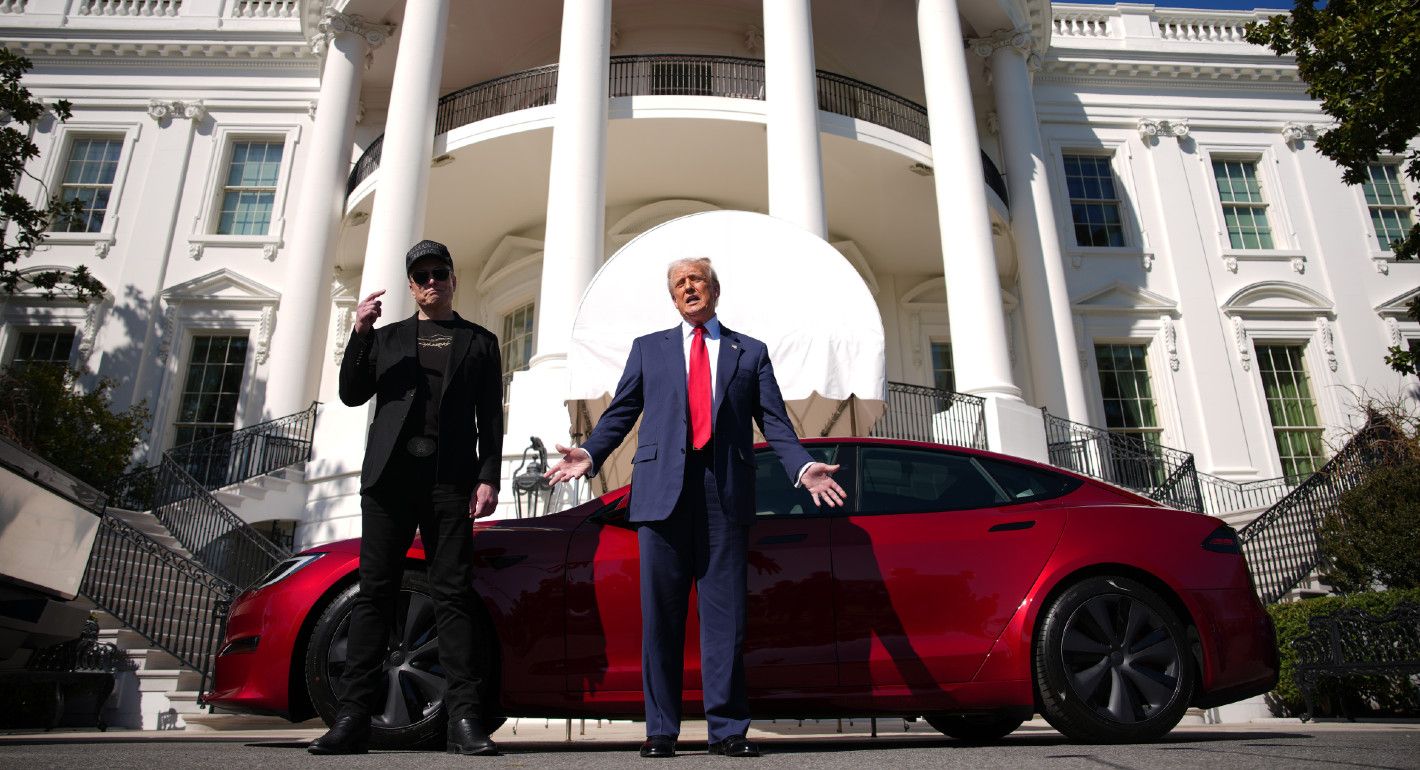
The Brennan Center reports that “Trump is merging the powers of the presidency with his businesses and personal finances to an extent never before seen.” He has used his executive position to push for crypto-friendly regulations while he and his inner circle “directly benefit from the sale of their cryptocurrency.” He sold access to a “pay-to-play” private dinner for big purchasers of his memecoin. And when the United Arab Emirates invested billions into a cryptocurrency startup controlled by family members of both Trump and his Middle East Envoy Steve Witkoff, the “involvement of senior U.S. government officials raised major ethical conflicts.” More broadly, Trump’s family, including sons Eric and Donald Jr., have “pursued major business deals overseas in countries such as Vietnam and Saudi Arabia where the foreign governments have every reason, and the ability, to facilitate million- and billion-dollar deals with the Trump Organization and related entities.” Trump’s administration accepted a luxury jet from Qatar for eventual use as Air Force One, raising criticism for potentially violating “the Constitution’s emoluments clause, which bars federal officials from accepting financial benefits from foreign governments without Congress’s approval.” And Trump’s allies have been rewarded for their proximity to the White House—for example, Elon Musk “benefited from the Trump administration halting investigations into Tesla, Neuralink, and SpaceX” and from the president promoting Tesla cars on the White House lawn.
In addition, Trump has made use of the government’s prosecutorial and judicial powers for his personal benefit. Under his leadership, “individuals convicted of crimes or subject to civil enforcement suits have received preferential treatment when they contribute financially to Trump’s interests.” The Department of Justice “ordered federal prosecutors to drop the corruption charges against Mayor Eric Adams” of New York City based on a claim that the case was interfering with the mayor’s cooperation with the Trump administration on immigration, in an intervention that raised concerns about prosecutorial independence “given the way Mr. Adams has curried favor with Mr. Trump.” Trump has overseen the “mass firing of over a dozen inspectors general who deter, detect, and prevent the misuse of billions of dollars in U.S. government funding,” creating “a chilling effect, making watchdogs afraid to challenge wrongdoing for fear of losing their jobs.” He “pressured several major law firms to donate” nearly one billion dollars in pro bono legal work for his causes, “using the threat of official actions, like prohibitions on them and their clients from government business, as a cudgel.” And in October, he demanded “that the Justice Department pay him about $230 million in compensation for the federal investigations into him,” even though “any settlement might ultimately be approved by senior department officials who defended him or those in his orbit,” creating serious ethics concerns.
Trump has made use of the government’s prosecutorial and judicial powers for his personal benefit.
While the real-time consequences of these acts of self-enrichment and corruption are deeply troubling in and of themselves, this behavior has broader consequences for U.S. anti-corruption norms at home and efforts to fight corruption abroad. Trump has exposed the systemic vulnerabilities that permit the president to wield his authority in these ways without meaningful checks or consequences, paving the path for such avenues to be used moving forward. And, of course, Trump is modeling to other leaders and governments the type of executive behavior that U.S. anti-corruption policy has previously sought to confront.
The Trump administration’s reversal of U.S. international and domestic anti-corruption policies has been fast and far-reaching. It has erased the enhanced institutional capacity for anti-corruption policy created by Biden’s team and eroded institutional mechanisms for anti-corruption foreign assistance across the government. It has backtracked on rulemaking that would have closed major gaps in U.S. regulations and has pared back long-standing anti-corruption policies. It has dismantled or slowed the anti-kleptocracy innovations born from anti-corruption efforts in Russia and Ukraine and stepped away from U.S. international anti-corruption leadership across the board. And in the United States itself, Trump and his team have eschewed long-standing anti-corruption and anti-self-enrichment norms and taken actions that open up major corruption vulnerabilities in the U.S. government.
While the anti-corruption domain has been hit hard by this administration, not all avenues are closed off. Globally, a range of actors could step up to mitigate the losses incurred by the absence of U.S. international anti-corruption leadership. In the realm of funding, there is an opportunity for other countries, multilateral organizations, or philanthropic foundations to fill crucial gaps left by U.S. backtracking. And in spaces where diplomatic pressure is needed to sustain political will for anti-corruption reforms in developing countries, other global powers could take the helm. France, Switzerland, and the United Kingdom are already modeling the types of initiative that will be important to uphold the anti-corruption domain with their March announcement of a joint task force dedicated to combating international bribery and corruption. Broadly, it is time for the international community to rise to the moment—to ramp up domestic and transnational anti-corruption enforcement, to advance measures to root out illicit finance, and to refuse to give haven to enablers of corruption.
It is time for the international community to rise to the moment—to ramp up domestic and transnational anti-corruption enforcement, to advance measures to root out illicit finance, and to refuse to give haven to enablers of corruption.
There are also sources of resilience within the United States. Philanthropies, the business community, and other private actors invested in the rule of law and secure markets could marshal their resources to do more anti-corruption work. Faith communities or veterans’ organizations could advance demands for integrity in public service. Congress could act—pushing back on efforts to dismantle anti-corruption infrastructure and supporting initiatives that contain anti-corruption elements. There are also areas of anti-corruption advocacy that could still resonate with the Trump administration’s “America First” ideology, including tailored efforts to protect Americans and U.S. markets from transnational corruption. Even within the administration, there are opportunities for progress in this reshaped regulatory landscape. Though the FCPA has been pared down from its broader anti-corruption focus, for example, the Department of Justice is now focused on combating cartel-led money laundering in U.S. markets. Any lessons that are derived from this work could be valuable in future anti-corruption efforts. Although much institutional and normative progress has already been lost, it is still possible for the United States to play a positive role in international efforts to fight corruption.
The authors thank Abigail Bellows for her substantial help with the research and writing of this article. All views expressed herein are the responsibility of the authors alone.

Former Research Assistant, Democracy, Conflict, and Governance Program
McKenzie Carrier was a research assistant in the Democracy, Conflict and Governance Program.

Harvey V. Fineberg Chair for Democracy Studies; Senior Fellow, Democracy, Conflict, and Governance Program
Thomas Carothers, a senior fellow in the Carnegie Endowment for International Peace’s Democracy, Conflict, and Governance Program, is a leading expert on comparative democratization and international support for democracy.
Carnegie does not take institutional positions on public policy issues; the views represented herein are those of the author(s) and do not necessarily reflect the views of Carnegie, its staff, or its trustees.

Funding Ukraine remains a priority for European leaders. As Russia’s war of aggression heads into another winter, two feasible options to mobilize support for Kyiv should be fast-tracked.


Vladyslav Rashkovan, Gregory P. Wilson

In an interview, Rozina Ali discusses her new book on the rise and manifestations of Islamophobia in the United States.

Michael Young

While the EU and European governments are embracing the much-lauded middle-power moment, this entails three difficult conundrums.

Richard Youngs
The middle power moment will not be defined by sovereign states alone, and California stands out for its potential contributions to international cooperation.


Ian Klaus, Stewart Patrick

Ex-president Gurbanguly Berdimuhamedov remains interested in politics, but his son Serdar, Turkmenistan’s current president, is becoming increasingly independent and willing to break with his father’s legacy. If their covert rivalry goes too far, both risk losing power.

Galiya Ibragimova