

Paper
There is a transnational far-right populist movement that links middle powers in a global movement that extends well beyond Trump.
Christopher S. Chivvis, Rohan Mukherjee, Milan Vaishnav
Source: Getty
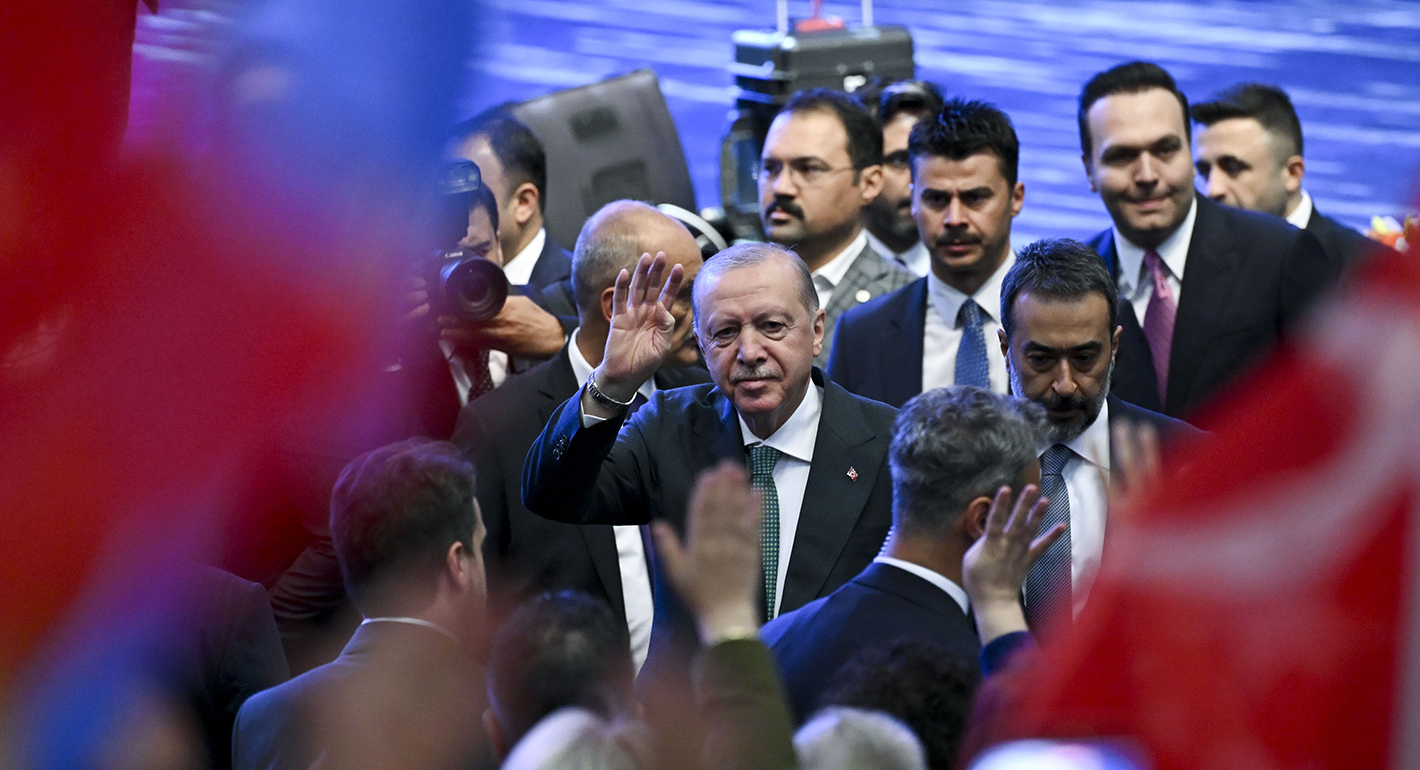
Turkish right-wing populists have been trying to advance the country’s middle-power goals based on perceptions of what the public wants, but they have been doing so in ways that reinforce their project of autocratic political consolidation.
This paper is part of “The Populist Turn in Middle Power Diplomacy,” a Carnegie Endowment series on the international impacts of right-wing populism. Focusing on middle powers, the series explores how populist leaders reshape foreign policy, build transnational networks, and advance shared agendas across borders.
Türkiye offers a vivid example of how right-wing populists can reshape a country’s foreign policy, while also revealing the limits of their ability to do so sustainably.
Over the last twenty-three years, Türkiye has been ruled by the governments of Recep Tayyip Erdoğan (as prime minister in 2003–2014 and president since 2014) and his Justice and Development Party (AKP), elected to power in late 2002. During this period, their shifting policies and rhetoric have often puzzled domestic and international audiences about what the country’s long-term motivations and allegiances are. In order to achieve more clarity, one needs to understand that Erdoğan and the AKP have been following a dual imperative. The first is shaped by a broad cross-party consensus on Türkiye’s changing regional and global interests since the 1990s, and the second is formed by the AKP and Erdoğan’s peculiar right-wing populist worldview. While the second imperative enables faster decisionmaking and flexibility, it undermines the long-term sustainability of Türkiye’s foreign policy by feeding corruption, incoherence, and potential instability.
Turkish right-wing populists have been trying to advance the country’s middle-power goals on the international stage based on widely shared perceptions of what these goals are among policymakers and the public, but they have been doing so in specific ways that reinforce their project of autocratic political consolidation at home. Interrogating how alternatives that are not right-wing populist would manage Türkiye’s external relations differently helps to distinguish between these two imperatives. If the main opposition force, the center-left Republican People Party (CHP) came to power, it would likely continue many policies of Erdoğan and the AKP that are shaped by how broad segments of Turks perceive the country’s national interests as a middle power.1 But there would also be fundamental differences because the CHP would follow a modified dual imperative. It would advance Türkiye’s middle power interests in ways that reverse democratic backsliding and support the consolidation of liberal and social democracy.2 The implications for Türkiye’s long-term alliances and its role in regional and global order would be significant: Its foreign policy would become more predictable, anchored in democratic values, treaty commitments, and law—replacing the AKP’s transactional and destabilizing approach.
Various forms of populism and right-wing ideologies have dominated Turkish politics since the establishment of multiparty democracy in 1950.3 However, the core vision and political strategy of Erdoğan and the AKP have represented the specific kind of populism that causes worry for many observers worldwide due to the severe threats it poses to democracy.4 They have been populist and pernicious polarizers who sought and kept power by fostering a permanent and Manichean divide between people and elites, and by weaponizing a majoritarian and unchecked understanding of popular sovereignty.5 Having said that, their expressed identity and dominant policies have not been constant. After coming to power by promising democratization and clean government to the electorate, the policies and rhetoric of Erdoğan and the AKP incrementally became less liberal and democratic, and more illiberal and autocratic as they accumulated more power. Simultaneously, their right-wing discourse and policies became less “conservative-democratic” and more “Islamist-nationalist.”6 Since 2016, they have also operated in a de facto coalition with the far-right Nationalist Action Party (MHP) and formed electoral coalitions with various Islamist and nationalist fringe parties that share their right-wing populist ideology.7
The consequences for democracy over two decades of right-wing populist AKP rule have been severe.
The consequences for democracy over two decades of right-wing populist AKP rule have been severe. The country backslid from being an established yet defective electoral democracy on the path to building liberal democracy in the early 2000s to being an electoral autocracy by the late 2010s.8
Turkish right-wing populists have transformed the country’s foreign policy, yet the underlying long-term vision and goals are not immediately obvious—obscured by shifting (and often contradictory) policies, ideology, and rhetoric.
The first foreign policy imperative, which has remained constant underneath the shifting actions and motivations of Erdoğan and the AKP, has been the country’s perceived middle-power interests in a changing global order. Türkiye is considered an emerging middle power alongside countries such as South Korea, Indonesia, and Mexico. While there is no fixed definition of middle powers, they are considered to lack the capabilities of great powers such as the United States and China but to have enough power to disrupt the international order.
In the 1990s, many political leaders across party lines realized that economic growth and changing incentives in the post–Cold War era required and enabled a more activist foreign policy.9 Accordingly, Türkiye sought greater regional influence, more diverse relations from Africa to Asia, and a stronger voice in multilateral institutions. But these goals were paired with the goals of strengthening liberal democracy at home and greater integration with Western institutions, particularly the EU, of which Türkiye became a membership candidate in 1999. Thus, the country developed strategic autonomy but remained anchored to the West politically and institutionally. It had a “civilizational interest” in doing so, given its centuries-long policy of cultural-institutional Westernization while remaining West-skeptical—clear-eyed about how Western states have historically treated and will likely keep treating the rest of the world.10
Even though people may disagree over the policies through which Türkiye should pursue its middle-power interests, a cross-party consensus has been evolving on what these interests are. They stem from Türkiye’s position as a growing, export-oriented, and energy-dependent economy with a large and upwardly mobile population; as a post-imperial power with a geostrategically central location between Asia, Europe, and Africa; and as a country with historical-cultural linkages to these regions. This has significantly influenced the foreign policy outlook of successive governments, particularly in periods, like the current one, that are marked by heightened flux in the global economic and security order. Foreign policy has also been influenced by Western allies and global economic and regional geopolitical developments, which have at different times expanded or reduced Türkiye’s room for maneuver.
All this explains why Türkiye has sought to diversify its economic ties beyond the West, even as it has tried to expand its influence in Western-led global institutions. This also clarifies why the country challenges the liberal international order from within as what may be called a loyal and responsible participant.11 Rather than rejecting the order’s underlying legal and political principles, Türkiye challenges what it views as Western dominance in how multilateral institutions are managed and in how their rules are applied.12 Long-standing frustration with the EU reflects this dynamic. Turkish leaders do not reject its principles outright; rather, they object to what they perceive as the EU’s reluctance to accept their country as a full member, and, if it does, as culturally distinct, fully equal, and important, as opposed to peripheral.
Türkiye pursued its foreign-policy goals through institutional and professionalized policymaking, particularly in the Foreign Ministry and the military, as well as through a combination of soft and hard power. It significantly increased its soft power through the expansion of development aid, trade, and the opening of cultural centers in regions such as the Balkans, the Middle East, Africa, and Central Asia. It also worked to reduce its dependence on military equipment from its NATO allies by developing its arms industry, and it supported NATO and UN peace missions by deploying troops in Bosnia, Kosovo, Afghanistan, and Lebanon.13
Since coming to power, Erdoğan and the AKP have continued these policies whenever they also served their second imperative of autocratic power consolidation at home. Between 2003 and 2011, they relied predominantly on a discourse of Muslim democracy, which blended Islamic identity with the language of liberal democracy. They also pursued neoliberal economic policies, maintained the country’s good standing in multilateral institutions such as NATO and the World Trade Organization, and projected soft power as a dynamic trading state committed to having what then foreign minister Ahmet Davutoğlu (2009–2014) called a “zero problems with neighbors” policy.14
All this made sense during the global monetary expansion of the 2000s, which saw capital pouring into Türkiye, and amid Western efforts to identify liberal Muslim allies during the global War on Terror. This approach also helped Erdoğan appropriate the image of his secular political rivals as pro-democracy, pro-EU, and pro-West politicians for domestic and foreign audiences. While making sure that Türkiye’s Western commitments, including the EU accession process, remained intact, he pursued closer cooperation with emerging powers and institutional alternatives to the Western-dominated global order. For example, he sought BRICS membership and joined with Brazil’s President Luiz Inácio Lula da Silva to negotiate a nuclear swap deal with Iran in 2010.15
The second imperative that has guided governance and the transformation of Türkiye since the AKP and Erdoğan came to power has been their partisan motivations and regime goals. These have been described as “passive-revolutionary,”16 populist, political Islamist,17 Islamist-populist,18 neo-Ottoman,19 “state-conquering rather than state-democratizing,”20 and guided by Islamic civilizational goals and affinities.21
Electoral victories in 2010 and 2011 strengthened the AKP government’s domestic position. The resulting growth in authoritarianism was confronted by fierce popular opposition in the Gezi protests in 2013.22 Erdoğan also fell out with his Islamist-nationalist Gülenist allies and faced major corruption allegations in 2014.23
Alongside these developments, Türkiye’s foreign policy became more activist and overtly pro-Islamist. The tumultuous Arab Spring changes that swept through the Middle East and North Africa after 2010–11 may have encouraged an activist foreign policy, but not necessarily an Islamist one. Türkiye’s engagement with Western allies within the EU and NATO became increasingly transactional. Erdoğan began seeking closer relations with autocratic regimes like the one in Russia and with Islamist transnational actors such as the Muslim Brotherhood and Hamas. This shift came with an increased willingness to rely on military force, such as by deploying the military or by using radical Islamist proxies, as in Syria. Many Turkish liberal observers have described this transformation as one from constructive or “restrained” middle-power behavior toward an “excessively activist” and “assertive” posture.24
The changes in foreign policy went in tandem with the AKP and Erdoğan incrementally constructing a neo-patrimonial executive.25 This transformation has been sustained by the model of state capitalism and a welfare system that the AKP and Erdoğan have gradually constructed.26 As they moved away from liberal democracy, they came into values-related conflicts with the governments and civil societies of democratic states.
This ideological transformation has also shaped the AKP and Erdoğan’s power perceptions, rhetoric, and actions in foreign policy, where they saw other Islamist or authoritarian national and transnational actors as trustworthy allies and sources of information. For example, in early 2011, information circulating within Muslim Brotherhood networks appears to have led Erdoğan and Davutoğlu to anticipate the rapid collapse of the Assad regime in Syria, following similar developments in Tunisia and Egypt.27 This expectation contributed to Türkiye’s heavy backing of the Syrian opposition.
Ideological framing has also shaped domestic political discourse. When the CHP criticized Türkiye’s Syria policy in the 2010s, for example, government officials dismissed this with rhetoric such as “The Syrian people are getting rid of their own CHP.”28
Erdoğan’s foreign policy became even more assertive and unilateral after he survived what appears to have been a failed military coup attempt in 2016.29 This new shift came with a stronger ultra-nationalist and Eurasian bent as Türkiye sought closer relations with Russia and developed dialogues with institutions like the Shanghai Cooperation Organization.30 Erdoğan’s rhetoric and, partly, his policies grew more openly critical of the West and more explicitly Islamist. “Zero problems with neighbors” gave way to the notion of “precious loneliness,”31 signaling a more coercive and self-reliant approach that privileged autonomy over diplomatic accommodation.32 Türkiye purchased Russian S-400 missile batteries despite objections from NATO, leading to its “costly expulsion” from the U.S.-led F-35 program.33
Erdoğan and the AKP have continued to develop Türkiye’s defense industry, albeit now with neo-patrimonial and state-capitalist means; that is, by relying on industries close to the government and the president’s family. Efforts have included the development of armed drone platforms (such as the Bayraktar TB2 and Anka systems) that have helped position the country as a major drone producer, and have been used to promote techno-nationalism and bolster the regime’s domestic legitimacy.
Partisan interests have also undermined the ability of Erdoğan and the AKP to achieve peace with the Kurds. Like previous governments, they have opposed Kurdish separatism. However, unlike previous governments, they framed initiatives to resolve the issue primarily through a narrative of Islamic fraternity, conditional upon the Kurds accepting the neo-patrimonial autocratic rule in Ankara. Erdoğan and the AKP have viewed U.S.-backed Kurdish military advances in Syria with suspicion, as most Turkish governments would. But they further complicated the issue by backing Islamist factions and missing opportunities to win the Kurds’ trust by refusing to protect them against jihadi violence at critical junctures—developments critics link to ideological preferences and transnational alignments.34
Since 2019, Erdoğan has sought to repair relations with Western allies such as the United States and the EU as well as with regional powers such as Egypt, the United Arab Emirates, and Israel.
Since 2019, as a troubled economy and a more competitive opposition have threatened his rule, Erdoğan has recalibrated once again. He has largely maintained his jingoistic rhetoric but scaled back some overreaching policies. As he has sought to repair relations with Western allies such as the United States and the EU as well as with regional powers such as Egypt, the United Arab Emirates, and Israel, he has also begun to curb engagement with the Muslim Brotherhood. Türkiye joined Trump’s Board of Peace and took a visibly restrained position during the U.S.-Israeli war against Iran—with Erdoğan staying silent on the United States and muted on Israel. This seems to contrast with the government’s fierce rhetorical condemnation of Israel’s war on Gaza and an official trade embargo—while allegedly allowing trade to continue through backchannels.35
Table 1 illustrates how, in the pursuit of Türkiye’s perceived middle-power goals and interests, the foreign policy vision of Erdoğan and the AKP and that of the CHP compare with the cross-party consensus. This sheds light on the contrasting logics that underpin the dual imperative in foreign policy under the current regime, while suggesting how it would continue and differ under a CHP-led government.
For example, a more activist foreign policy seeking greater autonomy from the West was rational for Türkiye in terms of the cross-party perception of middle-power interests and in light of the diminished flow of Western capital after the 2008 financial crisis and the 2011 Arab Spring. However, the government’s pro-Islamist activism and rapprochement with autocratic regimes resulted from its partisan ideological and political goals.
On balance, the AKP and Erdoğan's foreign policy broadly mirrors that of other authoritarian middle powers—subordinating foreign policy to authoritarian regime survival at home.36 A CHP government, by contrast, would likely pursue what Finland's President Alexander Stubb calls “values-based realism”37—advancing Turkish interests alongside liberal and social democracy at home and rule-based external relations.38
Türkiye’s foreign policy under Erdoğan and the AKP has evolved in tandem with their efforts to centralize decisionmaking in the presidency and make it less anchored in other established bureaucracies, first through what Erdoğan called a “de facto presidential system” in 2014 and then through the adoption of an executive presidency in 2018. This reflects the pattern associated with right-wing populist governments: executive centralization, de-institutionalization and personalization of policymaking, non-diplomatic and combative discourse, predilection for dealmaking, transactionalism, and direct leader-to-leader diplomacy.39
The more centralized and personalized, and thus less constrained, approach allows flexibility and rapid adjustments. It also makes it easier to deploy non-state actors—such as independent or “government-organized” nongovernmental organizations, business networks, religious communities, and even armed groups—to achieve foreign policy objectives.
However, the use of personalized and extra-institutional channels also increases the risks of corruption, erosion of meritocracy, and the blurring of state policy with private gain. In Transparency International’s global corruption ranking, Türkiye ranked 124 out of 182 countries in 2025, a big fall from fifty-four in 2012 and sixty-five (out of 102) in 2002.40 Since Hakan Fidan, the long-time head of the National Intelligence Organization, became foreign minister in 2023, the ministry’s operational style has come to resemble that of the intelligence service: discreet, security-centered, and oriented toward strategic leverage rather than traditional diplomatic processes.
To stay in power, Erdoğan and the AKP do not only rely on populist votes; they also draw on a business community that is, in general, quite docile.
The political economy of gaining and maintaining domestic dominance is central to understanding the foreign policy style of Erdoğan and the AKP. To stay in power, they do not only rely on populist votes; they also draw on a business community that is, in general, quite docile. The corporate-owned pro-government media is instrumental in maintaining their image of being far superior to any alternative. Close ties between the state and firms also help to shore up economic conditions and finance political campaigns and social transfers in the run-up to elections.41 The government has strong incentives to sustain its excessively activist middle-power policy in places like Syria and Africa because this rests on a quid pro quo: firms support the government and, in return, the government facilitates their access to favorable investment opportunities in these regions.
The 2016 agreement with the EU provides a stark example of Erdoğan-era transactionalism. Türkiye agreed to staunch the flow of migrants to Europe, which led to an increase in their number in the country. Erdoğan could have used the considerable leverage from the EU’s dependence on Ankara to stem migration to secure substantial gains for Turkish citizens, such as revitalizing the country’s stalled accession process or modernizing the outdated Customs Union Agreement.42 Instead, he secured around €6 billion (approximately $6.75 billion) of EU funding in exchange for the immense social, economic, and political costs of hosting around 4 million forcibly displaced people, 2–3 million of them from Syria, allowing the strategic relationship to sidestep the accession process.43 Promised benefits such as visa-free travel to the EU for Turkish citizens never materialized, largely due to disagreements over Ankara’s anti-terror legislation. However, Erdoğan came out of this with a major partisan benefit: He was able to use fears about migration as leverage in disputes with the EU and as a means of muting EU criticism of Türkiye’s democratic backsliding.44
All in all, the EU’s reliance on Erdoğan regarding the Syrian war, migration, and instability in Türkiye’s southern and eastern neighborhoods has deepened its preference for transactional stability and “stabilitocracy over support for democracy.”45 European Commission President Ursula von der Leyen merely issued “a carefully worded expression of ‘deep concern’” in response to the arrest and imprisonment of Erdoğan’s main presidential rival, Istanbul Mayor Ekrem İmamoğlu, and Erdoğan’s crackdown on the CHP, since March 2025.46 The recent strains in transatlantic relations and concerns over the future of NATO may reinforce this trend by augmenting the importance of Türkiye for European security.
Erdoğan and the AKP have built a wide range of transnational ties. These include leader-centric networks; party and parliamentary alliances; networks rooted in shared faith, ideology, and narratives; ties with think tanks and nongovernmental organizations; and opportunistic alignments with other right-wing populist and authoritarian actors. As democratic backsliding continued, these alliances increasingly reflected the regime’s autocratic priorities.
The AKP was a member of the European Conservatives and Reformists Party between 2013 and 2018. The AKP left in the aftermath of the 2016 coup attempt, as the party tightened its grip on power and moved further from the European party’s pro-democracy position. The AKP has also maintained informal but close cooperative relations with illiberal parties such as the United Socialist Party of Venezuela, Fidesz in Hungary, and the Serbian Progressive Party. These alignments with other populist or authoritarian actors are grounded in a shared foreign policymaking style and view of how power works.
Over time, these transnational linkages have expanded and deepened. The most significant has been the relationship with the Muslim Brotherhood. The AKP traces its roots to the Islamist National Outlook movement, which has maintained ideological affinities and organizational linkages with the Muslim Brotherhood since the 1960s.47 Under Erdoğan, these ties have been strengthened, and Türkiye has provided significant support to Brotherhood-affiliated groups, including material resources, political and military training, and sanctuary.48 In the wake of various geopolitical setbacks for the organization, particularly the military coup against its short-lived government in Egypt in 2013, Istanbul was a primary hub for its activities, hosting its foundations, organizations, and television channels.
A second major transnational linkage, also grounded in shared faith and ideology, was the partnership between the AKP and the Gülenist movement, which collapsed due to in-fighting between 2012 and 2016. The movement is rooted in Naqshibendi-Nurcu Sufi religious orders in Türkiye, and it has members, informal networks, schools, companies, and professional associations in places ranging from Central Asia to the Balkans, Africa, and the United States. Gülenist-affiliated networks were highly influential in shaping foreign policy during the AKP’s first decade in power, providing the government with information, contacts, and institutional capacity.49
Religious orders have also provided important cross-border networks that inform and enable Erdoğan’s foreign policy. The Naqshibendi-Nurcu Sufi order, for example, has extensive influence in Türkiye and Iraq, and Erdoğan’s governments used it to build a cooperative relationship with Iraqi Kurds.
These ties are informal and nonexclusive; they do not constitute formal alliances. The state is the ultimate decisionmaker and dominant partner, and it often seeks to bring religious networks under its control. At the same time, these actors significantly inform and enable foreign policy.
Türkiye has long-standing engagement with non-state actors, especially in the religious sphere. For example, it has long used cultural and religious diplomacy as instruments of soft power, through state, semi-state, and private sector organizations. These include the Directorate (now Presidency) of Religious Affairs (Diyanet), which has developed into a vast organization that runs mosques, employs preachers, and provides humanitarian assistance across Europe, North America, Africa, and Central Asia.50
Party and regime interests have reshaped such engagement. Before Erdoğan came to power, Diyanet promoted a form of Islamic teaching that was careful to respect constitutional secularism, to avoid organic relations with religious orders, and to exclude religious extremism. Under him, it has become a vehicle of democratic backsliding and Sunni-Muslim social engineering.51 Moreover, Diyanet has deepened its relations with religious orders, blurring the boundaries between the formal and informal and the national and transnational. In addition to being an instrument of soft power, religious ideology can be mobilized to bolster the regime’s support among religious voters.
The record of the first half of the twentieth century offers a sobering reminder of the risks inherent in an international system in which great and middle powers seek to maximize their interests, unconstrained by democracy and rule of law at home or by international rules and norms abroad. The models of statecraft adopted by right-wing populist actors are not reflected well in history. However forcefully they critique existing institutions, they struggle to offer a convincing alternative to a rules-based order.
The developments in Türkiye have important parallels with those in the United States and elsewhere. Since Trump’s return to office and his rapid reshaping of domestic institutions and aspects of the “post-national” liberal international order,52 several patterns have become clear. First, the international system is entering a period of heightened uncertainty, driven by the interaction between domestic political changes and broader geopolitical shifts. Second, populist leaders have often been quicker than their rivals to recognize and exploit these transformations. Third, liberal-democratic actors have struggled to adapt, finding themselves in a largely reactive posture.
Erdoğan and the AKP can be seen as having been early responders to shifting global conditions. They pursued Türkiye’s interests as a middle power accordingly, but they did so with a populist-Islamist worldview. While this resulted in some rational policies in line with the existing cross-party consensus, it has also produced many policies that are “semi-loyal,”53 not only to the liberal international order led by the West, but also to a rules- and institutions-based global order. This has produced many adverse consequences for the country. These include opaque transnational linkages, strained relations with the EU and the United States, the decline of soft power as a Muslim and secular democracy, unfettered immigration, environmental degradation, democratic backsliding, and recurring economic instability.
As a middle power whose growing economy is deeply integrated with global supply chains and dependent on capital inflows, export markets, and oil and gas imports, Türkiye benefits from the peace, predictability, and stability that are provided by a rules- and institutions-based global order. Hence, it can be expected to support these orders based on principle. Under AKP and Erdoğan, however, Türkiye is still embedded in global institutions, but appears to support them out of necessity or for their material benefits alone. It charges these multilateral institutions with ulterior motives and ethnic-religious biases without proposing viable paths to make them more inclusive and just. And, while keeping one foot in the liberal international order, Türkiye has cultivated ties with illiberal regimes and actors.
Erdoğan’s dual imperative in foreign policy may not be sustainable: Domestic autocratization and state de-institutionalization undermine rational policymaking based on national interest. Turkish foreign policy echoes that of other authoritarian middle powers—which are inherently “more self-serving . . . and volatile than their democratic counterparts”54—limiting Türkiye’s ability to reliably contribute to European and democratic security. And should autocratization—most recently the deposing of CHP leadership—destabilize the country, the risks would extend well beyond Türkiye.55 The contest between Erdoğan’s governing coalition and opposition actors like the CHP is both ideological and geopolitical. For Türkiye, dueling visions of politics at home map onto competing orientations abroad. One vision privileges personalized power and selective defiance, while the other emphasizes institutionalized decisionmaking, democracy, and alignment with a rules-based international order. The outcome of this contest will determine whether Türkiye aligns more closely with democratic or authoritarian powers in global politics.
Since the mid-2010s, populism has reemerged as a major focus of research in international relations and political science. Yet relatively little scholarship has examined how populist movements, and the connections they maintain across borders, are tangibly reshaping foreign policy and international politics.
Are populist leaders advancing new ideological framings of foreign policy? Are they forging transnational linkages with like-minded movements abroad? And are these connections producing greater alignment around shared policy agendas?
This Carnegie series explores the populist turn in middle power diplomacy. Focusing on states with regional influence and global reach, it brings together leading scholars to examine how the rise of right-wing populism is reshaping foreign policy decisionmaking, cross-border political networks, and relations among states.

Murat Somer
Professor, Özyeğin University, Istanbul
Murat Somer is professor of politics and international relations at Özyeğin University, Istanbul, and an expert on political polarization and depolarization, democratic erosion, recovery and oppositions, and ethnic, religious, and secular conflicts and politics in Türkiye and around the world.
Carnegie does not take institutional positions on public policy issues; the views represented herein are those of the author(s) and do not necessarily reflect the views of Carnegie, its staff, or its trustees.
There is a transnational far-right populist movement that links middle powers in a global movement that extends well beyond Trump.


Christopher S. Chivvis, Rohan Mukherjee, Milan Vaishnav
Unresolved tensions within the AfD may ultimately constrain the its potential as a leader among European and global populist forces.
Jeremy Cliffe
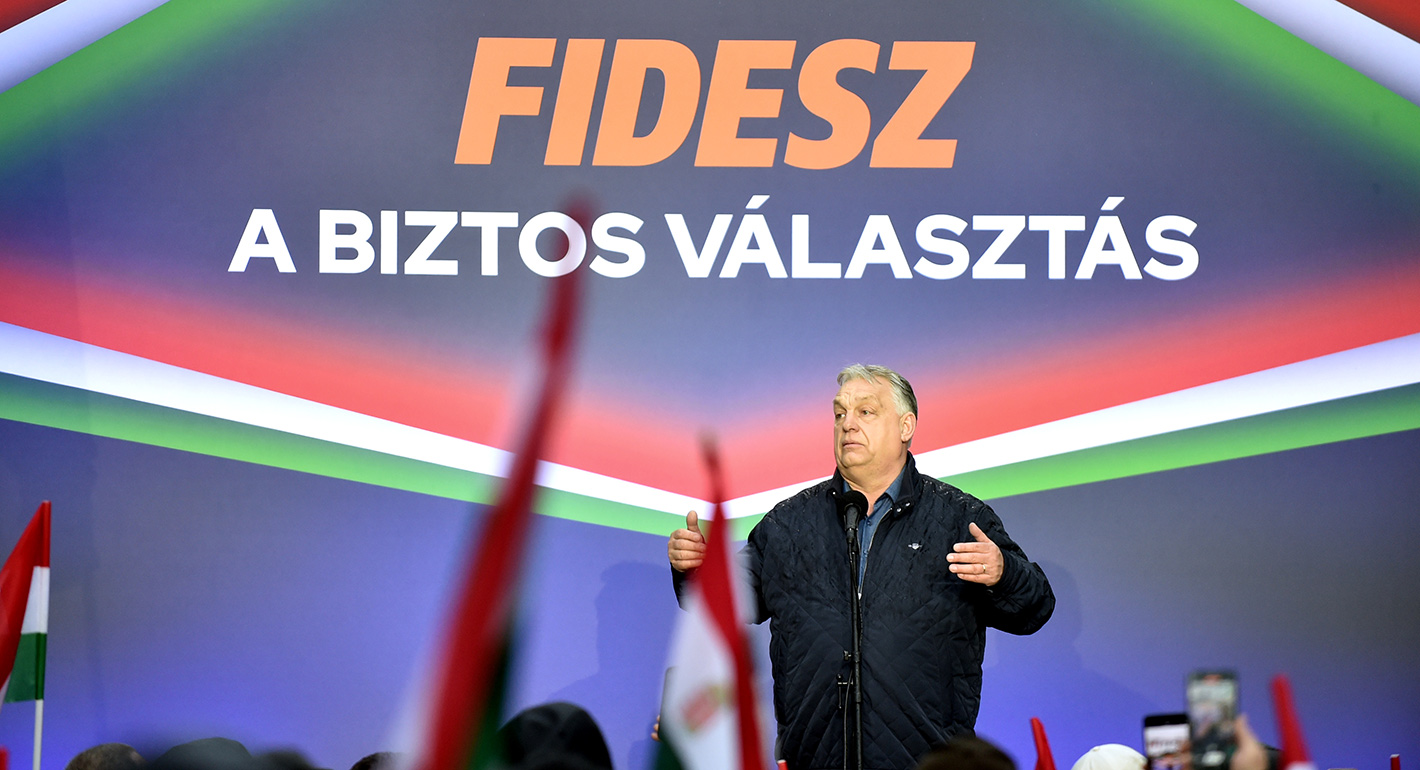
Hungary under Viktor Orbán deployed right-wing populism as a foreign policy strategy, embedding the country in a web of illiberal transnational networks whose legacy will endure even after his April 2026 electoral defeat.
Zsuzsanna Végh
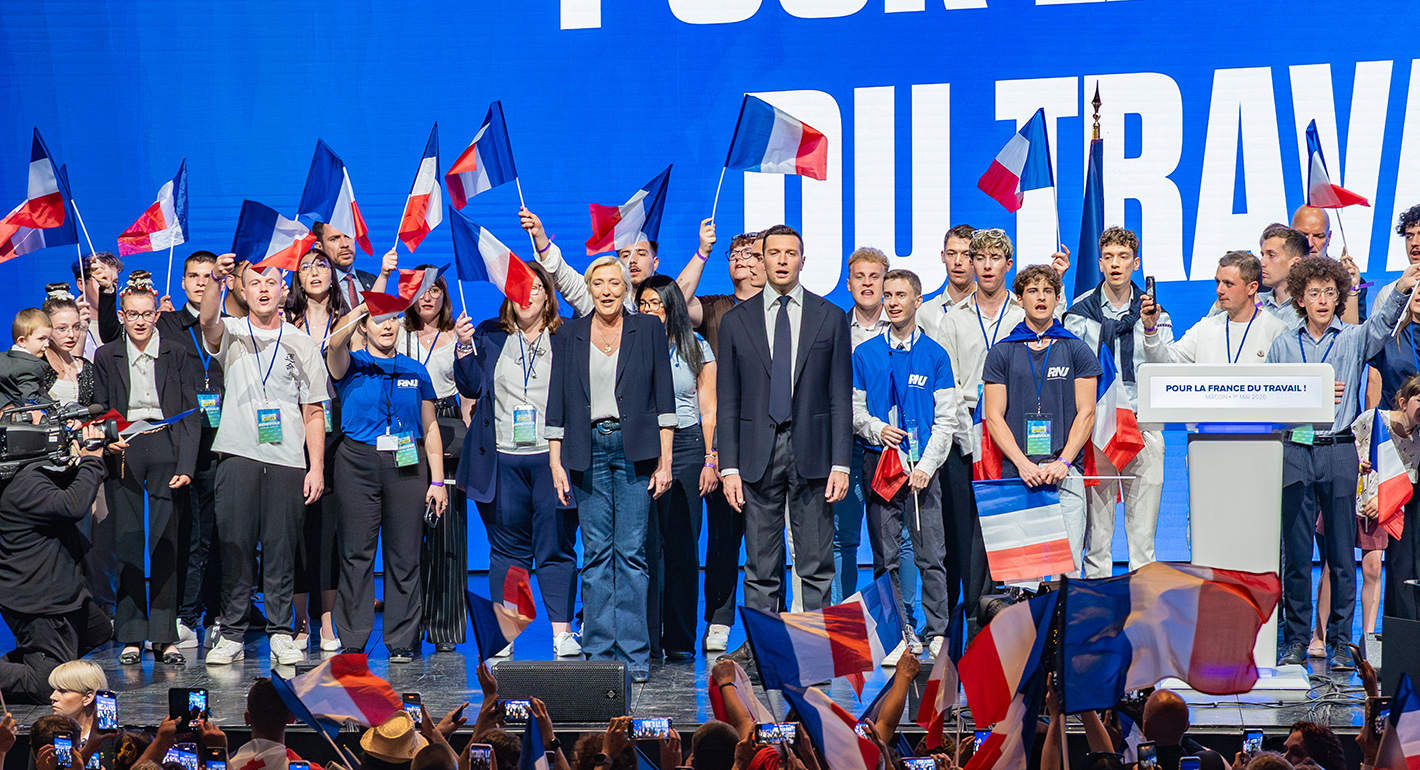
The National Rally’s electoral strength, coupled with its internal fragility at a crucial political juncture, contributes to foreign policy vagueness.

Catherine Fieschi
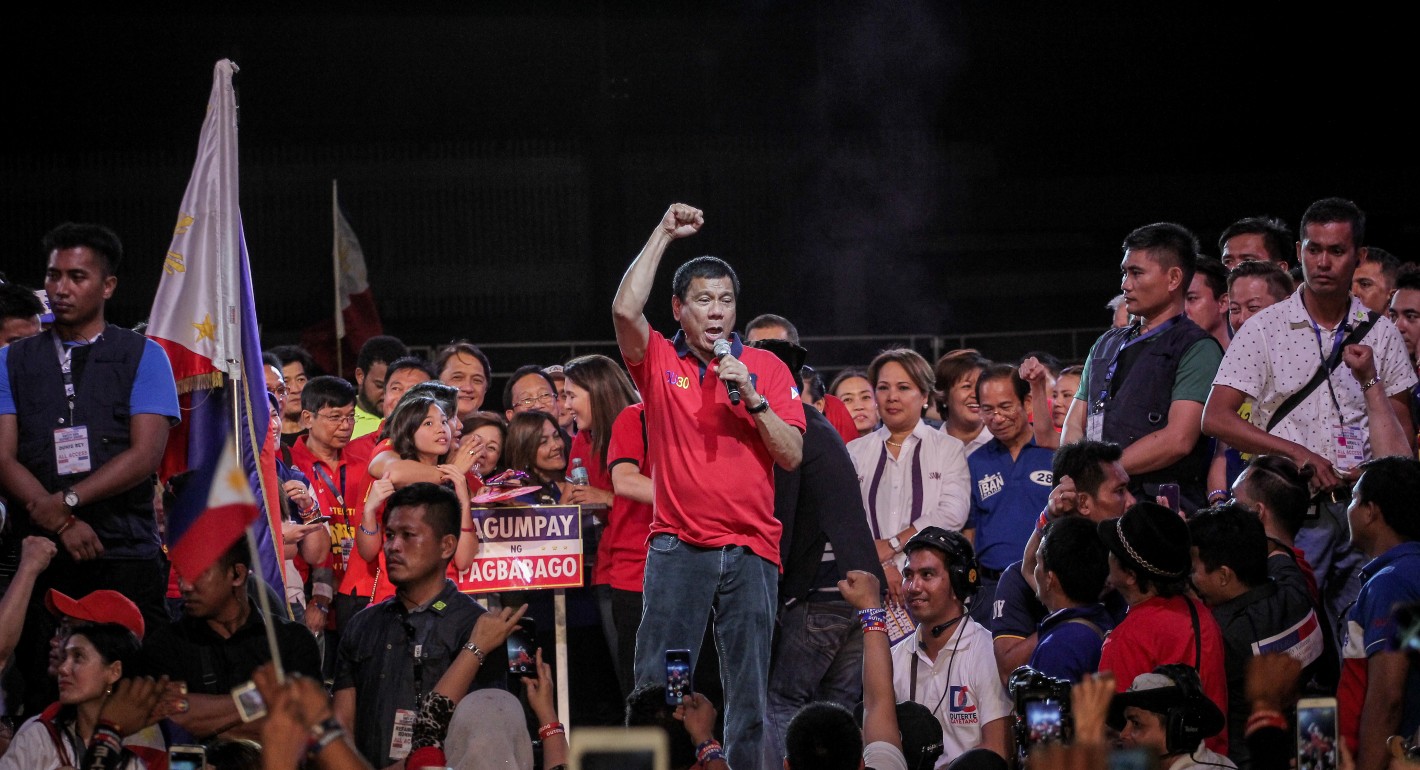
In the Philippines, Duterte-era discourse emphasizing sovereignty, anti-Western skepticism, and strongman diplomacy mirrors tenets of populist foreign policy around the world.
Aries A. Arugay