

Paper
America’s foreign-policy objectives have grown more demanding while Americans have demanded greater focus on their own affairs.
Stephen Wertheim
Source: Getty
State capacity is, at its core, the ability of governments to do what their citizens ask them to do. The Trump administration’s cuts come against a background of long-term capacity decay.
Since entering office in 2025, the Donald Trump administration has sought to eliminate agencies, shed employees, centralize processes, and decrease the government’s material footprint. Ostensibly, the aim is to increase efficiency, but many of these moves compound an already declining capacity of the federal state to exercise U.S. power on the world stage. State capacity is, at its core, the ability of governments to do what their citizens ask them to do. High-capacity states anticipate problems and prepare for them, providing elected officials with more and better policy options, and implementing their laws and directives more successfully.1 In foreign policy, this means having the capacity to defend American interests and effectively design and implement programs to serve a range of diplomatic, military, and economic tasks.
The Trump administration’s cuts come against a background of long-term capacity decay. America’s governance infrastructure is crumbling across the board, just like its physical infrastructure. The problem has complex roots and predates the Trump administration, although Trump’s deconstruction has intensified it.2 From Hurricane Katrina to the Gulf Oil Spill, the 2008 financial collapse, and the failed Obamacare rollout, there is plenty of evidence for this decay. The federal government still processes every federal retirement claim by hand in a limestone mine in Boyers, Pennsylvania, and the Internal Revenue Service has been trying to upgrade its legacy computer system for thirty-five years.3 President Joe Biden promised 500,000 electric vehicle chargers by 2030, but only seven had been produced by his fourth year in office.4 This decay is rooted in the fact that government programs have become increasingly dissociated from the government itself, hidden from citizens, and thus hard to support.
The U.S. government increasingly pursues its goals without directly administering public programs, relying instead on proxies like contractors or grantees. This has shifted the type of personnel the federal government employs, has redefined the contours of federal and state capacity, and has shaped the willingness of elected officials to invest in capacity more generally. It is now doing five times as much as in 1960 with modestly more personnel than it employed then. National policymakers have expanded the scope and reach of government activity by enacting significant new social welfare, environmental, financial, and security policies such as Medicaid, the Clean Water Act, and the Department of Homeland Security.
The increasing burden on personnel is shown in figure 1, which graphs inflation adjusted federal spending and federal civilian employment since 1960. Federal spending in real dollars has increased from $733 billion to $5.5 trillion in 2025, an increase of more than 500 percent. It increased from 2.3 million civilian employees in the 1960s to 2.9 million in 2025, a 26 percent increase. To keep pace with spending, federal employment would have had to increase to more than 11.5 million employees. And as of 2026, after the first year of the Donald Trump administration and DOGE cuts, it’s now down to levels not seen since 1966.
Although part of this gap can be explained by increases in the productivity of labor, it also results from the growing recourse to grants to state and local governments and contracts to private organizations, tax policy, and credit and insurance programs.5 This has meant that the federal government does less direct service delivery and more management of grants, contracts, and systems. A government that once built ships in federal shipyards, for example, now makes contracts to purchase them. Whereas U.S. officials once directly engaged in international development and relief work, foreign policy bureaucrats now provide funds to other organizations to do this work.6
Across domestic and foreign policy, the federal government has thus in many ways shifted to governing by proxy.7 State and local government employment has expanded significantly, and the number of contract employees has ballooned.8 In the process, the federal government has built up a white-collar administrative workforce of lawyers, managers, and rule writers. These are administrators rather than makers or doers. Similarly, federal employees do fewer inspections, government scientists do less direct research, and federal agencies do less of their own analysis. In general, the government has high capacity for policymaking, buying, and managing, but low capacity for delivering directly.9 The U.S. Agency for International Development is a good example. The agency was once staffed with personnel who would directly take part in projects, like infrastructure engineers, but increasingly replaced them with employees hired to plan and oversee projects implemented by non-U.S. employees.10 Networks of grantees, contractors, and subcontractors are harder to manage than agency employees. Accountability is diffused and so is credit. When programs fail, it can be difficult to determine which step of the process failed. When programs succeed, credit often goes to the most proximate party delivering the aid rather than the agency or government that funded or initiated the program. This undercuts the foreign policy goals of such aid.
It is far easier to determine whether the State Department has fulfilled its reporting requirements than whether they have successfully contributed to strengthening democracy in the Western Balkans.
The government has also built accompanying systems focused on compliance, which is easier to measure than whether a program is effective. For example, it is far easier to determine whether the State Department has fulfilled its reporting requirements than whether they have successfully contributed to strengthening democracy in the Western Balkans. When federal work is being done by states or contractors, the demands for accountability only increase, as do rules for reporting and the number of personnel to ensure compliance. All of this creates a burden on administrators, reducing their capacity to fulfill their mission. The Federal Acquisition Regulation includes fifty-three parts described in more than 2,000 pages. This does not include agency supplements to the regulation.
The decline of direct service provision has made it harder for citizens to see how state spending produces the outcomes they want, and this has made it harder to get public support for the bureaucracies. If veterans get loans from a bank rather than the Department of Veterans Affairs, for example, they do not see the role of the bureaucracy in making this possible.11 Lack of visibility means less political momentum to sustain and strengthen state capacity, particularly in an era of slim majorities.12 Moreover, when the effects of strengthening capacity only appear five to seven years in the future, the political incentives for doing so are further reduced. In the analogy of public infrastructure, political leaders prefer the new road that people can see to spending on the maintenance of a bridge. In addition, if the minority helps the majority pass legislation, this could help that majority keep or pick up seats in the next election.
The disconnect may be greatest between federal programs and what voters see in foreign policy: where the actions of the foreign policy bureaucracy are arguably least tangible to the voters, and where key outcomes play out over the course of years, if not decades, of diplomatic spadework. Hiring one more grant manager or procurement official to coordinate the actions of key government partners is hard to connect to concrete foreign policy outcomes that voters care about. The voter learning about famine in a foreign country or an increasing number of countries voting against the United States at the United Nations—just like the veteran trying to get a loan—does not see investments in foreign policy personnel, process, or equipment as addressing the issue. What voters want for domestic and foreign issues is that they are dealt with well and efficiently, and yet what they observe is a government wasting money on more grant managers, procurement officials, and administrative personnel.13 This expenditure seems distant from the problems, which meanwhile persist. From this perspective, it is easy to understand how elected officials want to cut the federal government bureaucracy, even as they want the problems solved.
Some conservatives have used these structural impediments to performance as justification to further deconstruct the administrative state and to combat programs they dislike. When they have failed to repeal programs through legislation, they have sometimes sought to break the departments and agencies that implement those programs—from foreign aid to financial regulation to federal involvement in education.14 Steve Bannon, for example, identified deconstruction as one of three key Trump administration goals in 2017.15 Trump, haltingly at first, and more aggressively in his second term, has thus worked to unravel the machinery of government through executive actions, budgets and spending, and the politicization of federal personnel.16
In foreign policy, the Trump administration has reduced analytical and planning capacity, disrupted the people and processes involved in relationships with foreign governments, and dismantled operational capacity by removing people and equipment. Five of the top twenty-five agencies targeted for staff cuts were foreign policy agencies, with cuts ranging from 20 percent (State) to 95 percent (USAID).17 This does not include an estimated 25 percent reduction in Foreign Service employees.18 These reductions degrade the ability of each agency to analyze and plan, particularly when combined with the destabilizing effects of organizational changes and the centralization of policymaking and managerial processes. The Trump administration, for example, canceled contracts with groups collecting public opinion data throughout the Caribbean and Central and South America. Without alternative sources of information about public opinion, Washington has less insight into what is happening on the ground in Venezuela or surrounding countries, areas whose stability impacts U.S. efforts to deal with drug trafficking, immigration, and regional security. They also eliminated the staff in the Office of Personnel Management tasked with measuring federal agency performance and did not conduct the Federal Employee Viewpoint Survey (FEVS), the primary tool federal managers use to evaluate management performance. This will not improve the performance of the foreign policy agencies or increase their overall impact.
Personnel reductions and instability damage U.S. relationships with foreign governments, inhibiting cooperative efforts to solve problems. While other countries like China maintain an active, persistent, and engaged presence in many countries, many U.S. embassies lack a confirmed ambassador and are staffed by too few employees.19 Understaffing hurts U.S. efforts to accomplish many goals such as the identification of global health threats before they reach U.S. hospitals.20 The United States government must work with the governments of other countries, international organizations, nongovernmental partners, state health agencies, and local hospitals and first responders. With persistent vacancies or rapid turnover, interagency or intergovernmental teams get made and remade as officials enter or leave, fouling up the process of diplomacy and creating costly inefficiencies.21 Important decisions, for example, get delayed and meetings rescheduled. Lower-level officials funnel decisions up to overworked senior officials because there is nobody to sign off on important commitments.22 Most large foreign policy concerns are complex and require team cooperation across agencies and significant long-term planning. U.S. efforts to work with partners are slowed by reduced workforces and disruptive changes in personnel and processes.
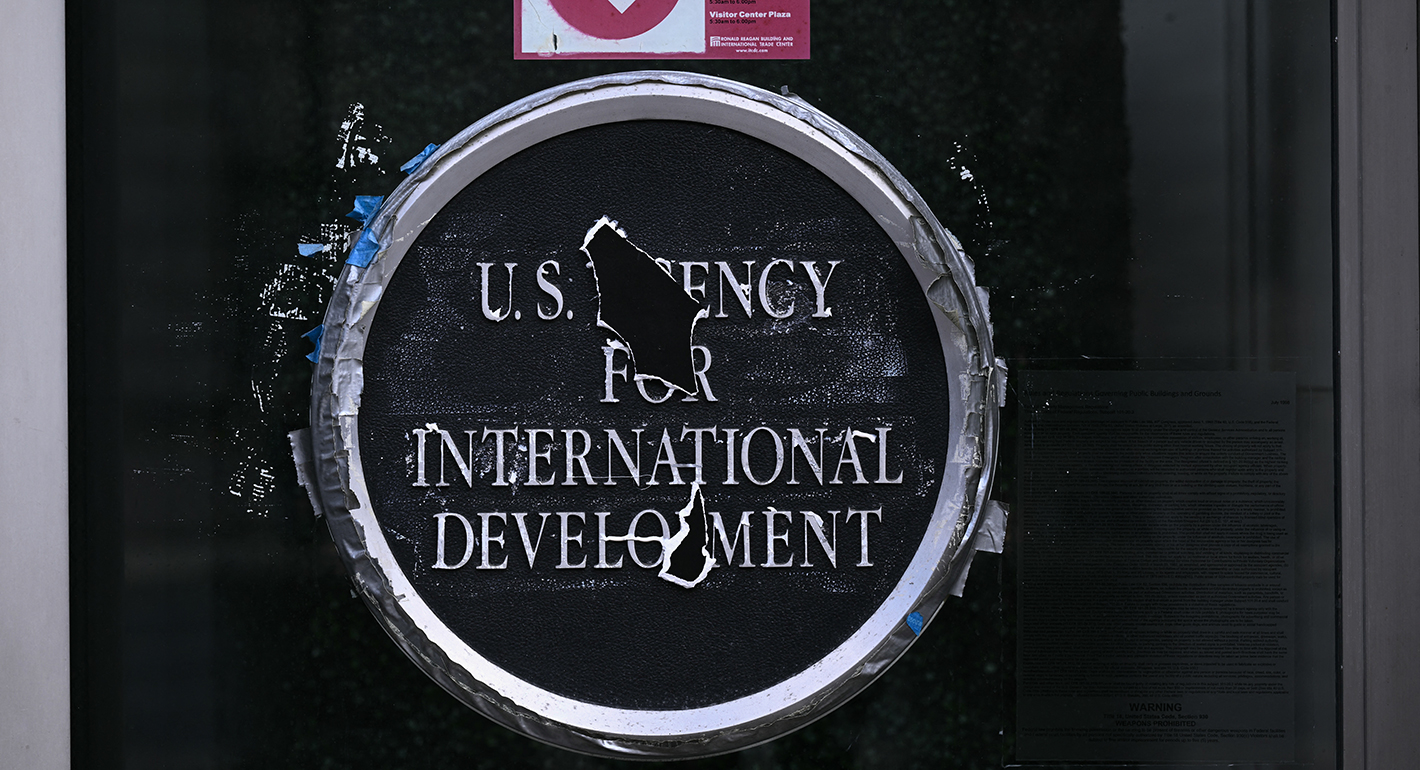
The Trump administration sought to reduce the operational capacity in the foreign policy bureaucracy by closing foreign missions and eliminating websites, data, and infrastructure. When the Trump administration began dismantling USAID, they locked employees out of computer systems and closed the building. They also reportedly removed servers from the building. There is no team to manage local projects and no money to fund them. If the order was given to restart payments on a contract or program, there would be no infrastructure in place to easily do that.23
State capacity is often slow to change, but recent policy shifts that reduced the federal workforce, centralized processes, and reduced the federal footprint will have an impact. Policy interventions such as these are easier than those that build capacity, which themselves will be vulnerable in the long run to the same destructive forces of neglect and deconstruction discussed above.
State capacity in foreign policy may be especially susceptible to depletion because one of its core assets—the accumulated relationships, area expertise, and institutional knowledge of experienced diplomats and development professionals—cannot be easily purchased, contracted out, or rebuilt in short order. The expertise that makes a senior diplomat or development specialist effective is not technical knowledge that can be quickly acquired in a six-week training course or in the private sector—but rather includes decades of relationship capital with foreign counterparts, hard-won regional knowledge, and judgment built from repeated engagement with specific governments and crises. There is no private sector equivalent to the State Department that the U.S. government can draw on and no accelerated path to reconstruction. What takes careers to accumulate can be lost in a single cycle of deep budget cuts, and the timeline for rebuilding is measured in decades, not administrations. Reconstructing what has recently been dismantled will therefore be extremely difficult.
There is no private sector equivalent to the State Department that the U.S. government can draw on and no accelerated path to reconstruction. What takes careers to accumulate can be lost in a single cycle of deep budget cuts.
Public sector personnel systems encourage stability by protecting the rights of employees in laws and rules. This stability allows government employees to invest in useful expertise, long-term plans, and relationships untroubled by political turbulence.24 Employees afraid of removal will focus instead on activities that will be rewarded in the open labor market rather than expertise that is only valuable to the government.25 The equipment of agencies, including agency computers, IT systems, cell contracts, automobiles, and buildings are also sticky.26 Once agencies have started using and integrating such equipment, they are loath to change. Costs of replacement are high and disentangling systems like IT and computers is complicated. Lease and rental agreements are easier to continue than change.
Recent empirical work on policymaking capacity suggests it has been slow-changing at least through 2024.27 This has provided the president and Congress a predictable source of policy options and the ability to implement new and existing programs. While there were agencies where capacity had been diminished (for example, State Department and USAID), there were also organizations where it increased (for example, Department of Defense, Immigration and Customs Enforcement). It is important to remember that the federal government employs more than 2 million civilians working in 250 to 300 different agencies, with more than 87 percent of these employees outside the Washington, DC, metropolitan area.28 Cutting workforces in foreign nations or Washington, DC, do not alter this workforce, one partly protected by the parochial interests of members of the House and Senate where these workers live. Recent efforts to dramatically reduce the federal workforce, change agency structure and process, and physically dismantle computer and payment systems, however, have disrupted this durability.
If an effort to rebuild is undertaken, the agencies will therefore face the slow and careful process of searching, hiring, onboarding, and developing. Although some short-term improvements are possible, many effects may not be fully realized until ten to fifteen years from now. Choices made now will determine how many employees with significant experience and expertise work in government in the future. Workforce reductions led to the resignations or retirements of thousands of experienced public servants that cannot be immediately replaced in the short run. They can be replaced in the long run with effective recruitment and development now. Government offices at home and abroad can either be full of seasoned and motivated senior officials solving problems and effectively implementing public programs or a hodgepodge of short-termers, generalists, hacks, and consultants trying to patch together government programs in complex networks of interagency, intergovernmental, and intersectoral systems.
Efforts to restore processes may be quicker—a few months to a few years. Installing new processes will require interagency agreements or the initiation of rulemaking. Similarly, restoring equipment and systems can be time consuming if new purchases require new requests for proposals, bidding processes, and contract awards. The time will be shorter if agency employees remember and embrace the new processes and experienced contractors are on the federal schedule or have past frameworks at hand.
The immediate response to a decline in state capacity is to rebuild it by hiring new personnel, changing processes, and improving equipment. In foreign policy, the priority should be staffing analytical and planning operations, teams involved in working relationships with foreign governments, and agency operations. The U.S. foreign policy apparatus has often been neglected even before it was targeted for deconstruction in 2025. Agencies like the State Department have had persistent vacancies and too few resources. They have rarely had the luxury of taking on complex and long-term projects like upgrading IT systems or improving human resources, financial management, and acquisition processes. Therefore, the immediate value of an investment in hiring and reform is quite high. Such measures, however, will not change the underlying conditions that make maintaining state capacity difficult. As long as capacity (and its importance) is invisible to voters and their elected representatives, it will face the same challenges. This is particularly the case for capacity that supports programs that are politically controversial or have few proximate benefits for voters (for example, foreign aid and the United Nations).
Strengthening state capacity will require eliminating administrative burdens, improving public data access, increasing the visibility of the capacity, and taking concrete steps to build a pipeline of talent into government.
Eliminating Administrative Burdens on Agencies: Federal managers are challenged by the rules and requirements elected officials place on them to justify the rationality of their decisions, document steps taken to allow participation, and provide transparency. The accumulation of these rules and requirements dramatically increases the difficulty of implementing public programs and creates a focus on procedural compliance instead of core mission. Removing red tape could free up agency officials to do the work Congress has given them and could make them accountable for results.
Data: What gets measured gets attention. A fundamental problem of U.S. state capacity is that people too often cannot see the connection between capacity and outcomes. The regular, clear, and reliable publication of data makes neglect and inattention more difficult, generating its own political momentum. Conversely, the publication of reliable and regular data also highlights good performance, thus encouraging further good behavior and protecting high performing agencies from unwarranted political attacks.
This data should include indicators of input, process, and output. Input data on the number of civilian, foreign service, and contract employees in various locations should be easily accessible. This helps make it visible when elected officials neglect foreign policy capacity. Operations data on key processes from human resources (for example, time to hire, morale, vacancy lengths) to procurement (for example, value, evaluation of successful delivery) should also be publicly available. Finally, agency leaders should work more aggressively to evaluate, document, and publicize the outcomes of different programs and activities. Ideally, such efforts will highlight numerical indicators where possible, since countable indicators are often the most visible and easy to digest. These indicators can range from changes in literacy and hunger rates to external evaluations of the efficacy of different programs and activities from knowledgeable insiders.
Visibility: Contracts, grants, and incentive-based programs (for example, insurance, tax expenditures) obscure the role that government plays in the lives of Americans. Tools should be chosen based upon effectiveness, and the benefits should be weighed against the consequences of their obscurity. This means more direct production and delivery of government services. After all, outsourcing public programs frequently has little to do with efficiency, with single-bid contracts widespread.29 Without competition, the market is no more efficient or accountable than federal employees. Critics have long charged that nongovernmental organizations take too large a portion of foreign aid dollars and deliver too little in return.30
People: Fundamentally, state capacity is composed of people. These people can have better or worse processes and better or worse equipment, but people need to be in place to prepare for the future, anticipate problems, develop options for public officials, and then effectively implement public programs. The long-term capacity of government depends upon a stable pool of high-quality prospective employees, an effective system for bringing them into government, and persuading them to stay. Colleges and universities often do a poor job preparing graduates for government work, whether in the civil or foreign service. The federal government, with a few exceptions (for example, the Army, Central Intelligence Agency, Federal Deposit Insurance Corporation, Government Accountability Office), is a poor recruiter of civilian talent. Bright young graduates find it difficult to navigate the federal hiring system; it’s far easier for them to work in government consulting.31 Key national security bureaucracies, like the State and Defense Departments, should improve student preparation and federal recruitment.
Such steps can create a more durable and effective foreign policy bureaucracy. They will help increase the salience and visibility of these agencies to voters and elected officials. When people see and understand what agencies do, they are more willing to support investments. Agencies with fewer burdens, more visible accomplishments, and new investments can rebuild trust and support. Most importantly, however, such changes can create a meaningful increase in American power by increasing expertise, building relationships, and effectively delivering on the policies of the U.S. government.
What is the future of American power? The United States commands extraordinary resources across every dimension of national power, yet in recent years it has struggled to achieve many important foreign policy aims. This paradox raises a key question for Americans and the world: What can the United States actually do with the power it has? Our project examines not just the quantity but the qualities of American power, assesses the degree to which it is eroding, and asks how the United States might use the power it has to better effect.
David E. Lewis
Rebecca Webb Wilson University Distinguished Professor, Vanderbilt University.
David E. Lewis is the Rebecca Webb Wilson University Distinguished Professor at Vanderbilt University. He is the author of two books and numerous articles on American politics, public administration, and management. His research has been featured in outlets such as the Harvard Business Review, New York Times, and Washington Post. In 2022, he was appointed as a public member of the Administrative Conference of the United States. He is a member of the National Academy of Public Administration.
Carnegie does not take institutional positions on public policy issues; the views represented herein are those of the author(s) and do not necessarily reflect the views of Carnegie, its staff, or its trustees.

America’s foreign-policy objectives have grown more demanding while Americans have demanded greater focus on their own affairs.

Stephen Wertheim

Smaller powers cannot go it alone, but Canadian history shows that integration with the United States will not always be benign.
Paul Samson
Soft power on its own is insufficient to meet U.S. national security needs, but hard power also has its limits. Soft power allows for more effective and efficient use of hard power than hard power alone, as it encourages cooperation and compliance which deters the need for hard power.

Sarah Yerkes

Washington needs to recognize that influence in the Western Hemisphere comes from presence, delivery, and reliability. It also must recognize that while the United States remains the key external actor, it no longer operates in a permissive environment and cannot presume deference from regional players who have other options, namely China.
Juan S. Gonzalez
Chinese strategists are once again debating whether American power is declining and whether U.S. hegemony is experiencing irreversible decay.
Wu Xinbo