

Paper
Smaller powers cannot go it alone, but Canadian history shows that integration with the United States will not always be benign.
Paul Samson
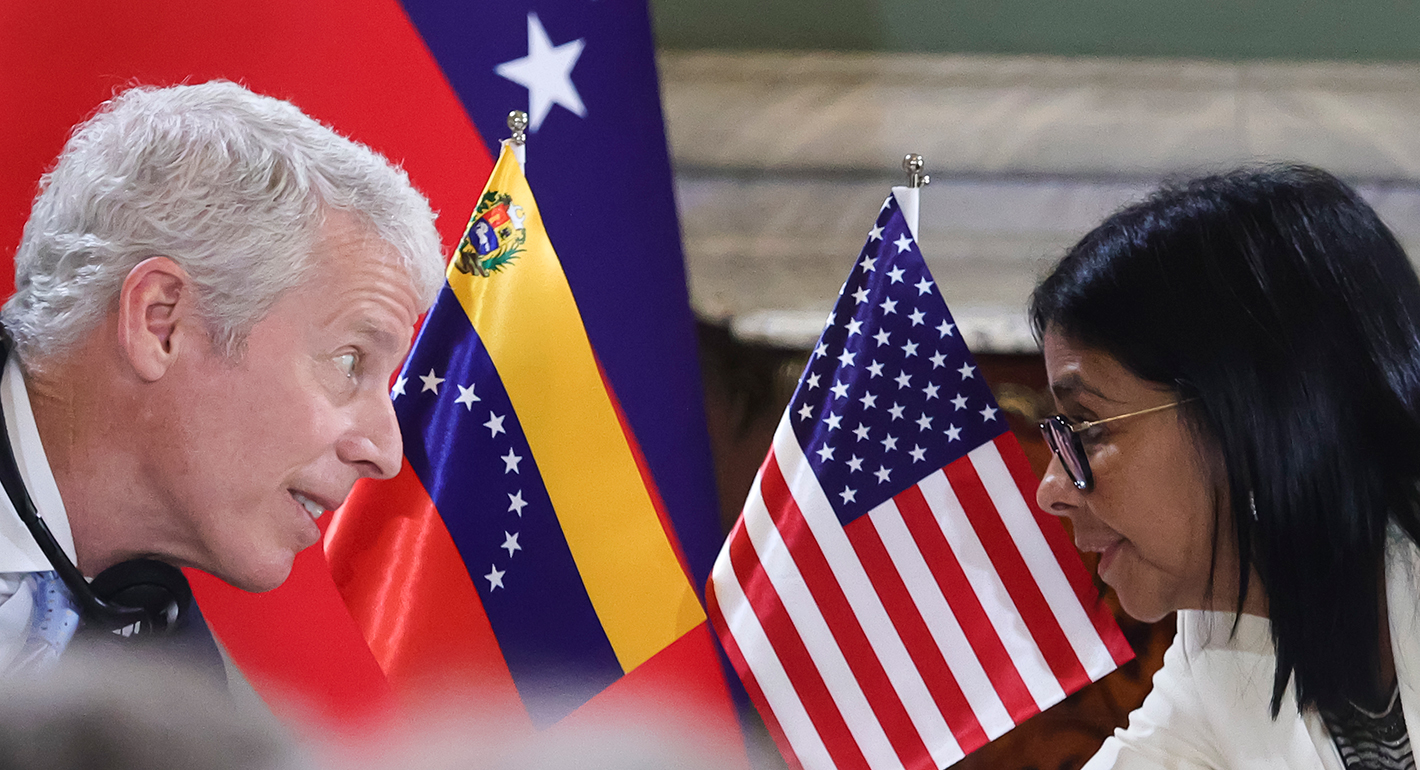
Source: Getty
Washington needs to recognize that influence in the Western Hemisphere comes from presence, delivery, and reliability. It also must recognize that while the United States remains the key external actor, it no longer operates in a permissive environment and cannot presume deference from regional players who have other options, namely China.
The United States remains the key external actor in the Western Hemisphere as measured by: geography, market scale, investment stock, institutional presence, and security relationships.1 Yet across multiple domains, American primacy is eroding and Washington is struggling to parlay its advantages into strategic outcomes. For decades, the United States enjoyed regional democratic convergence, unchallenged economic primacy, and the absence of credible challengers. But these favorable conditions no longer exist and may never return. The stakes are real. Migration pressures, criminal economies, contested energy and technology supply chains, and democratic backsliding across the region impact the United States directly—at the border, in overdose deaths, in domestic politics—in a way that developments in more distant theaters do not.
Washington needs to recognize that influence in the Western Hemisphere comes from presence, delivery, and reliability. It also must recognize that while the United States remains the key external actor, it no longer operates in a permissive environment and cannot presume deference from regional players who have other options, namely China. China has not outspent the United States in the hemisphere, but it is more and more influential. The United States is overweighted in coercive and reactive instruments—sanctions, migration enforcement, and episodic diplomacy—and underweighted in the sustained economic and technological engagement that now determines competitive advantage and, hence, power. The results are diminishing returns to existing American power resources.2
Building durable influence within a permanently more plural and competitive hemisphere will require a reprioritization of the U.S. power portfolio, not simply greater effort. That means shifting from episodic intervention toward persistent economic presence, from coercion as a first resort toward sequenced statecraft, and from rhetorical partnership toward material co-investment in the region’s future sectors.
For most of the post–Cold War period, U.S. influence in the hemisphere rested on two mutually reinforcing foundations. The first was structural embeddedness: the integration of the hemisphere’s economies, institutions, and security architectures with U.S. systems. This integration included trade agreements such as the U.S.-Mexico-Canada Agreement (USMCA, formerly the North American Free Trade Agreement, NAFTA) and the Dominican Republic–Central America agreement; multilateral institutional leadership through the Organization of American States and the Inter-American Development Bank; substantial investment flows; dollar centrality in regional financial systems; and deep professional, educational, and diaspora linkages.3 Over three decades, the United States and its regional partners expanded trade, reduced interstate conflict, broadened access to U.S. capital markets, and achieved regional consensus, however imperfect, around democratic governance and market-oriented economics. The integrated systems consolidated the United States as the region’s dominant external actor. As of 2024, the United States accounted for 38 percent of total foreign direct investment (FDI) inflows to Latin America and the Caribbean, maintaining a substantial lead over all competitors, with total inflows reaching nearly $189 billion.4
Even governments seeking distance from Washington have found this integration difficult to escape. When Guatemala’s political establishment moved to dismantle the internationally backed anti-corruption institutions built over the preceding decade, the effort succeeded, but at the cost of years of sustained friction with the United States, targeted sanctions on Guatemalan officials, and a confrontation that shaped the country’s politics through its 2023 electoral crisis.5 The region’s technological future deepens the dependency: The firms, capital markets, and research institutions that will shape the deployment of artificial intelligence across the hemisphere remain overwhelmingly American. Dollar centrality constrains even the periodic rhetorical flirtations with de-dollarization. These advantages offer the United States real power. But power that binds is not the same as power that attracts, and in the future, the United States will need more of the latter to sustain its influence.
The second foundation was normative alignment: a shared aspiration toward democratic governance and rule of law that provided a framework for low-friction cooperation. In the mid-2000s, most countries in the Americas were rated “Free” by Freedom House, reflecting a broad, if uneven, democratic convergence.6 This alignment was never uniform, and it masked significant variation in the quality of democratic governance. But ideological alignment lowered friction between Washington and its partners while amplifying the returns on U.S. engagement. When countries shared a baseline commitment to democratic governance, it was far easier for Washington to exercise leadership.
Structural democratic embeddedness remains substantial today, but its marginal impact is declining as competitors offer alternatives at scale. China has built a parallel infrastructure of trade, investment, and financing relationships that gives countries options they did not have two decades ago. Normative alignment has frayed even more significantly. Democratic backsliding has accelerated across the region, and U.S. credibility as a democratic standard-bearer has been weakened by inconsistent application of democratic norms—defending democratic processes selectively and at times subordinating governance concerns to short-term security or political priorities.
China’s rise as a commercial power in the hemisphere, the fragmentation of democratic consensus, and the region’s growing economic sophistication have reshaped the competitive landscape regardless of any single administration’s choices. The result is an efficiency problem: The United States is paying more in diplomatic effort, political capital, and coercive instruments while generating less in durable alignment and strategic returns.
One further constraint cuts across every domain of U.S. power in the hemisphere and shapes all that follows. More than in any other regional portfolio of American statecraft, U.S. policy toward Latin America is driven by domestic constituencies—diaspora communities, ideological lobbies, electoral incentives, and congressional subcommittee dynamics. These generate bursts of attention and resources, but they also insert an unpredictability that partners have learned to discount. Cuba policy has been shaped for more than six decades by a domestic political calculus that has often overridden strategic assessment.7 Venezuela policy has followed a similar trajectory. Diaspora influence is not uniformly distorting—diaspora communities carry knowledge, relationships, and legitimacy that officials in Washington often lack—but when diaspora politics fuse with electoral incentives in pivotal states, country-specific policies harden into positions that outlive their strategic rationale. Haiti has suffered the inverse problem: The absence of a politically influential constituency has produced chronic underinvestment and episodic crisis responses. The result is a portfolio in which ideological adversaries get maximum pressure, aligned governments get maximum tolerance, and countries without a domestic constituency get neglected—a pattern that erodes U.S. credibility regardless of any single administration’s choices.
Understand the world with the latest from our scholars around the world.
The erosion of both foundations of influence plays out differently across domains of power. In each area, the United States retains meaningful advantages but faces the same underlying question: can it sustain or improve its strategic returns without changing the mix of instruments it deploys?
The United States remains the region’s largest single source of FDI and a central trading partner. Bilateral economic relationships—particularly with Mexico, Brazil, and Colombia—remain deep and consequential. But the United States is no longer the default economic anchor and is losing ground thanks to its intermittent and sometimes ad hoc approach. China is now the main trading partner for Brazil, Chile, Peru, and Uruguay, with China–Latin America trade reaching a record $518 billion in 2024.8 The trajectory is striking: In 2000, China accounted for less than 2 percent of the region’s exports. Latin America now supplies roughly 75 percent of China’s soybean imports and nearly all its lithium carbonate imports, and Chinese exports to the region grew 13 percent between 2023 and 2024.9
Beijing’s approach has been to use state power to embed itself in sectors that will define Latin America’s long-term growth: energy, infrastructure, telecommunications, and supply chains. Chinese development finance institutions have extended more than $120 billion in loans to the region since 2005.10 The composition has evolved, shifting from large sovereign loans toward equity investments, concessions, and targeted deals in renewable energy, critical minerals, and electric vehicle manufacturing, but the result is persistent economic presence at scale.11 China’s opening of the Chancay megaport in Peru in late 2024, which significantly cut shipping times between Asia and South America, illustrates the kind of infrastructure investment that reshapes trade patterns and embeds China’s long-term economic competitive advantage.
That embeddedness not only achieves commercial outcomes, but political ones as well. For example, since 2017, five governments in the hemisphere—including Panama, the Dominican Republic, and Honduras—have severed recognition of Taiwan and established relations with Beijing, in each case amid expanded Chinese financing and investment commitments. China’s market position, sustained over time, purchased a concrete geopolitical result that U.S. pressure did not prevent. Washington has underused this strategy; it is not just the announcement of deals but also the accumulation of presence that consolidates a partner’s dependence.12
China’s market position, sustained over time, purchased a concrete geopolitical result that U.S. pressure did not prevent.
The United States, by contrast, relies on a private sector–led model that can produce higher-quality outcomes and stronger governance standards but is not calibrated to the scale and speed of the competition now underway. While the U.S. International Development Finance Corporation was substantially strengthened by the recent tripling of its contingent liability ceiling to $205 billion and new equity authorities,13 expanded authority has not yet translated into expanded deployment in the region. The U.S. Export-Import Bank and the U.S. Trade and Development Agency offer complementary instruments—vendor diversification support, feasibility studies, and direct lending—but they operate at a fraction of the scale of their Chinese counterparts.14
The Caribbean makes the returns on presence and the costs of neglect especially visible. Few places in the world offer the United States a higher return on sustained engagement at a lower cost, but the region is still largely neglected. The case of Guyana clearly shows the potential for returns: Sustained American commercial engagement in its offshore oil development helped anchor what became the world’s fastest-growing economy, in a state that borders Venezuela and sits astride strategic sea lanes.15 Yet across the rest of the Caribbean, instances of neglect abound. When Venezuela’s PetroCaribe program collapsed, leaving a regional energy and financing vacuum, the United States dithered while Chinese state-backed firms built ports, highways, and resorts across Jamaica, the Bahamas, and the Eastern Caribbean.16 For the Caribbean’s small states, even modest investment carries strategic weight, and their votes in regional and multilateral institutions give them influence disproportionate to their economies.
The tradeoff is increasingly apparent. While staying focused on democratic quality, the United States risks losing market positioning, and quality without sustained presence will produce limited strategic returns. Countries do not organize their long-term planning around a partner that appears intermittently. They build relationships with whoever shows up consistently. Right now, China shows up more consistently in the sectors that matter most for their growth.
Changing regional politics, combined with mixed messages on democratic values is meanwhile depleting the political advantage that America once enjoyed. Support for democracy in the hemisphere remains real,17 but the crisis of governance is also real. States struggle to provide the security, services, and economic opportunities their citizens demand. As a result, political legitimacy is becoming more dependent on service delivery performance, moving publics toward whoever can provide security and material progress, democratic or not. Publics are now more willing to trade democratic aspirations for marginal improvements in governance from undemocratic leaders.
Twelve of thirty-five countries in the Americas recorded declines in democratic indicators in 2025, while only seven registered improvements.18 According to V-Dem, only 4 percent of the region’s population lives in liberal democracies—Chile, Costa Rica, and Uruguay—and seven countries meet V-Dem’s stricter threshold for active autocratization—a narrower measure than the Freedom House score declines cited above, which register any year-on-year drop.19
The United States retains significant convening power and weight in the region’s multilateral institutions, but its credibility as a democratic standard-bearer has weakened. Washington has given domestic latitude to governments that align geopolitically, tolerating democratic erosion to ease security cooperation. This selectivity is noticed across the region: Regional survey data consistently show declining trust in U.S. intentions and in the consistency of democratic commitments.20
El Salvador under President Nayib Bukele is the proof case for the governance and service delivery thesis. Bukele’s popularity is built on his ability to deliver on the single issue Salvadorans cared most about: homicide. Under his government, homicide rates fell from among the highest in the world to among the lowest in the hemisphere, and the gangs that had terrorized Salvadoran society for decades were dismantled or suppressed.21 The democratic costs—a state of emergency extended repeatedly since 2022, mass detention without due process, the subordination of judicial independence, the elimination of constitutional constraints on reelection—were a price Salvadorans accepted by overwhelming margins.22 Bukele’s model commands attention because it demonstrates that delivery generates legitimacy faster than democratic process can protect it: A leader who visibly solves a country’s central problem can dismantle institutional checks with public consent.
Both recent U.S. administrations have struggled with the trade-off, in different ways. President Joe Biden’s administration prioritized democratic governance, conditioning aspects of the relationship with El Salvador on democratic standards. The administration had limited leverage, however, because Bukele delivered the security outcomes that mattered most to Salvadorans and in practice these served U.S. migration objectives. Donald Trump’s administration then embraced Bukele as an aligned partner, deprioritizing democratic erosion in favor of cooperation on enforcement and ideological affinity.23 The result in both cases was the same: declining democratic quality with limited U.S. influence over the trajectory.
Bukele exposes the limits of U.S. power in shaping internal political dynamics. The United States can set boundaries—through sanctions, conditionality, and diplomatic signaling—but it cannot engineer democratic outcomes from the outside. Democratic convergence is built, not forced.24 It is a function of institutional depth, economic opportunity, and sustained engagement over time, not of leverage applied in one electoral cycle. Bukele’s governance should be understood not as a problem with a short-term fix but as a structural challenge that demands the kind of patient, institutionally focused engagement the United States has consistently deprioritized in the hemisphere.25
Washington’s ability to support democracy in the region has also been weakened by questions about democratic norms in the United States, which erode both moral authority and strategic credibility. A more effective approach would begin with the recognition of a shared problem. That means leaving behind the paternalistic lecturing of the past. Few shifts would do more to restore the legitimacy on which U.S. normative influence depends.
The United States’ edge lies in the depth of its societal connections: educational exchanges, professional networks, diaspora ties, open capital markets, and the institutional ecosystem that sustains them. Authoritarian competitors can fund scholarship programs and municipal partnerships, and China has done so aggressively, but they cannot replicate the organic linkages an open society generates. That edge is not self-sustaining, however. It erodes when exchange programs are defunded, visa access is narrowed, and the United States deprioritizes the very openness that distinguishes it from competitors like China.
When it comes to hard security, Washington has considerable capabilities at its disposal, but there are real limits to what they can achieve. Transnational security challenges—migration, organized crime, and illicit finance—have become embedded features of the regional landscape with direct spillover into U.S. domestic stability. But while military force can disrupt leadership structures and interdict shipments, it cannot dismantle the economic incentives, institutional vacuums, and governance failures that sustain these problems.
Migration is the clearest case. The displacement of people en masse is the cumulative result of governance failures, economic dislocation, insecurity, and environmental stress across multiple countries. These are leading indicators of state fragility with direct consequences for U.S. domestic politics, blurring the distinction between foreign and domestic policy.26 There is little the United States can do militarily to respond. Confronting transnational criminal organizations requires law enforcement cooperation, judicial institution-building, financial intelligence, and economic alternatives—precisely the tools a militarized approach deprioritizes. The intermestic logic is inescapable: The conditions that drive both migration and criminal exploitation are produced in the region, and addressing them requires sustained engagement, not just enforcement at the point of arrival.
The conditions that drive both migration and criminal exploitation are produced in the region, and addressing them requires sustained engagement, not just enforcement at the point of arrival.
The security relationship also runs in both directions, a fact U.S. policy debates routinely omit. Washington focuses on what crosses its border heading north: migrants, fentanyl, and criminal proceeds. But American firearms head south. Weapons trafficked from the United States arm the very criminal organizations U.S. policy then mobilizes the hemisphere to combat; most firearms recovered at crime scenes in Mexico and submitted for tracing originate in the United States, and southbound trafficking estimates run as high as 200,000 weapons or more each year.27 A security strategy that treats the region’s criminal violence as a foreign problem arriving at the border—rather than a system in which the United States is a structural participant—will misdiagnose the problem and forfeit credibility with the partners whose cooperation it requires.
Remittances now represent a substantial share of GDP in several countries—exceeding 20 percent in Honduras, El Salvador, and Haiti, and 19 percent in Guatemala—creating structural dynamics that sustain households while reducing pressure for domestic reform.28 Migration has become both a symptom of fragility and a mechanism that freezes that fragility in place.
The United States holds structural advantages in innovation, research, and advanced technology, but it has underinvested in shaping the region’s digital and industrial transformation—the layer where technology translates into economic presence and strategic influence. Chinese firms have moved into that space with speed and scale. Huawei and ZTE equipment is widely deployed across Latin American telecommunications networks, including next-generation systems.29 Chinese firms are also expanding into cloud infrastructure, data centers, surveillance technologies, and smart city projects.30 Washington has focused on highlighting the security risks of Chinese providers, but its warnings have not been matched with competitive alternatives at comparable scale or cost. When the United States tells a government not to use Huawei but offers no viable substitute at a competitive price, the warning loses credibility and China gains market share.
The impending buildout of the region’s artificial intelligence capabilities is likely to further erode U.S. power. Chinese providers will offer capable systems at lower cost, as they did in telecommunications, and the deployment layer of the region’s AI transition will follow the path of its networks toward dependence on China’s tech. The dependencies will run deeper this time, because AI systems embed themselves in government services, financial systems, and security architectures in ways network hardware never did.31 Technological leadership that does not translate into regional market presence yields declining strategic returns, and the region’s digital infrastructure is at risk of being built around systems that will be difficult and expensive to reverse. Dependence of this kind is itself a form of power: Once a government’s payments, public services, and security functions run on another state’s systems, the cost of switching becomes prohibitive, and that switching cost is leverage.
Venezuela exposes a core asymmetry in the U.S. power portfolio. The United States has historically been effective at applying coercive pressure but less effective at converting it into durable political and economic outcomes. Over the past decade, Washington sustained coercive measures to put pressure on Caracas: layered sanctions beginning in 2015, expanded sectoral sanctions on the state-owned oil and gas company PDVSA, diplomatic isolation, and ultimately support for regime change.32 Parts of the region welcomed that assertiveness after years of diplomatic stagnation, failed mediation, and ineffective multilateral responses to a regime that had dismantled democratic institutions, generated enormous sub-regional instability, and presided over the worst economic collapse in the hemisphere’s modern history. But coercion failed to produce institutional stabilization, economic recovery, or a credible governance framework.33 Nicolás Maduro was removed from power by U.S. forces in early 2026, but the aftermath should have been anticipated: Venezuela now represents the largest reconstruction challenge in the hemisphere. The country suffers from a collapsed economy with GDP contraction exceeding 75 percent between 2013 and 2020, decimated infrastructure, massive external debt, and a displaced population exceeding 7 million people.34
Removing the regime took only hours. Rebuilding the system will be a sustained effort requiring precisely the economic statecraft instruments—development finance, private capital mobilization, debt restructuring, and coordination with international financial institutions—that the United States has underinvested in relative to its coercive toolkit.35
Efficiency is the measure that underlies this power assessment: the ratio between the resources, instruments, and attention Washington invests in the region and the strategic returns it generates. Across domains, the United States retains significant positional advantages but is not efficiently converting them into outcomes; Washington is focusing on short-term leverage—for example, sanctions, crisis diplomacy, and migration enforcement—at the expense of long-term structural needs.
Meanwhile, China has pursued persistent economic engagement, embedding itself in infrastructure, financing, and supply chains that compound over time. To be sure, China’s model faces its own constraints: Countries in the region are now repaying more to Chinese creditors than they receive in new loans.36 But China is operating on a timeline and at a scale that the United States is currently not matching.
The inputs-versus-outputs comparison is instructive. U.S. sanctions on Venezuela expanded steadily from 2015 through 2025, yet produced regime change only after a decade and a major military operation. They left behind a reconstruction challenge the United States has no strategy to address. Migration enforcement has risen sharply, yet migration pressure has persisted because the underlying governance and economic conditions have not changed. U.S. diplomatic engagement on democratic backsliding has been consistent in some cases, yet democratic quality across the region has declined over the same period.
Over the past twenty years, the United States has moved from a position of relatively unchallenged primacy to contested leadership in a more plural, transactional, and competitive region. The post–Cold War architecture, built on economic integration, democratic convergence, and institutional leadership, has eroded across all three dimensions. The region has diversified its trade away from the United States, democratic indicators have deteriorated, and institutions have weakened.37 Over the past five years, the shift has accelerated. Recent U.S. policy has produced tactical gains and found a receptive audience among those frustrated by years of diplomatic stalemate. But a welcoming of assertiveness is not an endorsement of the model behind it.
The same period has also accelerated efforts by regional powers to diversify their external relationships. Some of this is hedging to reduce vulnerability to U.S. policy volatility,38 but much of it reflects the fact that regional economies are growing more sophisticated and more globally integrated. It would be anomalous if hemispheric trade and investment patterns remained static as Asia, Europe, and the Middle East expanded their commercial reach. Countries are pursuing new markets, suppliers, and sources of capital because it makes economic sense, not solely as a reaction to Washington. It is an analytical error to interpret every new regional partnership as a geopolitical defection. The fact is that the United States has not adapted its engagement model to a region that now has options it did not have two decades ago.
The United States has not adapted its engagement model to a region that now has options it did not have two decades ago.
Data from the Economic Commission for Latin America and the Caribbean show that FDI project announcements in the region fell 53 percent in the first half of 2025 compared with the same period in 2024, reflecting uncertainty generated by shifts in U.S. trade policy. That volatility is itself a reminder that when the United States introduces volatility into its own economic relationships, it accelerates the very diversification it laments.39 Pressure without persistent economic presence produces hedging. The more visibly coercive leverage is wielded, the stronger the incentive to diversify. Even close partners hedge—not against U.S. values, but against U.S. unpredictability.
Does the United States’ current approach work? On the metrics it sets for itself, yes. Maduro is gone. Border encounters have fallen.40 Tariff threats have extracted concessions. These are real outputs. But an approach that maximizes short-term gains while degrading trust, predictability, and institutional linkage is bound to fail. It will not address the underlying needs of the region in a way that gives the United States meaningful influence to protect its medium- and long-term interests.
Some of what has changed is irreversible. China’s rise as a global economic power with deep commercial presence in the hemisphere is not reversible through U.S. policy adjustments alone. The fragmentation of democratic consensus reflects a global trend that transcends any single bilateral relationship. The demographic transition closing the region’s growth window is arithmetic, not ideology: Fertility rates have fallen sharply, populations are aging, and the working-age share is peaking or already declining in many countries. And the collapse of the foreign-domestic policy distinction through migration has restructured the politics of hemispheric engagement in ways that will persist regardless of which administration occupies the White House. These are not problems a more disciplined strategy could have prevented, nor problems that better instrument calibration will reverse. They set the permanent outer bounds within which U.S. influence must now operate.
A skeptic might argue that none of this requires a strategic rethink. They might say that the United States has weathered predictions of hemispheric decline before and that the structural facts remain overwhelmingly in Washington’s favor: Geography is immovable, the dollar is entrenched, U.S. capital markets are unmatched, and China’s model carries its own contradictions that will eventually cap its expansion. With this view, the efficiency problem is real but self-correcting. Beijing’s lending has already slowed, its project failures are mounting,41 and Washington need only wait for the pendulum to swing back rather than overhaul its approach. There is something to this argument. The U.S. position is more durable than declinist accounts allow, and China’s footprint should not be mistaken for inevitable Chinese dominance. But this optimistic argument mistakes a slower rate of loss for stability. Every cycle in which the United States waits for the pendulum to swing is a cycle in which the region builds infrastructure, supply chains, and financing relationships with China and, as a result, embeds China’s power at the expense of America’s.
Within those bounds, however, outcomes remain highly policy-sensitive. The underinvestment in economic statecraft is a choice. The overreliance on coercive instruments is a choice. The inconsistency of democratic signaling is a choice. The failure to follow up warnings about Chinese technology with competitive alternatives is a choice. Each decision can be reversed or recalibrated within existing authorities and institutional frameworks.42
Four factors will shape the trajectory of U.S. power in the hemisphere and could push it in either direction. First, the domestic political sustainability of consistent engagement remains uncertain. U.S. attention to Latin America has historically been episodic, driven by crises rather than sustained strategy. Whether any administration can maintain persistent economic presence over multiple electoral cycles remains an open question. The region has learned to discount promises of sustained partnership because those promises have been broken before.
Second, China’s model faces its own constraints. Chinese development finance has slowed, with countries now repaying more than they receive. These dynamics could create openings for the United States—but only if Washington is positioned to act when they materialize. Openings that are not exploited close.43
Third, the region’s own political trajectory remains fluid. Brazil’s positioning between Washington and the BRICS, Mexico’s trajectory in the post–López Obrador era under the constraints of USMCA renegotiation, Argentina’s reform experiment, Colombia’s internal security and political dynamics, and Venezuela’s uncertain post-Maduro path each represent inflection points that could shift the competitive landscape in ways difficult to predict with confidence.
Fourth, the pace and direction of the global energy transition will determine whether Latin America’s mineral endowment becomes a source of genuine strategic leverage or remains a site of extraction without industrial integration. The window is real but time-limited. If the United States does not move to secure value-chain positions in the near term, those positions will be occupied by competitors.44
The realistic objective is not restored primacy. The United States should aim to be the most trusted, most embedded, and most indispensable partner within a permanently plural hemisphere rather than the sole organizing power above it. That requires a theory of influence grounded in sustained presence, mutual benefit, and institutional depth rather than episodic leverage. In practice, it means rebalancing the portfolio of American power from coercive instruments toward sustained economic and technological engagement. The Development Finance Corporation’s 2025 reauthorization, which tripled its contingent liability ceiling to $205 billion, creates new capacity that must now be deployed.45 The Export-Import Bank, the Trade and Development Agency, and private capital mobilization frameworks need to function as core instruments of regional strategy.46
The region’s defining challenges—democratic erosion, institutional fragility, criminal economies, migration pressure, and value-chain competition—do not have short-term fixes. Influence that is continuously earned and renewed is more durable than influence assumed as a birthright, but it requires a kind of strategic patience Washington has rarely demonstrated in the hemisphere.47
The second Trump administration is testing a different theory of hemispheric power: mercantile in its economics, ideological in its alliances, and coercive in its methods. The approach will likely yield compliance rather than alignment and leverage rather than long-term influence. The next administration will need to assess whether the United States can still demonstrate that open, reliable, delivery-focused partnership outcompetes both Beijing’s patient capital and Washington’s own coercive reflexes.
American primacy in the region is gone. The challenge now is to generate influence where alternatives to American power exist. Latin America is a test case for whether American power can still convert assets into outcomes in a world that no longer grants Washington the benefit of the doubt. The answer will matter well beyond the hemisphere.
What is the future of American power? The United States commands extraordinary resources across every dimension of national power, yet in recent years it has struggled to achieve many important foreign policy aims. This paradox raises a key question for Americans and the world: What can the United States actually do with the power it has? Our project examines not just the quantity but the qualities of American power, assesses the degree to which it is eroding, and asks how the United States might use the power it has to better effect.
Juan S. Gonzalez
Resident Fellow, Georgetown Americas Institute
Juan S. Gonzalez is a resident fellow at the Georgetown Americas Institute. He served as special assistant to the president and senior director for the Western Hemisphere at the National Security Council during the Biden-Harris administration, and previously held senior roles at the U.S. Department of State and the U.S. International Development Finance Corporation.
Carnegie does not take institutional positions on public policy issues; the views represented herein are those of the author(s) and do not necessarily reflect the views of Carnegie, its staff, or its trustees.

Smaller powers cannot go it alone, but Canadian history shows that integration with the United States will not always be benign.
Paul Samson
Soft power on its own is insufficient to meet U.S. national security needs, but hard power also has its limits. Soft power allows for more effective and efficient use of hard power than hard power alone, as it encourages cooperation and compliance which deters the need for hard power.

Sarah Yerkes
Chinese strategists are once again debating whether American power is declining and whether U.S. hegemony is experiencing irreversible decay.
Wu Xinbo

Networks—from international payments platforms to key economic sectors—underlie many aspects of U.S. power. But they are suffering under an extractive approach to foreign policy.
Daniel W. Drezner

American power is entrenched in Europe. Yet the depth of this relationship has become a source of unease in Europe and Europeans are working to reduce their exposure to the vicissitudes of U.S. politics wherever they can.


Sophia Besch, Tara Varma