• Research
  • Emissary
  • About
  • Experts
Carnegie Global logoCarnegie lettermark logo
DemocracyIran
  • Donate
{
  "authors": [
    "Moataz El Fegiery"
  ],
  "type": "commentary",
  "blog": "Sada",
  "centerAffiliationAll": "",
  "centers": [
    "Carnegie Endowment for International Peace"
  ],
  "collections": [],
  "englishNewsletterAll": "",
  "nonEnglishNewsletterAll": "",
  "primaryCenter": "Carnegie Endowment for International Peace",
  "programAffiliation": "",
  "programs": [],
  "projects": [],
  "regions": [
    "North Africa",
    "Middle East"
  ],
  "topics": [
    "Democracy"
  ]
}
Attribution logo
REQUIRED IMAGE

REQUIRED IMAGE

Commentary
Sada

How Criticizing Arab Governments Becomes Illegal

Unwilling to remain on the sidelines in the reform debate that the region has witnessed for the past two years, Arab governments have asserted themselves against civil society activists and reformists, creating a significant rise in the numbers of Arab prisoners of conscience.

Link Copied
By Moataz El Fegiery
Published on Aug 18, 2008
Sada

Blog

Sada

Sada is an online journal rooted in Carnegie’s Middle East Program that seeks to foster and enrich debate about key political, economic, and social issues in the Arab world and provides a venue for new and established voices to deliver reflective analysis on these issues.

Learn More

Unwilling to remain on the sidelines in the reform debate that the region has witnessed for the past two years, Arab governments have asserted themselves against civil society activists and reformists, creating a significant rise in the numbers of Arab prisoners of conscience.  The return of security issues to the fore once again in the politics of the Middle East, as well as the softening of calls by the international community for freedom and reform, have encouraged Arab regimes in such actions.

Arab regimes use similar strategies to repress criticism.  Among them is recourse to extremely vague and general laws whose interpretation and application are subject to the whim of the executive authority.  Such legal texts are a shared feature of Arab nations whereby peaceful expression of opinion is criminalized by the use of language such as “threatening public order,” “undermining the Constitution,” “insulting the president” (or the royal family), “offending religion,” “spreading false information that could harm the reputation of the country,” “discrediting the country abroad,” and similar formulations.  The lack of judicial independence, subordination of the prosecutor's office to the executive authorities, and expansion of national security and military trials controlled by the executive branch all conspire to facilitate prosecution of such cases, which are often classified as affecting the security of the state.

In addition to laws long on the books, the post-September 2001 security situation has eased the passage of new laws to fight terrorism, which adopt definitions of terrorism broad enough to criminalize peaceful political or civil action.  Bahrain, Morocco, Qatar, and Tunisia have already enacted new laws. Other countries such as Egypt and Syria have used special laws for decades that grant near total authority to the security apparatus for administrative detention and the violation of constitutional rights.  The Egyptian government has not been content with its emergency law, but has gone so far as to introduce articles to combat terrorism—and justify restricting human and civil rights—into the Constitution, a unique precedent in constitutional traditions world-wide.

Selective enforcement of old and new laws that criminalize criticizing the government has led to a rash of arrests, trials, and prison sentences for reasons of conscience. The situation is perhaps the most serious in Syria, where a series of prison sentences have been handed down in recent months to political and human rights activists. Among the most prominent is Kamal al-Labwani, sentenced to twelve years in prison for “involvement in foreign plots planning aggression against Syria” after he met with human rights activists, journalists, and government officials in Europe and the United States.  Syria also took disciplinary action against those who signed the Beirut-Damascus Declaration that called for an end to Syrian interference in Lebanese affairs.  The most notable of these cases include a five-year sentence meted out to lawyer Anwar al-Bunni, and a three-year sentence given to the activists Michel Kilo and Mahmoud Issa, for “weakening national feeling and inciting sectarian and ideological arrogance.”

But Syria is by no means alone in prosecuting those who express views that irritate the government.  In Tunisia, journalist Muhammad Abbo was sentenced to three years in prison on charges including “publishing writings that disturb public order” and “defaming judicial authorities” because of his articles on torture in Tunisian prisons.  Egypt has similarly prosecuted journalist Huweida Taha for “publishing false information violating the reputation of the country” due to her work on torture, as well as blogger Karim Amer and newspaper editor Ibrahim Eissa for “insulting the president.”  In Bahrain a number of human rights activists have suffered security and judicial harassment, accused of defaming the royal person.  In Sudan, journalist Osman Mirghani was imprisoned for criticizing the minister of justice under a penal code that allows the public prosecutor to undertake any actions and measures to protect public order, an article also used to justify suspending publication of an independent newspaper.

Prisoners of conscience and defenders of human and political rights in the Arab world are in dire need of the solidarity and support of global civil society.  Governments bound by international cooperation agreements with the governments of the Arab region, especially the European Union and the United States, should place the issue of prisoners of conscience high on their list of priorities.  These violations will continue to multiply so long as the governments of the region lack the political will to expand the space for freedom of opinion and expression, without which their will be no opportunity for true democratic development.

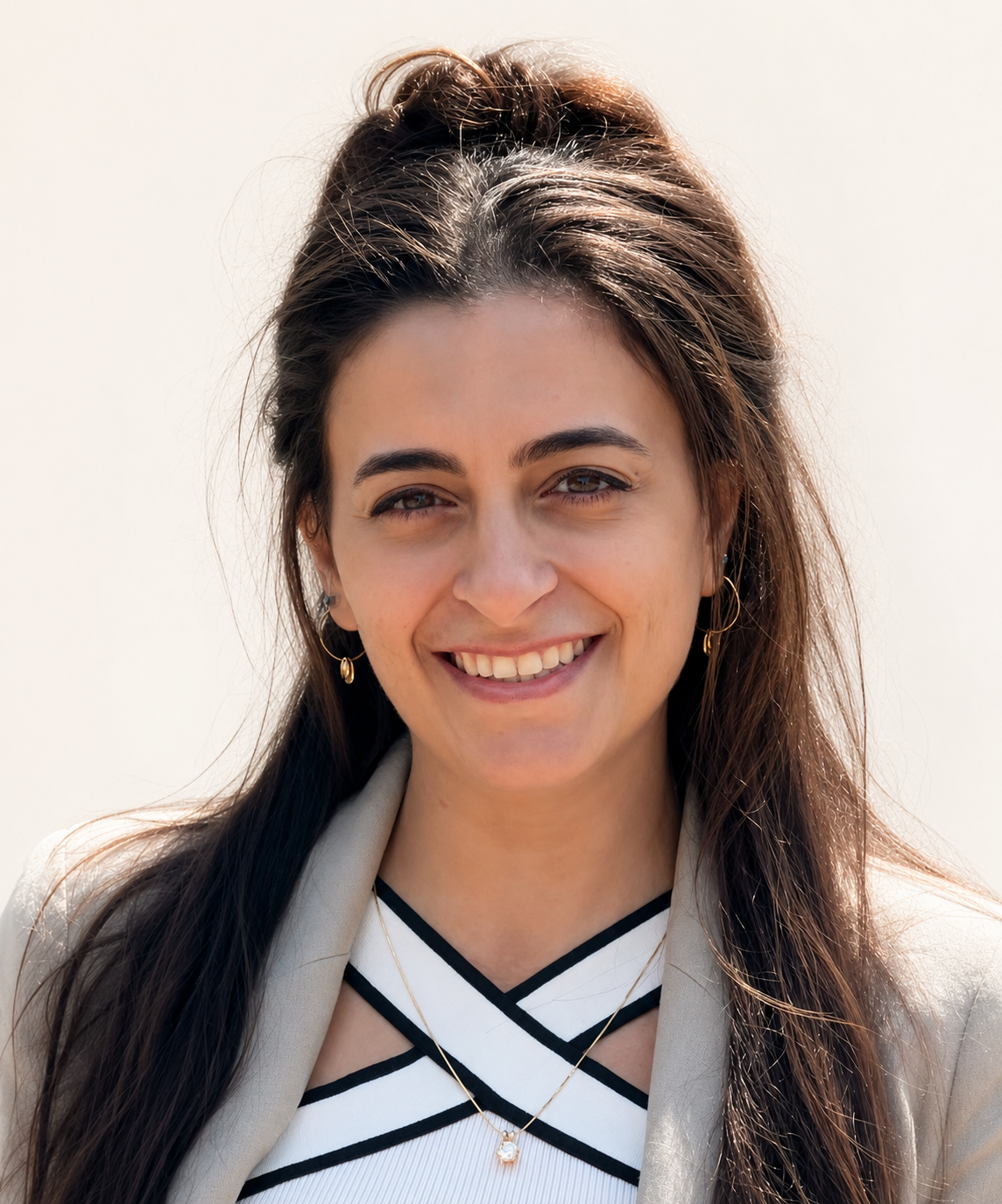
Moataz El Fegiery is program director at the Cairo Institute for Human Rights Studies and member of the Executive Committee of the Euro-Mediterranean Network for Human Rights. This article was translated from Arabic by Kevin Burnham.

About the Author

Moataz El Fegiery

Moataz El-Fegiery is an Egyptian academic and human rights activist. He is a founding member of the Egyptian Forum for Human Rights and a member of the executive committee for the Euro-Mediterranean Human Rights Network.

Moataz El Fegiery

Moataz El-Fegiery is an Egyptian academic and human rights activist. He is a founding member of the Egyptian Forum for Human Rights and a member of the executive committee for the Euro-Mediterranean Human Rights Network.

DemocracyNorth AfricaMiddle East

Carnegie does not take institutional positions on public policy issues; the views represented herein are those of the author(s) and do not necessarily reflect the views of Carnegie, its staff, or its trustees.

More Work from Sada

  • Commentary
    Sada
    Duqm at the Crossroads: Oman’s Strategic Port and Its Role in Vision 2040

    In a volatile Middle East, the Omani port of Duqm offers stability, neutrality, and opportunity. Could this hidden port become the ultimate safe harbor for global trade?

      Giorgio Cafiero, Samuel Ramani

  • Commentary
    Sada
    Sub-Saharan African Migrants in Morocco: Security Concerns and the Test of Human Rights

    Is Morocco’s migration policy protecting Sub-Saharan African migrants or managing them for political and security ends? This article unpacks the gaps, the risks, and the paths toward real rights-based integration.

      Soufiane Elgoumri

  • Commentary
    Sada
    A House Divided: How Internal Power Struggles Shape Iraq’s Foreign Policy

    Iraq’s foreign policy is being shaped by its own internal battles—fractured elites, competing militias, and a state struggling to speak with one voice. The article asks: How do these divisions affect Iraq’s ability to balance between the U.S. and Iran? Can Baghdad use its “good neighbor” approach to reduce regional tensions? And what will it take for Iraq to turn regional investments into real stability at home? It explores potential solutions, including strengthening state institutions, curbing rogue militias, improving governance, and using regional partnerships to address core economic and security weaknesses so Iraq can finally build a unified and sustainable foreign policy.

      Mike Fleet

  • Commentary
    Sada
    The Role of E-commerce in Empowering Women in Saudi Arabia: Assessing the Policy Potential

    How can Saudi Arabia turn its booming e-commerce sector into a real engine of economic empowerment for women amid persistent gaps in capital access, digital training, and workplace inclusion? This piece explores the policy fixes, from data-center integration to gender-responsive regulation, that could unlock women’s full potential in the kingdom’s digital economy.

      Hannan Hussain

  • Commentary
    Sada
    A War Fueled by Hate Speech: Sudan’s Fall into Fragmentation

    Hate speech has spread across Sudan and become a key factor in worsening the war between the army and the Rapid Support Forces. The article provides expert analysis and historical background to show how hateful rhetoric has fueled violence, justified atrocities, and weakened national unity, while also suggesting ways to counter it through justice, education, and promoting a culture of peace.

      Samar Sulaiman

Get more news and analysis from
Carnegie Endowment for International Peace
Carnegie global logo, stacked
1779 Massachusetts Avenue NWWashington, DC, 20036-2103Phone: 202 483 7600Fax: 202 483 1840
  • Research
  • Emissary
  • About
  • Experts
  • Donate
  • Programs
  • Events
  • Blogs
  • Podcasts
  • Contact
  • Annual Reports
  • Careers
  • Privacy
  • For Media
  • Government Resources
Get more news and analysis from
Carnegie Endowment for International Peace
© 2026 Carnegie Endowment for International Peace. All rights reserved.