• Research
  • Emissary
  • About
  • Experts
Carnegie Global logoCarnegie lettermark logo
DemocracyIran
  • Donate
{
  "authors": [
    "Valentine M. Moghadam"
  ],
  "type": "commentary",
  "blog": "Sada",
  "centerAffiliationAll": "",
  "centers": [
    "Carnegie Endowment for International Peace"
  ],
  "collections": [],
  "englishNewsletterAll": "",
  "nonEnglishNewsletterAll": "",
  "primaryCenter": "Carnegie Endowment for International Peace",
  "programAffiliation": "",
  "programs": [],
  "projects": [],
  "regions": [
    "Middle East",
    "North Africa"
  ],
  "topics": [
    "Political Reform"
  ]
}
Attribution logo
REQUIRED IMAGE

REQUIRED IMAGE

Commentary
Sada

The Gender of Democracy: The Link Between Women's Rights and Democratization in the Middle East

The empowerment of women and the establishment of gender equality are crucial to democracy. Democracy is as much about citizenship rights, participation and inclusion as it is about political parties, elections, and checks and balances. The quality of democracy is determined not only by the form of institutions, but also by the extent that different social groups participate in these institutions.

Link Copied
By Valentine M. Moghadam
Published on Aug 20, 2008
Sada

Blog

Sada

Sada is an online journal rooted in Carnegie’s Middle East Program that seeks to foster and enrich debate about key political, economic, and social issues in the Arab world and provides a venue for new and established voices to deliver reflective analysis on these issues.

Learn More

The empowerment of women and the establishment of gender equality are crucial to democracy. Democracy is as much about citizenship rights, participation and inclusion as it is about political parties, elections, and checks and balances. The quality of democracy is determined not only by the form of institutions, but also by the extent that different social groups participate in these institutions. In this regard, the gender of democracy matters profoundly. The absence of women from political life results in democratization with a male face or in a "male democracy"—an incomplete and very biased form of democracy.

In the United States and in European countries such as Britain, democratic rights initially were enjoyed exclusively by property-owning white males, and only extended to women and to the rest of the male population much later. In other parts of the world, the expansion of women's rights has gone hand-in-hand with the establishment of democracy, and women have played a key role in the transition from authoritarianism to democracy. The Latin American experience is a leading example, especially the cases of Argentina, Brazil, and Chile. In Turkey in the 1980s, when civil society was under tight military control, the new Turkish feminist movement helped to usher in democratization through campaigns for women's rights, participation, and personal freedom.

And today, across the Arab world and in Iran, modernizing women are principal agents of democratization and cultural change. Democratization and women's rights movements have emerged more or less in tandem. These processes are closely intertwined and indeed mutually dependent: the fate of democratization is bound to the fate of women's rights and vice versa. Separating the two is conceptually muddled as well as politically dangerous. This is because women can pay a high price when a democratic process is launched without strong institutions and without firmly-established principles of equality and the rights of all citizens. In such situations, a party based on patriarchal norms can come to power through free elections and then move to relegate women to second-class citizenship.

In fact, this was the Algerian feminists' nightmare. It is the reason why many educated Algerian women who wanted democratic change opposed the Islamic Salvation Front (FIS) after it burst on the scene in 1989 with its rhetoric of 'democracy' but with an agenda of rolling back women's rights. (The FIS's complicity in violence against women during the insurrection that occurred after the military nullified the 1991 elections cast further doubt on the FIS's dubious commitment to women's rights). To prevent "democracy without democrats," therefore, policies to protect women's rights and to increase women's participation in parties, in the judiciary, and in civil society are essential.

Many of the calls for reform emanating from Arab countries appear to be gender-blind and inattentive to issues of women's rights. These calls seem to be trapped in formalistic rhetoric without being conscious of the importance of the quality and gender of democracy. The recent reform manifesto of the Muslim Brotherhood in Egypt, for example, extols the laudable goals of forming political parties and establishing an independent judiciary, but it also calls for "conformity to Islamic Sharia," a goal that is incompatible with gender equality.

The U.S. government has made numerous and profound mistakes in its Middle East policy. U.S. efforts to promote women's rights and women's empowerment as part of a broader policy of democracy promotion, however, are not among them. More important, it behooves Middle Eastern intellectuals and activists working for political reform to understand the interconnections among women's rights, political rights, and democracy, and to acknowledge that a democratic system without women's human rights and gender equality is an inferior form of democracy.

Women may need democracy in order to flourish, but the converse is also true: democracy needs women if it is to be an inclusive, representative, and enduring system of government.

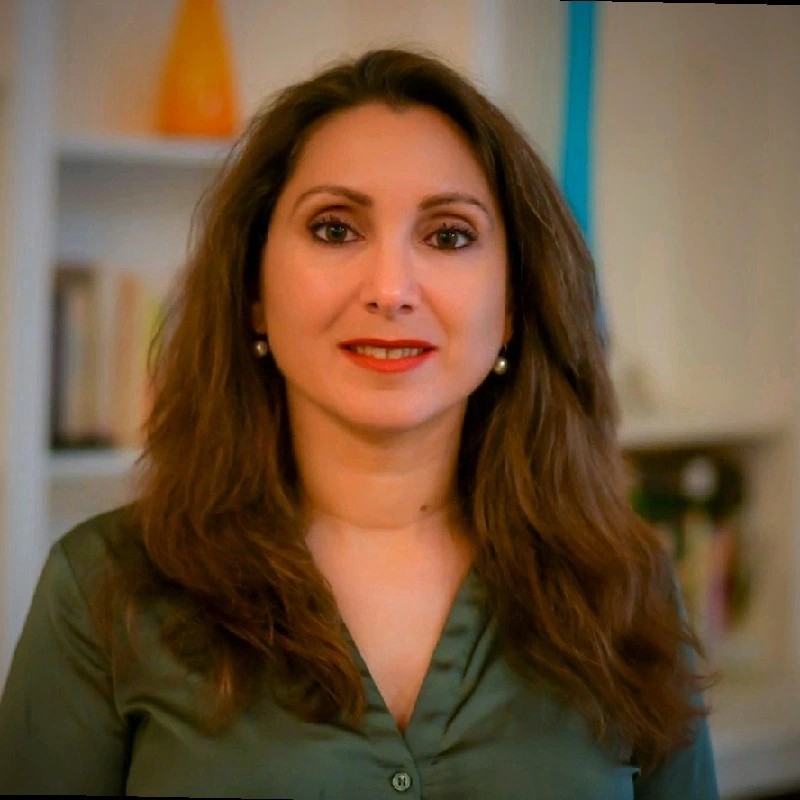
Valentine M. Moghadam is currently the chief of the section for Gender Equality and Development in the sector of Social and Human Sciences at UNESCO in Paris. She is on leave from her position as director of women's studies and professor of sociology at Illinois State University. Dr. Moghadam is the author of Modernizing Women: Gender and Social Change in the Middle East (Boulder, CO: Lynne Rienner Publishers, 2003, 2nd ed.).

About the Author

Valentine M. Moghadam

Valentine M. Moghadam
Political ReformMiddle EastNorth Africa

Carnegie does not take institutional positions on public policy issues; the views represented herein are those of the author(s) and do not necessarily reflect the views of Carnegie, its staff, or its trustees.

More Work from Sada

  • Commentary
    Sada
    Duqm at the Crossroads: Oman’s Strategic Port and Its Role in Vision 2040

    In a volatile Middle East, the Omani port of Duqm offers stability, neutrality, and opportunity. Could this hidden port become the ultimate safe harbor for global trade?

      Giorgio Cafiero, Samuel Ramani

  • Commentary
    Sada
    Sub-Saharan African Migrants in Morocco: Security Concerns and the Test of Human Rights

    Is Morocco’s migration policy protecting Sub-Saharan African migrants or managing them for political and security ends? This article unpacks the gaps, the risks, and the paths toward real rights-based integration.

      Soufiane Elgoumri

  • Commentary
    Sada
    A House Divided: How Internal Power Struggles Shape Iraq’s Foreign Policy

    Iraq’s foreign policy is being shaped by its own internal battles—fractured elites, competing militias, and a state struggling to speak with one voice. The article asks: How do these divisions affect Iraq’s ability to balance between the U.S. and Iran? Can Baghdad use its “good neighbor” approach to reduce regional tensions? And what will it take for Iraq to turn regional investments into real stability at home? It explores potential solutions, including strengthening state institutions, curbing rogue militias, improving governance, and using regional partnerships to address core economic and security weaknesses so Iraq can finally build a unified and sustainable foreign policy.

      Mike Fleet

  • Commentary
    Sada
    The Role of E-commerce in Empowering Women in Saudi Arabia: Assessing the Policy Potential

    How can Saudi Arabia turn its booming e-commerce sector into a real engine of economic empowerment for women amid persistent gaps in capital access, digital training, and workplace inclusion? This piece explores the policy fixes, from data-center integration to gender-responsive regulation, that could unlock women’s full potential in the kingdom’s digital economy.

      Hannan Hussain

  • Commentary
    Sada
    A War Fueled by Hate Speech: Sudan’s Fall into Fragmentation

    Hate speech has spread across Sudan and become a key factor in worsening the war between the army and the Rapid Support Forces. The article provides expert analysis and historical background to show how hateful rhetoric has fueled violence, justified atrocities, and weakened national unity, while also suggesting ways to counter it through justice, education, and promoting a culture of peace.

      Samar Sulaiman

Get more news and analysis from
Carnegie Endowment for International Peace
Carnegie global logo, stacked
1779 Massachusetts Avenue NWWashington, DC, 20036-2103Phone: 202 483 7600Fax: 202 483 1840
  • Research
  • Emissary
  • About
  • Experts
  • Donate
  • Programs
  • Events
  • Blogs
  • Podcasts
  • Contact
  • Annual Reports
  • Careers
  • Privacy
  • For Media
  • Government Resources
Get more news and analysis from
Carnegie Endowment for International Peace
© 2026 Carnegie Endowment for International Peace. All rights reserved.