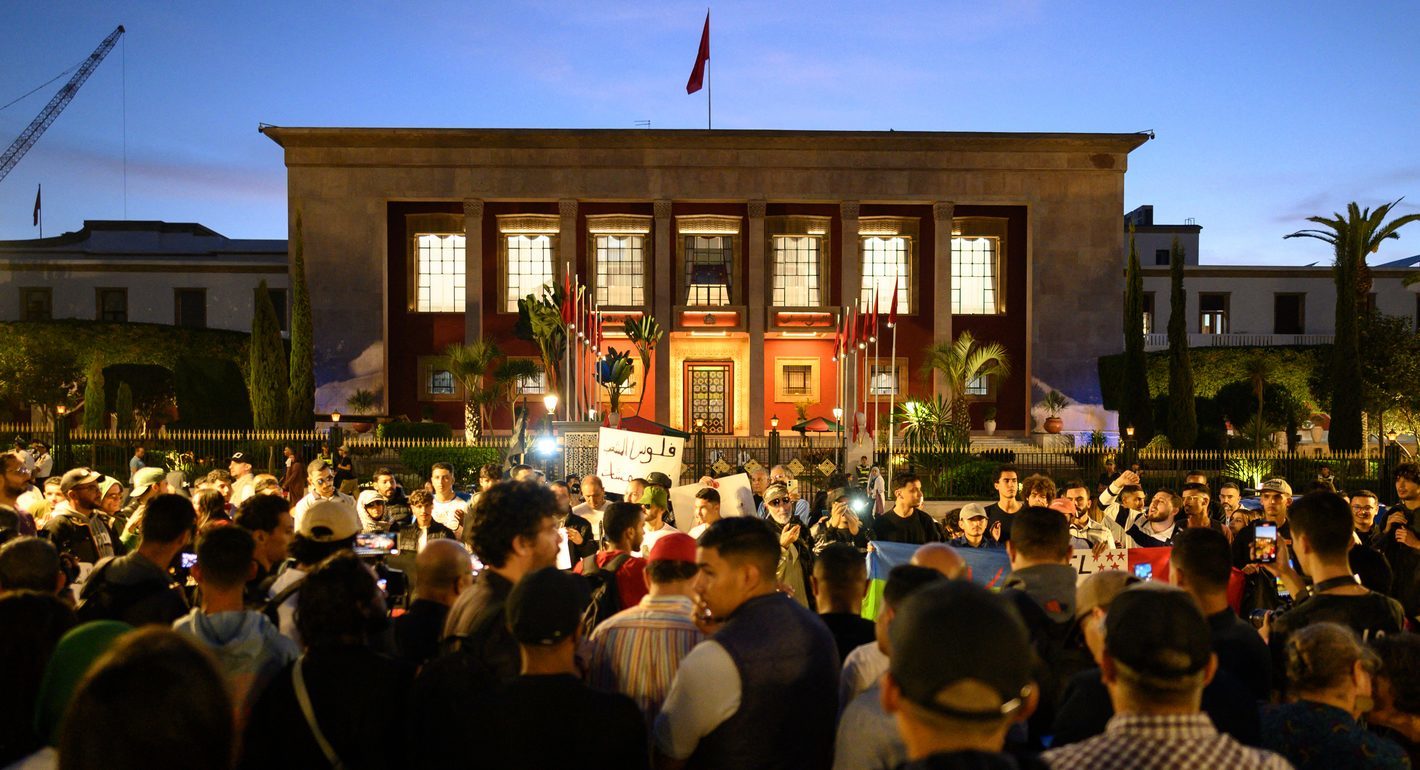
In recent weeks, Fatah and Hamas celebrated their movements’ founding in Gaza and the West Bank. It was the first time since the Hamas-Fatah rift of 2007 that thousands of Hamas supporters were allowed to rally in the West Bank in mid-December and thousands of Fatah supporters were able to show open support for Fatah in the Hamas stronghold of Gaza in early January. On Thursday, January 17, the leaderships of the two movements agreed to bridge their long divide, stating that they will form a provisional technocrat government and will begin to implement their reconciliation agreement of April 2011 by the end of this month. The public celebrations and the recent Hamas-Fatah talks led many political commentators as well as ordinary Palestinians to express optimism about the prospects for reconciliation. However, there are still seemingly insurmountable challenges standing in the way of reconciliation namely issues of security integration, consolidation of governing institutions, and internal opposition.
These points of contention might deem the January 2013 round of talks as ineffective as the many that preceded it. Since 2005 Fatah and Hamas have come to seven reconciliation agreements; none of which was fully implemented. Security integration has been a major sticking point. As part of the reconciliation talks, Palestinian Authority president Mahmoud Abbas requested the dissolution of all militias, among them al-Qassam brigade—Hamas’ military wing in Gaza—and their integration into a unified Palestinian security force under the control of the PA. Since the 2007 split, while Abbas has worked toward the dissolution and integration of militias in the West Bank, in Gaza Hamas has continued to strengthen and arm its al-Qassam brigade. Currently, Hamas leaders vehemently reject the dissolution of al-Qassam. Furthermore, Israel strongly opposes the participation of Hamas in the security apparatus of the West Bank. The conflicting military doctrines guiding the PA security force and Hamas’ military wing in Gaza pose an additional obstacle to integration.
And while the focus in Gaza is on the buildup of capacity for armed resistance against Israel, in the West Bank the PA’s security apparatus engages in close security coordination with Israel. In addition, factionalism is also apparent within the West Bank. For example, in a January 10 demonstration in Nablus of armed men affiliated with Fatah’s military wing, protestors decried their heavy handed treatment by elements in the PA security apparatus and expressed their objection to the integration of Hamas militias which, they said, will undermine Fatah’s dominance. The security issue, therefore, remains the main challenge to reconciliation and the two sides do not appear close to agreement on the matter. Bearing in mind that negotiations over the Fatah founding celebrations in Gaza took over a month and included moments of deep tension and mutual accusations, it is not clear how a resolution of the security issue is expected to take place in the short period of time set aside for the reconciliation process.
The consolidation of governing institutions is also likely to remain a point of contention. Six years of parallel governing have allowed Hamas to consolidate its power over governing institutions as well as economic activity in Gaza and Fatah to do the same in the West Bank. Integrating the parallel systems is not only a daunting task, it also has many opponents. In the aftermath of the 2007 rift, both Fatah and Hamas distributed jobs and favors to members and supporters of their respective movements at the expense of those affiliated with the rival movement. Those who have benefitted from this state of affairs fear a loss of position, influence and privilege that might accompany institutional integration.
If over the past few years it was Hamas that was concerned about possible electoral defeat, these days it is Fatah that has most to fear. An economic crisis in the West Bank, alongside no advancements on Abbas’ political project of negotiations with Israel and a perceived Hamas military victory in the recent war in Gaza all weaken Fatah’s electoral appeal. Hamas seems poised to win in presidential and legislative elections, if these were held any time soon. The latest poll by the Ramallah based Palestinian Center for Policy and Survey Research, conducted in December 2012, indicates that a Hamas electoral victory is likely. Exacerbating matters, several internal splits within Fatah, most prominently between Abbas and Mohammed Dahlan, further undermine its electoral prospects. In the 2012 West Bank local election, Fatah members suffered defeat in many contests at the hands of breakaway Fatah members running on independent lists. In addition, reconciliation will likely deepen rather than alleviate the PA’s economic crisis, as funding from Western donors might come to a halt if Hamas were included in a new government. Thus, political players and economic interests stand to lose in the event of reconciliation and are therefore likely to oppose it.
Not everyone in the Hamas and Fatah leaderships is on board with the reconciliation agenda. Some Hamas leaders question Abbas’ sincerity in the reconciliation talks, arguing that he is too reliant on Israel and the US. Within Fatah there are factions expressing a distrust of Hamas, arguing that its real intention is to seize control over the West Bank. The continued detention and, according to some reports, brutal treatment of Hamas political prisoners by the PA even as reconciliation talks are ongoing is another indication that the situation on the ground presents a stark contrast to the optimistic statements coming out of the reconciliation negotiation halls in Cairo.
It appears that obstacles are stacked up against this latest effort to arrive at Fatah-Hamas reconciliation. Power politics rather than ideological disagreements are at the heart of the Palestinian impasse. The “Prisoners Document” of 2006, officially titled the National Reconciliation Document, has already shown that Fatah and Hamas could in fact agree on a political roadmap for dealing with Israel. Rather, it is the roadmap for internal Palestinian power sharing that seems the most elusive.
Mahmoud Jaraba is a Ph.D. Candidate at the Departments of Political Science and Middle Eastern Studies at the Friedrich-Alexander University of Erlangen-Nuremberg, Germany. He is the author of Hamas: Tentative March toward Peace (Ramallah: Palestinian Center for Policy and Survey Research, 2010). Lihi Ben Shitrit is an Assistant Professor at the School of Public and International Affairs, University of Georgia, Athens.