

Commentary
Syria’s worsening drought is no longer a seasonal crisis. This report explains what climate change is doing to rainfall, groundwater, and food security, and what solutions experts say are still possible.
Milia Esper
{
  "authors": [
    "Kai Kverme"
  ],
  "type": "commentary",
  "blog": "Sada",
  "centerAffiliationAll": "",
  "centers": [
    "Carnegie Endowment for International Peace"
  ],
  "collections": [],
  "englishNewsletterAll": "",
  "nonEnglishNewsletterAll": "",
  "primaryCenter": "Carnegie Endowment for International Peace",
  "programAffiliation": "",
  "programs": [],
  "projects": [],
  "regions": [
    "Middle East",
    "Lebanon",
    "Levant",
    "Syria"
  ],
  "topics": [
    "Civil Society",
    "Religion"
  ]
}
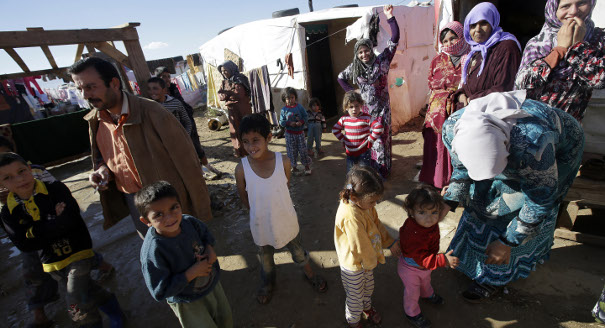
Source: Getty
The Syrian crisis has revealed the far-reaching and fundamental disagreements among Lebanon’s Christian parties.
The waves of Syrian refugees seeking a safe haven have further exacerbated the division among the Christian parties in Lebanon. On opposite sides of the issue are the Lebanese Forces Party (LFP) and the Kataeb Party—both members of the March 14 Alliance—and the Free Patriotic Movement (FPM). The LFP and the Kataeb are united by their opposition to the Syrian regime and opposition to the presence of Hizbullah as an armed force outside state control; the FPM is part of the March 8 Alliance and views the Syrian regime as a sustainer of minority rights and also supports Hizbullah’s role as a defense force against Israel. The refugee question has evoked fear among a section of Lebanese Christians, specifically the FPM, in that their presence will resemble that of the Palestinians, who came to constitute a viable political force in Lebanon and upset the delicate balance of power in the country’s sectarian based political system. The different stands toward the Syrian regime and the disagreements on how to address the issue of refugees have revealed the far-reaching and fundamental divisions among Lebanon’s Christian parties.
Gebran Bassil, son-in-law of Michel Aoun and currently the minister of energy, has called for the closure of the border with Syria in an effort to stop the flow of refugees entering the country. This has been opposed by most if not all other political parties and actors—President Michel Suleiman included—who have called on the international community to help Lebanon cope with the increasing number of refugees. The official number of registered Syrian refugees in Lebanon has exceeded two hundred thousand, but the real number could be considerably higher. Additionally, thousands of Palestinians have fled Syria; most of these have taken refuge in Palestinian camps in Lebanon, like Ain al-Hilweh in Saida. Prices for housing have skyrocketed, and even in Christian districts such as upper Metn, refugees are occupying abandoned buildings and along available space beside roads, selling whatever they can in order to get food on the table. While the influx has been noticeable in other parts of Lebanon for some time, it is a recent phenomenon in these areas. Groups of veiled women raise fears among locals that the demographic balance in these parts might change. Thus among Christian Lebanese there is considerable anxiety regarding the consequences of the tide of refugees, and plays into deep division of Christian communities over Syria.
Opposition to the Assad regime initially served as the main point of convergence for the different Christian parties in Lebanon—both during the civil war and during the post-war Syrian tutelage. Now, it remains one of the most divisive issues for these parties. Michel Aoun and his Free Patriotic Movement have voiced their support for the Syrian regime, describing them as the "guarantors" of Christian and other minorities’ rights and as a bulwark against an encroaching Sunni-Islamism. In their view, this is consistent with an agenda they claim to have followed from the very outset of the civil war: to resist a Saudi-American “scheme” of transforming Lebanon into a Sunni-dominated republic where Palestinian refugees will eventually be naturalized.
On the other side of the political divide, the picture is more complex. The Kataeb Party has supported the Lebanese government’s policy of disassociation, and pointed at the possibility of dangerous repercussions should Syria’s conflict spread to Lebanon. From the start of the conflict in Syria, Kataeb’s fellow March 14 ally, the Lebanese Forces Party (LFP), has voiced full support for the uprising. The degree of support might be illustrated by the reaction when the Syrian branch of the Muslim Brotherhood—a key component of the Syrian opposition—launched their new policy document last fall, and LFP head Samir Geagea praised it as a “democratic expression.” While no supporter of Islamism or a Sunni-dominated Lebanon—and in many ways it shares the same initial agenda as Aoun and the FPM—the LFP’s reading of the Christian division differs fundamentally from that of the FPM. An intellectual close to the 14 March Movement, Shaoul Melhem, asserted in a private interview1 recently: “For years we raised the slogan of ‘Lebanon First,’ and now they adopted it [hinting at the Lebanon First parliamentarian block of Sunni-dominated Future Movement]. Should we tell them we don’t want to?"
Adding to (or perhaps reflecting) this division is the position taken by the Maronite Church. During the reign of the former Patriarch Nasrallah Boutros Sfeir, the hierarchy took a clear position against the Syrian tutelage which followed the civil war. On the eve of the parliamentary elections in 2009, in an interview with al-Massira magazine, the patriarch issued a stern warning not to vote for parties allied to Syria—a direct criticism of the FPM and Aoun. The election of Beshara Boutros al-Rai as the new patriarch in 2011 must be said to represent a shift for the policies of the Church. Even those who had worked closely with al-Rai in the years before his election were surprised by the words he choose to characterize the Syrian system: that it was the best of the Arab regimes for the Christians, and by his warnings of a future Syria dominated by the Muslim Brotherhood. Some lay activists argue that it was still early to judge the new patriarch (though clearly distanced themselves from his statements), and that what he did was to try to bring about a balance after the years of Sfeir’s anti-Syrian push. But while relations between the church and Aoun have certainly warmed, tensions between the patriarch and the LFP have deteriorated considerably—thus upholding the division, rather than bringing about balance.
For both sides, the conflict in Syria is a challenge. Aoun seems to be manipulating widespread Christian anxiety of an Islamist-dominated Syria to promote his view that Lebanese Christians are far better off with the continuation of the Assad regime. But the problem for him is that Syrian interference in Lebanese affairs after the civil war is still a recent experience, and few, if any, would want a return to the marginalization of Christians which characterized this period. Additionally, there is a common realization that it is highly problematic to be closely associated with such a brutal regime. And while Geagea has echoed this view, his praise for the Muslim Brotherhood in Syria is definitely not an easy position to adopt.
Both sides are preparing for a showdown in June—when the next parliamentarian elections are set to take place. Irrespective of the profound uncertainty to whether elections will take place at all (and under which election laws), there seems to be a general agreement that Syria, more than anything else, will take center stage during the upcoming campaign.
Kai Kverme is a researcher and project coordinator at the Center for Islamic and Middle East Studies at the University of Oslo, Norway.
Kai Kverme
Carnegie does not take institutional positions on public policy issues; the views represented herein are those of the author(s) and do not necessarily reflect the views of Carnegie, its staff, or its trustees.
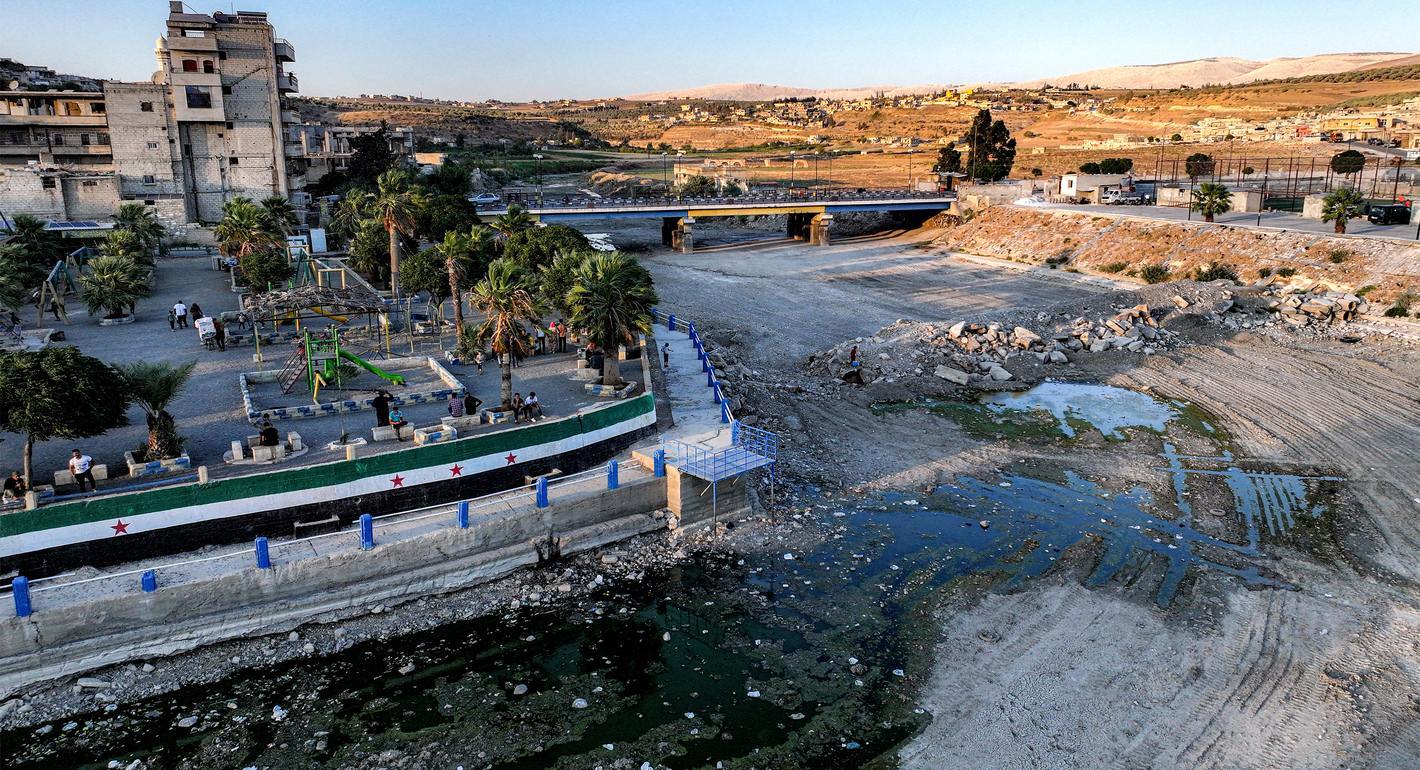
Syria’s worsening drought is no longer a seasonal crisis. This report explains what climate change is doing to rainfall, groundwater, and food security, and what solutions experts say are still possible.
Milia Esper
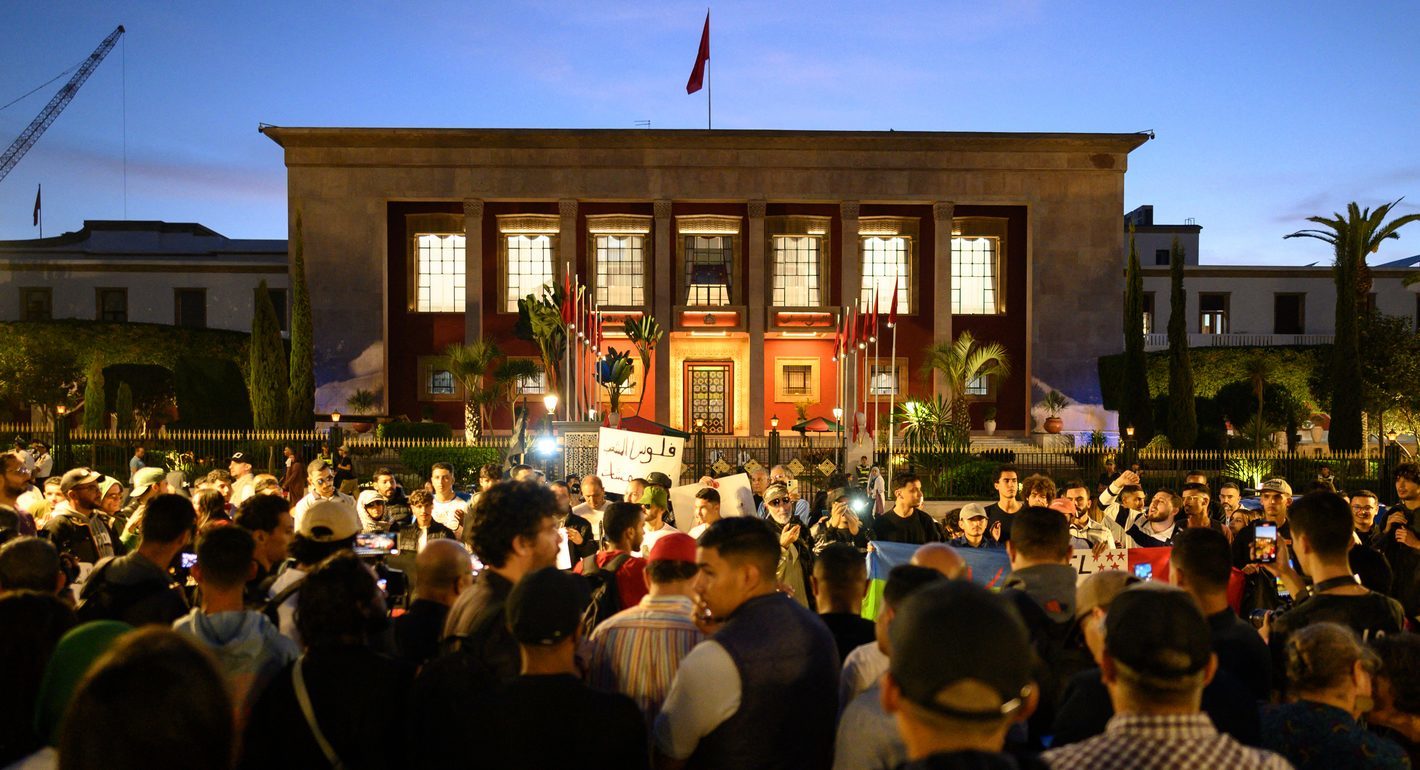
From anime heroes to online gaming communities, Morocco’s Gen Z is building a new protest culture. What does this digital imagination reveal about youth politics, and how should institutions respond?
Abdelilah Farah
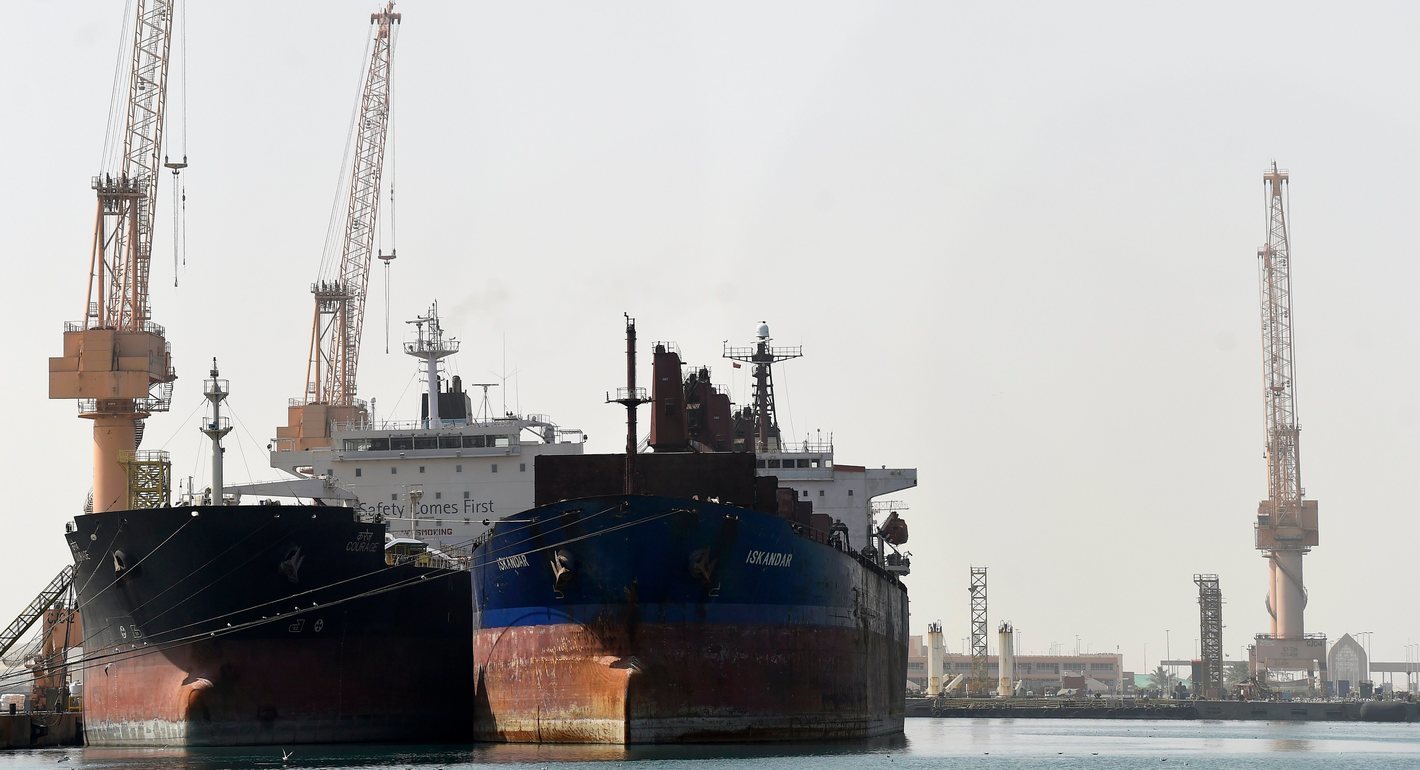
In a volatile Middle East, the Omani port of Duqm offers stability, neutrality, and opportunity. Could this hidden port become the ultimate safe harbor for global trade?
Giorgio Cafiero, Samuel Ramani
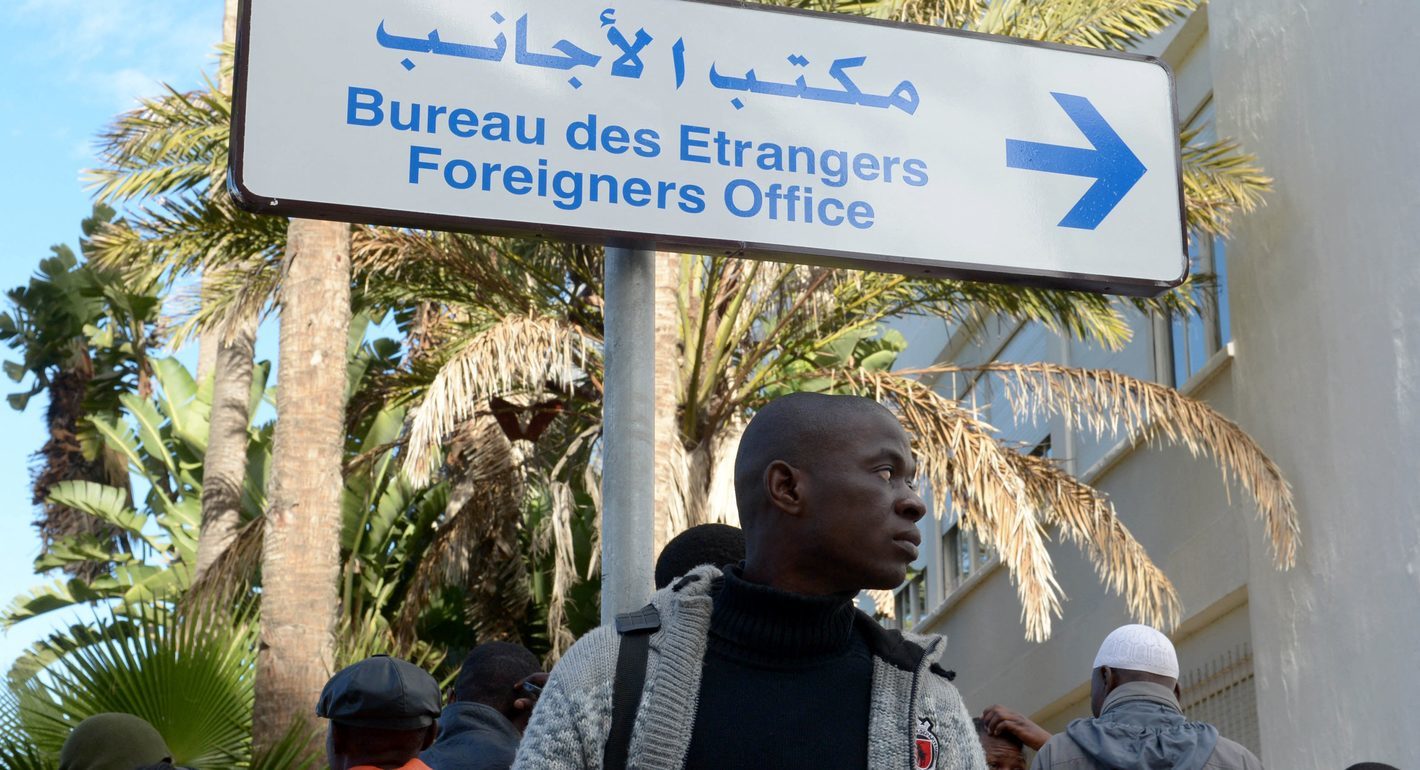
Is Morocco’s migration policy protecting Sub-Saharan African migrants or managing them for political and security ends? This article unpacks the gaps, the risks, and the paths toward real rights-based integration.
Soufiane Elgoumri
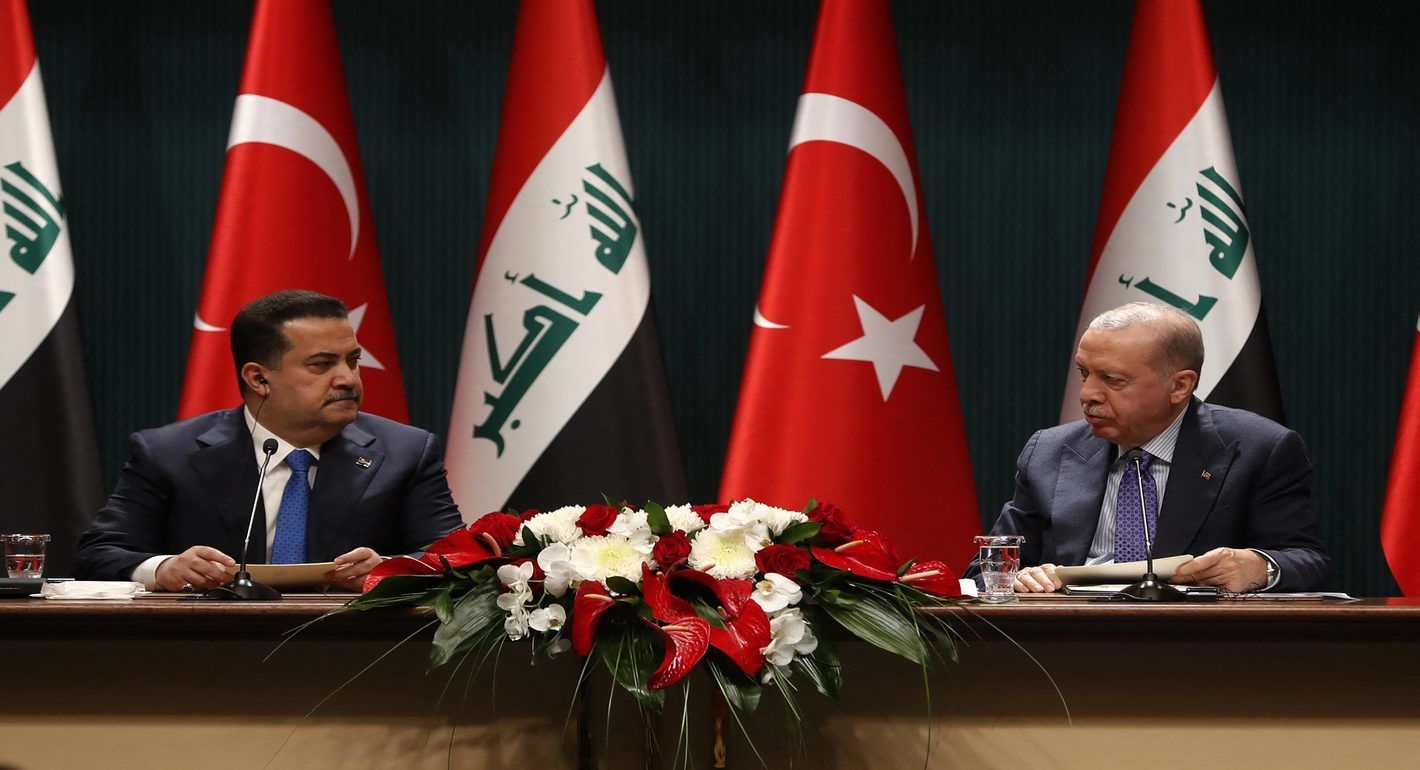
Iraq’s foreign policy is being shaped by its own internal battles—fractured elites, competing militias, and a state struggling to speak with one voice. The article asks: How do these divisions affect Iraq’s ability to balance between the U.S. and Iran? Can Baghdad use its “good neighbor” approach to reduce regional tensions? And what will it take for Iraq to turn regional investments into real stability at home? It explores potential solutions, including strengthening state institutions, curbing rogue militias, improving governance, and using regional partnerships to address core economic and security weaknesses so Iraq can finally build a unified and sustainable foreign policy.
Mike Fleet