On Sunday, September 8, members of the Southern Separatist Movement (Hirak) returned to Yemen’s National Dialogue Conference (NDC) following a month-long boycott. Their return—following a series of meetings with Jamal Benomar, the UN Envoy to Yemen, about the possibility of a separate north-south dialogue conference to be held after the NDC and to involve other separatist factions (not all of whom are party to the dialogue)—shows that Yemen’s NDC has overcome its latest hurdle. The dialogue’s success is still far from assured; its failure, however, is all but guaranteed to plunge the country into war.
As of Monday, all NDC sessions have resumed their work, with Hirak in attendance. Hirak, which had boycotted the conference in an attempt to guarantee their legal demands against the dominance of northern forces, had no viable option but to return to the conference, said Munir Mawari, a Washington DC-based Yemeni writer and political analyst: "No party at all would dare to stand with Hirak, in fear of international threats.” The movement came under pressure from the international community to reengage: Mohammed Ali Ahmed, the head of the National Southern Conference (representing the separatist groups involved in the NDC), returned from London to Sanaa last week after pressure from British officials. Before leaving the UK, Mohammed Ali Ahmed said in a letter to President Abd Rabu Mansour Hadi during the boycott that they now want to enter into direct negotiations with the North, to be held in a neutral country, aiming at the successful formation of a federal state. He told reporters, "We returned to the dialogue to restore the independent state of the south." Although he and the other separatists were able to present this promise of continued dialogue as the reason for ending their boycott, in fact the existing domestic and international pressures on them to return to the negotiating table would have brought them back anyway. Furthermore, those southerners who most fiercely advocate a separate state were not involved in the NDC nor have they supported it—the petition to start separate negotiations for the issue may have been a way for southern NDC attendees to appease those southerners who favor separation over dialogue.
The 565 participants in the six-month-long NDC, supposed to end on September 18, were divided into nine commissions to cover the nine main issues of the dialogue. During Hirak’s boycott, at least half of the NDC’s representatives were absent. Sessions were only operating nominally, making little progress on the key issues. Now that Hirak has ended their boycott, little time is left for the conference to finish discussing these nine issues. Bilqis Lahabi, the deputy chairwoman of the group on the southern issue, indicated that there is a chance the NDC’s mandate could be extended: "I think we may extend one month at least only for finishing the three most important and controversial issues: Hirak, Saada, and building up the state."
The issue of US drone strikes in Yemen has further impaired the already complicated dialogue process. Over the period of July 28 to August 10, 2013, Yemen witnessed an unprecedented series of drone attacks on moving cars suspected of carrying al-Qaeda members, resulting in 42 deaths, including those of Saudi nationals. Several of these attacks targeted Saudi national Ibrahim al-Rubaish, the deputy head of al-Qaeda in the Arabian Peninsula (AQAP), who had topped the Yemeni government’s list of 25 terrorists responsible for security and military assassinations and terror threats. If his death is confirmed, this could be a significant success for these recent drone attacks.
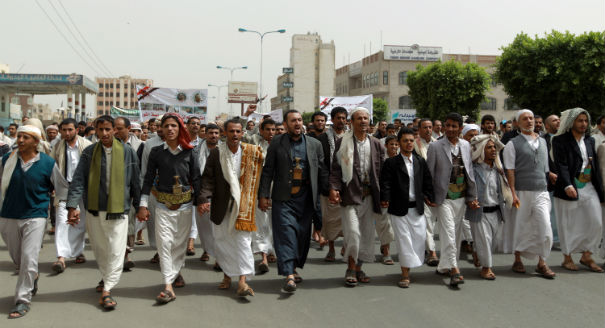
In the meantime, these attacks have not only increased sympathy for al-Qaeda—which always benefits from these strikes to recruit more—but also generated opposition to the president and his government for allowing the U.S. to kill Yemenis and violate Yemeni sovereignty. For instance, on August 18, 2013, armed tribesmen from Ma’arib province organized a demonstration against drones, holding al-Qaeda flags. Earlier that week, members of Ansar Allah, the military branch of the Houthi movement, held a similar anti-drone demonstration in Sanaa, chanting, “Death to America, death to Israel, a curse on the Jews, and victory to Islam.” The issue of drones has been used by separatists as another excuse to boycott, and NDC members have used strong anti-drone rhetoric (they’ve also proposed passing a law to ban drones, an idea that’s unlikely to go far with the current government) to absorb popular anger about the issue.
Ultimately, average Yemenis do not expect much from the dialogue, but they feel that if NDC members fail, the alternative will only be a return to pre-transition armed conflicts and insecurity. "We want the dialogue people to finish their work, we do not want them to return to wars, this is all what we want," said Mohammed Ameen, a fruit vendor. "I am not expecting them to improve my living at all, [but] war is even worse." However, outside the possibility of an extension, a successful end to the dialogue at this point could mean at least a partial resolution to the issues previously outlined. As the dialogue winds down, the next hurdle for Yemen is likely to be the issue of presidential elections and whether Hadi’s mandate should be extended. This issue is sure to put the two main political players at odds again, with the Islamist Islah Party favoring an extension of Hadi’s term while the ruling General People’s Congress opposes it.
Nasser Arrabyee is a Yemeni journalist based in Sanaa.