

Commentary
From anime heroes to online gaming communities, Morocco’s Gen Z is building a new protest culture. What does this digital imagination reveal about youth politics, and how should institutions respond?
Abdelilah Farah
{
  "authors": [
    "Yussef Auf"
  ],
  "type": "commentary",
  "blog": "Sada",
  "centerAffiliationAll": "",
  "centers": [
    "Carnegie Endowment for International Peace"
  ],
  "collections": [],
  "englishNewsletterAll": "",
  "nonEnglishNewsletterAll": "",
  "primaryCenter": "Carnegie Endowment for International Peace",
  "programAffiliation": "",
  "programs": [],
  "projects": [],
  "regions": [
    "North Africa",
    "Egypt"
  ],
  "topics": [
    "Political Reform",
    "Democracy"
  ]
}
Source: Getty
Egyptians’ growing distrust of the judiciary highlights the need for a detailed, efficient, and independent transitional justice system.
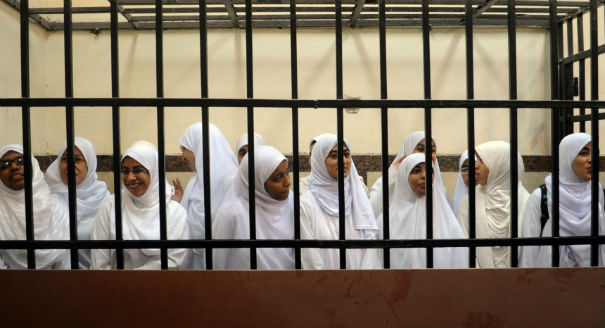
Legal experts and casual observers in Egypt were stunned on November 27 when a misdemeanor court in Alexandria found 21 young Egyptian women guilty and sentenced fourteen of them to eleven years in jail. The remaining seven girls (all minors) are to be held in a juvenile correctional facility until further notice. The young women’s crime was gathering in an early morning protest movement, called “7am,” against the overthrow of former president Mohamed Morsi; they were arrested on October 31 on four different charges, including illegal assembly, obstructing roads, and the destruction of public property. The reaction to the ruling exposed Egyptians’ distrust of their judicial system—particularly in light of the judiciary’s perceived political role after the removal of president Morsi. The trial and ruling demonstrate the dire need for a viable transitional justice in Egypt.
The trial triggered condemnations from many prominent figures, such as the left-wing former presidential candidate Hamdeen Sabahi, who called for a presidential pardon. The interim president’s aides have responded with official statements saying that the president would exercise his power to grant amnesty, but that he was legally unable to do so until the judicial ruling becomes final.
Much of the reason for the public outrage is the harsh sentences for 21 young women on relatively inconsequential charges—which particularly contrast with the light sentences and acquittals of former Mubarak officials and police officers tried for killing demonstrators over the past two and a half years. Those that were found guilty received very little jail time—most infamously, the police officer known as the “eye sniper,” who targeted protesters’ eyes with birdshot, will serve only three years in prison.
The ruling provides an ideal opportunity to think through the transitional justice system needed for Egypt. Since the overthrow of former president Hosni Mubarak’s regime in February 2011, the popular demand for a transitional justice system has been constant. However, the three subsequent regimes (the Supreme Council of the Armed Forces led by General Tantawi, then the Muslim Brotherhood’s Mohammed Morsi, and finally the regime in power since July 3) have failed to respond. Virtually the only progress has been the appointment of a minister of transitional justice under the current government, but this new position so far has nothing but a title. Furthermore, Article 241 in the draft constitution, completed on December 3, requires the next parliament to pass a transitional justice law. The very fact that the constitution would only now necessitate a transitional justice law illustrates how poorly the successive governments have performed in tackling the issue of transitional justice—whether intentionally or not—because Egypt nearly three years after the January 25 Revolution is still waiting for its grievances to be resolved adequately.
The demands for transitional justice have consistently been framed in very broad terms, without a clear detailed vision of how they would be applied in Egypt’s specific situation. Transitional justice, after all, is not a unified model, and any proposed vision of transitional justice, especially as concerns the trials, needs to start with the creation of a transitional justice supreme commission that has total financial and administrative autonomy and has authority over all matters related to transitional justice. The function of this commission would be to work on the judicial and non-judicial procedures relating to revealing, documenting, and prosecuting crimes and human rights violations committed in Egypt from 1981 (when the Mubarak regime came to power) to the present, in order to right the wrongs done to victims. It would also reform government institutions, build up trust in them, and lay the groundwork for national reconciliation.
There are several mechanisms through which the aforementioned goals could be achieved, including for instance establishing sub-committees with full authority to work on various aspects of the commission's function—such committees could be formed to document violations, discuss accountability and amnesty, etc. The most crucial component of a Transitional Justice Commission, however, would be a court with sweeping powers to ensure that the trials proceed quickly, efficiently, and with judicial autonomy from both the executive branch and the normal judicial system, given the latter’s serious shortcomings in effectiveness. The power to investigate violations and crimes would be granted to judges who are answerable to the Transitional Justice Courts, avoiding the public prosecutor as part of the normal judiciary.
The hoped-for democratization and progress in social and economic development in Egypt will not happen until the grievances of the recent past and present are resolved for good. Only under a system of accountability, efficiency, and equality will Egypt be able to move forward with its transition.
Yussef Auf is an Egyptian judge and a non-resident fellow at the Atlantic Council’s Rafik Hariri Middle East Center.
Yussef Auf
Carnegie does not take institutional positions on public policy issues; the views represented herein are those of the author(s) and do not necessarily reflect the views of Carnegie, its staff, or its trustees.

From anime heroes to online gaming communities, Morocco’s Gen Z is building a new protest culture. What does this digital imagination reveal about youth politics, and how should institutions respond?
Abdelilah Farah
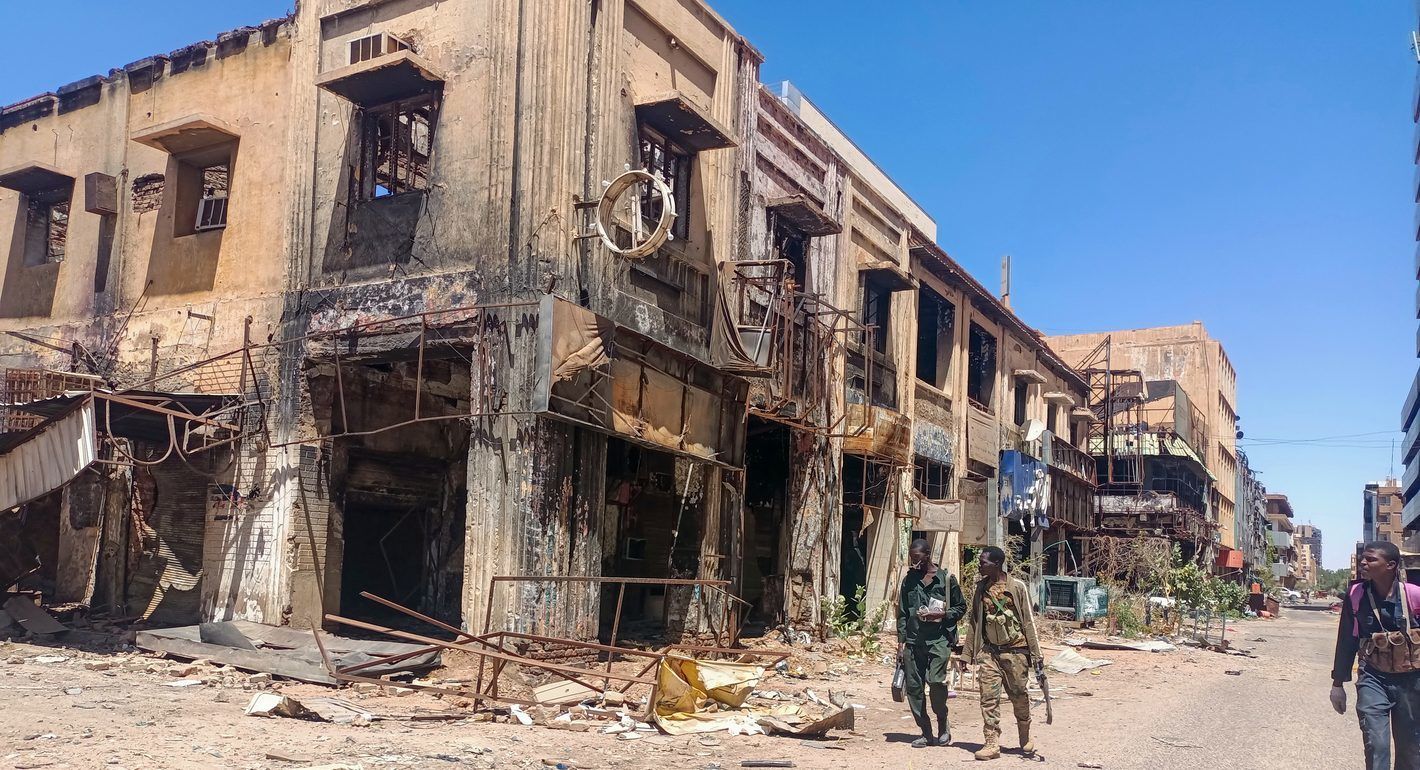
Hate speech has spread across Sudan and become a key factor in worsening the war between the army and the Rapid Support Forces. The article provides expert analysis and historical background to show how hateful rhetoric has fueled violence, justified atrocities, and weakened national unity, while also suggesting ways to counter it through justice, education, and promoting a culture of peace.
Samar Sulaiman

Kuwait’s government has repeatedly launched ambitious reforms under Kuwait Vision 2035, yet bureaucratic inefficiency, siloed institutions, and weak feedback mechanisms continue to stall progress. Adopting government analytics—real-time monitoring and evidence-based decision-making—can transform reform from repetitive announcements into measurable outcomes.
Dalal A. Marafie

The chaos of street naming in Sana’a reflects the deep weakness of the Yemeni state and its failure to establish a unified urban identity, leaving residents to rely on informal, oral naming systems rooted in collective memory. This urban disorder is not merely a logistical problem but a symbolic struggle between state authority and local community identity.
Sarah Al-Kbat
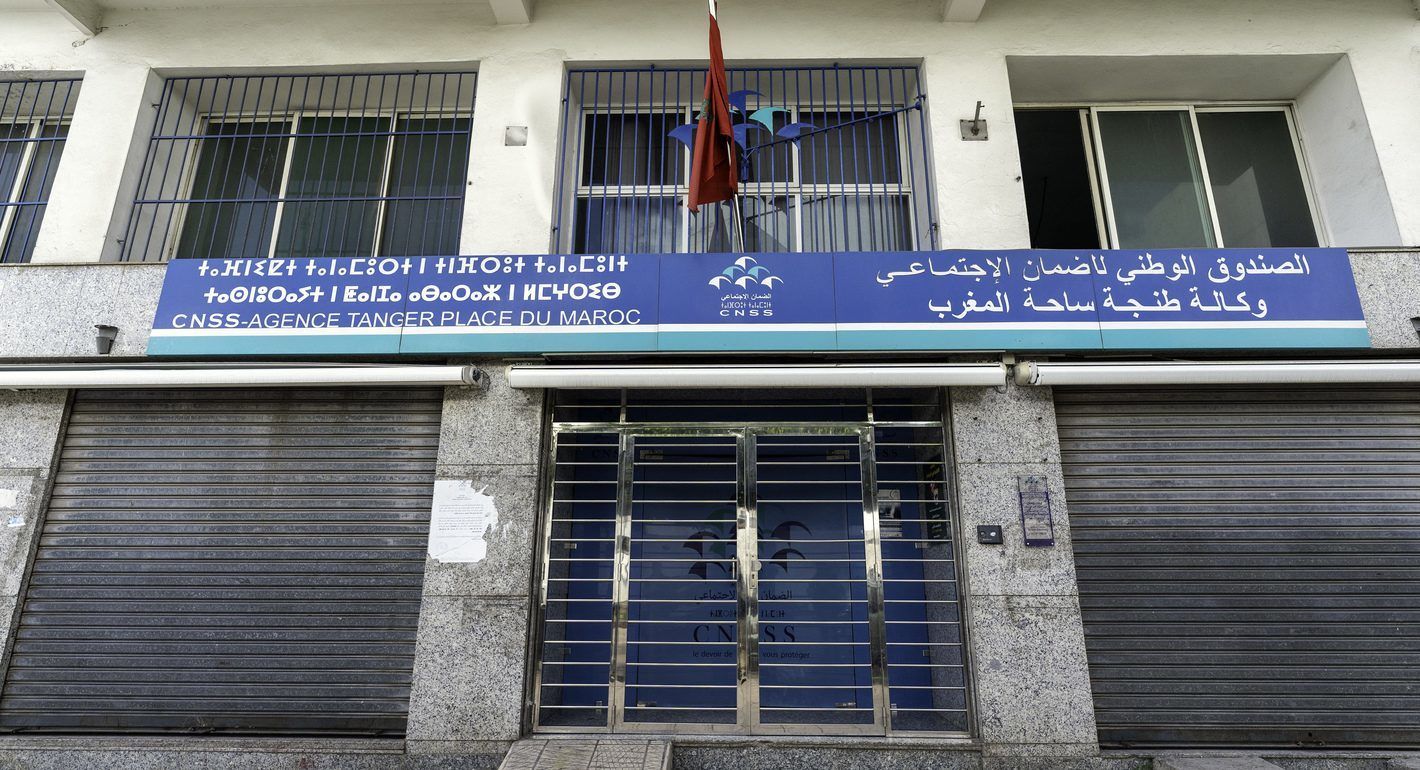
While Morocco’s shift to a digitized social targeting system improves efficiency and coordination in social programs, it also poses risks of exclusion and reinforces austerity policies. The new system uses algorithms based on socioeconomic data to determine eligibility for benefits like cash transfers and health insurance. However, due to technical flaws, digital inequality, and rigid criteria, many vulnerable families are unfairly excluded.
Abderrafie Zaanoun