

Commentary
Syria's transition promised a fresh start. But are old habits of power making a comeback? This analysis looks at the warning signs and what it will take to build a more accountable state.
Sima Beitinjaneh
{
  "authors": [
    "Sharif Abdel Kouddous"
  ],
  "type": "commentary",
  "blog": "Sada",
  "centerAffiliationAll": "",
  "centers": [
    "Carnegie Endowment for International Peace"
  ],
  "collections": [
    "Arab Awakening"
  ],
  "englishNewsletterAll": "",
  "nonEnglishNewsletterAll": "",
  "primaryCenter": "Carnegie Endowment for International Peace",
  "programAffiliation": "",
  "programs": [],
  "projects": [],
  "regions": [
    "North Africa",
    "Egypt"
  ],
  "topics": [
    "Democracy",
    "Security",
    "Military",
    "Civil Society"
  ]
}
Source: Getty
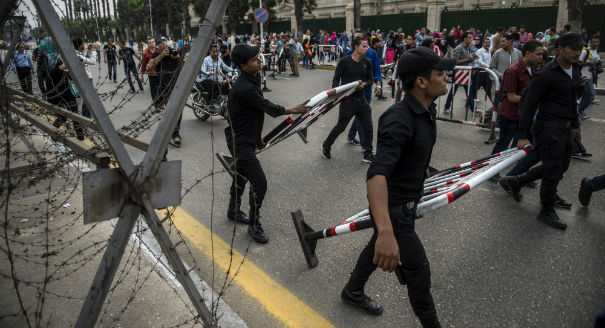
President Abdel Fattah al-Sisi’s steps to quash dissent exceed the Mubarak era’s in scope and intensity.
In a bid to stamp out any last vestiges of revolutionary fervor and hold at bay the threat of collective empowerment, the Sisi regime has taken concrete steps to quash dissent, silence opposition voices, and consolidate control over the body politic. Under the guise of a war on terror and restoring “stability,” President Abdel Fattah al-Sisi has enshrined unprecedented authoritarian measures into law. Over the past few months, authorities have imposed a series of decrees and steps designed to expand the security state, increasing its reach and powers across Egyptian society, from university campuses and religious institutions to civil society and the Internet.
The government has frequently claimed the raft of security measures is necessary to combat terrorism, yet militant violence has only increased. A low-level insurgency in the Sinai has continued unabated, with attacks expanding to Cairo and the Nile Delta. Hundreds of police and army soldiers have been killed over the past year. Most recently, on October 24, attacks in North Sinai left over 30 security personnel dead in the worst anti-state violence since the ouster of Mohamed Morsi in July 2013. The government moved swiftly to declare a three-month state of emergency in parts of North Sinai along with a 5 p.m.-7 a.m. curfew.
Sisi also issued a law that formalizes the role of the army in domestic security and expands the jurisdiction of military courts. The legislation, signed on October 27, allows the military to assist police in guarding public facilities, including power stations, gas pipelines, railway stations, roads, and bridges. The law would allow the use of military tribunals to try civilians accused of offenses such as blocking roads or attacking public property, charges commonly handed down to street protesters. The measures are just the latest in a series of steps the Sisi regime has taken to grant state institutions wide, unchecked powers to tighten their grip on the country.
THE UNIVERSITIES
In one of his first acts in office, Sisi issued a presidential decree in June that authorizes him to directly appoint university presidents, reversing the practice begun after the 2011 overthrow of Hosni Mubarak that allowed professors and deans to choose their own leadership through elections. University presidents have since been given new powers to expel students or fire professors suspected of “crimes that disturb the educational process” without independent review. At Cairo University, one of the country’s top academic institutions, all partisan political activity has been banned. Meanwhile a court in February overturned a 2010 ruling that barred police from entering campuses.
Following last year’s ouster of Morsi and the brutal dispersal by security forces of two sit-ins held by his supporters, university campuses emerged as one of the last bastions of mass dissent against the military-backed regime. Protests by university students last year were met with a harsh crackdown by police that left up to sixteen students dead, 1,000 arrested, and 500 expelled or suspended. This year, authorities delayed the start of the academic year to mid-October to put new security measures in place. Steel walls, metal detectors, and surveillance cameras were set up at several universities, and the government hired the private security firm Falcon to screen students at the entrances of twelve universities, creating long lines at campus gates. On the first day of the academic year, security forces arrested over 70 students in predawn raids on their homes in a preemptive crackdown. The ensuing protests that erupted on campus were met with police firing tear gas and birdshot. Now, two weeks into the academic year, one student at Alexandria University, Omar al-Sharif, has died from injuries caused by security officials, and about another 200 student protesters have been rounded up.
MORE POLICING TO COME
The reinforcement of the already vast security state has not stopped at academia. The government is currently taking steps to create a new division within Egypt’s police force known ominously as the “Community Police.” On October 18, the state council passed a law supporting a proposal by the Interior Ministry that would allow civilians to join this new police division, and grant them arrest powers after an eighteen-month training period. Specific details on the role of the community police are scant, but the move may be an attempt to formalize the existing relationship between the security forces and their large network of civilian informants. According to Nabil al-Shahed, a security expert who originally proposed the idea of a community police force, the division would “form groups of ‘elites’ in every neighborhood and hold periodic meetings in which they receive reports on ‘suspicious’ activity in the area and the ‘strangers’ showing up there, in order to create a database for the police.”
Meanwhile, NGOs in Egypt are bracing for a crackdown next month. A looming November 10 deadline requires all civil society groups to officially register under a restrictive Mubarak-era law that “empowers the government to shut down any group virtually at will,” according to Human Rights Watch. The government is demanding that long-established groups currently registered as law firms or nonprofit companies—many of which have been instrumental in documenting human rights abuses and corruption—register as associations under Law 84/2002 or risk criminal penalties of up to one year in prison for unauthorized activities. Homeland Security has reportedly identified at least 100 organizations working in the field of human rights that have not been properly registered.
An even more restrictive law is on the horizon. New draft legislation proposed by the government gives state authorities and security agencies complete authority over all activities of NGOs, including the ability to veto their board decisions, and it imposes harsher penalties of up to three years in prison for such infractions as operating without a license or receiving foreign funding without prior permission. What is more, last month Sisi signed an amendment to Article 78 of the penal code so that anyone charged with receiving money from a foreign country or organization could face a lifetime prison sentence. The vague language of the amendment gives authorities broad leeway for interpretation.
CLAMPDOWN ON RELIGIOUS SPHERE AND ON THE MEDIA
Egyptian authorities are also taking unprecedented steps to tighten control on mosques across the country. On October 19, the Justice Ministry approved a measure allowing the Ministry of Religious Endowments to grant its inspectors the right to arrest anyone who violates restrictive new laws and regulations inside mosques. In April, the government announced it had barred 12,000 imams from delivering sermons. The Religious Endowments Ministry has set strict new guidelines that it says are aimed at combating extremism and political sloganeering but which also serve to control the message from the pulpit and prevent any challenge to authorities.
Journalists and media outlets also continue to come under fire from the government. This month, the editor-in-chief and a reporter at Egypt’s largest private newspaper, Al-Masry Al-Youm (a largely pro-regime publication) were hauled before state security prosecutors and interrogated for fourteen hours after the paper declared it would publish investigation records into alleged fraud in the 2012 presidential election. They were released on bail and face charges that include spreading false information, stealing interrogation records, and disturbing the peace. This came on the heels of the government halting the publication of Al-Masry Al-Youm’s October 1 print issue on the grounds that it included a sensitive interview with an intelligence agent. Meanwhile, at least eleven journalists are behind bars in Egypt, including three journalists with Al Jazeera English who were sentenced to between seven and ten years in prison on terrorism charges.
The crackdown comes despite a media landscape already subservient to the state. In the wake of the October 24 Sinai attacks, the heads of seventeen state and privately owned daily newspapers signed a statement supporting the government in its war on terror and pledging not to criticize state institutions. “We reiterate our rejection of attempts to doubt state institutions or insult the army or police or judiciary in a way that would reflect negatively on these institutions’ performance,” they wrote. Meanwhile, two high-profile talk show hosts were pulled off the air within the space a week. Talk show host Wael al-Ibrashy had his episode abruptly cut mid-show by privately-owned Dream TV after he criticized several ministers. Privately-owned Al-Nahar station banned television host Mahmoud Saad from his nightly show, replacing him with another anchor after Saad’s guest referred to Egypt's military defeat in 1967.
ONLINE TRACKING
Alongside traditional media, the government is also looking to monitor the online communications of its citizens to crack down on potential challenges to the regime. The internet remains the only medium in Egypt where criticism of the Sisi regime is open and widespread. The Interior Ministry is looking to procure new technologies to establish a vast internet surveillance system designed to monitor both public activity, such as posts on social media platforms, and private activity, such as communication in chat rooms, phone calls, and texts. In a leaked copy of the tender issued by the Interior Ministry, the type of “destructive ideas” in online communication it will be searching for include everything from “calling for demonstrations” and “defaming religion” to “ridicule, sarcasm, slander, and profanity” and “taking statements out of context.”
The expanding role of the army within the state continued with the news this month that the Ministry of Communications and Information Technology will give the Ministry of Defense a ruling share of the national communications infrastructure and the right to manage it. And earlier this month, army major general Khaled Abdel-Sallam al-Sadr was tapped to be the new secretary general of Egypt’s House of Representatives, the first ever military officer to hold the post. Following the unprecedented move, the major general will be responsible for running the daily business of parliament when it is elected—and in the meantime, Sisi holds both executive and legislative power.
Meanwhile, thousands of people remain locked up, many of them held in preventative detention—a legal mechanism that allows prosecutors to imprison citizens without trial or due process for months on end. Many have been arrested and charged under a draconian protest law issued last year that effectively bans public demonstrations. In the latest ruling, a Cairo court sentenced 23 young activists on October 26 to three years in prison for violating the protest law, among other charges. They were arrested in June during a peaceful demonstration against the law and for the release of detainees.
Employing the age-old autocratic logic that trades rights for security, the Sisi regime continues to lay the groundwork for an increasingly authoritarian state. The space for opposition or holding those in power accountable in Egypt is fast shrinking.
Sharif Abdel Kouddous is an independent journalist based in Cairo. He is a correspondent for the TV/radio program Democracy Now! and a fellow at the Nation Institute.
Sharif Abdel Kouddous
Carnegie does not take institutional positions on public policy issues; the views represented herein are those of the author(s) and do not necessarily reflect the views of Carnegie, its staff, or its trustees.
Syria's transition promised a fresh start. But are old habits of power making a comeback? This analysis looks at the warning signs and what it will take to build a more accountable state.
Sima Beitinjaneh
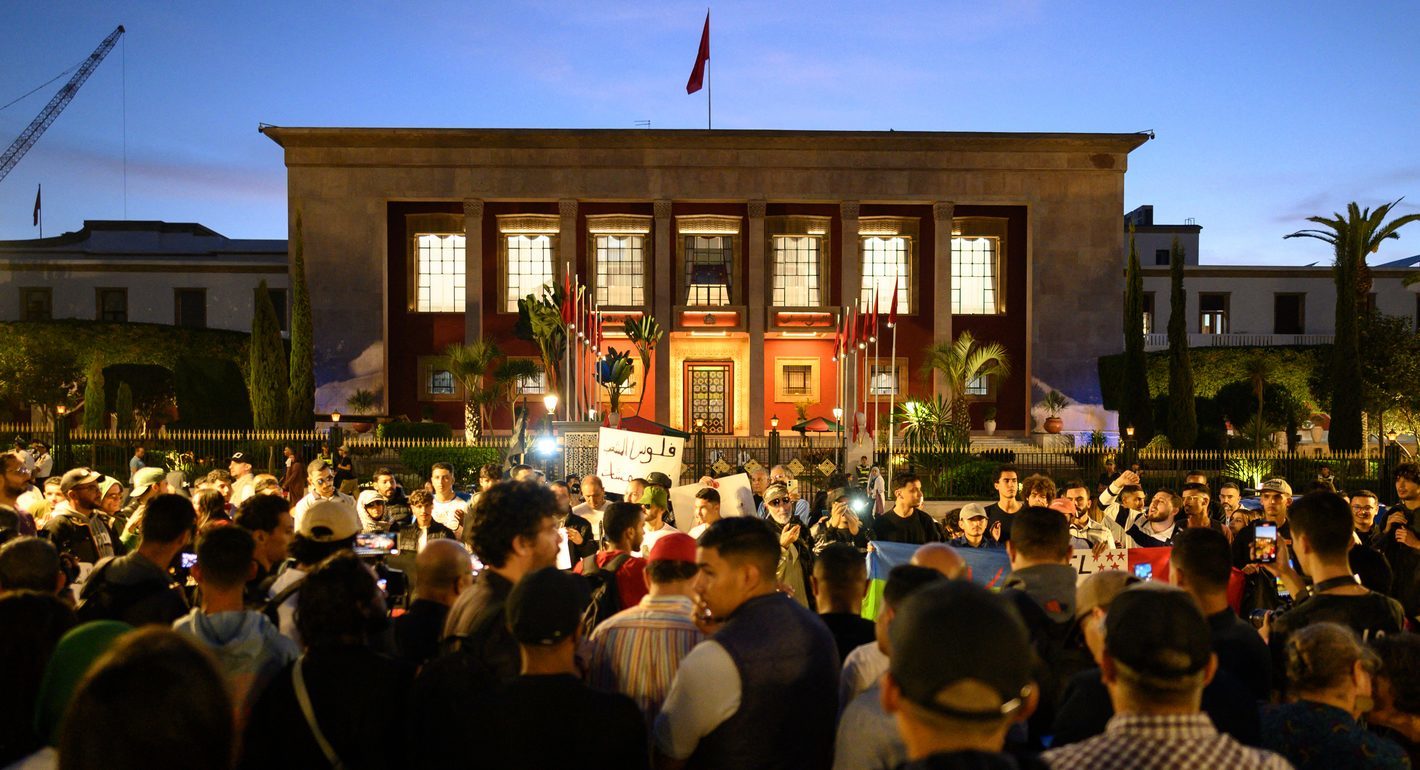
From anime heroes to online gaming communities, Morocco’s Gen Z is building a new protest culture. What does this digital imagination reveal about youth politics, and how should institutions respond?
Abdelilah Farah
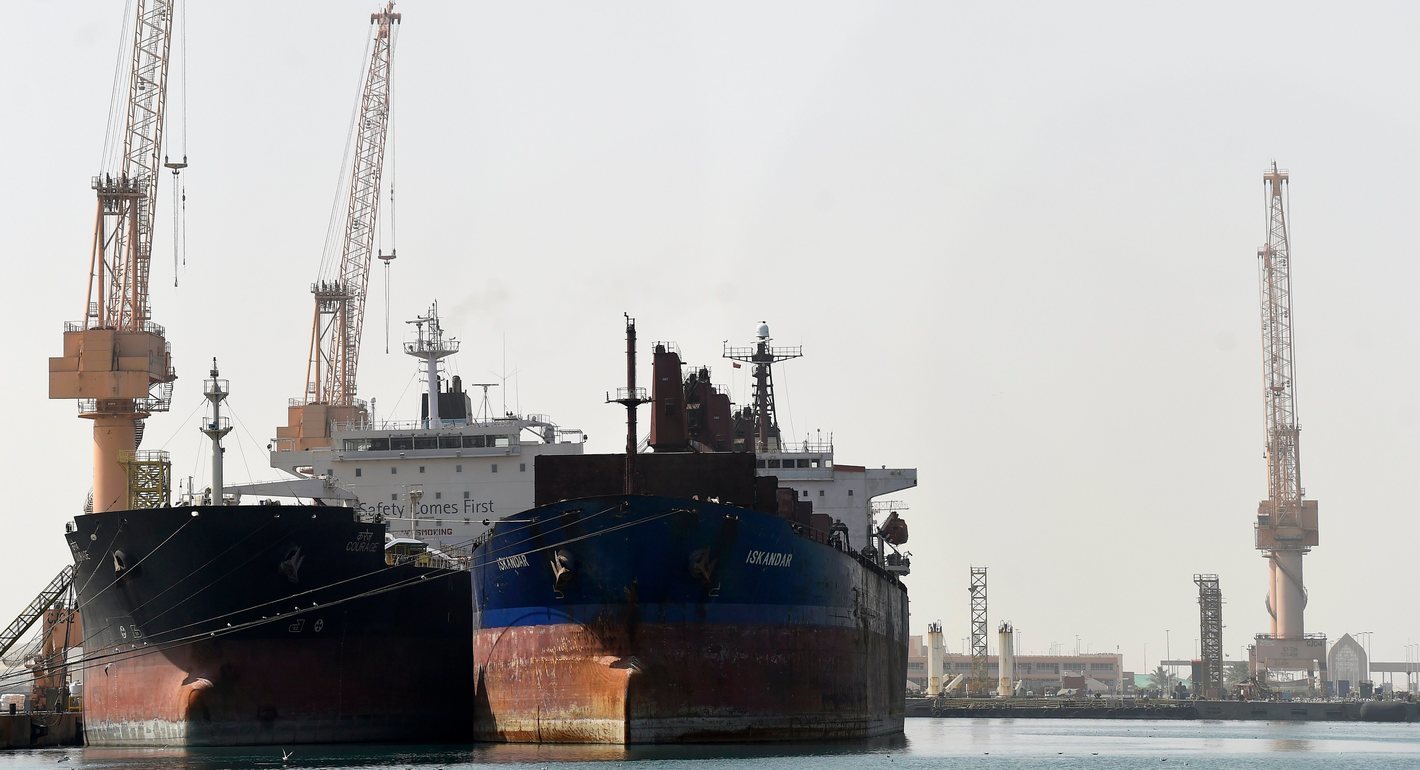
In a volatile Middle East, the Omani port of Duqm offers stability, neutrality, and opportunity. Could this hidden port become the ultimate safe harbor for global trade?
Giorgio Cafiero, Samuel Ramani
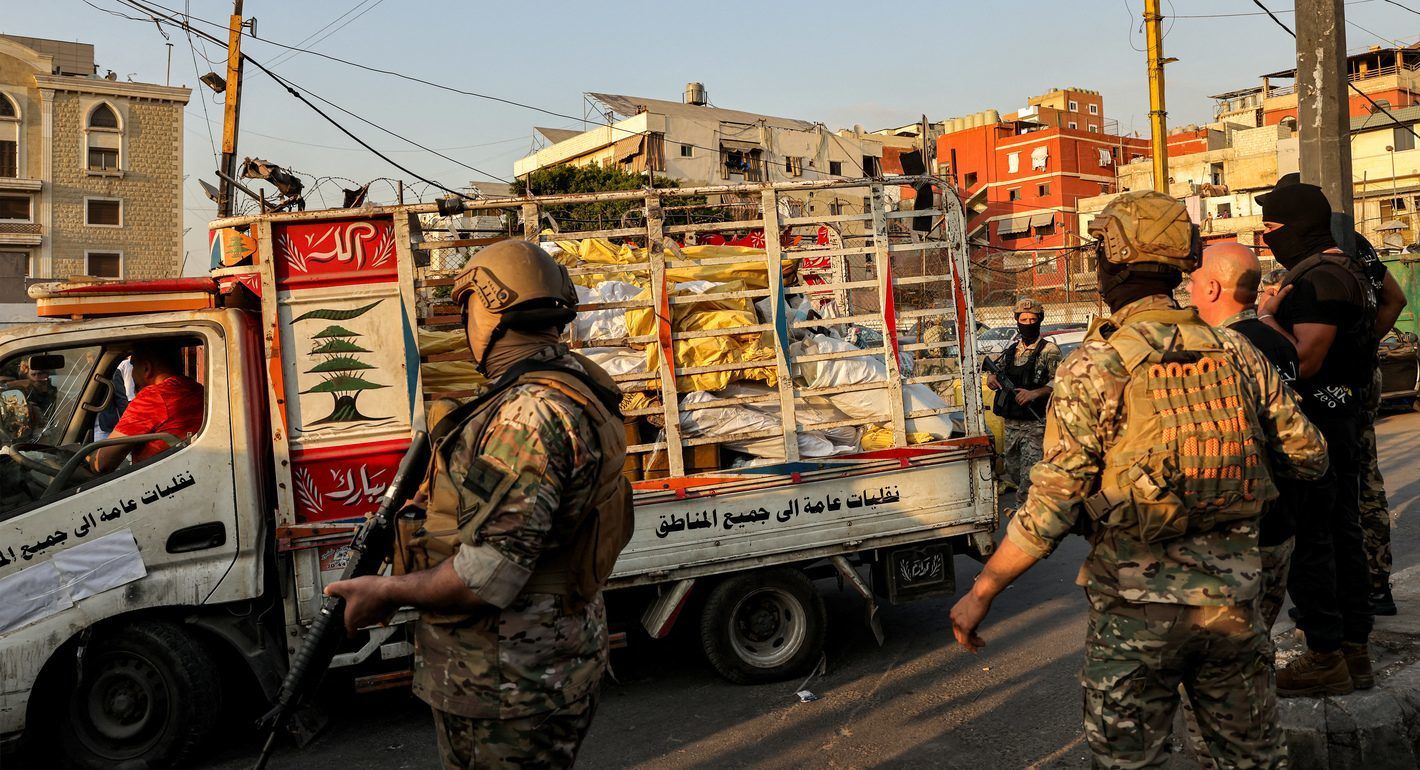
The August 2025 government decision to restrict weapons to the Lebanese state, starting with Palestinian arms in the camps, marked a major test of Lebanon’s ability to turn a long-standing slogan into practical policy. Yet the experiment quickly exposed political hesitation, social gaps, and factional divisions, raising the question of whether it can become a model for addressing more sensitive files such as Hezbollah’s weapons.
Souhayb Jawhar
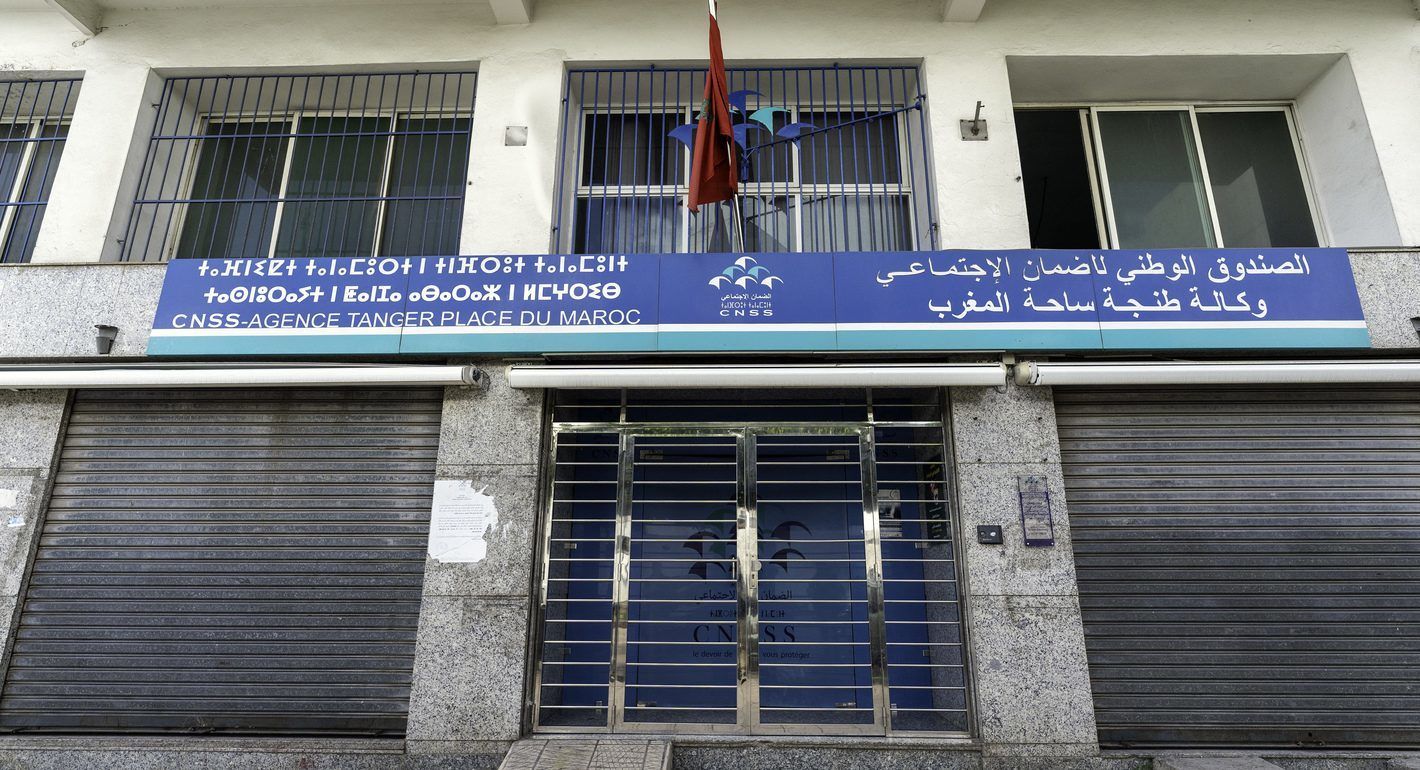
While Morocco’s shift to a digitized social targeting system improves efficiency and coordination in social programs, it also poses risks of exclusion and reinforces austerity policies. The new system uses algorithms based on socioeconomic data to determine eligibility for benefits like cash transfers and health insurance. However, due to technical flaws, digital inequality, and rigid criteria, many vulnerable families are unfairly excluded.
Abderrafie Zaanoun