

Commentary
Mohamed El-Shewy
{
  "authors": [
    "Mohamed El-Shewy"
  ],
  "type": "commentary",
  "blog": "Sada",
  "centerAffiliationAll": "",
  "centers": [
    "Carnegie Endowment for International Peace"
  ],
  "collections": [],
  "englishNewsletterAll": "",
  "nonEnglishNewsletterAll": "",
  "primaryCenter": "Carnegie Endowment for International Peace",
  "programAffiliation": "",
  "programs": [],
  "projects": [],
  "regions": [
    "North Africa",
    "Egypt"
  ],
  "topics": [
    "Political Reform",
    "Democracy"
  ]
}
Source: Getty
Driven by its distrust of organized political groups, Sisi's regime has gone to considerable lengths to depoliticize the parliament and the country's new “political” elite.
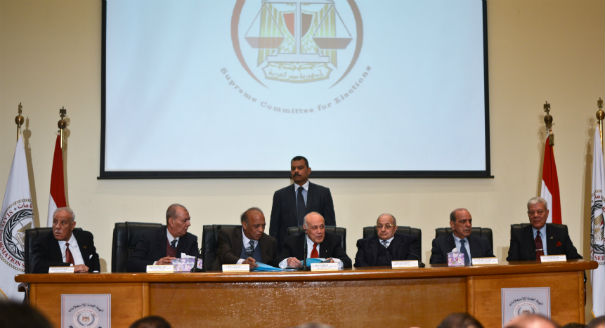
On March 1, Egypt’s Supreme Constitutional Court ruled that Article 3 of the electoral law was unconstitutional. Two days later, the Administrative Court suspended the elections pending a change in the electoral law. This suspension plays into President Abdel Fattah el-Sisi’s hands, as it delays the devolution of legislative powers from the president to the parliament and extends his unilateral rule. Sisi’s overall approach to the parliamentary elections further reveals ambitions to diminish the political role of the parliament so it becomes a passive player to his decisionmaking. The elections—originally scheduled to take place over two stages in March and April—are the last phase in the country’s transitional roadmap introduced following the removal of Mohamed Morsi from office in July 2013. It will be Egypt’s first legislative body since the Supreme Constitutional Court dissolved the parliament in 2012 for technical reasons. Since then, legislative powers have been held by Sisi, who has issued a number of laws addressing Egypt’s economy.
The state sees the elections as a way to convey legitimacy by demonstrating the regime’s commitment to democracy and institution-building. Having a functioning parliament also helps Egypt convince much-needed foreign investors that the country’s transition is stable enough for long-term business ventures. But perhaps most importantly, the state can use the parliament as a form of “elite management”1 to appease family heads, businessmen, and politicians, and to secure their aid in maintaining and imposing stability.
Yet despite the likelihood of a pro-Sisi parliament, the government is still unenthusiastic about elections, foreseeing a number of potential challenges to the regime. The new parliament will be obligated to review and approve all laws passed and ratified since Morsi’s ouster in July 2013, in order for them to remain in effect. This constitutes nearly two years’ worth of legislation, including controversial ones such as the protest law of 2014. This law in particular faces strong questions surrounding its constitutionality, opening the door for the law’s possible repeal or amendment. The regime and the military will likely view this process of reviewing laws as a waste of time, but additional delays in parliamentary elections will only push the inevitable review process back even further.
With no parliamentary ally along the lines of Mubarak’s National Democratic Party (NDP), the Sisi government’s approach to these concerns has been to limit the political space available to parties. This prevents them from operating in any meaningful way outside of the regime’s influence. Both the constitution and the electoral law actively weaken the ability of potential opposition parties to gain any kind of significant platform in the future parliament. The electoral law of 2014 strengthens the position of individuals ahead of political parties, allotting over 70 percent of the 567 seats in parliament to independent candidates. As in the Mubarak era, the emphasis on independent candidates means seats are more likely to be won by well-connected individuals, especially businessmen. For comparison, the 2011 electoral law gave parties two-thirds of seats elected through proportional representation lists.
The military establishment has long viewed political parties with suspicion, believing them to only act in their own self-interests, rather than the nation’s as a whole. Now that a former military man is president, this approach is easier to act upon. In a meeting with fifteen party heads, the president called on them to form “one inclusive coalition” by running on one list that he would endorse. Rather than backing one particular political party or ideology, Sisi is attempting to remain politically neutral by calling on all parties to unite behind a national vision. Instead of a pluralist process where a multitude of views are represented, parliament is reduced to a homogeneous political body that merely supports the president’s national projects.
Some political parties are already opposing this project, among them the Strong Egypt and Constitution parties, which have announced their boycott of the polls. But a pro-Sisi coalition is even more likely to perform well in elections due to the boycott. In reaction to Sisi’s call for a unified electoral coalition, Sameh Seif El-Yazal, a former military intelligence officer and strategic advisor, formed one such electoral list called “For the Love of Egypt.” Despite some initial criticism from the Wafd Party, “For the Love of Egypt” appears to have a strong footing ahead of the elections, and in mid-February was bolstered by the subsequent inclusion of the most prominent liberal parties, Wafd and the Free Egyptians.
With the current system favoring individual parliamentary candidates rather than parties, Sisi is looking to empower military figures instead of the Mubarak-era business elite, many of whom Sisi mistrusts. He has emphasized the role of the state in the economy, and suggested in an interview last year that the private sector would have to accept a smaller role than it had under Mubarak. He is particularly hesitant to rely on those closely associated with Gamal Mubarak for support, as he does not wish to be associated with that era’s corrupt practices. Instead, Sisi has sought to include figures like El-Yazal into the parliament. This would eschew traditional party politics altogether and ensure Sisi’s influence over the legislative process. In addition to the military, this new political class will include civilian politicians and businessmen not closely affiliated to Gamal Mubarak’s inner circle. Rather than rely on an ideological support base, this “apolitical” class will further diminish the parliament’s influence on the country’s political life.
Driven by its distrust of organized political groups, Sisi has gone to considerable lengths to depoliticize the parliament and the country’s new “political” elite. Parliamentary life under Sisi looks set to be little more than technocratic assistance to the president, with little room for opposition.
Mohamed El-Shewy is a freelance writer and analyst, currently based in Germany. He is a regular contributor to Sada.
1. Lisa Blaydes, Elections and Distributive Politics in Mubarak’s Egypt, New York: Cambridge University Press, 2011. ?
Mohamed El-Shewy is a freelance writer and analyst based in Germany.
Recent Work
Mohamed El-Shewy
Mohamed El-Shewy
Carnegie does not take institutional positions on public policy issues; the views represented herein are those of the author(s) and do not necessarily reflect the views of Carnegie, its staff, or its trustees.
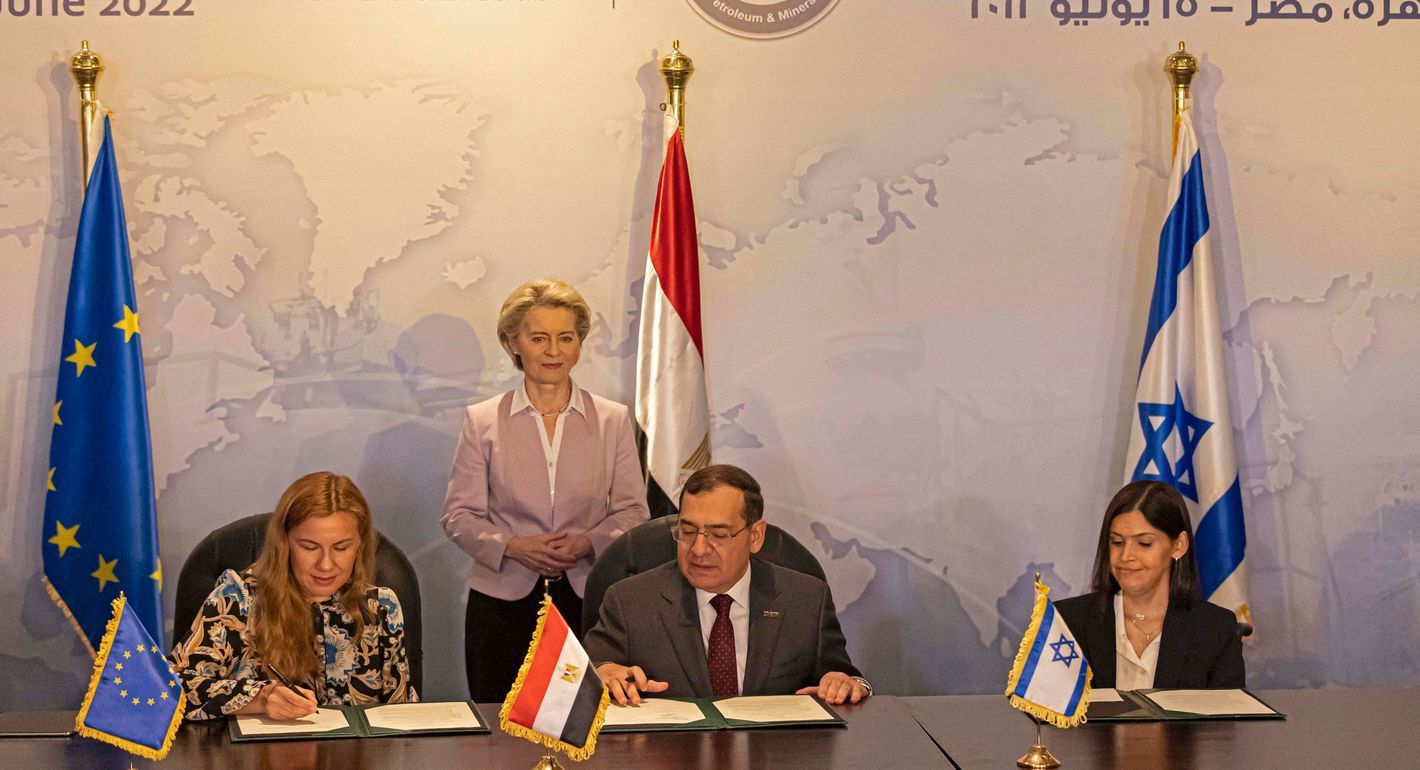
Can economic ties help contain conflict between Egypt and Israel, or do they simply postpone confrontation? Drawing on the German-Russian experience, the article examines how the gas deal creates mutual dependence, keeps channels of cooperation open, and raises the cost of conflict, without necessarily delivering lasting peace.
Nourhan Hefzy
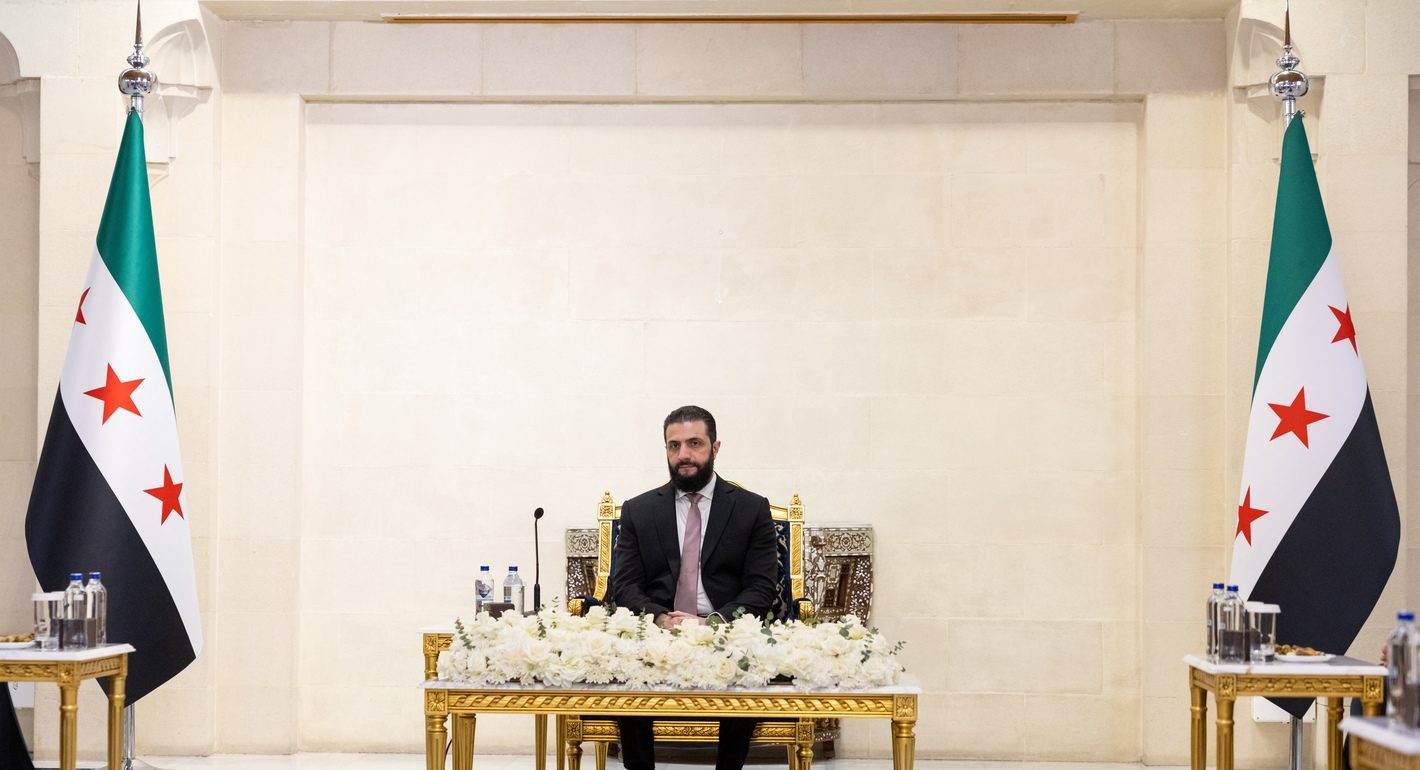
Syria's transition promised a fresh start. But are old habits of power making a comeback? This analysis looks at the warning signs and what it will take to build a more accountable state.
Sima Beitinjaneh
From anime heroes to online gaming communities, Morocco’s Gen Z is building a new protest culture. What does this digital imagination reveal about youth politics, and how should institutions respond?
Abdelilah Farah
Hate speech has spread across Sudan and become a key factor in worsening the war between the army and the Rapid Support Forces. The article provides expert analysis and historical background to show how hateful rhetoric has fueled violence, justified atrocities, and weakened national unity, while also suggesting ways to counter it through justice, education, and promoting a culture of peace.
Samar Sulaiman
Kuwait’s government has repeatedly launched ambitious reforms under Kuwait Vision 2035, yet bureaucratic inefficiency, siloed institutions, and weak feedback mechanisms continue to stall progress. Adopting government analytics—real-time monitoring and evidence-based decision-making—can transform reform from repetitive announcements into measurable outcomes.
Dalal A. Marafie