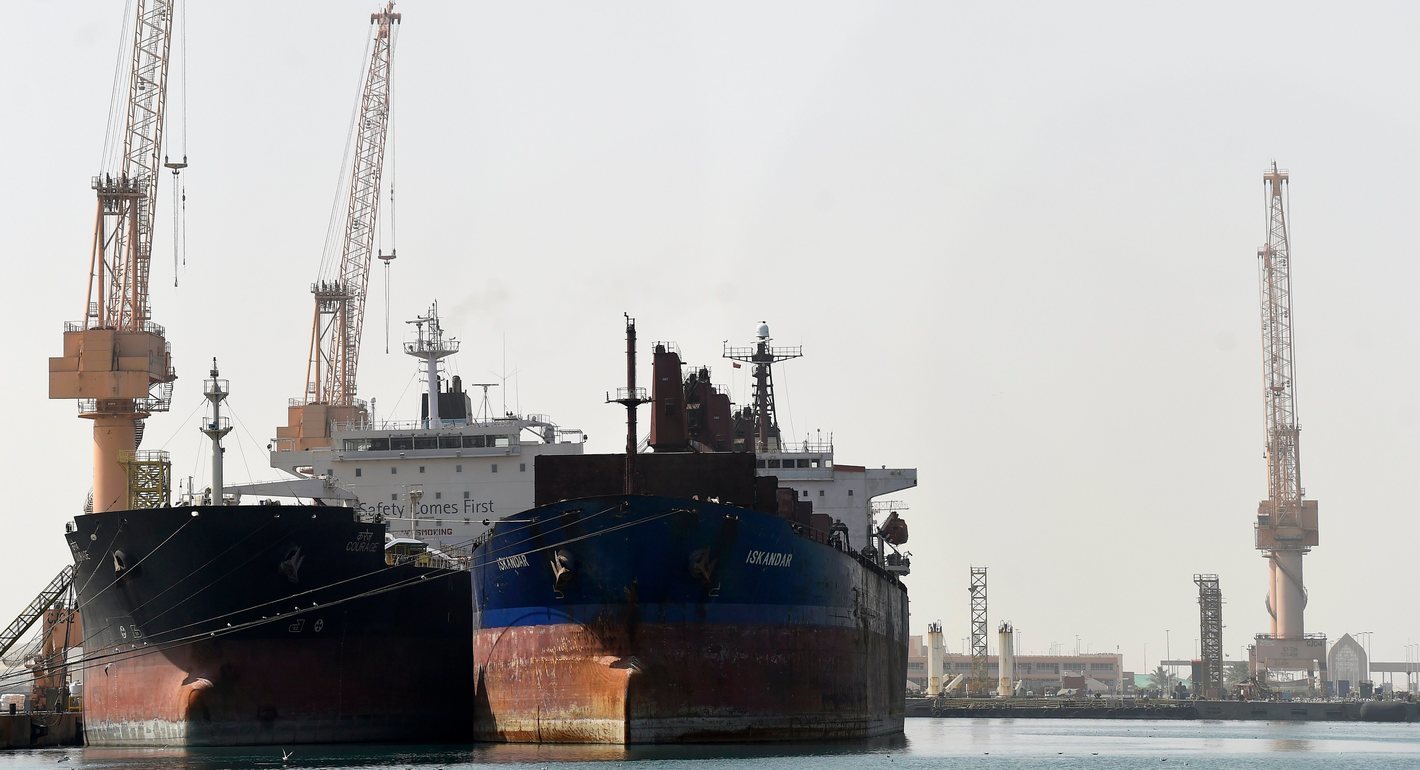
Earlier this year, several international observers lauded Morocco for having successfully cut all subsidies on fuel in 2015, managing to make sizeable financial savings without igniting any social conflagration. This decision was taken in 2008 under the previous government and in response to the historically high oil-prices (around $100 a barrel) that were making it more costly for Morocco to meet its energy needs, 90 percent of which rely on imports. The country’s subsidy regime, also known as “compensation system,” adjusts prices at the source, meaning the state pays for the difference between international commodity market prices and agreed domestic prices before they reach consumers. During those unusually high-oil-price years subsidies used 6.6 percent of the state budget in 2012 and contributed significantly to the country’s annual budget deficits.
The first stage of the government’s subsidy-cutting program on fuel began in 2012 and reached its first major landmark in 2015, despite early concerns of the public’s reaction and initial threats of industrial action from the transport industry federations in 2013. Several factors contributed to the relatively uneventful transition. First, the government proceeded cautiously by gradually decreasing subsidies once every year. Second, it carried out public awareness campaigns, vowing to set up special measures for economic actors. The Islamist Prime Minister Abdelilah Benkirane has repeatedly spoken for these cuts and their necessity. Finally, and some would argue more fundamentally, the authorities enjoyed a favorable stroke of luck: low oil prices on the international market. Ordinary consumers barely felt a hit, nor did the economy (despite the state planning for a shrinking economy) and the only complaints were anecdotal.
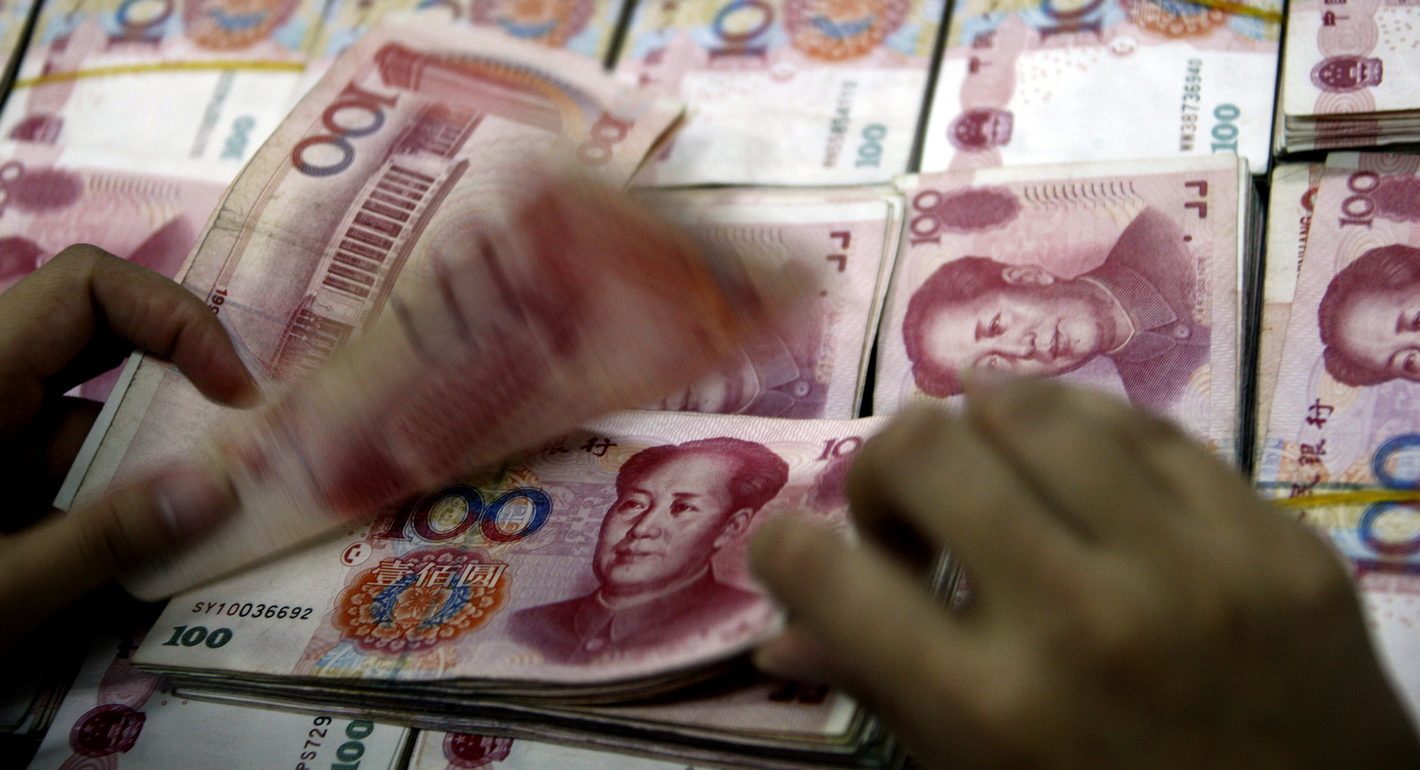
The Moroccan Ministry of Finance released an important report in July assessing the “compensation reform” and outlining its financial benefits. First, the government managed to reduce its spending on subsidies from 56.6 billion dirhams ($5.8 billion) in 2012 to 32.7 billion dirhams ($3.4 billion) in 2014 and saved a further 12.25 billion dirhams in 2015. As a measure of comparison, the 2012 compensation charge represents 106 percent of the state’s investment budget or 56 percent of its payroll. This reform also allowed Morocco to improve its image among its international economic partners, including financial institutions and creditors; in fact, on July 22 the IMF board approved a $3.47 billion loan under the “precautionary and liquidity line,” a formula reserved to support “member countries with sound economic fundamentals and strong records of policy implementation but with some remaining vulnerabilities.” Finally, the Moroccan government took proactive steps toward future energy challenges by shifting its focus from fossil fuel to renewable energies, especially following the Noor solar plant launch in February 2016. When fully operational, the plant will allow Morocco to satisfy 30 percent of its energy requirements, reducing its dependency on oil imports and satisfying the increasing demands of its growing industrial ambitions.
Despite these positive aspects, this subsidy reform on energy steered clear of butane gas subsidies, a cut that will be included in the next stage. Canisters are used across the country for cooking (and sometimes lighting) purposes. A regular gas canister costs 42 dirhams ($4) for consumers, and would currently cost around 120 dirhams ($12) without state subsidies, which amounted to 13.3 billion dirhams ($1.4 billion) in 2014, a sum that cannot be ignored.
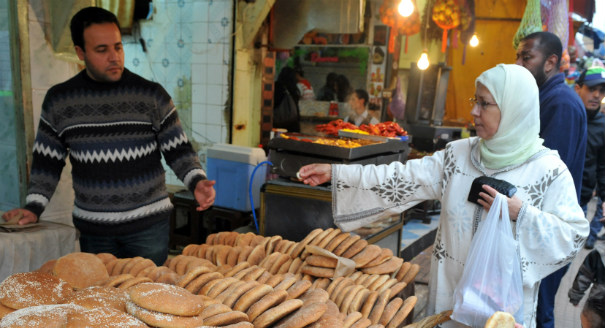
The second stage of Morocco’s subsidy cuts, initially penciled in for 2015–17, targeted household staple goods (sugar, white flour, and butane gas) but has been delayed. These goods represent the cornerstone of consumption, and their subsidized prices keep poorer social groups from falling into total poverty; therefore any cuts to the current regime require extra care to avoid a repeat of the Casablanca riots of 1981. The current standstill owes to the constraining impact of public opinion and the reluctance of the Justice and Development Party (PJD) and other political actors to alienate poorer social classes.
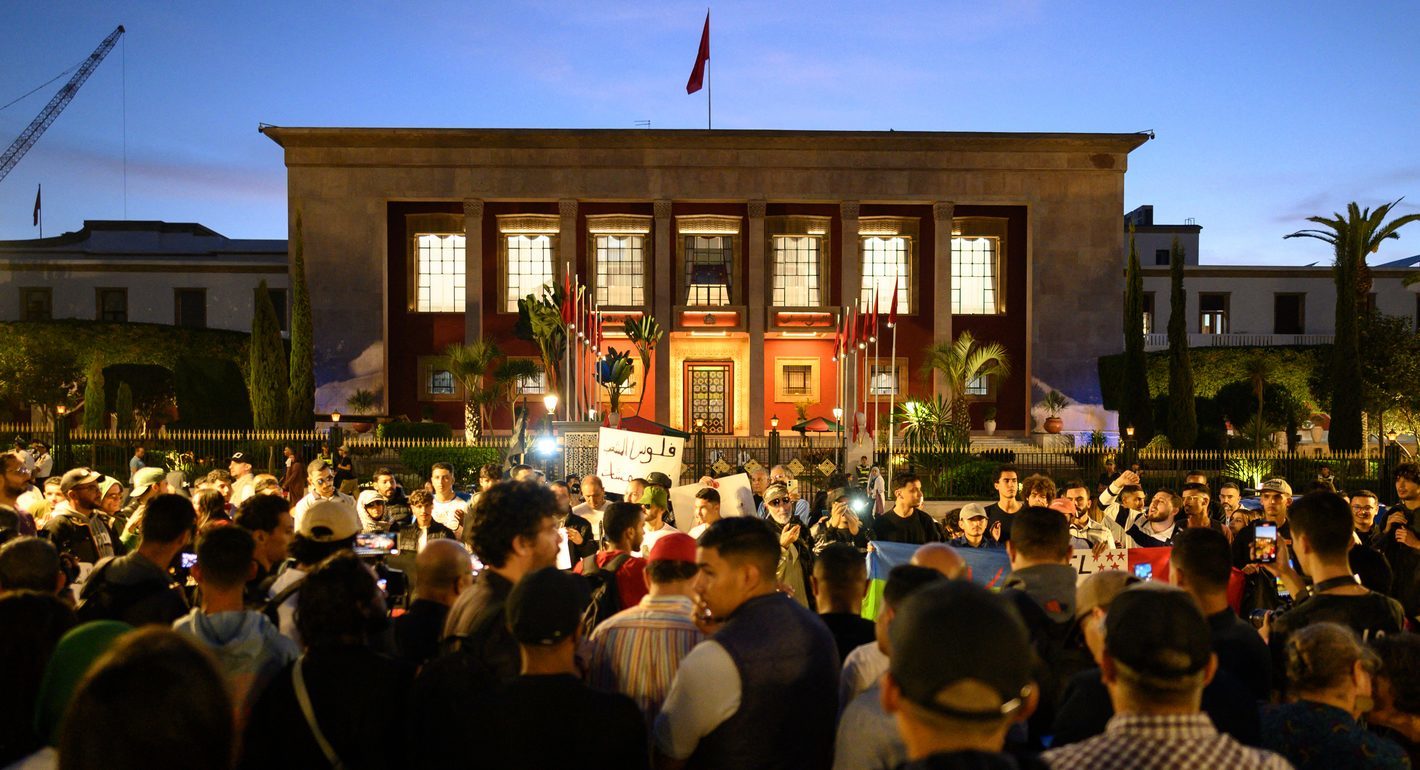
The current government has been unusually reactive to rumors of impending cuts circulated by social and print media, with officials issuing declarations to the contrary or seeking to control the discussion. In 2013, a Reuters article cited Mohamed Najib Boulif, Minister of Governance, as reducing subsidies before Ramadan, which caused a small panic on social media and prompted official denials. And in February 2015 similar rumors announcing cuts for butane were circulated, this time by Telquel, an influential weekly magazine, and were promptly denied by Minister of Governance Mohamed Louafa. In a televised interview on October 29, 2015, Benkirane announced that subsidy cuts on sugar will be instituted over the course of eighteen months, but not on “sugar loaves,” the two-kilo (4.4 pound) lumps traditionally used by households across the country. None of these media interventions have provided sufficient clarity, and the ease with which rumors have spread reveals the population’s lack of trust in their political leadership.
In the meantime, academic experts, parliament working groups, and even government and state officials have advocated for reforms. There is general agreement that the current system of adjusting prices at the source for staple goods is badly designed and does not serve its initial goal of driving consumerism. It disproportionally benefits wealthier social groups and the food industry while draining immense state resources because the state is at the mercy of international prices and domestic consumption trends, according to Moroccan economist Mohamed Bentahar. In 2014, sugar subsidies amounted to 3.5 billion dirhams ($360 million) and flour subsidies to 2 billion dirhams ($200 million), in addition to subsidies on butane gas, while Morocco continues to occupy low ranks in human development classifications, especially with regard to inequality and income indicators.
Salima Bennani, head of Morocco’s Compensation Fund (Caisse de Compensation), recently affirmed they were looking to substitute blanket compensation with targeted cash flows toward the most vulnerable populations by studying the experiences of Brazil, Mexico, India, and Southeast Asia. She assured that savings from subsidies would then be deployed to support more useful programs, although this has yet to show significantly in the latest state budgets. Moreover, several Moroccan experts, such as Hicham Al Moussaoui, offer notes of caution that the substitution of subsidies with targeted cash flows will weaken the lower half of the middle class, drive debt up, and weaken the economy.
Despite these risks and current delays, declarations by Salima Bennani and other state officials are a sure indication the process will be decisively resumed in the coming months. The consensus is that the issue will be the next government’s responsibility for after the October 7 elections and that, regardless of its composition, the reforms will go ahead due to Morocco’s overarching obligations toward international financial institutions. After all, despite its populist base, the Justice and Development Party (PJD) has pursued a firm liberal agenda. A report on this question has been briefly discussed in parliament in June 2016, indicating that a reform package has been designed and is merely waiting for the right timing—which would explain the IMF’s confidence in extending a loan to Morocco. In the meantime, economic actors and the population lack clarity over timeframes, despite how deeply it will affect key segments of the population.
Idriss Jebari is a postdoctoral research fellow with the Arab Council for Social Sciences working on social and cultural change in North Africa.