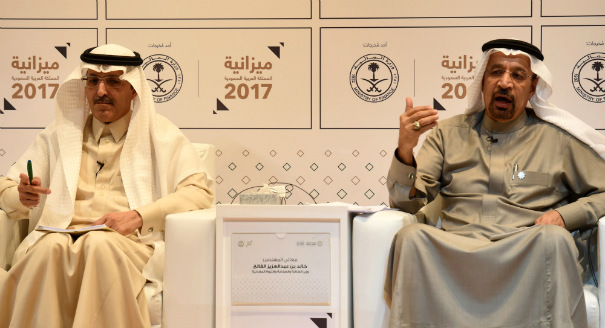
Saudi Arabia’s Deputy Crown Prince Mohammed bin Salman has not only been at the forefront of the kingdom’s political and military forays in the region, but also at the center of what could represent a more profound economic change. Under his leadership, the government announced Vision 2030, seeking to diversify the economy and streamline welfare and subsidy spending. However, the vision is missing long-term political and social reform necessary to break the oil dependency, namely dismantling the political order and drawing new social contracts that are not based on the distribution of oil rents.
Saudi Arabia’s oil wealth is a major reason the ruling system has been stable for so long. This wealth has not only allowed the government to maintain powerful global allegiances and domestic security, but also provided it with the means to keep the population generally content. With Vision 2030, this crutch will be weakened. As the kingdom prepares to shift from a rentier economy to a production-based economy (and eventually a knowledge-based one), a more inclusive and participatory political system necessary for economic development is still missing. One without the other will not be possible, yet political reform does not seem to be factored into the grand vision.
The government’s policies and spending patterns that have helped maintain its power had always been inextricably linked to the price of oil and its revenue. During the boom in oil prices between 2003 and 2013, the Saudi government was able to invest heavily in education, health, infrastructure, and job creation. This is in addition to the funds necessary to sustain the expenses and exorbitant set monthly stipends for every member of the royal family, probably the world’s richest. Furthermore, the ruling classes provided citizens easy access to high-paying, public-sector employment, thereby discouraging engagement in productive entrepreneurial activity. The private sector was unable to attract much local talent, as public-sector jobs were paying on average three times more than the private sector. The state was the primary provider of everyday income, rather than a welfare services provider, allowing the government to maintain its “authoritarian bargain.”
However, over the past three years, the government experienced its first fiscal deficits in nearly two decades, and the 2016 deficit is estimated to be well over $75 billion. The kingdom hopes that the plan laid out in Vision 2030 will make the economy, spearheaded by the private sector, more mature, prosperous, and sustainable. An integral element within that proposed mechanism inherently entails profound shifts in the social contract between the government and its people. In order for the private sector to produce more than 65 percent of GDP, as envisioned, labor must be shifted away from the reliable and high-paying but low-productivity public sector. And in order for the government to truly diversify its own income, it must expand its tax collection system. However, the issue of tax collection generally entails the expectation of higher accountability from governments. For a Saudi regime that is now experimenting with income tax increases as part of a new economic plan, it does not seem to be making similar efforts to shift political institutions to reflect citizens’ expectations of transparency—not a hallmark of this monarchy. In short, the government and system of rule would shift from that of patronage to more conventional administrations of the public domain.
This shift is further complicated by citizens’ continued expectations of state patronage. Citizens have become used to viewing the state—by extension, the monarchy—as providers. The state had in the past reinforced that by providing expansive social programs and direct cash transfers of the oil wealth to keep locals quiet. In 2011, when the Arab Spring swept the region, the late King Abdullah bin Abdulaziz Al Saud gave out cash handouts worth a reported $37 billion to the population. At the same time, the government also signed off on nearly $130 billion to finance the creation of 120,000 new public sector jobs and building 500,000 houses. They set a minimum wage of $800 in the public sector, gave all civil servants a bonus, and set up a new unemployment assistance scheme. While these transfers were effective at the time, the government will not be able to afford them, based on the current direction of budget cuts—especially if the budget becomes less liquid as it moves away from oil dependency. This is not to discount some of the more admirable and effective means of public spending, such as an immense foreign scholarship program, and the relatively high levels of spending on scientific research and medical programs. However, even those have become subject to budget cuts.
For the Saudi citizen to wholeheartedly accept such a shift, government institutions would need to lead the way by exhibiting changes in their own right. The Saudi monarchy does not seem to be looking for any structural change to its governance, apart from the deputy crown prince’s nominally modern and forward-thinking approach. To the contrary, there have been indications that freedom of speech and political opposition will continue not to be tolerated in the future—especially regarding religion or the ruling family, issues where recent judicial convictions and even death sentences show the monarchy still clings to the traditional power structure based on religion, tribalism, and oil. Even the spread of ideas that could challenge or gradually develop these structures risks being obstructed, creating an intellectual barrier between the monarchy and the outside world. Though Saudi politics are highly complex, at the very least the economic liberalization the monarchy desires would develop more efficiently if there were more openness to progress on all levels.
In the past, Saudi Arabia has focused on implementing counter-cyclical fiscal policies, whereas the need for political change might be just as pressing. While the monarchy had bought some time by introducing these measures, it did not address the need for political and economic institutional transformation to prepare for when the oil cycle was broken, or at least profoundly altered. Even though oil wealth (and periodic price booms) offered the Saudi regime a comfortable cushion to maintain order despite minimal political freedoms, this cannot be the assumption moving forward, especially after acknowledging that the economic order must be changed.
Mohamed Elmeshad is an Egyptian journalist, as well as a researcher and PhD student at the School of Oriental and African Studies (SOAS) in London.