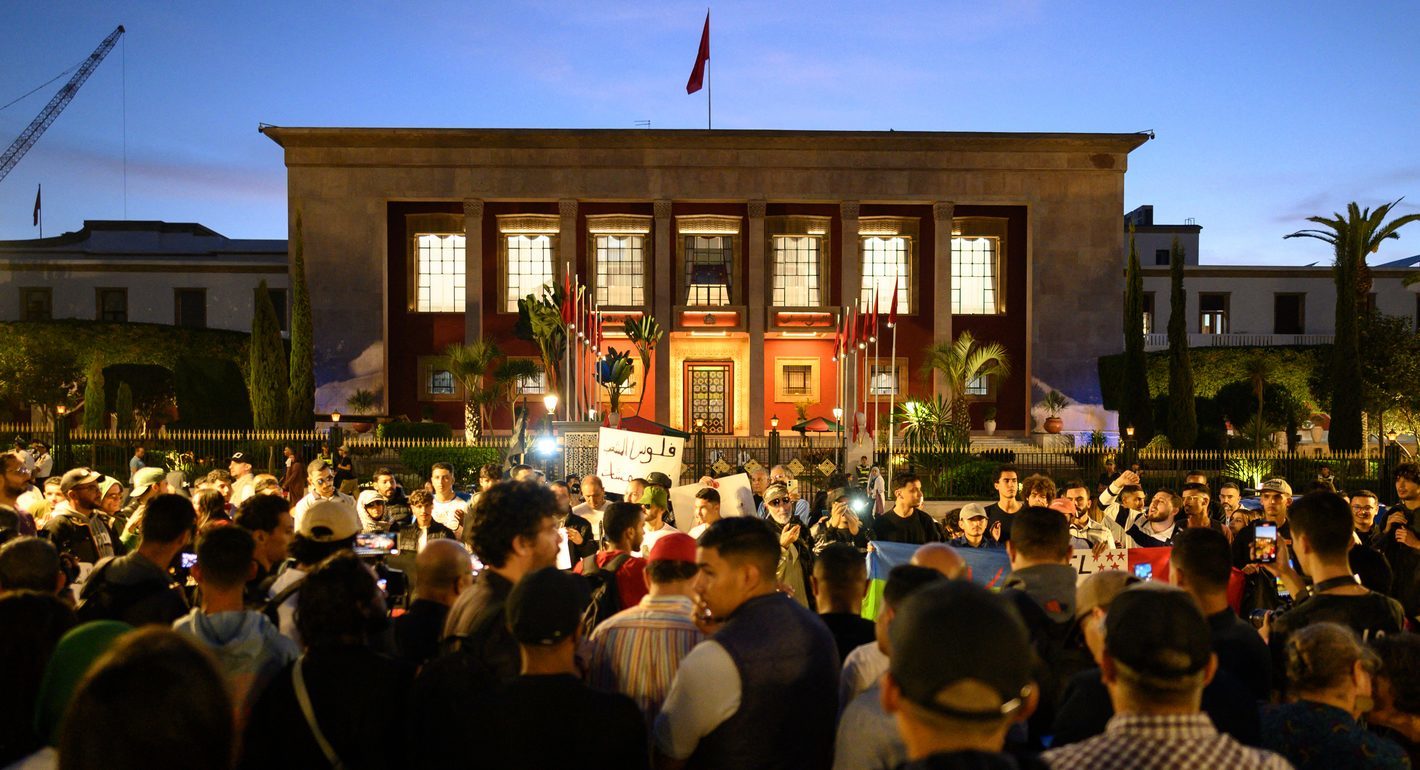
Framed as an act of goodwill and regional support, the June 10 renewal of the Gulf Aid Package to Jordan—after new economic austerity measures ignited mass protests—may spell trouble for the kingdom. As the Gulf countries, especially Saudi Arabia and the United Arab Emirates (UAE), move toward a more aggressive regional policy, it is likely that this most recent infusion of aid will come with political strings. The Gulf countries see Jordan as a lynchpin in their Israel–Palestine strategy and as a potential ally in the ongoing Gulf crisis with Qatar. Facing mounting economic pressure at home, Jordan may have few options other than to make such political concessions in exchange for the much-needed financial relief.
Jordan is in a dire economic state with no easy solution. Public debt has reached 94 percent of the country’s GDP, unemployment remains high at 18.5 percent, and the ongoing refugee crisis is exacerbating current economic challenges. In response to these concerns—and to pressure from the International Monetary Fund (IMF), which has extended the kingdom $723 million in loans—the Jordanian government drafted far-reaching austerity measures in May, sparking public protests that forced the government to restructure and walk back on its proposed increases to income taxes and cuts to subsidies for electricity, fuel, and bread. This has left Jordan yet again reliant on foreign aid to support its economy. The fellow monarchies of Saudi Arabia, the UAE, and Kuwait quickly convened the Mecca Summit on June 11 to offer a five-year, $2.5 billion aid package to Jordan.
The aid package, however, provides neither immediate aid nor holistic long-term support and can be withdrawn at any time. The package is comprised mainly of loans in the form of deposits (which includes a deposit in the Jordanian Central Bank to reinforce currency reserves), guarantees of World Bank loans, annual budget support, and funding for infrastructural investments. The Saudis, Emiratis, and Kuwaitis can renege on the deposits to the Central Bank and infrastructural investments at their discretion, meaning these two loans can be used as leverage to extract political concessions—a distinct possibility as Jordan’s foreign policy strays further from the Saudi–Emirati line.
In 2017, at the tail end of the 2012 five-year Gulf aid package, Saudi Arabia decided not to renew it despite Jordan’s continued financial need. Jordanian officials have said the decision was punishment for taking positions inconsistent with those of Saudi Arabia on regional matters, mainly its continued support of a Palestinian state, its failure to ban the Muslim Brotherhood, and its refusal to sever diplomatic ties with Qatar in June 2017. King Abdullah II even said in January 2018 that the kingdom has been financially pressured to mute its opposition to the U.S. decision to move its embassy from Tel Aviv to Jerusalem. As the Qatar crisis deepens and the Trump administration’s potential Israel–Palestine peace deal continues to dominate headlines, the Saudi–Emirati bloc now has even more motivation to use the aid package to capitalize on Jordan’s latest instability and constrain the country’s ability to act independently of its donors.
In recent months, the Arab Gulf countries have been rumored to be more actively supporting the Trump administration’s aspirations of making a peace deal between Israel and the Palestinian Territories, hoping this means they can get U.S. and potentially Israeli assistance to counter Iran. As custodian of Jerusalem’s holy sites, home to millions of Palestinians in diaspora, and neighbor to Israel and the Palestinian Territories, Jordan is a crucial party to any future deal and—to the dismay of the Arab Gulf countries—has been outspokenly divergent from their policy decisions on the matter. Additionally, Saudi Arabia is eyeing taking over Jordan’s custodianship of Jerusalem’s holy sites as a way to facilitate the Trump administration’s peace deal. The Jordanian government has reportedly been increasingly concerned about Saudi Arabia’s expanding commercial and religious ties in Jerusalem, its rejection of Jordan’s assertion as custodian of these sites in recent months, and numerous diplomatic spats with Riyadh over the Jerusalem question.
For Jordan, acquiescing to the rumored Israel–Palestine peace agreement would, most notably, eliminate the right of Palestinian refugees to return to the Palestinian territories. This would likely also ignite anger among East Bank Jordanians who see the government as allowing Jordan to become an alternative country for Palestinians.
Amman has also been caught in the middle of the diplomatic war between Qatar and Saudi Arabia, the UAE, and Bahrain. When the blockade was initiated in June 2017, Saudi Arabia and the UAE asked many countries in the region to cut diplomatic ties with Qatar, but Jordan opted to downgrade relations instead. It is likely that the coalition viewed the kingdom’s response as an act of defiance, which Jordanian officials speculated was a major reason Saudi Arabia declined to renew its aid in 2017. This had a considerable impact on Jordan’s ability to cope with its latest round of economic woes.
As the blockade continues with no apparent end in sight, it is likely that Saudi Arabia and the UAE will use this most recent aid package as leverage to force Jordan’s to take positions consistent with that of Riyadh and Abu Dhabi, including severing financial ties with Qatar. This would cut Jordan off from one of its most consistent donors and sources of foreign income. Qatar, a popular work location for Jordanian nationals, is the third-largest investor in Jordan, with an estimated $2 billion in investments, and the volume of trade between the two countries is valued at over $400 million. Following the most recent protests, Qatar also extended its own financial support package, pledging $500 million in economic aid, including 10,000 job openings for Jordanian nationals in Qatar and investments in infrastructure and tourism in Jordan.
The Gulf monarchies would not let a fellow monarchy and a country as strategically located as Jordan collapse. But their generous aid package—3.5 times larger than the current IMF loan—buys them not just stability but also leverage. The popular protests drove the government to defer critical economic reforms, leaving it further reliant on foreign aid. However, accepting the Gulf aid package with all its potential foreign policy concessions could add to the turmoil and may force a complete re-evaluation of its foreign relations in the region, most especially the neutrality that has allowed the small kingdom to withstand a tumultuous regional political environment.
Rachel Furlow and Salvatore Borgognone are Amman-based independent Middle East analysts. Follow them on Twitter @RachelFurlow and @salborgognone.