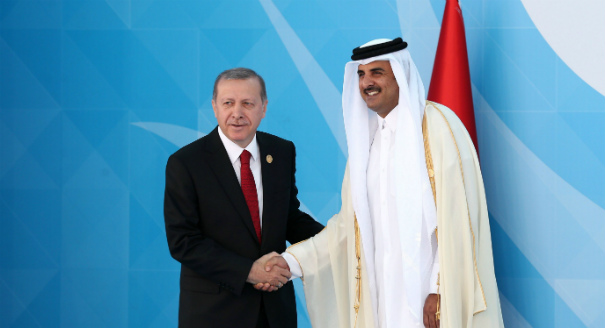
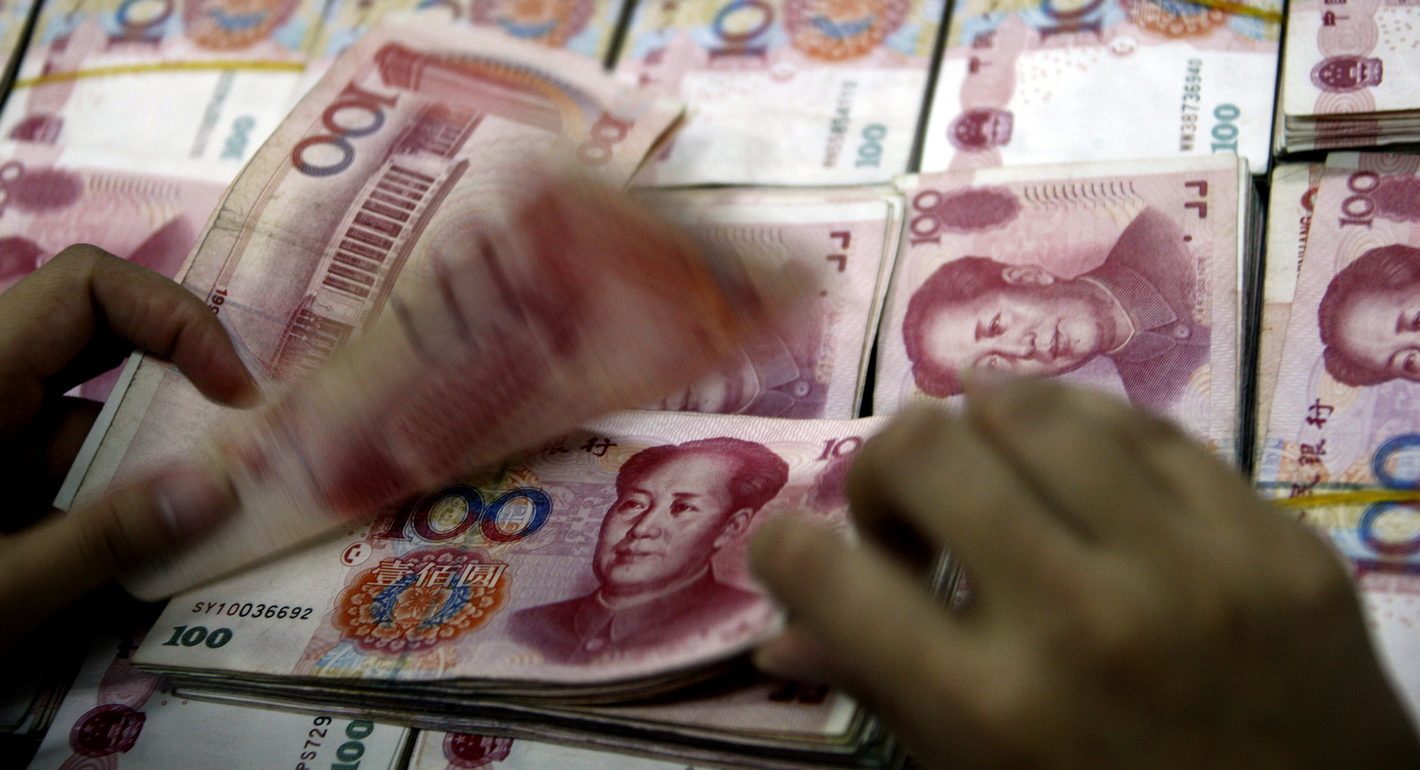
On August 15, after a meeting in Ankara between the Emir of Qatar Sheikh Tamim bin Hamad Al Thani and Turkish President Recep Tayyep Erdoğan, Qatar’s Ministry of Foreign Affairs confirmed that Doha would invest $15 billion in the Turkish economy, to include both new investments and deposits. As part of the pledge, Turkey’s and Qatar’s Central Banks signed a currency swap agreement on August 19 in which Doha will buy up to $3 billion worth of Turkish lira to boost its value. The agreement aims to facilitate bilateral trade in local currencies and provide liquidity. Yet while the Qatari emir’s visit and pledge were expected given close ties between the countries, many in Turkey saw his offer of economic aid as not only overdue, but also not guaranteed.
Turkey’s economy, which is highly dependent on foreign currency loans, has suffered significantly throughout 2018, with the lira’s value against the U.S. dollar plummeting 40 percent since January 2018. Critics of the Turkish government have attributed the fall in the lira’s value to Erdoğan’s refusal to raise interest rates amid growing inflation. Furthermore, on August 2 the U.S. administration imposed sanctions on two Turkish ministers in retaliation for Ankara’s refusal to free Pastor Andrew Brunson. The pastor’s status has become a highly sensitive issue that has exacerbated friction in Washington–Ankara relations. From Washington’s perspective, Turkish authorities are holding Brunson on bogus charges as a political pawn. From Turkey’s perspective, the United States is failing to respect the ongoing legal process on the pastor’s file. On August 10 the United States doubled tariffs on Turkey’s aluminum and steel exports, setting off a currency crisis. The lira sank from 4.9 against the U.S. dollar on August 1 to 6.9 by August 13, leading Erdoğan to blame the United States for waging an “economic war” against his country.
The $15 billion relief package came just in time to stem criticism of Qatar, in what some Turkish media outlets called “betrayal.” The 2017 Gulf crisis helps explain why Turkey expected Qatar to provide assistance more swiftly. Once Bahrain, Egypt, Saudi Arabia, and the United Arab Emirates (UAE) began blockading Qatar in June 2017, Erdoğan instructed Minister of Economy Nihat Zeybekci to assist Doha in circumventing the blockade imposed by its neighbors. Ankara’s intervention in the crisis was crucial in providing a lifeline to Qatar. At the same time, Turkey accelerated its planned deployment of troops to Qatar as part of a joint defense agreement, reducing the potential for the Saudi-led bloc to take military action against the emirate. Because Ankara invested heavily in its political and military relations with Doha, Turkey expected reciprocal Qatari economic efforts.
However, despite excellent political and security relations, Turkey and Qatar have never had strong commercial ties. Except in 2008, bilateral trade has not surpassed the $1 billion goal set by officials in both countries. Official figures show that since 2014, when the two countries signed a memorandum to establish the Supreme Strategic Committee—a bilateral mechanism for high-level dialogue on political, economic, and defense relations—the volume of trade nevertheless declined from around $740 million in 2014 to $710 million in 2016. The 2017 Gulf crisis changed this trajectory, with Turkish exports to Doha increasing during that year by 48 percent, pushing the volume of bilateral trade to $913 million. Yet Qatar’s share of Turkey’s total exports in 2017 was still only 0.3 percent, forty-eighth among Turkey’s trading partners, because Doha remains heavily dependent on other traditional markets in Europe, East Asia, and North America for its imports.
In the last few years, Qatar has also invested in Turkey’s banking, real estate, tourism, media, and manufacturing sectors. However, the amount of these investments reported by the media and some Qatari officials has been highly exaggerated. In 2017, many reports claimed without any evidence that Doha’s investments in Turkey exceeded $20 billion; but according to official figures from the Turkish Central Bank, Qatar’s total Foreign Direct Investment (FDI) in Turkey from 2002 to 2017 did not exceed $1.7 billion total. Part of this discrepancy comes from Qatari companies falling short of delivering on their promises. For example, the Hassad Company—Doha’s premier agri-business investor and a subsidiary of the Qatar Investment Authority—announced plans to invest $500 million in Turkey’s agricultural sector in September 2014 and upped this figure to $650 million in October 2017, but has not initiated any projects. Qatar promised an additional $19 billion in October 2017 that has yet not been delivered, contributing to Turkish skepticism surrounding the latest deal.
Regardless of whether Qatar will deliver, the announcement of the $15 billion pledge had several immediate benefits for Turkey. Politically, the pledge reinforced Ankara’s confidence that it was not being internationally isolated, boosting its efforts to strengthen its relations with countries that can further assist it in this crisis such as China, Kuwait, and Russia. This also allows it to stand its ground against Washington regarding Pastor Andrew Brunson despite U.S. economic pressure. Economically, the announcement boosted public confidence, helping the lira rally to 5.75 against the dollar, up from the record low of 7.25 it reached the previous week.
However, whether this economic package can help Turkey overcome its current economic challenge depends on two factors. The first is related to inflation. Until September 13, Erdoğan refused to let the central bank raise interest rates, the usual method of keeping high inflation under control. Erdoğan instead argued that priority should be given to the growth of the economy, and in order to achieve this goal, the interest rate should be kept very low so that people can have access to cheap credit and continue spending instead of saving. Nonetheless, after the central bank raised interest rates, Erdoğan emphasized how the move demonstrated the central bank’s independence while remaining skeptical about the argument that raising interest rates will help Turkey fight inflation. Second, if the crisis with the U.S. escalates—quite possible given Trump’s attempts to rally evangelical support—Turkey may face further U.S. sanctions if Brunson is not freed as the White House demands.
If Turkey ignores the need for urgent internal economic reforms, odds are the country will seek more financial assistance from abroad to deal effectively with its set of economic crises. Although Ankara is likely to reach out to China, Kuwait, and Russia for investments and deposits, Turkey will probably continue counting on Qatar to help them weather the economic storm exacerbated by the crisis in Turkish–U.S. relations. Ankara will remain keen to further deepen its relations with non-Western allies to communicate to the White House that it has other options. Doubtless, as fault lines harden in the Sunni Muslim world—with Qatar and Turkey increasingly viewing the Saudi–UAE–Egypt axis as a threat—the two countries’ interdependence in political, economic, and security fields will grow. Yet it remains to be seen how much damage Qatar’s potential failure to deliver will inflict on the alliance.
Ali Bakeer is an Ankara-based political analyst and researcher. Giorgio Cafiero is CEO of Gulf State Analytics. Follow them on Twitter @AliBakeer and @GiorgioCafiero.