Disclaimer: The views and opinions expressed in this article represent those of the author alone and do not reflect the views of their employer, the Government of Canada.
Introduction:
Iraq has been engaged in a careful balancing act, managing relations with neighboring states, expanding ties across the region, and calibrating its relationships between the U.S. and Iran. After the November 2025 elections, with government formation still ongoing, the key question remains: how is Iraq seeking to balance security and economic interests with regional and global partners?
Iraq’s domestic divisions and governance issues are the primary drivers of its foreign policy, both in proactive and reactive measures. Much of the government’s foreign policy remains focused on addressing internal fissures, often through short-term solutions, within a complex domestic political environment of conflicting visions and interests.
To navigate these external pressures, Iraq follows a “good neighbor” approach. Note that this approach is an analytical framework, not an official policy of the Iraqi government. The approach aims to diversify Iraq’s economic and security ties across the region, pursue de-escalation, balance rival power interests, and prevent foreign intervention. While Iraq has long tried to balance the U.S.-Iran dichotomy since 2003, the acting Iraqi Prime Minister Mohammed Shia al-Sudani’s outreach across the region through an array of new economic and security ties with Gulf states marks an evolution in this strategy. However, divergent elite political interests, especially regarding the U.S.-Iran balance, continue to challenge these objectives when domestic affairs are perceived to be at risk.
This article first looks at Iraq’s efforts to mitigate and balance the Iran-U.S. dichotomy. Second, it examines Iraq’s “good neighbor” approach in foreign policy, including policies toward dissident groups and counternarcotics strategy. Finally, it analyzes how domestic investment and infrastructure needs have driven the Iraqi government’s efforts to re-integrate regionally.
Fractured From Within: Iraq’s Reactive Approach to Foreign Policy:
The Iraqi government continues to struggle with internal political and armed actors. While competing political parties and the Kurdistan Region-Federal Government relationship are long-standing features, the primary issue remains the influence of armed militias, particularly Iran-aligned militia groups (IAMGs), which also influence Iraq’s international relations with the U.S. and neighboring states. Militias such as Kata’ib Hizballah (KH), Badr Organization, and Asa’ib Ahl Al-Haq (AAH) maintain significant political influence, both formally in parliament and informally. These domestic dynamics obstruct Iraq’s engagement with the U.S. and other regional states, complicating the process to build trust for security cooperation, investment and sanctions avoidance.
The broad defeat and ongoing counter-terror efforts against ISIS have led the Iraqi government to seek an end to the Coalition, stating that U.S. groups were no longer needed for a separate operation in Iraq. This kickstarted the 2024 process to end the Coalition while negotiating a new bilateral security relationship. Additionally, Iraq viewed U.S. withdrawal as a risk-reduction measure. By limiting U.S. forces, IAMGs lost one of their key grievances, reducing the risk of U.S. retaliation if militias acted against U.S. forces.
Iraqi calculations for U.S. presence shifted significantly after the collapse of the Assad Regime in December 2024. While the Sudani administration was quietly urging for continued U.S. security engagement by September 2024, more skeptical political factions moved toward a pragmatic reassessment in 2025. The Iraqi government watched the Syrian collapse with alarm, particularly wary of a potential return of ISIS.
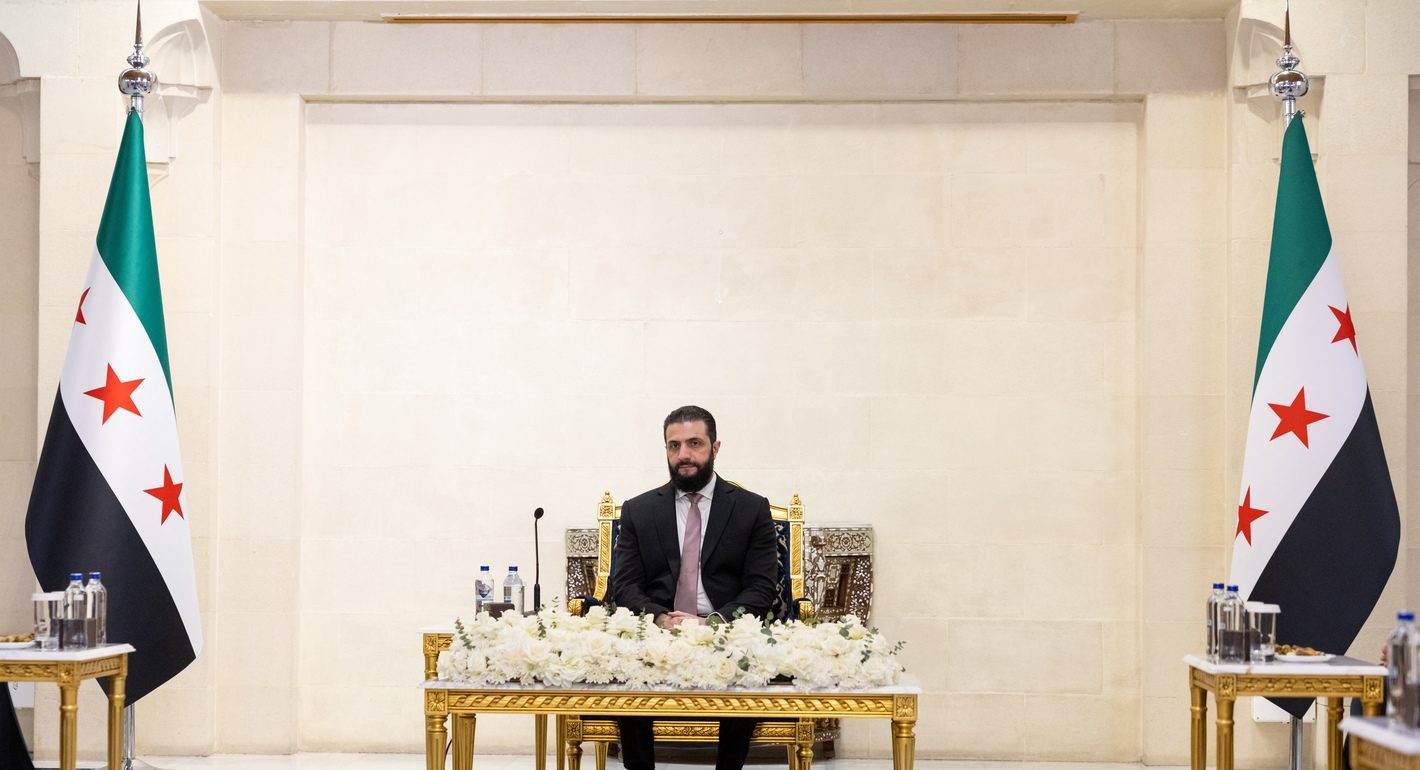
Iraqi ties with Syria have consequently shifted to a cautious relationship through 2025, as reflected in al-Sudani’s meeting with Syrian President Ahmed al-Sharaa in Doha in April 2025. Although some factions in Iraq maintained a more hardline position against the Global Coalition, a broader consensus, especially within the Coordination Framework (CF), emerged in favor of a pragmatic engagement with Washington. This shift was apparent in a December 2025 meeting between Nouri al-Maliki, leader of the State of Law Coalition, and Joshua Harris, the chargé d’affaires of the U.S. Embassy in Baghdad, during which al-Maliki emphasized the CF’s commitment to strong governance and the importance of Iraqi-U.S. economic ties.
The CF is itself a microcosm of Iraq’s schisms, with internal disputes and splits over how to position Iraq between the U.S. and Iran. This internal fragmentation limits Iraq’s ability to set a unified foreign policy stance towards Washington and Tehran. This is especially evident with different factions operating both within the government and outside of the state’s authority, highlighting Iraq’s fundamental lack of sovereign control over the use of violence.
As a result, while the Iraqi government may seek to engage the U.S. further and balance these ties, certain IAMGs similarly seek to safeguard their interests and spoil these efforts, both for domestic and ideological reasons.
For the IAMGs affiliated with the Islamic Resistance in Iraq (IRI), the relative pause in attacks during 2025 stemmed from two pressures. First, the Iraqi government increased efforts to halt militia actions that risked dragging the country into an unaffordable war. Second, and more decisively, the U.S. issued explicit warnings that any renewed attacks on Israel or U.S. forces would prompt direct strikes against the militias.
Ahead of the “12-Day War” in June 2025, the U.S. informed Baghdad that it had prevented an Israeli strike on Iraq by warning al-Sudani of the retaliation that would follow if IAMGs responded militarily. However, the question surrounding the unclaimed radar strikes during this period remains unresolved.
Following the war, CF members emphasized that Iraqi militias avoided further action against Israel or the U.S. to prevent an escalation that could have been disastrous for the country. According to these members, this restraint resulted from an arrangement reached with al-Sudani’s administration. Reports also indicate that Iran discouraged the militias from engaging during the war. Still, the fact that the al-Sudani administration needed to reach an agreement with the IAMGs on the use of force underscores the depth of internal schisms and the constraints these divisions impose on Iraq’s efforts to balance its foreign policy.
Lastly, on November 2, Iraqi Defence Minister Thabit al-Abbasi said during an interview with local media that U.S. Secretary of War Pete Hegseth, during a phone call, alluded to “imminent military operations” in the region— likely linked to the escalating Israel-Iran conflict. According to al-Abbasi, Hegseth explicitly warned Baghdad that Iran-backed armed factions must not engage in military action against Israel. Iran’s Foreign Ministry later condemned the exchange as “American interference” in Iraq’s November 11 elections, prompting a response from the Iraqi Ministry of Foreign Affairs on November 10 that characterized Iran’s statement as an equally unacceptable intrusion into Iraq’s internal affairs. These exchanges highlight the careful balancing act the Iraqi government is attempting to maintain between the U.S. and Iran, while also exposing the reactive nature of its foreign policy.
“Good Neighbor” Foreign Policy:
Several key factors of Iraq’s “Good Neighbor” foreign policy emerged throughout 2024–2025.
Much of this posture is related to three initiatives:
- Cooperation with Türkiye to address the Kurdistan Workers’ Party (PKK) militants in Iraq.
- Cooperation with Iran to address the Kurdistan Free Life Party (PJAK) militants in Iraq.
- Increasing domestic and regional counter-narcotics efforts.
This policy focuses primarily on areas where Iraq can exert direct influence. Unlike the challenge posed by IAMGs, Baghdad’s pressure on dissident groups operating from Iraqi territory and its expansion of counter-narcotics efforts are intended to signal Iraq’s commitment to acting as a responsible regional neighbor. However, particularly in the cases of the PKK and PJAK, these dynamics remain largely shaped by the strategic priorities of external actors—namely Türkiye and Iran. Although Baghdad can argue that such measures align with international norms governing terrorist-designated groups operating from its territory, this rationale weakens when applied to U.S.-designated IAMGs that have also carried out attacks against regional states.
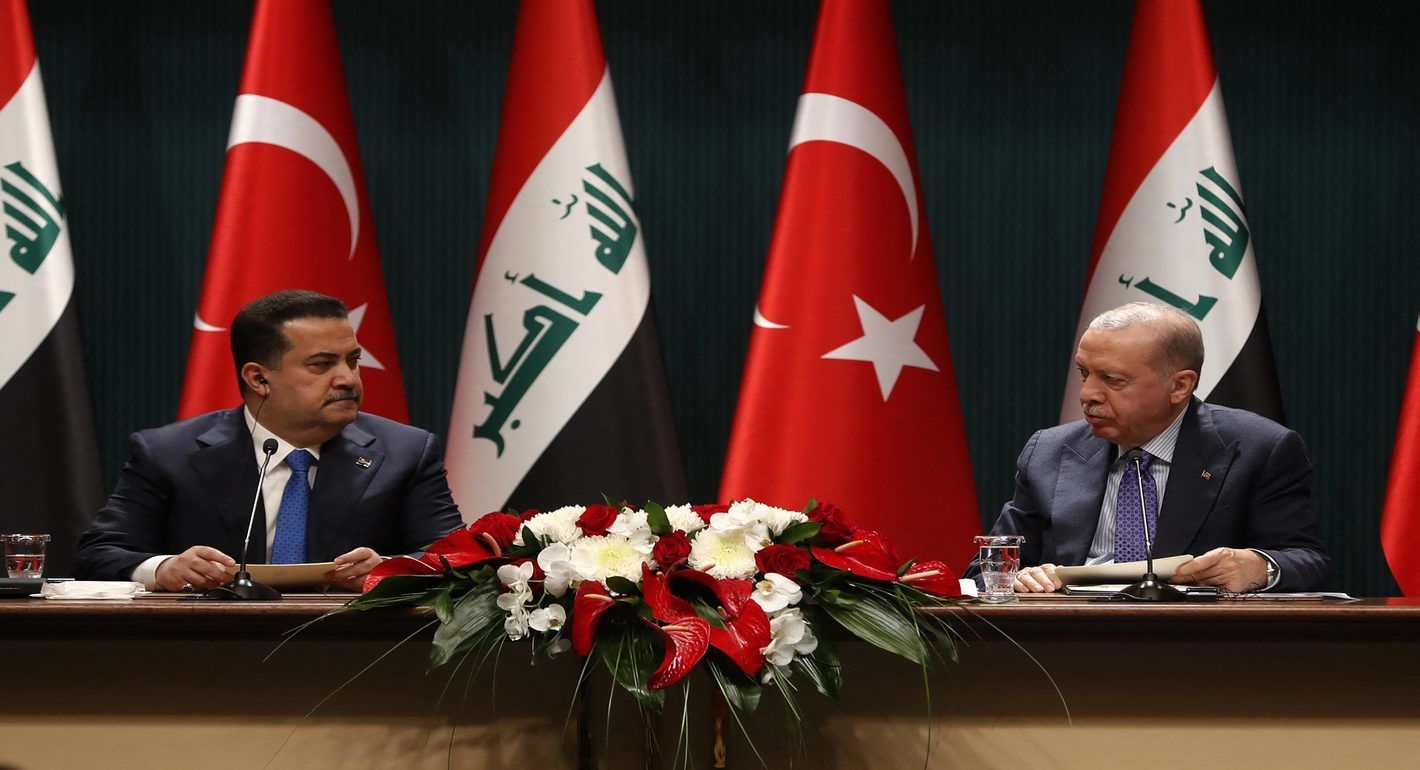
One of the most significant political changes in Iraq-Türkiye relations has centered on the long-standing challenge posed by the Kurdistan Workers’ Party (PKK). For Baghdad, the PKK’s presence within Iraq has provided Ankara with justification to conduct repeated airstrikes inside Iraqi borders. Following high-level talks between Turkish and Iraqi officials in 2024 in Baghdad, the Iraqi government formally banned the PKK and its affiliated parties in the country, and together with the Kurdistan Regional Government, it also sought to push PKK fighters toward designated disarmament camps. This was followed by Turkish President Tayyip Erdogan's first visit to Baghdad since 2011, highlighting the growing ties. However, the approach to the PKK within Iraq remains complicated, especially in areas such as Sinjar, where the PKK, PMF, KDP, Iraqi security forces, and local Yazidi actors are all entrenched in a complex web of security relationships for control, complicated further by the floundering Sinjar Agreement.
Second, Iran’s Supreme National Security Council Secretary Ali Larijani visited Baghdad on August 11, 2025, meeting with National Security Adviser Qasim al-Araji, Iraqi Parliament Speaker Mahmoud al-Mashhadani, President Abdul Latif Rashid, and Prime Minister Mohammed Shia al-Sudani. During the visit, Iraq and Iran signed a Memorandum of Understanding (MoU) on border security cooperation to enhance security and intelligence coordination and joint patrols in border areas. This MoU was built upon the March 19, 2023, Joint Security Agreement on Border Security and Measures to Neutralize the Iranian Kurdish Opposition in the Region. The MoU meeting came after suspected PJAK attacks in Iran by militants based in Iraqi Kurdistan in late July 2025. As with Türkiye, Baghdad’s goal was to prevent renewed cross-border strikes that would further undermine Iraqi sovereignty.
Finally, the Sudani administration has engaged in specific counter-narcotics efforts, with a notable increase in operations against drug traffickers in 2024 and 2025. In the first quarter of 2025, the General Directorate for Narcotics and Psychotropic Substances reported 3,006 arrests and 973 convictions. Authorities seized over 2.166 tons of illicit substances, including 1.538 tons seized under judicial orders from the Central Investigative Court in al-Rusafa.
As Iraq intensified its anti-narcotics campaign, its Anti-Narcotics Directorate was ranked third at the 2024 World Police Summit in Dubai. Iraq has also used this effort to build up relations with neighboring states, notably Saudi Arabia. On March 16, 2025, Iraqi authorities conducted a counter-narcotics operation with intelligence shared by Saudi Arabia’s Ministry of Interior. In a separate case, Iraq’s Ministry of Interior seized around 1.1 tons of Captagon pills smuggled from Syria, in which Iraqi officials confirmed that the operation was carried out with support and intelligence from Saudi Arabia’s General Directorate of Narcotics Control. Yet these efforts remain constrained by militias embedded within state institutions that are deeply engaged in the illicit economy, particularly as trafficking networks regroup following the Assad regime’s collapse.
Economy and Investment – Domestic Needs' Role in Foreign Policy:
To build on trust generated through its “good neighbor” strategy, the Sudani administration prioritized attracting investment to address Iraq’s chronic infrastructure and economic deficits. A proliferation of MoUs signed throughout 2024–2025 aimed to diversify Iraq’s regional partnerships and reintegrate the country economically after years of instability.
For example, Iraq has moved forward with the Development Road project. The framework, signed in 2024 between Iraq, Türkiye, Qatar, and the UAE, established a $17 billion initiative aimed at constructing approximately 1,200 kilometers (745 miles) of two-way railroad tracks and a new highway. The route would run from Basra’s Grand Faw Port through Diwaniyah, Najaf, Karbala, Baghdad, and Mosul before entering Türkiye, positioning Iraq as a transit hub linking markets in the Far East and Middle East with Europe. In parallel, Iraq has signed an oil-for-water agreement with Türkiye to support water infrastructure projects, following the resumption of oil exports through the Kirkuk–Ceyhan pipeline.
Beyond Türkiye, the Iraqi administration has signed memoranda of understanding with Oman, Saudi Arabia, Qatar, the UAE, Kuwait, and Jordan across a wide range of sectors. These agreements span private-sector investment, trade, health, intelligence sharing, counter-narcotics cooperation, electricity generation, and oil and gas development.
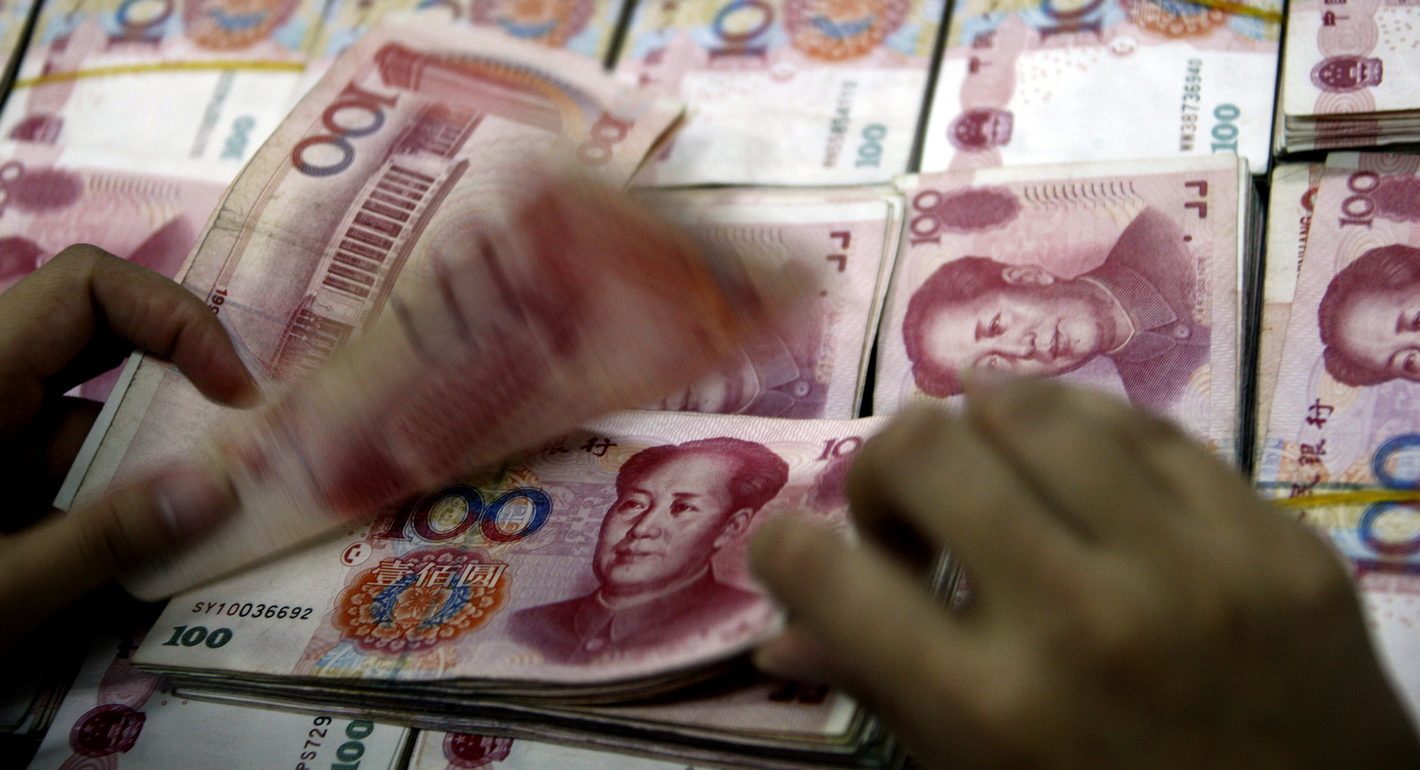
Lastly, Iraq-China ties continue to deepen. Between 50 and 67 percent of Iraq’s oil production comes from fields involving Chinese companies, while Chinese-built power plants have accounted for roughly half of Iraq’s electricity supply since 2019. Many of these projects were developed under the Belt and Road Initiative framework, which Iraq joined in 2015. Bilateral trade has expanded rapidly, with China exporting $8.8 billion in goods to Iraq in the first quarter of 2025, compared to $1 billion during the same period in 2024. Nonetheless, while China has expanded its security and diplomatic engagement through platforms such as the Global Security Initiative and the China–Arab States Cooperation Forum, it cannot match existing U.S. security guarantees or fully offset the potential impact of U.S. sanctions on Iraq. Even so, China remains a favored partner among Iraqi elites, as it is widely perceived as less intrusive, more predictable, and focused on mutually beneficial economic arrangements.
Taken together, these MoUs and agreements are directly tied to Baghdad’s efforts to build regional relationships capable of addressing Iraq’s internal challenges, particularly infrastructure development and job creation. However, while these initiatives represent meaningful progress, their success will depend on whether future governments choose to build on these gains—and, more critically, whether endemic corruption, an opaque business environment, and risk-generating militias ultimately undermine these opportunities.
Conclusion:
To assist Iraq on its path to security and stability, international governments should support institutional development and cooperation with the Iraqi government on investments and infrastructure, while paying close attention to avoiding benefiting militia networks, which will provide the best assistance to the country. This also requires commitment from the Iraqi political elite to instil these reforms meaningfully; otherwise, they will fail. This also includes ongoing security support with Iraq in a negotiated agreement to settle the terms of the relationship. While the primary issues are not going to disappear overnight, a stronger Iraq will become more stable internally and better able to deter foreign interference and internal political abuses.
However, this is almost assuredly against Iran’s fundamental strategy with Iraq, which prefers a weak neighbor, where sub-state actors maintain significant influence. This factor will continue to complicate efforts to strengthen the Iraqi state. That said, international governments would benefit by similarly acknowledging that it is a geopolitical reality that Iraq must maintain relations with Iran. Overall, however, these key issues must be addressed internally by Iraqis. Longstanding political schisms that have defined Iraqi politics for years have hampered the country, and the time to take action is running out, particularly amidst climate change and threats of a regional conflict that could be devastating.
As Iraq continues in its government formation process, the attempts by the prior administration to balance economic and security ties via the “good neighbor” strategy have generally succeeded in avoiding being drawn into a regional war while expanding regional relations, pushing Iraq in a more positive direction. However, this “stability dividend” that Iraq has enjoyed over the past few years cannot be counted on alone – domestic issues concerning water resources, power generation, corruption, militia and party impunity, weak private sector, and budgetary vulnerability highlight the fragility of Iraq’s current calm.
Furthermore, as Israel–U.S. –Iran tensions continue, Iraq’s position remains precarious. The next government in Iraq will inherit these systemic problems, each requiring a unique solution. As such, the next government must build on small gains, balance its international relationships, and strengthen Iraq internally for the good of its people. It is in the inherent interest of the political elite in Iraq to have it seen as a reliable partner and a safe source for investment, let alone for the good and benefit of Iraq’s citizens. Continuing to diversify ties and build trust among regional states and maintaining the “good neighbor” strategy will assist in this goal, but only if the political factions come to an alignment for a truly national strategy that is inclusive to all segments of the country. This includes the parties acknowledging that rogue militia factions are a liability to the state and even to their own fundamental interests. Failing to maintain a foreign policy balance and address internal issues will only deepen these internal divisions, harming Iraq and potentially the entire region. Without such alignment, Iraq risks remaining a house divided—at a moment when it can least afford it.
Acknowledgements:
The author would like to thank Dr. Zmkan Saleem and Hamzeh Hadad for their helpful comments on an early draft of the article, and the excellent team at Sada for their edits.
AI was used for editing this article.