

Commentary
From anime heroes to online gaming communities, Morocco’s Gen Z is building a new protest culture. What does this digital imagination reveal about youth politics, and how should institutions respond?
Abdelilah Farah
{
  "authors": [
    "Mohammed Samhouri"
  ],
  "type": "commentary",
  "blog": "Sada",
  "centerAffiliationAll": "",
  "centers": [
    "Carnegie Endowment for International Peace"
  ],
  "collections": [],
  "englishNewsletterAll": "",
  "nonEnglishNewsletterAll": "",
  "primaryCenter": "Carnegie Endowment for International Peace",
  "programAffiliation": "",
  "programs": [],
  "projects": [],
  "regions": [
    "Palestine",
    "Middle East"
  ],
  "topics": [
    "Economy"
  ]
}

REQUIRED IMAGE
The Palestinian economy has been in an ever-deepening crisis since the outbreak of the second Intifada in 2000, a crisis rooted in and perpetuated by an extremely inauspicious political setting. The record of economic decline is staggering: domestic output and per capita income have plunged; poverty and unemployment have ballooned; private investment has plummeted.
The Palestinian economy has been in an ever-deepening crisis since the outbreak of the second Intifada in 2000, a crisis rooted in and perpetuated by an extremely inauspicious political setting. The record of economic decline is staggering: domestic output and per capita income have plunged; poverty and unemployment have ballooned; private investment has plummeted; and the Palestinian Authority (PA) has developed a growing recurrent fiscal deficit that, along with worsening of humanitarian conditions, consumes more and more of the incoming foreign aid, leaving little for public investment.
Following Hamas’s electoral victory in January 2006, a combination of the crippling Western and Israeli-led financial squeeze and intensified restrictions on Palestinian movement has added to the Palestinian economic calamity. As a result, according to the World Bank, businesses “have closed, and large amounts of financial and human capital have fled … [with] most local capital being kept abroad or invested in real estate or short term trading activities.” In 2006 alone, according to the same World Bank report, Palestinian private investment fell by over 15 percent and businesses were operating at less than 50 percent of their capacity.
Conditions in Gaza are worse still. Five months after the Hamas takeover the coastal enclave, already burdened with high rates of poverty and unemployment, is effectively sealed off from the rest of the world. Its economy, which represents one-third of the Palestinian GDP, lies in tatters and the vast majority of Gazans now depend on foreign handouts for their basic survival.
In the occupied West Bank, the picture is also grim. The heavy presence of Israeli settlements, the construction of the separation barrier, and hundreds of checkpoints and roadblocks (which totaled 561 in October 2007) have seriously fragmented the territorial and economic space of the West Bank, divided the area into isolated Palestinian enclaves, and rendered the conduct of normal business activities increasingly difficult. These limitations on Palestinian movement, which Israel imposes on security grounds, continue to represent the single most significant factor behind the Palestinian economic freefall.
Economic decline has undermined the PA’s political base and grip on power, and led to widespread lawlessness. Today, a spiraling recurrent fiscal deficit, estimated by International Monetary Fund at $1.5 billion (or 34 percent of GDP) by year end, could very well complete the circle and threaten the PA’s very existence. And with domestic sources of finance already stretched to the limit, and a cumulative stock of arrears close to $1 billion, the PA faces serious fiscal problems. Fiscal adjustment under the present conditions is likely to be politically costly, while at the same time the continued economic crisis is bound to further worsen PA fiscal position.
All this poses the question of what needs to be done, and whether the current reform-cum-security-cum-aid approach to the Palestinian economic misfortune can succeed in reversing the downward slide. In this regard, recent past can provide useful lessons. As the experience of 2003-05 has vividly shown, neither economic recovery nor institutional reform can be sustained without a supporting political environment. In fact, the whole post-Oslo Palestinian experiment shows that providing foreign aid under continued conflict conditions and political instability is not sufficient to get the economy off the ground. The implications, therefore, are clear: reviving the Palestinian economy and in the process saving the PA from a potential collapse, require an integrated strategic approach incorporating political, financial and institutional action—with work on the political front leading the way.
Fortunately, a platform for action on each one of these fronts exists on the international level: the Middle East Quartet that deals with the political questions; the Ad Hoc Liaison Committee in charge of garnering financial support for the PA; and the ongoing work of Quartet representative Tony Blair on governance and institutional reforms. What seems to be dangerously lacking is the synergy between these activities, and the understanding that success on economics and reform is inextricably linked to tangible progress on the political front. Unless and until that realization sinks in, chances are that Palestine’s economy will continue to spiral downward, with unforeseen consequences.
To avoid such an outcome, there is an urgent need for the international community to go beyond the mere provision of financial aid and the continued calls for reform in Palestine. Neither development nor reform can be attained or sustained in the absence of a positive political setting. This much we already know from recent past. The need now is for a more active and sustained international engagement to facilitate and advance a serious political process that should lead, in the end, to a lasting negotiated political settlement. Only such a process can provide the essential missing ingredient needed to establish a stable, reformed, and economically viable Palestine.
Mohammed Samhouri is a Palestinian economist and a visiting senior fellow at the Crown Center for Middle East Studies at Brandeis University.
Mohammed Samhouri
Mohammed Samhouri is a U.S.-trained economist with over twenty years of experience in academia, research, and policy making.
Carnegie does not take institutional positions on public policy issues; the views represented herein are those of the author(s) and do not necessarily reflect the views of Carnegie, its staff, or its trustees.
From anime heroes to online gaming communities, Morocco’s Gen Z is building a new protest culture. What does this digital imagination reveal about youth politics, and how should institutions respond?
Abdelilah Farah
In a volatile Middle East, the Omani port of Duqm offers stability, neutrality, and opportunity. Could this hidden port become the ultimate safe harbor for global trade?
Giorgio Cafiero, Samuel Ramani
Is Morocco’s migration policy protecting Sub-Saharan African migrants or managing them for political and security ends? This article unpacks the gaps, the risks, and the paths toward real rights-based integration.
Soufiane Elgoumri
Iraq’s foreign policy is being shaped by its own internal battles—fractured elites, competing militias, and a state struggling to speak with one voice. The article asks: How do these divisions affect Iraq’s ability to balance between the U.S. and Iran? Can Baghdad use its “good neighbor” approach to reduce regional tensions? And what will it take for Iraq to turn regional investments into real stability at home? It explores potential solutions, including strengthening state institutions, curbing rogue militias, improving governance, and using regional partnerships to address core economic and security weaknesses so Iraq can finally build a unified and sustainable foreign policy.
Mike Fleet
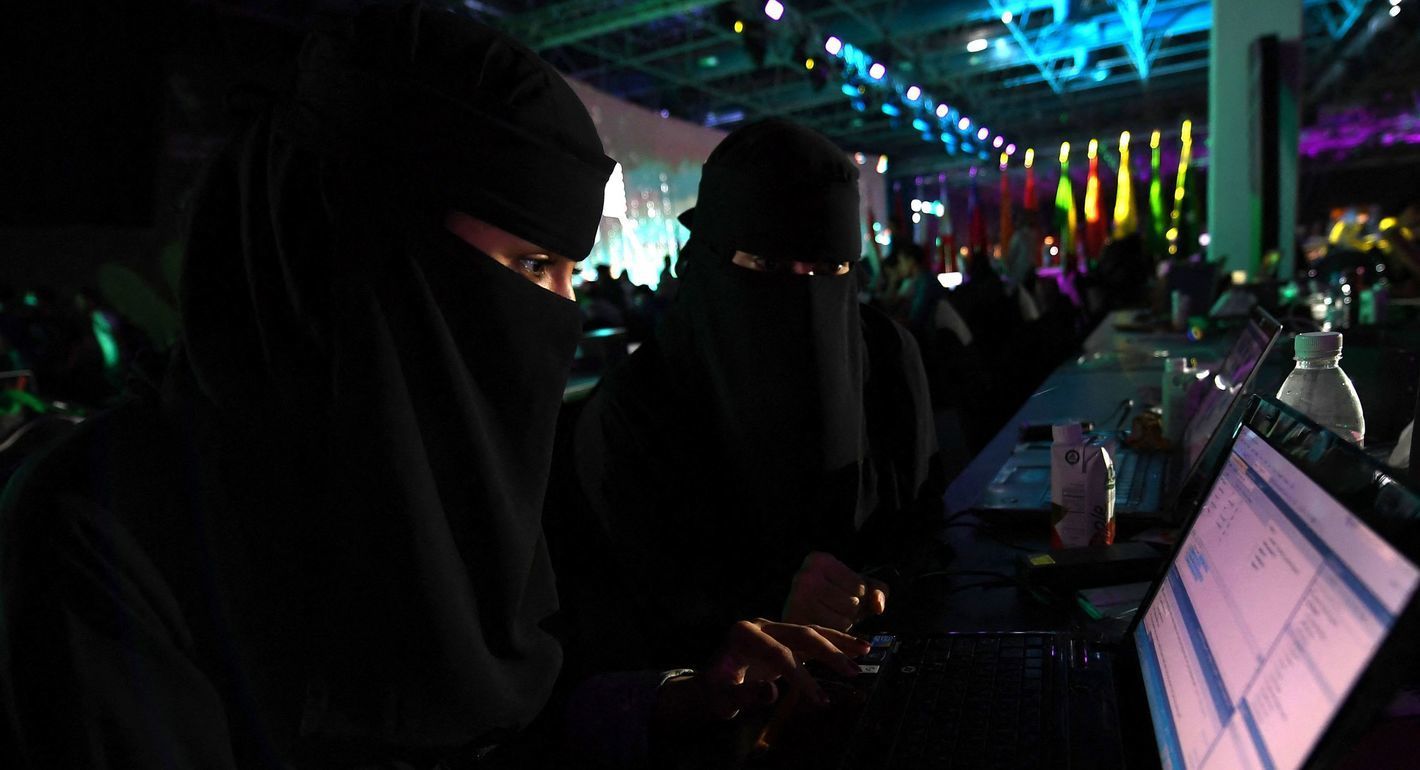
How can Saudi Arabia turn its booming e-commerce sector into a real engine of economic empowerment for women amid persistent gaps in capital access, digital training, and workplace inclusion? This piece explores the policy fixes, from data-center integration to gender-responsive regulation, that could unlock women’s full potential in the kingdom’s digital economy.
Hannan Hussain