
• Research
  • Emissary
  • About
  • Experts
Carnegie Global logoCarnegie lettermark logo
DemocracyIran
  • Donate
REQUIRED IMAGE
Report

China GNP per Capita

Link Copied
By Dr. Albert Keidel
Published on Dec 14, 1994
Program mobile hero image

Program

Asia

The Asia Program in Washington studies disruptive security, governance, and technological risks that threaten peace, growth, and opportunity in the Asia-Pacific region, including a focus on China, Japan, and the Korean peninsula.

Learn More

Source: World Bank

Back in 1994, Carnegie Senior Associate Albert Keidel, as a consultant for the World Bank, made a detailed analysis of GNP per Capital in China published at an internal World Bank report. He evaluated the various estimates at that time of China's PPP-dollar GNP, including the one the World Bank subsequently used through 2007. He pointed out a number of biases in the World Bank estimate at that time that likely made the estimate too high. Other chapters in the report calculated how the underpricing of services in the early 1990s made China's official GDP statistics reporting understate the scale of the economy. This estimate became the basis for Chinese GDP figures reported in World Bank statistics until the late 1990s. In 2000, a subsequent World Bank evaluation of then recent price reforms, in which Keidel also participated, concluded that service sector price reforms had made the earlier adjustments no longer necessary. Analysis of China's PPP figure adopted at that time begins on page 41 of this report.

This report was orignally published by the World Bank Reserach Committee. 

About the Author

Dr. Albert Keidel

Former Senior Associate, China Program

Keidel served as acting director and deputy director for the Office of East Asian Nations at the U.S. Department of the Treasury. Before joining Treasury in 2001, he covered economic trends, system reforms, poverty, and country risk as a senior economist in the World Bank office in Beijing.

    Recent Work

  • Article
    As China's Exports Drop, Can Domestic Demand Drive Growth?

      Dr. Albert Keidel

  • Article
    China’s Fourth Quarter 2008 Statistical Record

      Dr. Albert Keidel

Dr. Albert Keidel
Former Senior Associate, China Program
Albert Keidel
ChinaEconomyTrade

Carnegie does not take institutional positions on public policy issues; the views represented herein are those of the author(s) and do not necessarily reflect the views of Carnegie, its staff, or its trustees.

More Work from Carnegie Endowment for International Peace

  • Commentary
    China Financial Markets
    The Plaza Accord and Its Relevance for China

    The Plaza Accord was not an externally imposed punishment of Japan but part of a broader restructuring that Japanese economists and policymakers themselves recognized was necessary. Its effects were undermined, however, when Tokyo responded to the resulting slowdown with policies that exacerbated investment, credit expansion, and the very imbalances the adjustment was intended to resolve.

      Michael Pettis

  • Commentary
    Carnegie Politika
    Belarus Wants More From the West Than a ‘Massive Deal’ on Potash

    Trump has promised Belarus a massive potash deal. But Minsk is seeking something greater: restored Western transit and greater room for maneuver from Russia.

      Balázs Jarábik
  • Commentary
    Emissary
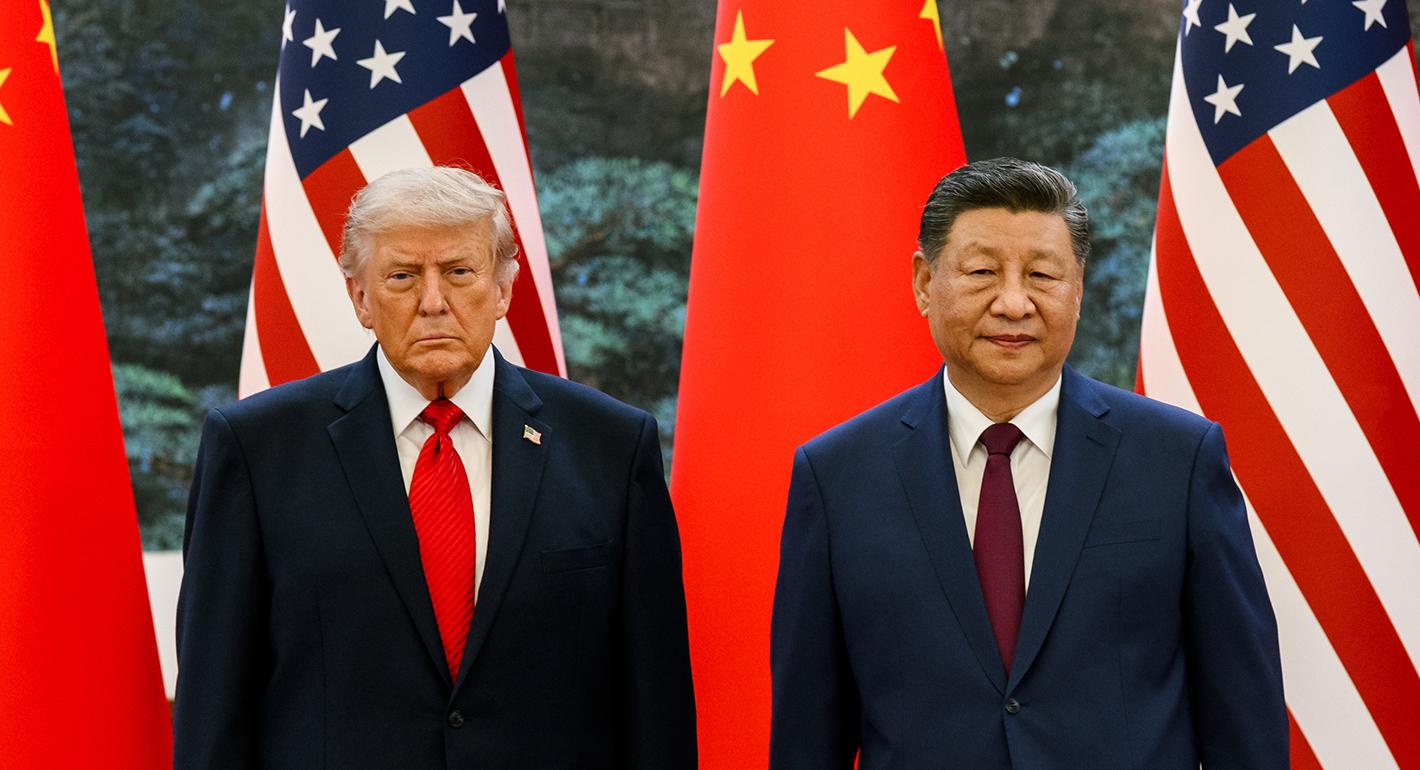
    What to Watch When Trump and Xi Meet in Washington

    The real test may come after the leaders leave the room.

      • Sheena Chestnut Greitens
      • Oriana Skylar Mastro's headshot
      • +1

      Sheena Chestnut Greitens, Oriana Skylar Mastro, Yukon Huang, …

  • The nuclear missile formation passes through Tian'anmen Square during a military parade on September 3, 2025 in Beijing, China.
    Paper
    Untangling the Nuclear Knot: A Constructive Agenda for Managing China’s Nuclear Relations with the United States and Its Allies

    The nuclear relationship between China and the United States is increasingly shaped by widening perception gaps rather than deliberate strategic design.

      Tong Zhao

  • Ukraine Russia Black Sea Food
    Commentary
    Strategic Europe
    A Black Sea Truce Is About Global Food Security, Too

    A summer of escalation in the Black Sea has hurt Ukraine economically and is exacerbating world food security. A truce is needed—as is a broader reframing of Europe’s Ukraine strategy.

      Thomas de Waal

Get more news and analysis from
Carnegie Endowment for International Peace
Carnegie global logo, stacked
1779 Massachusetts Avenue NWWashington, DC, 20036-2103Phone: 202 483 7600
  • Research
  • Emissary
  • About
  • Experts
  • Donate
  • Programs
  • Events
  • Blogs
  • Podcasts
  • Contact
  • Annual Reports
  • Careers
  • Privacy
  • For Media
  • Government Resources
Get more news and analysis from
Carnegie Endowment for International Peace
© 2026 Carnegie Endowment for International Peace. All rights reserved.


