

Report
- +2
George Perkovich, Jessica Tuchman Mathews, Joseph Cirincione, …
{
  "authors": [
    "Joseph Cirincione"
  ],
  "type": "legacyinthemedia",
  "centerAffiliationAll": "dc",
  "centers": [
    "Carnegie Endowment for International Peace"
  ],
  "collections": [
    "U.S. Nuclear Policy",
    "Korean Peninsula"
  ],
  "englishNewsletterAll": "ctw",
  "nonEnglishNewsletterAll": "",
  "primaryCenter": "Carnegie Endowment for International Peace",
  "programAffiliation": "NPP",
  "programs": [
    "Nuclear Policy"
  ],
  "projects": [],
  "regions": [
    "United States",
    "Middle East",
    "Iran",
    "South Korea",
    "East Asia"
  ],
  "topics": [
    "Foreign Policy",
    "Nuclear Policy",
    "Nuclear Energy"
  ]
}
REQUIRED IMAGE
Source: YaleGlobal
The fate of the most successful international security pacts in history hangs in the balance, as envoys from around the world meet to review the nuclear Non-Proliferation Treaty (NPT) at a United Nations conference. But US leadership is nowhere to be found. It is the latest sign that the Bush administration's counter-proliferation strategy has failed.
The NPT has united the world against the spread of nuclear weapons for 35 years and has permitted only one defector: North Korea. Today, this important security system is mired in such discord that it is in danger of crumbling. North Korea is ratcheting up the pressure, unloading yet another batch of plutonium-rich fuel from its reactor. Iran, meanwhile, threatens to end its suspension of uranium enrichment, a process that can make fuel for nuclear reactors and also for bombs.
These two nations get the daily headlines, but there are other dangers. There are still 27,000 nuclear weapons in the world held by eight nations (and possibly North Korea). Fifteen years after the Cold War, the United States and Russia account for over 26,000 of these warheads, with thousands still on hair-trigger alert, ready to launch in 15 minutes. There are also hundreds of tons of bomb material – highly enriched uranium and plutonium, much of it poorly guarded – in the stockpiles of the former Soviet republics and in civilian research reactors in some 40 nations. Al-Qaida is known to have an interest in acquiring these materials or weapons, yet programs to secure and eliminate them crawl along at a snail's pace.
There is no shortage of good, solid ideas for how to address these threats. The Carnegie Endowment report, Universal Compliance: A Strategy for Nuclear Security, has over one hundred practical recommendations, including twenty in a high-priority "action plan." Other reports from a special high-level panel to UN Secretary-General Kofi Annan and an expert panel of the International Atomic Energy Agency (IAEA) detail similar suggestions. President George W. Bush had several innovative proposals in his speech of February 11, 2004. IAEA Director-General Mohamed ElBaradei made over a dozen urgent recommendations in his speech to the conference on opening day.
The problem is lack of consensus. It took ten days of the month-long conference to even reach agreement on the agenda. Now, few expect that the conference will be able to write a consensus document by the end of the month. It is a major setback for US non-proliferation efforts and one that has been largely self-inflicted. Here, the shadow of Undersecretary of State for Arms Control John Bolton looms large: His strategy set the American approach – all but guaranteeing a deadlock.
Despite repeated calls by President Bush and Bolton himself for "action" to fix flaws in the treaty and build consensus among nations, little has been done over the past year, either to prepare for the conference or to advance new approaches. One former senior Bush official told the reporters, "Everyone knew the conference was coming and that it would be contentious. But Bolton stopped all diplomacy on this six months ago." 1
This was obvious in discussions I held with officials over the past six months. One senior UN official told me over lunch at the delegates' dining room, "Look around. The conference is just six weeks away. Normally, you would see Americans buttonholing delegates, lining them up in support. There is nothing." Officials in Europe told me that they did not hear a peep from the Americans until just a few weeks before the conference.
The flawed strategy goes deeper than one man's career distraction; it reflects a deep disdain for the international agreements and institutions. Many neo-conservatives in Washington believe these multilateral meetings are worthless. Worse, they see them as a trap where global Lilliputians can tie down the American Gulliver. To move beyond these "outmoded" instruments, President Bush pulled out of some treaties, ignored others, and gutted still others.
At the conference, the plan is to focus on denouncing Iran and North Korea for failing to comply with their treaty obligations. Many nations share that concern, but couple it with demands that the United States and the other nuclear-weapon states fulfill their obligations to not only reduce their nuclear arsenals but actually eliminate them. They are not persuaded by US arguments that its stockpile has halved over the past ten years; the United States will still have 5,000 nuclear weapons next decade, plans to retain that number indefinitely, and may soon begin building new generations of nuclear-armed missiles, bombers, and submarines.
Had the administration's strategy worked, these demands could have been rebuffed or ignored. The idea was to replace these international forums with US-centric initiatives, and to shift the focus from treaties to direct action that would eliminate certain regimes that had weapons. The war with Iraq was step one, intended to send a message to Iran and North Korea that they had better abandon their programs or face the consequences.
The result: Iran and North Korean nuclear capabilities have rapidly advanced in the past three years. They sped up their efforts to get the weapons needed to deter American attacks. The brutal war in Iraq has bogged down US forces and greatly weakened US credibility. It is difficult to imagine any new coalition willing to rally around new US calls for military actions.
The pendulum is now swinging back from the extreme policies of the neo-conservative idealists. The cost has been too great, the results too meager. There is a growing recognition that the United States cannot defeat the nuclear threat alone, or even with small coalitions of the willing. It needs sustained cooperation from dozens of diverse nations – including China, Russia, France, the United Kingdom, and leading states that have forsworn nuclear weapons, such as Brazil, Germany, and Japan – in order to broaden, toughen, and stringently enforce nonproliferation rules. In exchange, the nuclear states must show that tougher nonproliferation rules not only benefit the powerful but constrain them as well. Nonproliferation is a set of bargains whose fairness must be self-evident if the majority of countries is to support their enforcement.
Success will depend on the United States' ability to marshal legitimate authority that motivates others to follow. As Francis Fukuyama notes, "Other people will follow the American lead if they believe it is legitimate; if they do not, they will resist, complain, obstruct, or actively oppose what we do. In this respect, it matters not what we believe to be legitimate, but rather what other people believe is legitimate."
A return to moderation, however, may come too late to salvage the NPT conference. The best chance would be for the United States to embrace the common EU position: a consensus synthesizing the views of the two European nuclear powers, France and the United Kingdom, with the goals of the 23 EU non-nuclear-weapon states. The document is a balance of obligations. It reaffirms the goal of nuclear disarmament, while also endorsing tougher inspection and new mechanisms to deter and punish states that withdraw from the treaty to build nuclear bombs.
Time is short. The treaty is in trouble. The United States is floundering. The Europeans may yet ride to the rescue. Let's hope the Americans are prepared to listen.
Joseph Cirincione is director for nonproliferation at the Carnegie Endowment for International Peace. He is co-author of Universal Compliance: A Strategy for Nuclear Security and the forthcoming Deadly Arsenals: Nuclear, Biological and Chemical Threats. He publishes a leading proliferation web site at www.ProliferationNews.org.
1 Michael Hirsh and Eve Conant, "A Nuclear Blunder?", Newsweek, May 11, 2005, web version available at: http://msnbc.msn.com.
Former Senior Associate, Director for NonProliferation
Recent Work

George Perkovich, Jessica Tuchman Mathews, Joseph Cirincione, …
Joseph Cirincione
Carnegie does not take institutional positions on public policy issues; the views represented herein are those of the author(s) and do not necessarily reflect the views of Carnegie, its staff, or its trustees.

Although Ukrainian strikes have led to a noticeable decline in the physical volume of Russian oil exports, the rise in prices has more than made up for it.

Sergey Vakulenko

Five problems—and solutions—to make it actually work as a tool of great power competition.

Afreen Akhter
The Russian leadership wants to avoid a dangerous precedent in which it is squeezed out of Iran by the United States and Israel—and left powerless to respond in any meaningful way.

Nikita Smagin
One is hopeful. One is realistic. One is cautionary.

Andrew Leber, Sam Worby
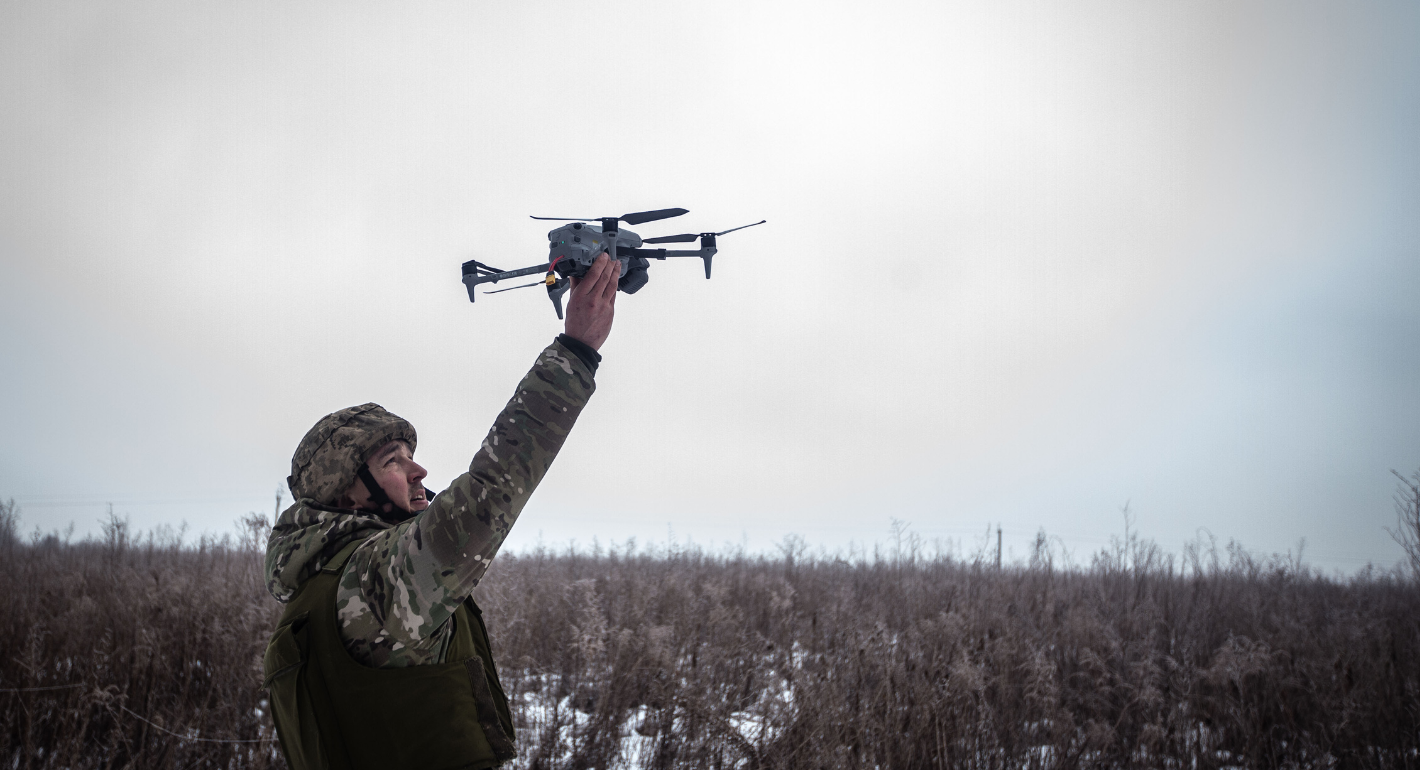
In Ukraine, Gaza, and Iran, AI warfare has come to dominate, with barely any oversight or accountability. Europe must lead the charge on the responsible use of new military technologies.

Raluca Csernatoni