• Research
  • Emissary
  • About
  • Experts
Carnegie Global logoCarnegie lettermark logo
DemocracyIran
  • Donate
Afghanistan: Searching for Political Agreement
Report

Afghanistan: Searching for Political Agreement

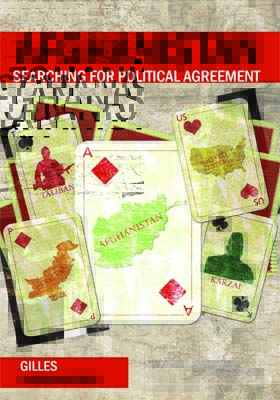
A less costly and more effective way for the international coalition to overcome the impasse in Afghanistan is a negotiated agreement with the Taliban, which could pave the way for a unity government.

Link Copied
By Gilles Dorronsoro
Published on Apr 13, 2010

Additional Links

Full Text
Program mobile hero image

Program

South Asia

The South Asia Program informs policy debates relating to the region’s security, economy, and political development. From strategic competition in the Indo-Pacific to India’s internal dynamics and U.S. engagement with the region, the program offers in-depth, rigorous research and analysis on South Asia’s most critical challenges.

Learn More

Coalition strategy in Afghanistan has reached an impasse: tactical successes will not defeat the Taliban while Pakistan offers sanctuary, nor can security be “Afghanized” by a government that lacks legitimacy and is irreparably unpopular. A less costly—both in lives and money—and more effective option would be a negotiated agreement with the Taliban that paves the way for a unity government. 

Challenging the coalition’s strategy:

  • Small military setbacks will not deal a significant blow to the Taliban as they have more than 30,000 insurgents and a steady pool of potential recruits. Co-opting local figures is unlikely—this failed in 2002 when the Taliban were at their weakest.
     
  • The coalition’s “go local” strategy of supporting unchecked local militias is polarizing the Afghan public and further weakening Afghan institutions.
     
  • The idea that 80 percent of insurgents can be enticed to lay down their arms for jobs has no empirical basis. The Taliban remain a cohesive, nationally organized movement. 
     
  • Parliamentary elections slated for September will only further undermine the legitimacy of the Afghan government—fraud is inevitable.


To begin negotiating with the Taliban, the coalition should:

  • Involve Pakistan: Pakistan must be included—as the intermediary to the Taliban—even at the expense of India’s involvement. Pakistan is the only country in the region that is a potential spoiler in the process.
     
  • Establish a cease-fire: A cease-fire during the negotiation process would demobilize the Taliban and distance them from radical groups like al-Qaeda and the Pakistani Taliban.
     
  • Work around Karzai: The coalition should negotiate directly with the Taliban. The president is too weak and cannot make a commitment on key points, including the withdrawal of Western troops and security guarantees relating to al-Qaeda.
     
  • Mobilize NGOs: A new constitution will need to be written to create a unity government and it will inevitably be more conservative than it is today. To prevent backsliding on human rights, particularly for women, the coalition must encourage NGO involvement in the process.


“Nothing guarantees that negotiations—if agreed to by the Taliban—will succeed. Furthermore, the regime that will be established will be unstable for months, perhaps even years,” writes Dorronsoro.

“But if the negotiations succeed, they will enable the formation of a national unity government in Kabul, a new constitution negotiated during a Loya Jirga, and internal and international guarantees to prevent the return of al-Qaeda. Given the current impasse in which the coalition finds itself, such a result is the best that one can hope for.”

About the Author

Gilles Dorronsoro

Former Nonresident Scholar, South Asia Program

Dorronsoro’s research focuses on security and political development in Afghanistan. He was a professor of political science at the Sorbonne in Paris and the Institute of Political Studies of Rennes.

    Recent Work

  • Paper
    Waiting for the Taliban in Afghanistan

      Gilles Dorronsoro

  • Paper
    Afghanistan: The Impossible Transition

      Gilles Dorronsoro

Gilles Dorronsoro
Former Nonresident Scholar, South Asia Program
Gilles Dorronsoro
North AmericaUnited StatesSouth AsiaAfghanistanAsiaPolitical ReformSecurityForeign Policy

Carnegie does not take institutional positions on public policy issues; the views represented herein are those of the author(s) and do not necessarily reflect the views of Carnegie, its staff, or its trustees.
More Work from Carnegie Endowment for International Peace

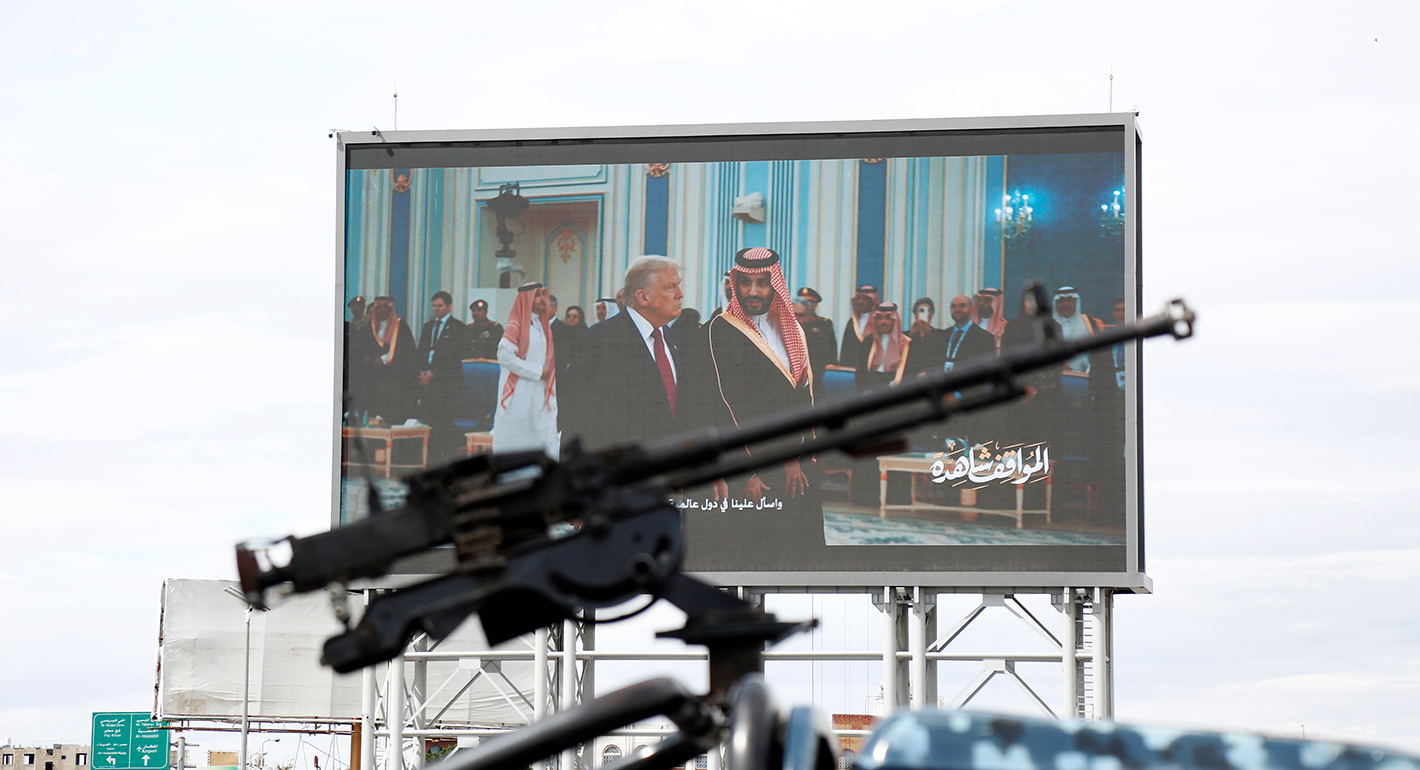
  •  A machine gun of a Houthi soldier mounted on a police vehicle next to a billboard depicting the U.S. president Donald Trump and Mohammed Bin Salman, the Crown Prince and Prime Minister of Saudi Arabia, during a protest staged to show support to Iran against the U.S.-Israel war on March 27, 2026 in Sana'a, Yemen.
    Collection
    The Iran War’s Global Reach

    As the war between the United States, Israel, and Iran continues, Carnegie scholars contribute cutting-edge analysis on the events of the war and their wide-reaching implications. From the impact on Iran and its immediate neighbors to the responses from Gulf states to fuel and fertilizer shortages caused by the effective shutdown of the Strait of Hormuz, the war is reshaping Middle East alliances and creating shockwaves around the world. Carnegie experts analyze it all.

  •  A machine gun of a Houthi soldier mounted on a police vehicle next to a billboard depicting the U.S. president Donald Trump and Mohammed Bin Salman, the Crown Prince and Prime Minister of Saudi Arabia, during a protest staged to show support to Iran against the U.S.-Israel war on March 27, 2026 in Sana'a, Yemen.
    Article
    Amid Iran War, Gulf Countries Slow the Pace of Reforms

    The return of war as the organizing factor in Middle Eastern politics has predictable consequences: governments are prioritizing regime stability and becoming averse to political and social reform.


      • Sarah Yerkes

      Sarah Yerkes, Amr Hamzawy

  • Commentary
    Carnegie Politika
    Power, Pathways, and Policy: Grounding Central Asia’s Digital Ambitions

    Central Asia’s digital ambitions are achievable, but only if policy is aligned with the region’s physical constraints.

      Aruzhan Meirkhanova
  • Commentary
    Strategic Europe
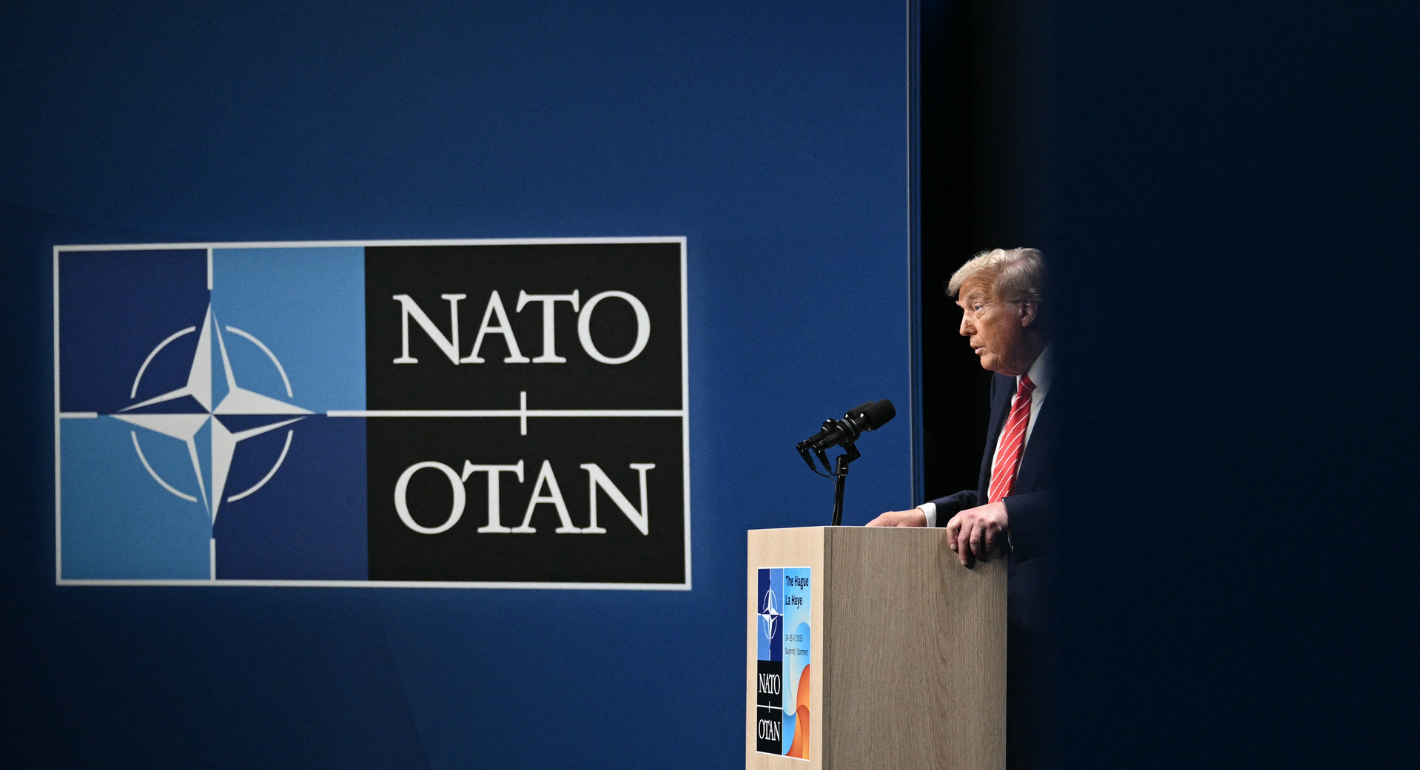
    Taking the Pulse: Can NATO Survive the Iran War?

    Donald Trump has repeatedly bashed NATO and European allies, threatening to annex Canada and Greenland and deploring their lack of enthusiasm for his war of choice in Iran. Is this latest round of abuse the final straw?

      • Rym Momtaz

      Rym Momtaz, ed.

  • A person faces away from the camera wearing a yellow jacket with "PRESS" printed across the back
    Paper
    The Impact of Ending U.S. International Media Assistance

    The future looks bleak for independent media worldwide, but there is a robust infrastructure of knowledge, organizations, and people to build upon.


      Daniel Sabet, Susan Abbott
Get more news and analysis from
Carnegie Endowment for International Peace
Carnegie global logo, stacked
1779 Massachusetts Avenue NWWashington, DC, 20036-2103Phone: 202 483 7600Fax: 202 483 1840
  • Research
  • Emissary
  • About
  • Experts
  • Donate
  • Programs
  • Events
  • Blogs
  • Podcasts
  • Contact
  • Annual Reports
  • Careers
  • Privacy
  • For Media
  • Government Resources
Get more news and analysis from
Carnegie Endowment for International Peace
© 2026 Carnegie Endowment for International Peace. All rights reserved.