• Research
  • Emissary
  • About
  • Experts
Carnegie Global logoCarnegie lettermark logo
DemocracyIran
  • Donate
{
  "authors": [],
  "type": "pressRelease",
  "centerAffiliationAll": "dc",
  "centers": [
    "Carnegie Endowment for International Peace"
  ],
  "collections": [],
  "englishNewsletterAll": "asia",
  "nonEnglishNewsletterAll": "",
  "primaryCenter": "Carnegie Endowment for International Peace",
  "programAffiliation": "AP",
  "programs": [
    "Asia"
  ],
  "projects": [],
  "regions": [
    "Southeast Asia"
  ],
  "topics": []
}
REQUIRED IMAGE

REQUIRED IMAGE

Press Release

Bakrie Center Foundation Endows Carnegie Southeast Asia Chair

The Carnegie Endowment for International Peace announced that the Bakrie Center Foundation will generously support a new senior associate to work on Southeast Asian issues, based in Washington, D.C.

Link Copied
Published on Jul 26, 2010
Program mobile hero image

Program

Asia

The Asia Program in Washington studies disruptive security, governance, and technological risks that threaten peace, growth, and opportunity in the Asia-Pacific region, including a focus on China, Japan, and the Korean peninsula.

Learn More

WASHINGTON, July 26—The Carnegie Endowment for International Peace announced today that the Bakrie Center Foundation will generously support a new senior associate to work on Southeast Asian issues, based in Washington, D.C.

The Bakrie chair will focus on political, economic, and strategic developments in Southeast Asia and the region’s global influence. In collaboration with colleagues in Carnegie’s offices in Moscow, Beirut, Brussels, and Beijing, the position will research and analyze policy pertaining to Southeast Asia.

Making the announcement, Douglas Paal, vice president for studies at the Carnegie Endowment, said:

“Carnegie is grateful for the Bakrie Center Foundation’s commitment to shaping international knowledge—and therefore global policy—on Southeast Asia and its geopolitical importance. The region is too often overlooked and we thank the Foundation for expanding its long-term commitment to increasing global understanding on Southeast Asia.”

Anindya Novyan Bakrie, head of the Bakrie Foundation and CEO of Bakrie Telecom, said:

“Working out of the world-class Carnegie Endowment, the Bakrie chair will contribute policy relevant research by revealing key political, economic, and socio-cultural trends in Indonesia and Southeast Asia. The senior associate will address the unanswered questions of the region and become a reference point for policy makers in the United States and the international community.”

###


ABOUT

  • The Bakrie Chair for Southeast Asian Studies will focus on the political, economic, and strategic developments in Southeast Asia and the region’s global influence. Based in Washington, the position will provide research and analysis on policy pertaining to Southeast Asia in collaboration with colleagues in Carnegie’s offices in Moscow, Beirut, Brussels, and Beijing. The chair is endowed by a generous contribution from the Bakrie Center Foundation.
  • With today’s announcement, Carnegie is beginning a search for a new senior associate to fill the Bakrie chair. For additional information, please visit www.carnegieendowment.org/employment.

NOTES

  • The Bakrie Center Foundation (BCF) is led directly by Anindya Novyan Bakrie and the third generation of the Bakrie family. Its primary objective is to provide Indonesia’s best and brightest with a chance to study for a higher education at some of the best universities at home and abroad. It is a private sector initiative to identify and develop leaders in Indonesia, creating a talent pool that will eventually drive economic development and growth. The BCF is an integral part of the established Yayasan Bakrie Untuk Negri (BUN) in philosophy and values. Initiatives complement and expand the work of BUN which has pioneered several philanthropic and educational efforts in Indonesia, including the establishment of Bakrie University, a full-fledged undergraduate institution. All its efforts go back to the deep-rooted conviction of its founding father and enduring mission of the Bakrie Group: to give back to society and build a more prosperous Indonesia.
  • The Carnegie Asia Program in Beijing and Washington provides clear and precise analysis to policy makers on the complex economic, security, and political developments in the Asia-Pacific region.
  • The Carnegie–Tsinghua Center for Global Policy is a joint U.S.–China research center based at Tsinghua University in Beijing, China. The Center brings together senior scholars and experts from the United States and China for collaborative research on common global challenges that face the United States and China.
  • Following its century-long practice of changing as global circumstances change, the Carnegie Endowment for International Peace is undertaking a fundamental redefinition of its role and mission. Carnegie aims to transform itself from a think tank on international issues to the first truly multinational—ultimately global—think tank. The Endowment has added operations in Beijing, Beirut, and Brussels to its existing centers in Washington and Moscow. These five locations include the two centers of world governance and the three places whose political evolution and international policies will most determine the near-term possibilities for international peace and economic advance. More information on the Carnegie Endowment's Global Vision.

PRESS CONTACT

  • Kendra Galante, 202-939-2233, pressoffice@ceip.org
Southeast Asia

Carnegie does not take institutional positions on public policy issues; the views represented herein are those of the author(s) and do not necessarily reflect the views of Carnegie, its staff, or its trustees.
More Work from Carnegie Endowment for International Peace

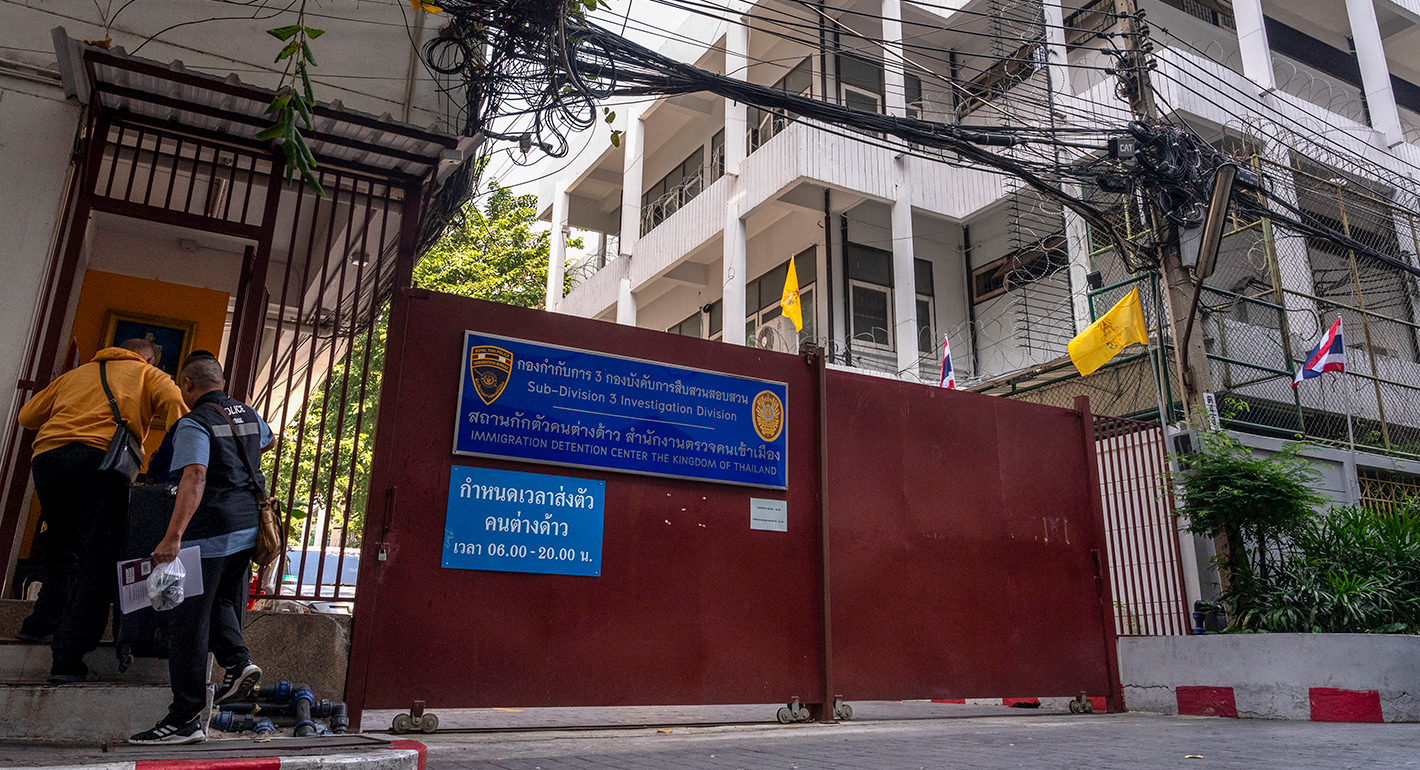
  • Police enter an immigration detention centre in Bangkok on January 22, 2025.
    Article
    Inside the Swap Mart: How Thailand’s Domestic Digital Repression Enables Transnational Repression

    Thailand is no longer safe for regional activists; neither are Cambodia, Laos, or Vietnam for Thai dissidents who had typically sought refuge in those countries.

      Janjira Sombatpoonsiri
  • Commentary
    Carnegie Politika
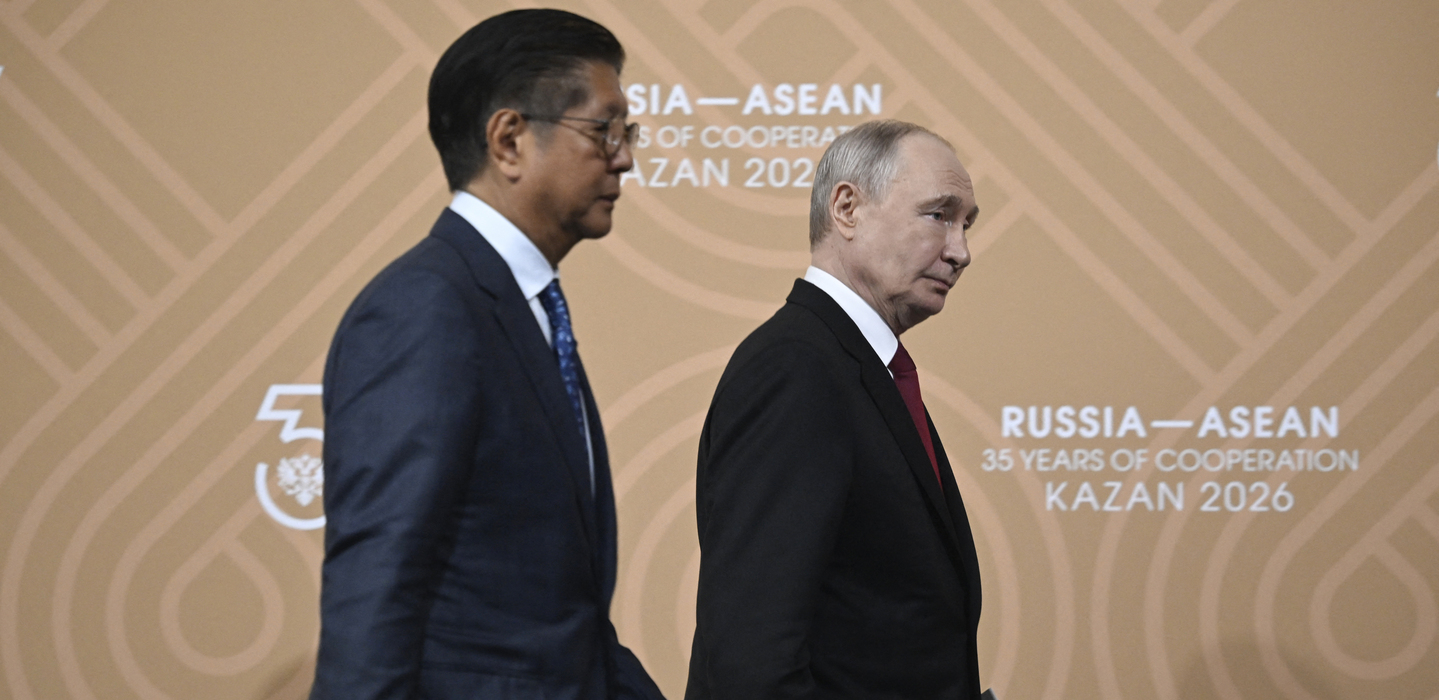
    Iran War Fallout Gifts Putin Diplomatic Victory at ASEAN Summit

    Russia looks set to reap economic benefits from closer ties with Southeast Asian countries that are keen to find reliable energy suppliers and diversify trade ties.

      • Alexander Gabuev

      Alexander Gabuev

  • Article
    China Is Building New Financial Architecture for Clean Energy Tech. It May Come with Conditions.

    China’s central bank swap lines could help developing world leaders drive their energy transition—if they harness conditionality to protect their interests.

      Ebipere K. Clark

  • Commentary
    China Sells Stability Amid American Volatility

    U.S. unpredictability has allowed China to capitalize on its positioning as the “responsible great power”. Paradoxically, the more China wins the perception game, the more likely expectations will rise for Beijing to deliver not just words but to demonstrate with its deeds.

      Chong Ja Ian

  • Vietnam's Top Leader To Lam meets with young representatives from China and Vietnam participating in the "Red Study Tours" at the Great Hall of the People on April 15, 2026 in Beijing, China. T
    Commentary
    Why Vietnam Is Swinging in China’s Direction

    Hanoi and Beijing have long treated each other as distant cousins rather than comrades in arms. That might be changing as both sides draw closer to hedge against uncertainty and America’s erratic behavior.

      • Nguyen-khac-giang

      Nguyễn Khắc Giang

Get more news and analysis from
Carnegie Endowment for International Peace
Carnegie global logo, stacked
1779 Massachusetts Avenue NWWashington, DC, 20036-2103Phone: 202 483 7600
  • Research
  • Emissary
  • About
  • Experts
  • Donate
  • Programs
  • Events
  • Blogs
  • Podcasts
  • Contact
  • Annual Reports
  • Careers
  • Privacy
  • For Media
  • Government Resources
Get more news and analysis from
Carnegie Endowment for International Peace
© 2026 Carnegie Endowment for International Peace. All rights reserved.