

Commentary
Putin’s conservative staffing policies and search for ever greater control have cemented parliament’s transformation into a bureaucratic appendage of the executive branch.
Andrey Pertsev
Source: Getty
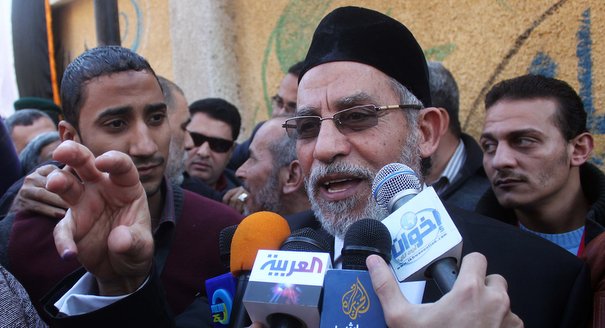
Given the overall political climate in Egypt and divisions within the Muslim Brotherhood, it seems likely that the Brotherhood will have a weaker showing in the upcoming elections than it did in 2005.
As the November 28 elections approach, the Muslim Brotherhood appears conflicted and troubled compared to its state before the 2005 parliamentary polls. Many in Egypt were taken aback by the Brotherhood’s determination to participate in the coming elections. But despite the organized repression the Brotherhood has faced since 2005, the scant rewards it has earned from its legislative work, and the many restrictions on participation in this year’s elections—nearly a quarter of its candidates have been disqualified already and its main slogan declared illegal—the group still has opted to run.
In 2005, the Brotherhood put up more than 150 candidates (all running as independents as the Brotherhood is an outlawed organization) in an election characterized by unprecedented mobilization. Opposition parties and movements saw participation as the best way to challenge National Democratic Party (NDP) control over the People’s Assembly. An internal consensus among top level and grassroots Brotherhood leaders led the group to contest more than a third of the elected seats in the People’s Assembly. The strong community appeal of many Brotherhood candidates in their constituencies—as well as the protest vote against the NDP—helped the group win 88 seats (20 percent of the assembly), its best showing ever.
This year the Brotherhood is competing under markedly different circumstances. Political freedoms have suffered a number of setbacks since 2005, including repeated extensions of the state of emergency and a set of constitutional amendments that removed full judicial supervision of elections and outlawed any political activity “with a religious point of reference.” Senior members and financiers of the Brotherhood, meanwhile, have been subjected to imprisonment and military trials. Nonetheless, the Brotherhood continues to side with the Wafd and other parties that still favor participation in elections.
More serious for the Brotherhood than external repression is its vanishing internal consensus, whether among its top level leaders or grassroots activists, on whether to participate in the elections. Arguments in favor of participation in recent years have included that it would mobilize the Brotherhood’s supporters, that the Brotherhood should not abandon the political arena to the ruling establishment, that it could use its presence in the People's Assembly to put forward pressing issues and reach the public, and that parliamentary immunity would maintain a degree of freedom of movement for Brotherhood deputies during periods of government repression. But such arguments have lost much of their credibility due to the lack of tangible progress made by Brotherhood deputies from 2005 to 2010. Participation has become increasingly controversial within the organization.
Recently some prominent Brotherhood figures who have always advocated electoral participation, such as Abdel Moneim Abu al-Fotouh (a former member of the Guidance Council, the Brotherhood’s leadership), have suggested the group should stay out of elections as long as political space in Egypt continues to dwindle and parliamentary deputies have little real oversight or impact on legislation. An opinion poll of the Brotherhood’s Shura Council members was conducted asking their views on boycotting versus participating in the 2010 parliamentary elections. The Guidance Office initially claimed that an overwhelming majority favored participation, until some influential Brotherhood members (including one of the advisors of the former Supreme Guide Mohamed Mahdi Akef) questioned the announced result and suggested that the majority in favor of participation had barely exceeded 50 percent.
Meanwhile, members such as Mukhtar Nuh, Haitham Abu Khalil, Khaled Daoud, Abdel-Hay Faramawi, and Ibrahim al-Za’farani have formed an opposition front within the group (labeling themselves the “Muslim Brotherhood reformists”) and issued a public statement rejecting the decision to take part in the elections. They even demanded that the Brotherhood separate its religious and political activities and form a legitimate political party to carry out the latter. Moreover, as many as one-quarter of Brotherhood parliamentarians elected in 2005 have announced that they will not run again this year. Some said that the current political climate was incompatible with their aspirations to introduce genuine democracy within the parliament.
The dissipating internal consensus has serious implications for the Brotherhood’s chances in the upcoming elections. The group’s grassroots leaders and supporters are unaccustomed to dealing with conflicting positions among its leaders or sharp divisions in its ranks, and the elections are fast approaching. Consequently, some grassroots leaders and supporters might give a lackluster performance in the elections or even ignore them completely.
Internal divisions also make the Brotherhood less able to adapt its strategy to accommodate the new constitutional and legal framework governing the 2010 elections. The most striking example in this regard is that the Brotherhood (as of press time) is still insisting its candidates use the campaign slogan “Islam is the solution,” despite the legal prohibition on using religious slogans in elections. Its 2010 election platform, entitled “Islam is the solution (freedom, justice, development, leadership),” is devoid of any new political content, and dodges major issues such as the constitutional prohibition on political activity based on religion and whether the Brotherhood is truly committed to equal citizenship rights without discrimination (its 2007 political program advocated excluding Christians from holding the highest government positions).
Thus the overall political climate and the internal Brotherhood context are likely to sap the group’s organizational and mobilizational capacities. These problems are already visible in the decision to put forward only 135 candidates (including 15 women running for women's quota seats) to compete for 508 elected seats in the new People's Assembly (26 percent of the total seats) compared to 160 candidates competing for 444 seats in the 2005 elections (36 percent of the total seats). When combined with the disqualification of one-fifth of the Brotherhood’s candidates during the registration procedures (28 candidates) and statements by some NDP leaders indicating the ruling establishment’s intent to minimize the Brotherhood’s presence in the new assembly, it seems increasingly likely that the Muslim Brotherhood can be expected to make a weaker showing in the upcoming elections than it did in 2005 and have a smaller presence in the new parliament.

Director, Middle East Program
Amr Hamzawy is a senior fellow and the director of the Carnegie Middle East Program. His research and writings focus on Egypt’s and other middle powers’ involvement in regional security in the Middle East, particularly through collective diplomacy and multilateral conflict resolution

Former Nonresident Scholar, Middle East Program
Michele Dunne was a nonresident scholar in Carnegie’s Middle East Program, where her research focuses on political and economic change in Arab countries, particularly Egypt, as well as U.S. policy in the Middle East.
Carnegie does not take institutional positions on public policy issues; the views represented herein are those of the author(s) and do not necessarily reflect the views of Carnegie, its staff, or its trustees.

Putin’s conservative staffing policies and search for ever greater control have cemented parliament’s transformation into a bureaucratic appendage of the executive branch.

Andrey Pertsev

Ex-president Gurbanguly Berdimuhamedov remains interested in politics, but his son Serdar, Turkmenistan’s current president, is becoming increasingly independent and willing to break with his father’s legacy. If their covert rivalry goes too far, both risk losing power.

Galiya Ibragimova

A notable degree of participative democracy has firmly arrived in Europe. But to have more far-reaching impact, democratic deliberation needs to move into a radically new phase.

Richard Youngs
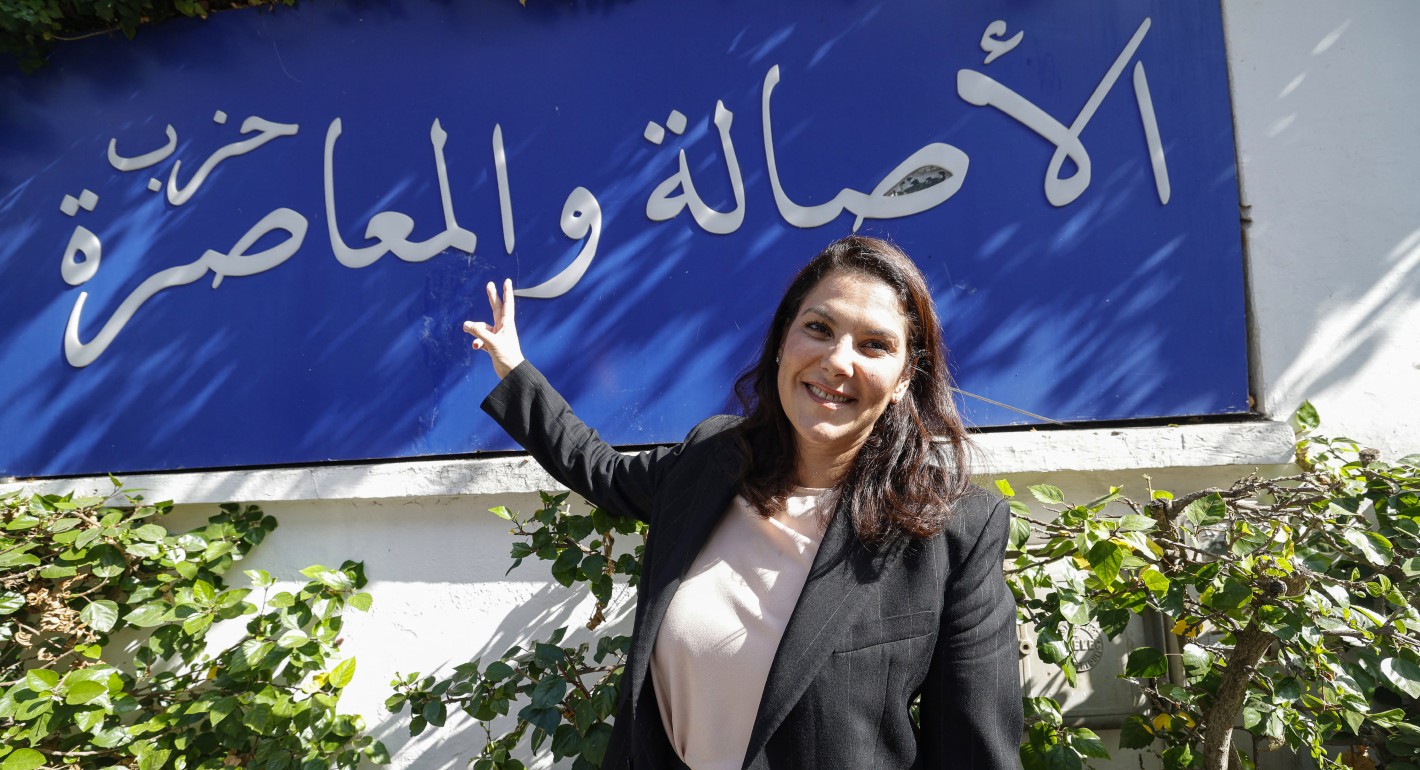
Fatima El Mansouri is the country’s first female prime minister. She’s also a privileged insider in a largely ceremonial position.

Sarah Yerkes

Sergei Kiriyenko used Russia’s parliamentary vote to further hone his strategy of corporate mobilization that is designed to maximize votes for United Russia.
Andrey Pertsev