

Commentary
Evan A. Feigenbaum
{
  "authors": [
    "Evan A. Feigenbaum"
  ],
  "type": "legacyinthemedia",
  "centerAffiliationAll": "dc",
  "centers": [
    "Carnegie Endowment for International Peace"
  ],
  "collections": [],
  "englishNewsletterAll": "asia",
  "nonEnglishNewsletterAll": "",
  "primaryCenter": "Carnegie Endowment for International Peace",
  "programAffiliation": "AP",
  "programs": [
    "Asia"
  ],
  "projects": [],
  "regions": [
    "East Asia",
    "China"
  ],
  "topics": [
    "Political Reform",
    "Economy"
  ]
}
Source: Getty
The Chinese growth model is delivering diminishing returns. China's cautious leaders face a choice between doubling down on needed reforms or continuing to muddle through on the current path.
Source: Eurasia Group

Why is China’s growth model delivering diminishing returns? The global economic crisis provided clear evidence that China’s export-driven economy is vulnerable to dips in demand in the rest of the world. Meanwhile, its dependence on investment has introduced distortions and imbalances into the Chinese economy. China’s rebalancing agenda is not merely about economics but, ultimately, the political viability of the Chinese system. Beijing has delivered economic prosperity to many Chinese citizens. But those very successes have yielded numerous problems—some large—that could undermine the regime’s legitimacy if left wholly unattended.
In this comprehensive look at the future of China’s political economy, Eurasia Group’s China team examines the maladies that confront Chinese leaders and the solutions they have prescribed to remedy them. Their blueprint is the 12th Five Year Plan, a set of strategic goals and binding economic targets through which they aim to alter China’s macroeconomic landscape in far-reaching ways, with effects that are likely to be felt for a decade to come.
But the report argues that China’s economic landscape will not change as fundamentally as the 12th FYP’s designers (and many foreigners) hope. And that, in turn, means that China in five years will be more brittle and beset by social difficulties. Although China should have little trouble muddling through until then, Chinese leaders will likely face starker choices when the plan has run its course in 2015 than they do today. They can double down on rebalancing—creating a more sustainable (long-term) growth model, but exacerbating (short-term) economic pain. Or, they can continue their attempt to muddle through and risk heightened political instability as a result of the widening gap between haves and have-nots. Eurasia Group is not optimistic that China’s cautious leaders have the stomach for bold reform. Thus, the next decade is likely to be more fraught than conventional wisdom suspects. This comprehensive new report explains why.

Vice President for Studies
Evan A. Feigenbaum is vice president for studies at the Carnegie Endowment for International Peace, where he oversees work at its offices in Washington, New Delhi, and Singapore on a dynamic region encompassing both East Asia and South Asia. He served twice as Deputy Assistant Secretary of State and advised two Secretaries of State and a former Treasury Secretary on Asia.
Recent Work
Evan A. Feigenbaum
Evan A. Feigenbaum
Carnegie does not take institutional positions on public policy issues; the views represented herein are those of the author(s) and do not necessarily reflect the views of Carnegie, its staff, or its trustees.
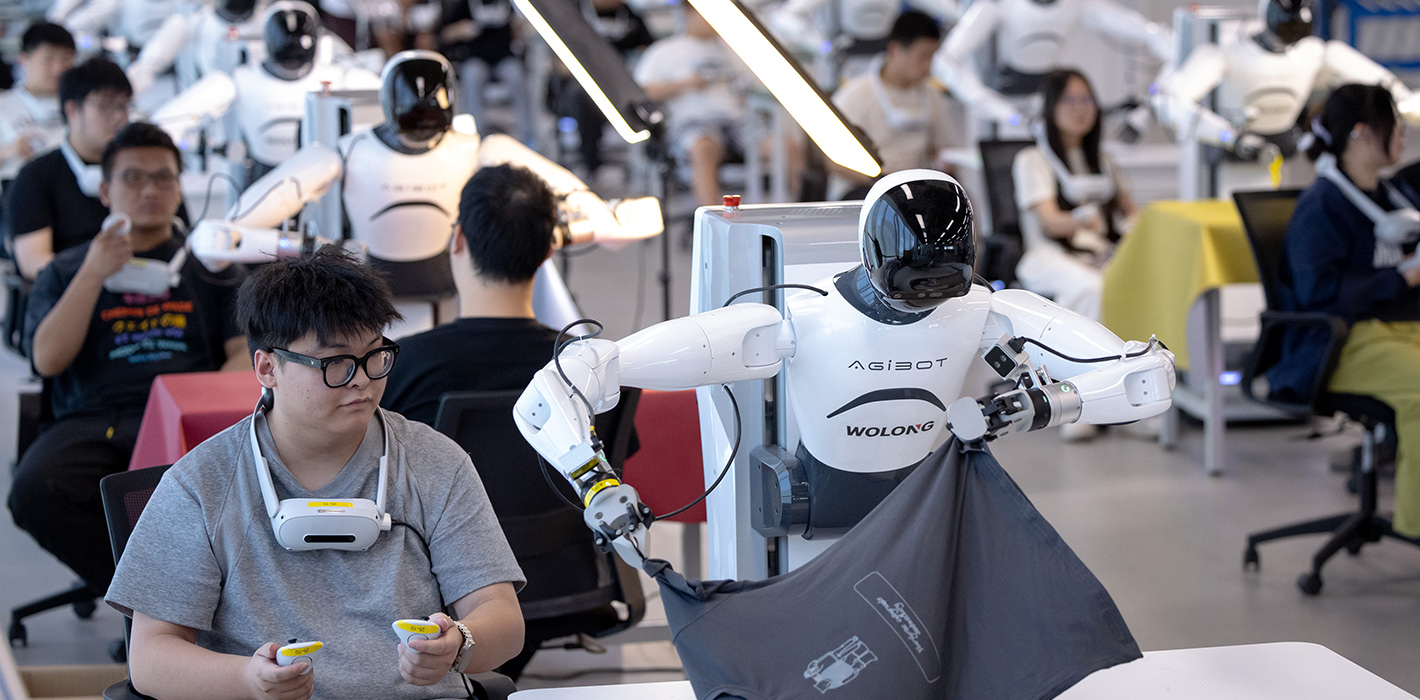
AI could hollow out jobs, reshape them gradually, create entirely new ones—or do all three at once. The case for starting to act now doesn’t depend on knowing which.

Teddy Tawil

The Russian state has opted for complete ideological control of the internet and is prepared to bear the associated costs.

Maria Kolomychenko

Powerful lobbyists and inertia led to Russia’s coal-mining sector missing an excellent opportunity to solve its structural problems.
Alexey Gusev

After four years of war, there is no one who can stand up to the security establishment, and President Vladimir Putin is increasingly passive.

Tatiana Stanovaya

Five problems—and solutions—to make it actually work as a tool of great power competition.

Afreen Akhter