

Article
Wang Tao
{
  "authors": [
    "Wang Tao"
  ],
  "type": "legacyinthemedia",
  "centerAffiliationAll": "",
  "centers": [
    "Carnegie Endowment for International Peace",
    "Carnegie China"
  ],
  "collections": [],
  "englishNewsletterAll": "",
  "nonEnglishNewsletterAll": "",
  "primaryCenter": "Carnegie China",
  "programAffiliation": "",
  "programs": [],
  "projects": [],
  "regions": [
    "East Asia",
    "China"
  ],
  "topics": [
    "Economy",
    "Climate Change"
  ]
}
Source: Getty
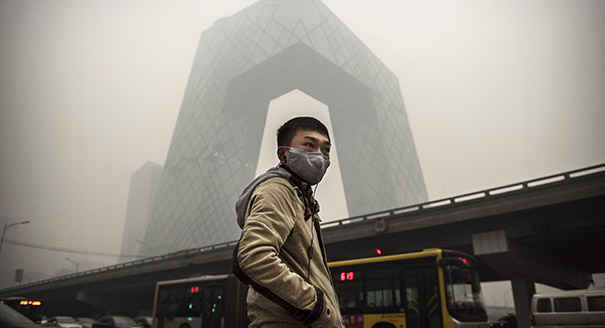
China faces challenges in achieving the ambitious carbon emissions targets announced during APEC, yet the country’s progress on clean energy technology could also benefit other developing countries.
Source: CCTV News
Speaking on CCTV News, Carnegie’s Wang Tao asserted that the carbon emissions targets that China announced during the APEC summit demonstrate strong central leadership. This initiative, he explained, will carry both short-term economic costs and long-term potential to cultivate clean energy technology both in China and abroad.
Although achieving these emissions targets will require economic restructuring that local officials might resist, Wang maintained that linking government policies on air pollution and economic reform will help to ensure that government actors work together. In the process, China will produce new clean energy technologies that will spur economic growth both domestically and in neighboring developing countries.

Former Nonresident Scholar, Carnegie-Tsinghua Center for Global Policy
Wang Tao was a nonresident scholar in the Energy and Climate Program based at the Carnegie–Tsinghua Center for Global Policy.
Recent Work
Wang Tao
Wang Tao, Yang Yifang
Carnegie does not take institutional positions on public policy issues; the views represented herein are those of the author(s) and do not necessarily reflect the views of Carnegie, its staff, or its trustees.

Montenegro and Albania are frontrunners for EU enlargement in the Western Balkans, but they can’t just sit back and wait. To meet their 2030 accession ambitions, they must make a strong positive case.


Dimitar Bechev, Iliriana Gjoni

Its reinstatement should be celebrated, but it retains some major shortcomings.

Leonardo Martinez-Diaz
Despite long-standing differences, China and Vietnam are reinforcing common ground for collaboration, especially in public security. This internal security–centered diplomacy offers a strengthened road map for how China moves forward with Southeast Asia.
Sophie Zhuang

Climate mobility interventions can vary, but they all present opportunities to unlock transformative results that mitigate costs associated with inaction.

Alejandro Martin Rodriguez
For Morocco, integrating gender into climate governance is not simply a matter of social justice. It is a strategic imperative for effective adaptation.
Fadwa Rajoauni