

Research
- +10
Rosa Balfour, Frances Z. Brown, Yasmine Farouk, …
{
  "authors": [
    "Moisés Naím"
  ],
  "type": "legacyinthemedia",
  "centerAffiliationAll": "",
  "centers": [
    "Carnegie Endowment for International Peace"
  ],
  "collections": [],
  "englishNewsletterAll": "",
  "nonEnglishNewsletterAll": "",
  "primaryCenter": "Carnegie Endowment for International Peace",
  "programAffiliation": "",
  "programs": [],
  "projects": [],
  "regions": [
    "United States",
    "Eastern Europe",
    "Western Europe",
    "North America"
  ],
  "topics": [
    "Political Reform",
    "Economy"
  ]
}
Source: Getty
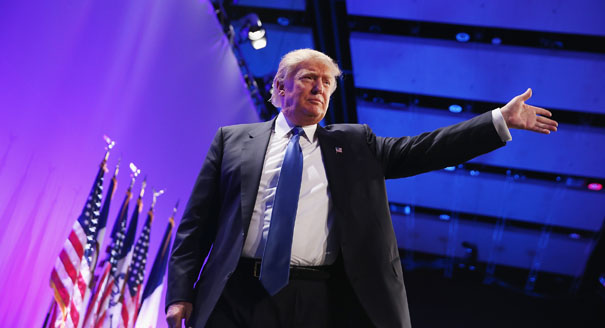
Tsipras and Trump are at the center of two critical questions facing humanity today: how to rescue crashing economies and how to manage immigration flows.
Source: Atlantic
Donald Trump and Alexis Tsipras couldn’t be more different. The sexagenarian Trump is an unabashed capitalist while the 40-year-old Greek prime minister joined the Communist Party as a teenager and since 2009 has led the radical-left Syriza party. The ostentatious American parades his multiple mansions and his fortune, which Forbes had the temerity to value at a meager $4 billion despite Trump’s claims that it “is in excess of TEN BILLION DOLLARS.” Tsipras, an engineer who has spent most of his life as a political activist, lives in a modest apartment in a working-class neighborhood of Athens. The prime minister rarely wears a tie, whereas the Donald J. Trump Collection offers “the pinnacle of style and prestige in the form of men’s suits, dress shirts, cuff links, neckwear, belts, eyewear, and more.” During political rallies, Trump likes to extol wealth while Tsipras denounces the growing gap between rich and poor.
In the past several weeks, however, Trump and Tsipras alike have attracted a disproportionate share of attention. Tsipras is contending with Greece’s catastrophic economic crisis and Trump wants to be the next president of the United States. Tsipras desperately needs a financial bailout from creditors whom he has managed to exasperate, whereas Trump is seeking the Republican Party’s nomination while also exasperating (and often insulting) his party’s establishment.In waffling on whether to adopt stringent economic measures demanded by lenders, the Greek prime minister has managed to anger both the European leaders he’s negotiating with and millions of Greeks who believed Tsipras’s stance against economic austerity and voted for him as a result. Tsipras has recently insisted on votes in the Greek parliament in favor of reforms requested by the International Monetary Fund, European Central Bank, and European Commission—institutions that he not long ago described as “criminal” and guilty of “financial asphyxiation.” Just days after a large majority of Greeks followed his advice and voted in a national referendum against the policies mandated by the country’s creditors, Tsipras was back in Brussels not only agreeing with the financial stranglers and accepting their “criminal” measures, but lobbying his cabinet and Greek lawmakers to support the changes.
Trump, meanwhile, has angered Republican Party leaders (by, among other things, belittling John McCain’s status as a war hero) as well as millions of Mexicans and Latinos as a whole, who make up about 17 percent of the U.S. population. Trump reportedly asserted that the United States should have invaded Mexico instead of Iraq, and declared that if elected president he would make the Mexican government pay for the construction of a wall along its 1,954-mile border with the United States. Such a wall, in his view, would prevent the entry of Mexican immigrants who are “bringing drugs. They’re bringing crime. They’re rapists.” He alleged that Mexicans are “laughing at us, at our stupidity. And now they are beating us economically. They are not our friend, believe me. ... The U.S. has become a dumping ground for everybody else’s problems.” GOP leaders are watching in horror as Trump alienates Latino voters, considered a key demographic to win the 2016 presidential election.
The key problem is that Trump’s reality-show approach to politics is burying the reality. Recent studies have demonstrated that Trump’s statements are based on erroneous premises and questionable data. A report by the American Immigration Council, for example, shows that immigrants (legal or not), irrespective of their country of origin or level of education, have lower rates of crime than the U.S.-born population does. Even during periods when immigration rates in the United States have gone up, rates of crime have gone down.
But none of this has mattered to voters. According to recent polls, Trump is polling in first place among the 16 Republican presidential candidates and enjoys almost twice the support of his closest rival. His stance on immigration may be demonstrably wrong, but it clearly yields political dividends.
Something similar is happening with Tsipras. His incompetence and broken promises should have undermined his public support by now, but the Greek prime minister instead remains popular. The shortsighted obtuseness of his European adversaries has so far saved him from utter political disgrace. The financial agreement that European leaders compelled Tsipras to sign, which will purportedly avert the Greek exit from the euro zone that many Greeks fear, is based on numbers and premises as false as the ones used by Trump to support his preposterous views on immigration. The prime minister himself claims to have accepted the deal against his will—“with a knife at my neck”—and to not believe in what he signed. Officials at the International Monetary Fund have asserted that the terms of the agreement aren’t feasible without substantially easing Greece’s staggering debt, while Wolfgang Schauble, the German finance minister, has argued that Greece would be better off if it bypassed the deal and left the European monetary union.
All this matters because Tsipras and Trump are at the center of two critical questions facing humanity today: how to rescue crashing economies and how to manage immigration flows. Both are complex problems, and reducing them to simplistic (and disingenuous) statements about austerity measures or crime rates hinders efforts to find sustainable and reasonable solutions. The American mogul and the Greek activist have muddled global debates about these topics.
The Donald will not become the next U.S. president and Greece will not fulfill the conditions of the agreement to which it has committed. But Trump and Tsipras will likely remain the protagonists of two unforgivable charades for some time to come.

Distinguished Fellow
Moisés Naím is a distinguished fellow at the Carnegie Endowment for International Peace, a best-selling author, and an internationally syndicated columnist.
Recent Work



Rosa Balfour, Frances Z. Brown, Yasmine Farouk, …
Moisés Naím
Carnegie does not take institutional positions on public policy issues; the views represented herein are those of the author(s) and do not necessarily reflect the views of Carnegie, its staff, or its trustees.

The Plaza Accord was not an externally imposed punishment of Japan but part of a broader restructuring that Japanese economists and policymakers themselves recognized was necessary. Its effects were undermined, however, when Tokyo responded to the resulting slowdown with policies that exacerbated investment, credit expansion, and the very imbalances the adjustment was intended to resolve.

Michael Pettis

Trump has promised Belarus a massive potash deal. But Minsk is seeking something greater: restored Western transit and greater room for maneuver from Russia.

Balázs Jarábik

Before the next wave of EU enlargement takes place, the union needs to grapple with thorny questions of how power is distributed among its members.


Emil Sondaj Hansen, Ditte Brasso Sørensen

The real test may come after the leaders leave the room.



Sheena Chestnut Greitens, Oriana Skylar Mastro, Yukon Huang, …

The European far right might fail to steer EU policy in the direction Russia wants, but they will create enough chaos inside Europe to benefit the Kremlin.

Dimitar Bechev