

Commentary
Alexander Gabuev, Temur Umarov
{
  "authors": [
    "Alexander Gabuev"
  ],
  "type": "legacyinthemedia",
  "centerAffiliationAll": "dc",
  "centers": [
    "Carnegie Endowment for International Peace",
    "Carnegie Russia Eurasia Center"
  ],
  "collections": [
    "Cyber and Digital Policy"
  ],
  "englishNewsletterAll": "ctw",
  "nonEnglishNewsletterAll": "",
  "primaryCenter": "Carnegie Endowment for International Peace",
  "programAffiliation": "TIA",
  "programs": [
    "Technology and International Affairs"
  ],
  "projects": [],
  "regions": [
    "East Asia",
    "China",
    "Russia",
    "Iran"
  ],
  "topics": [
    "Political Reform",
    "Democracy",
    "Economy",
    "Security",
    "Foreign Policy",
    "Global Governance",
    "Technology"
  ]
}
Source: Getty
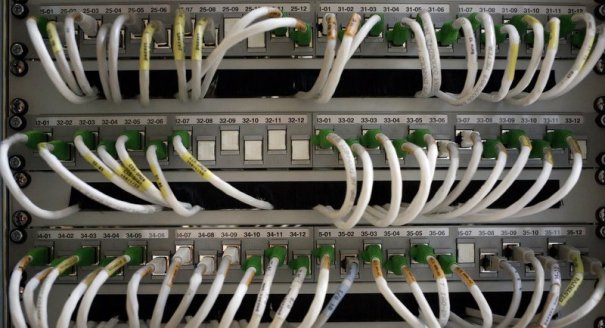
Sino-Russian digital cooperation is robust and mature. This relationship is much broader than a simple alliance of conspiracy-minded governments seeking to protect their citizens from hostile forces.
Source: Digital Russia
Since Russia's 2014 crisis in its relationship with the West, the country has attempted to pivot to the East, most notably towards China. However, economic woes and a sharp decline in commodity prices have left many announced investment projects hanging in the air. Yet unlike the partnership in the 'real' economy, where prospects for major breakthroughs are still unclear, Sino-Russian cooperation in the digital economy is already robust and mature, argues Alexander Gabuev, chair of the 'Russia in the Asia-Pacific' programme at Carnegie Moscow Center and an alumnus of Global Shapers Moscow.
From the 16th to the 18th of December, the small, touristy town of Wuzhen, dubbed 'the Chinese Venice' and located just 130 km from Alibaba Group's headquarters in Hangzhou, will host the second World Internet Conference. Chinese authorities are positioning the event as a global platform for discussing Internet governance and promoting the concept of 'national sovereignty' in cyberspace. This year the conference will be opened by President Xi Jinping and is set to draw a lot of foreign participants. The guest of honour is the Russian prime minister Dmitry Medvedev, who will deliver a speech and meet the Chinese Internet-business community, including Alibaba's CEO Jack Ma.
Medvedev's appearance at the Wuzhen event will add just one more invisible link to myriad connections between Russia and China in the digital space. On the major topic of the conference, 'An Interconnected World Shared and Governed by All', Moscow and Beijing share similar views. Both governments regard their national segments of the Internet as parts of 'sovereign domains' and want to have more control over distributed content and infrastructure. Both demand more say in the way ICANN, a non-profit U.S.-based organization playing a critical role in Internet governance, is managed. In January 2015, Russia and China joined hands and submitted a proposal on international information security to the UN Secretary General (drafted as a Shanghai Cooperation Organization joint initiative). The document calls for 'all states to play an equal role in global Internet governance' and makes a joint proposal to shift many critical functions of ICANN to the International Telecommunications Union, a specialized UN agency.As in the times of Sino-Soviet 'brotherhood' in the early 1950s, the countries are adopting each other's 'advanced experience' — these days it's about restrictions on the Internet. The PRC's draft law on cybersecurity, published this summer by the National People's Congress, includes provisions borrowed from the Russian Senate's 2014 draft on the same topic. Conversely, Russia's nation-wide content filtering architecture, which was widely discussed in the Russian digital community last year, shares many traits with China's pre-existent 'Golden Shield' project (known as 'The Great Firewall of China').
The joint push to limit alleged Western dominance in the digital sphere is not limited to regulation. In hardware, many Russian customers are switching from CISCO solutions to ZTE and Huawei technologies — a move which began after Edward Snowden's revelations that CISCO and other U.S. tech firms had been cooperating with the NSA and which has intensified following the Ukrainian crisis.
Yet it would be unjust to cast the Sino-Russian digital partnership as an alliance of conspiracy-minded governments seeking to protect their citizens from hostile forces. The relationship is much broader than that, and the involvement of various private companies and players makes it truly diverse and dynamic. Take Alisher Usmanov, Russia's richest man in 2014 and third richest today, whose DST Global Holding (co-founded with Yuri Milner, currently №32 in the Russian Forbes list) has invested hundreds of millions of dollars in Chinese tech companies such as Alibaba, it's arch-rival JD.com, smartphone producer Xiaomi, and Didi Dache, the Chinese answer to Uber. According to Usmanov, the return on his investment in Alibaba has been 500%. In the other direction, Usmanov's Mail.Ru Group has sold 7.4% of its shares to the Chinese Tencent group, and Chinese advertisers now account for 37% of the revenue stream of myTarget, Mail.Ru Group's direct marketing platform. AliExpress is midway through a hitherto successful expansion to Russia, which has even seen it organize competitions for Russian tech firms, for example, the AliExpress Challenge.
So when tech-savvy Dmitry Medvedev arrives in Wuzhen, he should feel right at home. All the more so if he chooses to use his YotaPhone, a Russian, China-assembled answer to the iPhone. The same phone was presented to Xi Jinping by Vladimir Putin last year, so during dull moments in the panel discussions the two leaders can exchange messages via different platforms — even Facebook, which may be unblocked in Wuzhen for the three days of the conference, as was the case last year. The only problem is that, unlike Medvedev, Xi does not use social networks.

Director, Carnegie Russia Eurasia Center
Alexander Gabuev is director of the Carnegie Russia Eurasia Center. Gabuev’s research is focused on Russian foreign policy with particular focus on the impact of the war in Ukraine and the Sino-Russia relationship. Since joining Carnegie in 2015, Gabuev has contributed commentary and analysis to a wide range of publications, including the Financial Times, the New York Times, the Wall Street Journal, and the Economist.
Recent Work

Alexander Gabuev, Temur Umarov
Alexander Gabuev
Carnegie does not take institutional positions on public policy issues; the views represented herein are those of the author(s) and do not necessarily reflect the views of Carnegie, its staff, or its trustees.
How Ukraine is driving doctrinal change in modern warfare.

Andriy Zagorodnyuk

Although Ukrainian strikes have led to a noticeable decline in the physical volume of Russian oil exports, the rise in prices has more than made up for it.

Sergey Vakulenko
Five problems—and solutions—to make it actually work as a tool of great power competition.

Afreen Akhter
The Russian leadership wants to avoid a dangerous precedent in which it is squeezed out of Iran by the United States and Israel—and left powerless to respond in any meaningful way.

Nikita Smagin
One is hopeful. One is realistic. One is cautionary.

Andrew Leber, Sam Worby