

Paper
Policy proposals on sovereign debt must both match the scale of the challenge and be implementable within existing political constraints.
David McNair
{
  "authors": [
    "William J. Burns",
    "Michael Mullen"
  ],
  "type": "legacyinthemedia",
  "centerAffiliationAll": "",
  "centers": [
    "Carnegie Endowment for International Peace",
    "Malcolm H. Kerr Carnegie Middle East Center",
    "Carnegie Europe",
    "Carnegie Russia Eurasia Center"
  ],
  "collections": [],
  "englishNewsletterAll": "",
  "nonEnglishNewsletterAll": "",
  "primaryCenter": "Carnegie Endowment for International Peace",
  "programAffiliation": "",
  "programs": [],
  "projects": [],
  "regions": [
    "North Africa",
    "Middle East"
  ],
  "topics": [
    "Democracy",
    "Foreign Policy",
    "Global Governance",
    "Civil Society",
    "Technology",
    "Political Reform",
    "Security",
    "Military"
  ]
}
Source: Getty
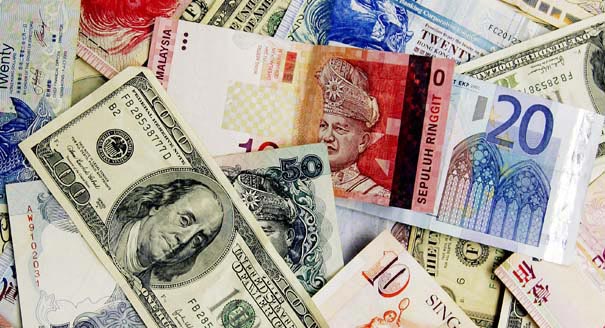
A strong focus on combating corruption is vital to addressing many of the crises currently besetting the world.
Source: Project Syndicate
Pope Francis has called corruption “the gangrene of a people.” US Secretary of State John Kerry has labeled it a “radicalizer,” because it “destroys faith in legitimate authority.” And British Prime Minister David Cameron has described it as “one of the greatest enemies of progress in our time.”
Corruption, put simply, is the abuse of public office for personal gain. As leaders increasingly recognize, it is a menace to development, human dignity, and global security. At the anti-corruption summit in London on May 12, world leaders – together with representatives from business and civil society – will have a critical opportunity to act on this recognition.
Corruption is decried across cultures and throughout history. It has existed as long as government has; but, like other crimes, it has grown increasingly sophisticated over the last several decades, with devastating effects on the wellbeing and dignity of countless innocent citizens.For starters, corruption cripples prospects for development. When, say, public-procurement fraud is rampant, or royalties for natural resources are stolen at the source, or the private sector is monopolized by a narrow network of cronies, populations are unable to realize their potential.
But corruption also has another, less-recognized impact. As citizens watch their leaders enrich themselves at the expense of the population, they become increasingly frustrated and angry – sentiments that can lead to civil unrest and violent conflict.
Many current international security crises are rooted in this dynamic. Indignation at the highhanded behavior of a corrupt police officer helped to drive a Tunisian fruit seller to set himself on fire in 2010, touching off revolutions across the Arab world. Protesters demanded that specific ministers be arrested and put on trial, and they called for the return of pilfered assets – demands that were rarely met.
In places where government officials enjoy (and often flaunt) their enrichment and impunity, extremist movements – including the Taliban, Boko Haram, and the Islamic State – exploit citizens’ outrage. The only way to restore public integrity, these groups assert, is by means of a rigidly applied code of personal conduct. With no viable recourse – and no avenue for peaceful appeal – such language has grown increasingly persuasive.It is clear that corruption must be combated. What is less clear is how to do it. In a world of competing demands, corrupt governments may seem to serve vital purposes. One deploys soldiers to the fight against terrorism; another provides critical energy supplies or access to raw materials. Leaders must inevitably contend with difficult tradeoffs.
To determine the best approach in each specific case, governments must analyze the problem more effectively, which means improving the collection of intelligence and data. As security expert Sarah Chayes argues in Against Corruption, the volume of essays that the British government will publish to accompany the summit, corruption today is structured practice. It is the work of sophisticated networks, not unlike organized crime (with which corrupt agents are often integrated). Governments must study these activities and their consequences the same way they study transnational criminal or terrorist organizations.
Armed with such assessments, donor countries must structure assistance in a way that mitigates corruption risks. Military or development assistance is not apolitical. Programs must be tailored to ensure that funds are not captured by kleptocratic elites. This means that anti-corruption efforts can no longer be shunted off to under-resourced specialists; they must be central to the planning of major development initiatives or the sale of costly weapons systems. Recipient governments must understand that funding will dry up if they continue to squander or steal it.
In fact, corruption and its implications must inform the way Western officials interact with their counterparts in the developing world. The departments that we spent our careers serving – the US State Department and the US Department of Defense – set great store by building relationships. Diplomats depend on these relationships to advance their national interests, and professional ties between military officers are sometimes the only channels that weather political storms.
But diplomats and military brass alike should be willing to take a step back when appropriate, condition their interactions, and make use of available leverage – even at the risk of a counterpart’s wrath. But, as recent revelations about purveyors of shell companies or bribery by intermediaries demonstrate, much of the real leverage is to be found at home – in the domestic financial and property industries, in public relations and law firms that burnish kleptocrats’ images, and in universities that educate corrupt officials’ children and solicit their donations. The application of the US Racketeer Influenced and Corrupt Organizations (RICO) Act to indict officers of FIFA, soccer’s international governing body, shows how focusing on Western service providers can curb corruption among foreign officials.
Another important tool in the fight against corruption will be technological innovation, which can reduce opportunities for wrongdoing, empower citizens to highlight illegal practices, and enhance government transparency and accountability. Strides have already been made in a number of areas, from electronic voter registration to electronic payments for civil servants. While technology is no panacea, when paired with wise policy reforms, it can make a meaningful contribution to the fight for good governance.
None of these suggestions will be easy to implement. But, to address many of the crises currently besetting the world, a strong focus on combating corruption is vital. Our hope is that the upcoming conference in London demonstrates the unity of purpose and commitment to action that is so badly needed.
Former Carnegie President (2015-2021)
A former career diplomat, William J. Burns served as director of the CIA, deputy secretary of State, and ambassador to Russia and Jordan. Burns was also president of the Carnegie Endowment for International Peace from 2015 to 2021.
Michael Mullen
Michael Mullen was Chairman of the U.S. Joint Chiefs of Staff from 2007 to 2011.
Carnegie does not take institutional positions on public policy issues; the views represented herein are those of the author(s) and do not necessarily reflect the views of Carnegie, its staff, or its trustees.

Policy proposals on sovereign debt must both match the scale of the challenge and be implementable within existing political constraints.
David McNair

Despite a new textbook, an influx of Russian teachers and managers, and an end to the teaching of Ukrainian, the Kremlin is unlikely to have “reprogrammed” locals.

Konstantin Skorkin

Fatima El Mansouri is the country’s first female prime minister. She’s also a privileged insider in a largely ceremonial position.

Sarah Yerkes

The acknowledgment has sparked fears of a new arms race with China and Russia.

Chris O’Meara

Smaller powers cannot go it alone, but Canadian history shows that integration with the United States will not always be benign.
Paul Samson