

Commentary
As the U.S. stumbles in its war with Iran, we are likely to see an acceleration of its disengagement from the region.
Michael Young
{
  "authors": [
    "Joseph Bahout",
    "Steven Cook",
    "Shadi Hamid",
    "Rachel Havrelock",
    "Emad Shahin",
    "Galip Dalay"
  ],
  "type": "other",
  "centerAffiliationAll": "dc",
  "centers": [
    "Carnegie Endowment for International Peace"
  ],
  "collections": [
    "Arab Awakening"
  ],
  "englishNewsletterAll": "menaTransitions",
  "nonEnglishNewsletterAll": "",
  "primaryCenter": "Carnegie Endowment for International Peace",
  "programAffiliation": "MEP",
  "programs": [
    "Middle East"
  ],
  "projects": [],
  "regions": [
    "Middle East",
    "Israel",
    "North Africa",
    "Iraq",
    "Lebanon",
    "Jordan",
    "Palestine",
    "Syria"
  ],
  "topics": [
    "Political Reform"
  ]
}
Source: Getty
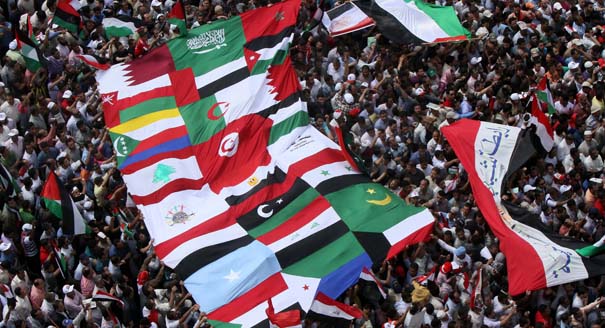
One hundred years after the division of the Middle East, the effects of the Sykes-Picot agreement are still playing out across the region.
Source: Foreign Affairs
The Sykes-Picot agreement that divided the Middle East one hundred years ago has profoundly impacted the political history and trajectory of the modern Middle East. Speaking with Foreign Affairs, Carnegie's Joseph Bahout assessed the consequences of this historic agreement.
Former Nonresident Fellow, Middle East Program
Joseph Bahout was a nonresident fellow in Carnegie’s Middle East Program. His research focuses on political developments in Lebanon and Syria, regional spillover from the Syrian crisis, and identity politics across the region.
Steven Cook
Shadi Hamid
Shadi Hamid is a senior fellow in the Project on U.S. Relations with the Islamic World in the Center for Middle East Policy. He served as director of research at the Brookings Doha Center until January 2014.
Rachel Havrelock
Emad Shahin
Galip Dalay
Carnegie does not take institutional positions on public policy issues; the views represented herein are those of the author(s) and do not necessarily reflect the views of Carnegie, its staff, or its trustees.

As the U.S. stumbles in its war with Iran, we are likely to see an acceleration of its disengagement from the region.

Michael Young

In Egypt’s dense cities, the disappearance of foliage has health implications and punishes daily commuters.

Angie Omar

If the Russian-speaking community in Latvia cannot articulate their interests without being seen as disloyal, they could end up embracing a pro-Kremlin agenda.

Sergejs Potapkins
The Zaidi government’s objective to collect weapons is constrained by regional conflict, but it can take certain measures at home.
Ali Al-Mawlawi

Russia’s ruling party would have benefited from Putin appearing as its distant patron, but as an active frontman imposing his views on the public, he has done nothing but harm both the party’s election campaign and the ruling system overall.

Andrey Pertsev