

Commentary
Ahead of a tough winter for Ukraine, Donald Trump’s swing back toward Russia bodes ill. But instead of panicking, Kyiv’s European allies are focusing on action.
Rym Momtaz
{
  "authors": [
    "Balázs Jarábik",
    "Iulian Groza",
    "Jana Kobzová",
    "Viktor Konstantynov",
    "Tsovinar Kuiumchian",
    "Leonid Litra",
    "Tornike Sharashenidze",
    "Isaac Webb"
  ],
  "type": "other",
  "centerAffiliationAll": "",
  "centers": [
    "Carnegie Endowment for International Peace",
    "Carnegie Europe"
  ],
  "collections": [
    "Europe’s Eastern Neighborhood"
  ],
  "englishNewsletterAll": "",
  "nonEnglishNewsletterAll": "",
  "primaryCenter": "Carnegie Endowment for International Peace",
  "programAffiliation": "",
  "programs": [],
  "projects": [
    "Reforming Ukraine"
  ],
  "regions": [
    "Caucasus",
    "Georgia",
    "Eastern Europe",
    "Ukraine",
    "Moldova",
    "Russia",
    "Europe"
  ],
  "topics": [
    "Political Reform",
    "Foreign Policy"
  ]
}
Source: Getty
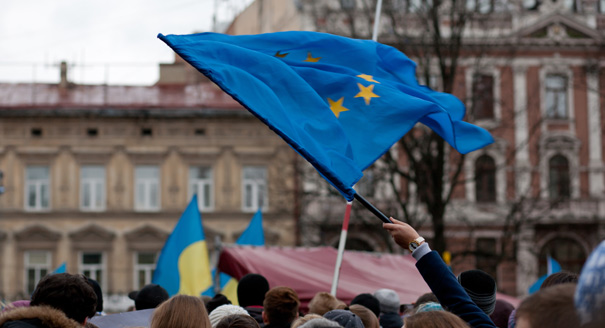
EU association deals with Ukraine, Georgia, and Moldova have proven to be key drivers of reform in all three countries. The emphasis should now be on implementation, not simply legislative adoption.
Source: European Parliament
Signing and ratifying Association Agreements with Georgia, Moldova, and Ukraine has proven to be an impressive affirmation of Brussels’ soft power. The EU’s overtures have persuaded elites and mobilised societies despite the fact that the Agreements come neither with a membership promise nor with the kind of financial assistance that has been given to the EU’s new member states.
EU assistance has been effective in restoring macro-financial stability in all three countries. While costs of compliance with the DCFTA were calculated, level of investment associated with the necessary modernisation to make these economies competitive were neglected. The discrepancy between costs and benefits should prompt the EU to be more flexible.
Brussels’ achievements remain fragile. Informal interests continue to play important roles in these countries and have the potential to thwart reforms. In the absence of strong, de-politicised institutions, the EU should work to support political consolidation—the alternative is further polarisation and political fragility—while at the same time insisting on adherence to democratic standards and strengthened institutional checks and balances.

Political analyst, former Slovak diplomat, and consultant specializing in Eastern Europe
Iulian Groza
Jana Kobzová
Viktor Konstantynov
Tsovinar Kuiumchian
Leonid Litra
Tornike Sharashenidze
Isaac Webb
Former Junior Fellow, Russia and Eurasia Program
Carnegie does not take institutional positions on public policy issues; the views represented herein are those of the author(s) and do not necessarily reflect the views of Carnegie, its staff, or its trustees.

Ahead of a tough winter for Ukraine, Donald Trump’s swing back toward Russia bodes ill. But instead of panicking, Kyiv’s European allies are focusing on action.

Rym Momtaz

Without a ceasefire with Ukraine on attacking each other’s energy infrastructure—to which the Kremlin is unlikely to agree—the diesel agreement between Putin and Trump is largely for show, rather than representing a genuine increase in the volumes of Russian diesel on the global market.

Sergey Vakulenko

Funding Ukraine remains a priority for European leaders. As Russia’s war of aggression heads into another winter, two feasible options to mobilize support for Kyiv should be fast-tracked.


Vladyslav Rashkovan, Gregory P. Wilson

Russian strikes are weakening the economy sustaining Ukraine’s war effort. Closing the growing funding gap will require more European support and politically contentious reforms in Kyiv.
Balázs Jarábik

While the EU and European governments are embracing the much-lauded middle-power moment, this entails three difficult conundrums.

Richard Youngs