

Article
Deborah Gordon, Smriti Kumble, David Livingston
{
  "authors": [
    "David Livingston"
  ],
  "type": "other",
  "centerAffiliationAll": "dc",
  "centers": [
    "Carnegie Endowment for International Peace"
  ],
  "collections": [],
  "englishNewsletterAll": "ctw",
  "nonEnglishNewsletterAll": "",
  "primaryCenter": "Carnegie Endowment for International Peace",
  "programAffiliation": "SCP",
  "programs": [
    "Sustainability, Climate, and Geopolitics"
  ],
  "projects": [],
  "regions": [
    "North America",
    "United States",
    "East Asia",
    "China",
    "Western Europe"
  ],
  "topics": [
    "Climate Change",
    "Foreign Policy"
  ]
}
Source: Getty
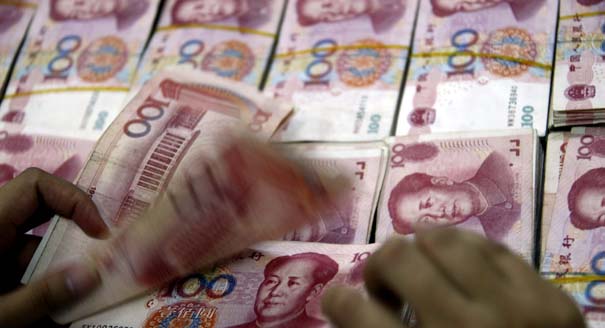
The rise in Chinese investment in the European energy sector has underscored the need for a clear and thoughtful transatlantic approach to safeguarding core strategic assets.
Source: American Institute for Contemporary German Studies
Earlier this November, the U.S.-China Economic and Security Review Commission released its 2017 report, recommending that the U.S. investment screening mechanism, the Committee on Foreign Investment in the United States (CFIUS), be updated. This follows closely on the heels of a bill, introduced by Republican Senators Richard Burr and John Cornyn along with Democrat Dianne Feinstein, that would expand the powers of CFIUS to review foreign deals. China already represents nearly a quarter of all CFIUS cases despite comprising only a few percentage points of foreign direct investment (FDI) in the United States, and Senator Cornyn stated this month that he believes the U.S. is increasingly in a “cool war” with China despite his earlier belief in—and support for—its peaceful economic rise. A certain hawkishness on the U.S.-China trade relationship—whether merited or not—is suddenly in vogue.
And yet, the vast majority of Chinese FDI is not targeting the United States. As my Carnegie colleague Yukon Huang points out, it has accounted for only around 2-3 percent of total Chinese outward investment over the past decade. Much more goes into Europe, where (1) the continent’s industrial structure is more complementary with China’s perceived needs, (2) more distressed, strategic assets have been available through privatizations in the wake of the global financial crisis and Euro crisis, (3) outside actors may have the impression that they can influence individual member states’ positions at the European Council through investment, and (4) the lack of harmonized rules on investment in strategic sectors has created opportunities for cherry-picking the most open recipient states.
These dynamics are now drawing additional scrutiny and debate in Europe, where France has long been concerned about the lack of reciprocity in trade and investment conditions, but is now joined by traditionally less protectionist Germany. The two countries, along with Italy, issued a joint letter to the Commission in February 2017 outlining their concerns with the potential loss of strategic technological assets and proposing that the Commission explore the possibility of mechanisms for protecting against deleterious deals. In September, Commission president Jean-Claude Juncker included a proposal in his own State of the Union speech, calling for “transparency…if a foreign state-owned company wants to purchase a European harbor, part of our energy infrastructure or a defense technology firm.” This was weaker than the original France-Germany-Italy proposal, as it would only provide EU guidance to member states, and would not include any penalties for failing to heed that guidance.
Much of Chinese investment in Europe has been in utilities and the broader energy sector. This is poised to grow further in scale against the backdrop of the massive capital investment needs posed by the energy transition and the scale of China’s economic expansion ambitions in the form of Belt-and-Road, New Silk Road Fund, and other initiatives. There are genuine compatibilities between Europe’s desire for decarbonization leadership and the vast capital and infrastructure that Beijing seeks to export.
This makes the decisions facing the European Commission, and its member states, all the more complex and challenging. Are minority stakes in critical energy infrastructure, such as national grids, the true source of concern, or is it instead the acquisition of know-how in tech start-ups that are developing the energy software and hardware of tomorrow? One is national security in terms of worrying about leverage over whether the lights stay on, while the other is more about losing a critical edge in the international marketplace.
Moreover, there are significant dangers in focusing too intensively on the source, rather than the target, of foreign investment. If Chinese-origin investment were to automatically raise additional red flags, there are myriad ways to re-deploy capital and investment flows in circuitous ways so as to avoid scrutiny. Moreover, this would be a crude diplomatic hammer to bring to a set of geoeconomic concerns that would be better served by a scalpel. The principle of reciprocity in granting market access is an important one, and this principle should remain the focal point of any refinements to investment screening, rather than an unsubstantiated paranoia over Beijing’s intentions.
With the UK preoccupied with its perilous Brexit negotiations, the future of the investment screening debate is likely to be shaped mostly by Berlin and Paris. France has made clear that it intends to pursue a more robust and demanding approach to foreign investment appraisal, one that some fear may become a vehicle too-easily hijacked by protectionist instincts. Germany, for its part, has thus far appeared to possess a less-consolidated position, largely due to its inconclusive federal elections and subsequent negotiations over the formation of a coalition government.
The apparent collapse of those negotiations further delays, and complicates, the prospects for a European consensus over third party investment. Both the CDU and the Greens appear to accommodate a wide range of views on the need for more stringent investment screening, while the FDP was expected to resist the more hardline approaches, in line with its pro-business commitment to free and open trade. Moreover, the political acrobatics needed to bring the elusive “Jamaica” coalition into being were always likely to entail a reshuffling of ministerial portfolios and responsibilities, making the “net expected value” of an eventual German position European-level investment screening policy all the harder to predict. Progress on the Juncker proposal, if it indeed represents a reasonable compromise among divergent European views, will remain frozen until a coalition government in Germany materializes, either with or without an unwelcome second round of elections there.
This is not to say that approaches to third party investment is not, eventually, a promising area for greater transatlantic dialogue. Coordination between the EU and the U.S. is necessary, if for no other reason to avoid free-riding and “beggar thy neighbor” approaches to investment policy. For example, Germany has never blocked a foreign investment despite the 338 individual reviews to date conducted by the country’s Ministry of Economic Affairs. In some cases, this may indicate not that the German government is without strategic concerns over certain investments, but instead that at least in some cases, it can wait patiently for other countries, such as the United States, to block a controversial takeover. This was recently the case with China’s attempted acquisition of Aixtron. It is not in America’s strategic interest to turn into a “bad cop” for others, particularly if this plays to unconstructive paranoia over China here in the United States.
A clear, thoughtful, and transparent transatlantic approach to identifying and safeguarding from harm core strategic assets is undoubtedly of great importance, but this is a project that should not be hurried, nor politicized. Indeed, it would be best left to a non-partisan “blue ribbon” commission of former officials and policy experts on both sides of the Atlantic, rather than politicians looking to score points from China bashing or investment courting. Such an enlightened approach looks unlikely in the current political moment, underscoring the case for a patient but prudent way forward on investment screening, rather than a rushed, reactionary one.
This article was originally published by the American Institute for Contemporary German Studies.
Former Associate Fellow, Energy and Climate Program
Livingston was an associate fellow in Carnegie’s Energy and Climate Program, where his research focuses on emerging markets, technologies, and risks.
Recent Work

Deborah Gordon, Smriti Kumble, David Livingston

Erik Brattberg, David Livingston
Carnegie does not take institutional positions on public policy issues; the views represented herein are those of the author(s) and do not necessarily reflect the views of Carnegie, its staff, or its trustees.

It should address the shortcomings of previous crisis communication efforts and adapt to the demands of frontier AI.

Lucy Luo

Washington’s decision to support some UN functions while letting others wither is pulling the organization apart at the seams.

Stewart Patrick, Theodore Zaritsky

While there are notable demographic, economic, and geographic divides over AI, there is also substantial alignment between Republicans and Democrats.



Ian Klaus, Mark Baldassare, Rachel George, …

Are Germany’s economic, industrial, and political struggles becoming a liability for the EU’s ability to rise to the geopolitical moment?

Rym Momtaz, ed.

China’s police training infrastructure construction projects provide benefits to recipient countries, promote China’s image as a major global security provider, and are likely to reinforce alignment between Beijing’s security priorities and those of countries in the Global South.


Cameron Waltz, Sheena Chestnut Greitens, Kim Nguyen, …