

Q&A
Eugene Rumer
{
  "authors": [
    "Eugene Rumer"
  ],
  "type": "other",
  "centerAffiliationAll": "dc",
  "centers": [
    "Carnegie Endowment for International Peace"
  ],
  "collections": [],
  "englishNewsletterAll": "ctw",
  "nonEnglishNewsletterAll": "",
  "primaryCenter": "Carnegie Endowment for International Peace",
  "programAffiliation": "russia",
  "programs": [
    "Russia and Eurasia"
  ],
  "projects": [],
  "regions": [
    "Russia"
  ],
  "topics": [
    "Political Reform",
    "Foreign Policy"
  ]
}
Source: Getty
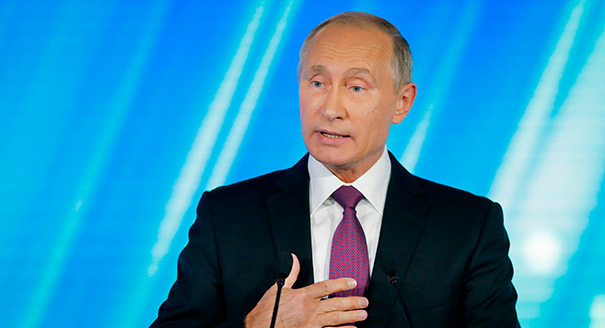
A discussion of expectations for Putin’s fourth term within the context of an increasingly fraught U.S.-Russia relationship.
Source: Center for Strategic and International Studies
The Center for Strategic and International Studies (CSIS) hosted a discussion in advance of Russia’s 2018 presidential election with Carnegie’s Eugene Rumer, RAND’s Samuel Charap, George Washington University’s Henry Hale, CSIS’s Olga Oliker, Georgetown University’s Angela Stent, and moderated by Susan Glasser of Politico. The experts unpacked Russian attitudes, politics, and interests on the eve of the March elections. Rumer discussed possible U.S. responses to the attack against former Russian double agent Sergei Skripal in the United Kingdom, efforts to get out the vote ahead of the election, and Putin’s fourth term agenda. He also emphasized Putin’s dichotomous goals for Russia to be a major global power and simultaneously isolated from the rest of the world.
This event was hosted by the Center for Strategic and International Studies.
Director and Senior Fellow, Russia and Eurasia Program
Rumer, a former national intelligence officer for Russia and Eurasia at the U.S. National Intelligence Council, is a senior fellow and the director of Carnegie’s Russia and Eurasia Program.
Recent Work
Eugene Rumer
Eugene Rumer
Carnegie does not take institutional positions on public policy issues; the views represented herein are those of the author(s) and do not necessarily reflect the views of Carnegie, its staff, or its trustees.

Before the next wave of EU enlargement takes place, the union needs to grapple with thorny questions of how power is distributed among its members.


Emil Sondaj Hansen, Ditte Brasso Sørensen

The real test may come after the leaders leave the room.



Sheena Chestnut Greitens, Oriana Skylar Mastro, Yukon Huang, …

The Horn of Africa countries are among those facing a new security calculus.


Andrew Leber, Lesley Anne Warner

The European far right might fail to steer EU policy in the direction Russia wants, but they will create enough chaos inside Europe to benefit the Kremlin.

Dimitar Bechev

The new U.S.–Denmark–Greenland agreement will help Washington exert political, economic, and financial dominance under the guise of security. Yet, it acknowledged Copenhagen’s and Nuuk’s sovereignty on the island.

Marc Pierini