


Commentary
By focusing only on hard security, the Shield ignores the conditions that fuel cartel power.
Alejandro Martin Rodriguez, Kayly Ober
{
  "authors": [
    "Deborah Gordon",
    "Smriti Kumble"
  ],
  "type": "legacyinthemedia",
  "centerAffiliationAll": "dc",
  "centers": [
    "Carnegie Endowment for International Peace"
  ],
  "collections": [],
  "englishNewsletterAll": "ctw",
  "nonEnglishNewsletterAll": "",
  "primaryCenter": "Carnegie Endowment for International Peace",
  "programAffiliation": "SCP",
  "programs": [
    "Sustainability, Climate, and Geopolitics"
  ],
  "projects": [
    "Carnegie Oil Initiative"
  ],
  "regions": [
    "South Asia",
    "India",
    "North America"
  ],
  "topics": [
    "Economy",
    "Climate Change"
  ]
}
Source: Getty
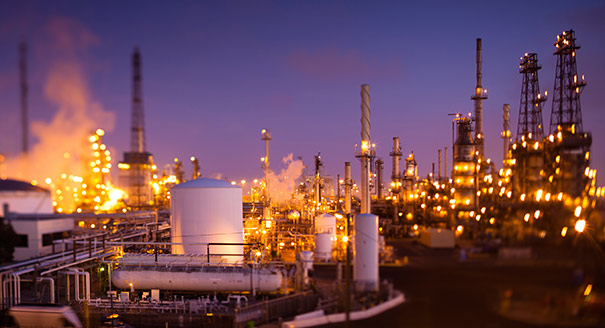
A successful switch to electric vehicles, coupled with strategically increased refining capacity, could be both a geoeconomic and geopolitical maneuver for India.
Source: Livemint
Last year, India announced its bold intention of electrifying the nation’s automobile fleet by 2030. The reaction has been mixed—electric vehicles (EVs) are enticing to customers and strongly supported by environmentalists, but automakers and fuel suppliers are not fully on board. The eco-friendly and cheaper operation of EVs can help lower local air pollution and out-of-pocket costs for increasingly expensive petrol and diesel. These benefits are countered by higher upfront costs of the cars themselves and the long lines and need for more charging stations.
The shift to EVs could also ease concerns about economic and energy security and climate change. India’s phenomenal growth has seen gross domestic product (GDP) quadruple in the past two decades, increasing oil imports from the world’s third-largest oil consumer to record levels. Oil imports expose the country to unpredictable global crude prices that create uncertainties in budgets, deficits, and inflation, while oil consumption elevates climate risks from the resulting greenhouse gas emissions.
If EVs are going to significantly reduce flows of oil through the Indian economy, policymakers need to ensure that using one less gallon of petrol when driving electric cars will actually cut an equivalent gallon of oil out of the economy. This requires focusing on the refining industry.
Refineries are gargantuan systems that heat, cleave, and mix each drop of oil into objects of value like petrol, plastics, and pharmaceuticals. These complicated processes make it difficult to stop producing just petrol without affecting the multitude of other refined products and inputs that have entrenched oil worldwide.
In India, this includes diesel to run trains on India’s railway network, which carries 23 million passengers daily; asphalt used to pave nearly 50,000km of roads and highways connecting economic nerve centres to far-flung borders; liquefied petroleum gas (LPG) that is slated for a 6% increase this year for cooking in a majority of urban households, and replacing wood and animal dung fires in rural areas; and jet fuel that will enable India’s intensifying desire for air travel.
Moreover, a host of other refined petroleum products also find their way into Indian industry, agriculture, households and transportation—from fertilizer to fabrics to food. Even the new EVs employed to reduce oil demand themselves contain many plastic parts (like seats, dashboards and bumpers) and rubber tyres that are derived from oil. And the new wind turbines and solar panels require oil in their manufacturing, installation, operation and upkeep, although the amount of oil embedded in renewable electricity does not meaningfully detract from their life-cycle environmental benefits.
Recent trends in national oil refinery throughput indicate that India is not necessarily planning ahead to dial down its oil consumption. Instead, India is eyeing its oil ambitions and undergoing a major oil infrastructure building boom. Between 2010 and 2017, India’s refining capacity grew by 68%—more than any other nation. Reliance Industries Ltd expanded its existing refinery into the world’s largest single refinery complex, with a capacity in excess of 1.2 million barrels a day (mbd), with a mega risk policy shared among 10 insurers. And additional oil infrastructure is slated by the Indian Oil Corp. Ltd (IOCL) that plans to invest Rs1.43 trillion ($21.5 billion) to double its refining capacity over the next five years.
A successful switch to EVs, coupled with strategically increased refining capacity, could be both a geoeconomic and geopolitical manoeuvre, increasing India’s purchasing power with world oil suppliers and boosting regional market clout by exporting petroleum to neighbouring countries. Still, making such big bets on refining will lock in investments for the remainder of the 21st century; this could pose huge financial, political, environmental, and climate risks.
An EV future that replaces petrol and diesel engines could be one of the keys to sustainable Indian growth. But to ensure this is the case, it must be determined where the displaced hydrocarbon feedstock will go.
In order to provide tangible environmental benefits, spare oil fractions cannot be shifted to petrol and diesel exports, used to produce low-quality residual oils to generate electricity to recharge EVs, or result in inefficient refinery operations (that could lead to higher-priced petroleum products). Instead, it will be important to identify desired outcomes through a thorough refining analysis that considers new refining configurations, new product slates, redundancies or gaps in refining assets, product transfers across regional boundaries, and impacts on greenhouse gas emissions. The goal is to ensure that EVs offer up an important piece to solve the petroleum puzzle.
Instead of taking a simplistic view of oil and its refining, decision makers will require new intelligence in order to reshape the world’s most complex and tightly integrated manufacturing operation, upon which many building blocks of modern society rest. As a growing part of a growing region, India’s EV policies and refining decisions will be significant, both regionally and globally. It is the right time to drill down on oil as India’s refining accelerates at a breakneck pace despite efforts to transition the world away from oil.

Former Director and Senior Fellow, Energy and Climate Program
Gordon was director of Carnegie’s Energy and Climate Program, where her research focuses on oil and climate change issues in North America and globally.
Smriti Kumble
Former James C. Gaither Junior Fellow, Energy and Climate Program
Carnegie does not take institutional positions on public policy issues; the views represented herein are those of the author(s) and do not necessarily reflect the views of Carnegie, its staff, or its trustees.

By focusing only on hard security, the Shield ignores the conditions that fuel cartel power.


Alejandro Martin Rodriguez, Kayly Ober

In any defense establishment, change is an ongoing process. However, despite the best of intentions, existing bureaucracies, bound by habit and years of socialization, have their limits in implementing transformative change.

Anit Mukherjee

The conflict has sent economic and political shock waves through a country with no representation at the negotiating table—and Kenya is not alone.

Georgia Schaefer-Brown, Jane Munga

China’s banking crisis in the 2000s was resolved by transferring the costs to households through financial repression—a decision that recapitalized the banks while exacerbating the structural imbalances that continue to shape the Chinese economy today.

Michael Pettis
Lee’s tour shows how Seoul is reorganizing its diplomacy away from Pyongyang and toward industrial networks and the geography of the compute economy.

Darcie Draudt-Véjares