

Article
Paul Stronski
{
  "authors": [
    "Paul Stronski"
  ],
  "type": "commentary",
  "centerAffiliationAll": "dc",
  "centers": [
    "Carnegie Endowment for International Peace"
  ],
  "collections": [],
  "englishNewsletterAll": "ctw",
  "nonEnglishNewsletterAll": "",
  "primaryCenter": "Carnegie Endowment for International Peace",
  "programAffiliation": "russia",
  "programs": [
    "Russia and Eurasia"
  ],
  "projects": [
    "Changing Geopolitics of Eurasia"
  ],
  "regions": [
    "Caucasus",
    "Georgia"
  ],
  "topics": [
    "Political Reform",
    "Democracy"
  ]
}
Source: Getty
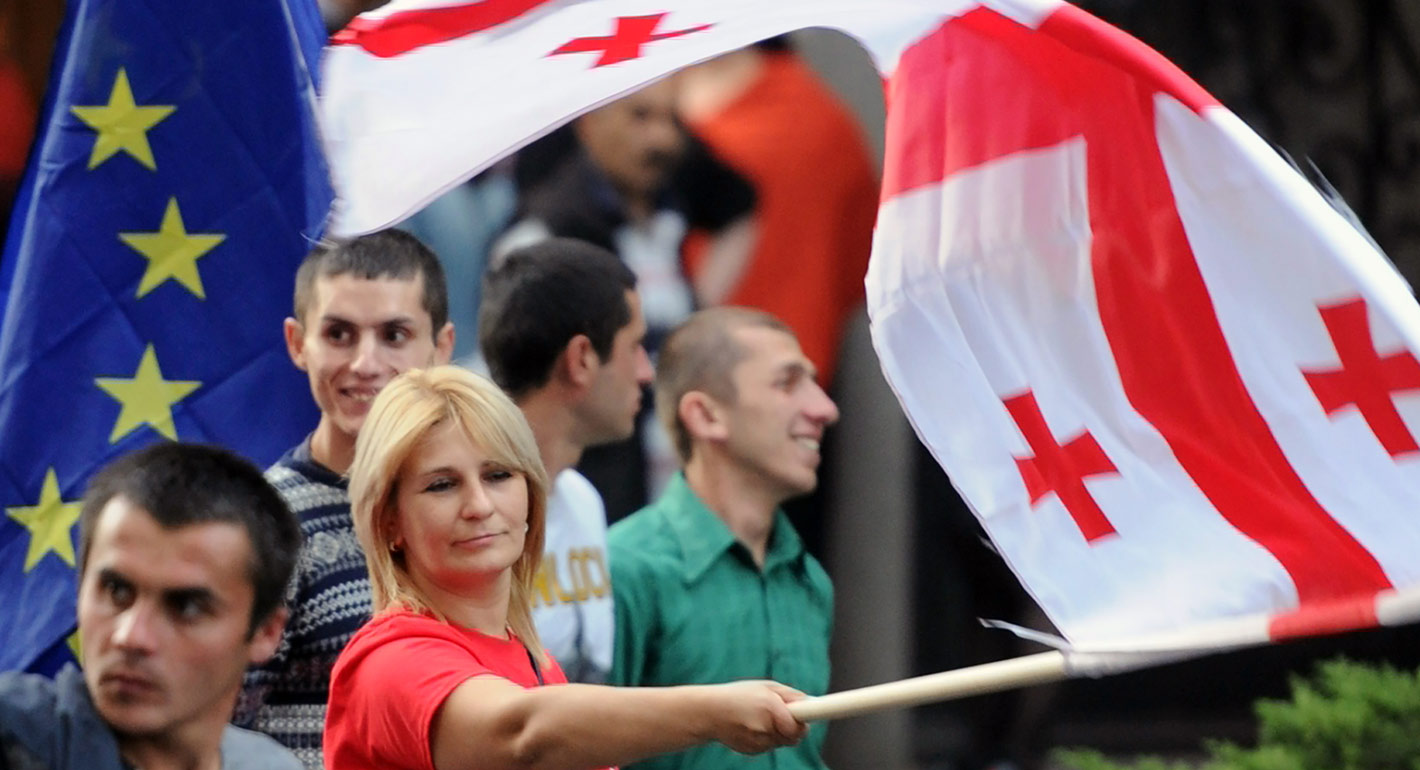
The Georgian presidential election will go to another round after a hotly-contested vote. That’s a good sign for democracy.
Georgia’s October 28 presidential election has moved to a runoff, to be held by December 1. Salome Zurabishvili, who is backed by the ruling Georgian Dream coalition, will face Grigol Vashadze, who is supported by the opposition United National Movement (UNM). Zurabishvili won 38.6 percent of the vote; Vashadze got 37.7 percent.
The vote is seen as a referendum on billionaire former prime minister Bidzina Ivanishvili and the Georgian Dream party he founded, which has governed for the past six years. Zurabishvili has no official party affiliation, but she is supported by Ivanishvili, who still holds deep political influence.
Despite her powerful friends, Zurabishvili was a weaker candidate than expected. Born in France, she made several Georgian-language speaking gaffes, and conspiracy theorists claim that she is Catholic.
Vashadze was the stronger campaigner. He is well respected from a long stint in government.
By the end, the race had devolved into mudslinging. There were allegations of corruption and cover-ups against Georgian Dream and Ivanishvili. And an audio tape allegedly implicating former president Mikheil Saakashvili of UNM in a murder plot was released.
This election won’t change Georgia’s foreign policy trajectory. Both top candidates want Georgia to be closer to Europe and the United States.
It will be Georgia’s last direct presidential election. As the country moves to a parliamentary system, the presidency is becoming increasingly symbolic. Starting in 2024, a 300-member electoral college will choose all future presidents.
But with twenty-five candidates on the ballot, the vote gave Georgians lots of choice and debate, in a region where manipulated elections are the norm.
Still, Georgian politics remains dominated by outsized personalities of the past: Ivanishvili of Georgian Dream, and former president Saakashvili, whose negative legacy still hangs over UNM.
Third-place finisher David Bakradze, who got 10.9 percent of the vote, is supporting Vashadze. With the opposition more unified, the runoff will be competitive and unpredictable.
If Zurabishvili wins, she will become Georgia’s first elected female president. If she loses, it could mean that Georgian Dream’s hold on Georgian politics is weakening.
If Vashadze wins, he may be the right person to steer UNM out of Saakashvili’s shadow.
Georgia’s goal of NATO membership will probably remain beyond its reach. But Georgians still hope for a closer relationship with the United States on security and political issues. The Trump administration clearly prefers bilateral partnerships over multilateral security alliances, and National Security Adviser John Bolton’s recent trip to Georgia, Armenia, and Azerbaijan suggests a renewed U.S. focus on the region.
Former Senior Fellow, Russia and Eurasia Program
Paul Stronski was a senior fellow in Carnegie’s Russia and Eurasia Program, where his research focuses on the relationship between Russia and neighboring countries in Central Asia and the South Caucasus.
Recent Work
Paul Stronski
Paul Stronski
Carnegie does not take institutional positions on public policy issues; the views represented herein are those of the author(s) and do not necessarily reflect the views of Carnegie, its staff, or its trustees.
Tokayev’s predecessor, Nursultan Nazarbayev, outlined arrangements for a power transition too soon and in too much detail, ultimately losing control over the process. Tokayev is determined not to meet the same fate.

Temur Umarov

As the EU confronts profound challenges, several leaders have called for fundamental reform to the union’s model—but only modest, superficial changes have resulted. What if Europe really could be reimagined from zero today: What should such a redesigned European order look like?

Richard Youngs, ed.

Despite unhappiness on the ground, Moscow is determined to use both carrot and stick to ensure there is record support for United Russia in occupied Ukraine.

Konstantin Skorkin
Far-right leader Marine Le Pen can—and will—run in France’s next presidential election. What does the outcome of her appeal against a 2025 embezzlement conviction mean for the country’s political future?

Catherine Fieschi
Whether PAS can refocus on the unfinished business of state-building may ultimately prove more consequential for Moldova’s European future than the pace of its accession negotiations.

Balázs Jarábik