

Commentary
Japan’s long-term security policy is driven by concerns about China, and there is little appetite for (or interest in) pursuing a confrontation with Moscow.
James D.J. Brown
{
  "authors": [
    "Sam Bresnick",
    "Paul Haenle"
  ],
  "type": "commentary",
  "centerAffiliationAll": "dc",
  "centers": [
    "Carnegie Endowment for International Peace"
  ],
  "collections": [],
  "englishNewsletterAll": "asia",
  "nonEnglishNewsletterAll": "",
  "primaryCenter": "Carnegie Endowment for International Peace",
  "programAffiliation": "AP",
  "programs": [
    "Asia"
  ],
  "projects": [],
  "regions": [
    "North America",
    "United States",
    "East Asia",
    "China"
  ],
  "topics": [
    "Foreign Policy",
    "Global Governance"
  ]
}
Source: Getty
China’s drastic measures helped contain the coronavirus outbreak, which continues to spread rapidly across the United States. Beijing has seized the moment to expand its global leadership and advertise its governance model.
Donald Trump likes to claim that he is the first U.S. president to “get tough” on China. Trump, along with his advisers and supporters, argues that his trade war and export controls have made him Beijing’s worst nightmare. Whereas previous presidents carried out policies that allowed China to take advantage of the United States, the narrative goes, Trump is the first chief executive to stand up to China and robustly defend America’s interests.
But this narrative does not withstand scrutiny. On the contrary, a growing number of Chinese government officials and strategic thinkers believe Trump’s policies offer China significant strategic benefits; as a result, they would in fact prefer to see Trump reelected in November. These Chinese observers have analyzed Trump’s weakening of the United States’ reputation and leadership in global governance institutions, destruction of its post–World War II alliance structures, and exacerbation of domestic political polarization and concluded that these trends not only harm Washington’s international position but also boost Beijing’s global standing.
In the midst of the coronavirus pandemic, Chinese leaders have taken decisive and aggressive steps to act on this analysis in order to seize on the strategic opportunities presented by Trump’s presidency. This includes chipping away at U.S. international influence and making a strong play for a global rebalancing of power. The extent to which Trump officials appear to be caught off guard by China’s more assertive approach and to overlook the strategic opportunities China sees in a crisis of this magnitude is shocking. Furthermore, there appears to be little appreciation of how much the Trump administration’s bungling of the crisis and failure to cooperate internationally has advanced Beijing’s efforts to position itself as a global leader.
The Trump administration’s domestic and international responses to the coronavirus have been woeful. While Trump had weeks to prepare for the coming onslaught, he played down the severity of the issue, repeatedly telling the nation he had the disease “totally under control” during January and February. As the situation deteriorated, he resorted to magical thinking, arguing the virus would simply “disappear.”
These gaffes were followed by baseless claims that vaccines were fast approaching, that warmer weather would destroy the virus, and that testing was widely available, among other inventions. Such untruths have undoubtedly driven segments of Trump’s already media- and elite-skeptic base to underestimate the severity of the pandemic and ignore instructions to stay indoors. It is clear that Trump’s downplaying or misunderstanding of the crisis allowed the virus to spread further, but his skepticism about the United States’ standing in the international community has also limited its ability to play a global leadership role.
Though Washington included increased funding for some diplomatic programs in its recent $2 trillion stimulus package, it has largely resisted working with multilateral organizations to address the pandemic. Former president Barack Obama and several of his predecessors used the UN to direct responses to previous disease outbreaks, but Trump has criticized the World Health Organization (WHO) and threatened to defund it. Furthermore, U.S. officials have hampered international cooperation efforts, as evidenced by Secretary of State Mike Pompeo’s insistence on using the term “Wuhan virus” in a G7 statement. Because other member states would not accede to the request, no joint statement was issued.
But the rot at the heart of the administration’s international response extends further. It has not worked closely enough with Taiwan and South Korea, two partners who have had success containing the coronavirus, to adjust its own response. Moreover, the Trump administration recently furloughed 4,500 South Korean employees at U.S. military bases, an unprecedented move. Instead of cooperating with its allies, the U.S. government is requisitioning medical equipment bound for other countries. As Evan Medeiros, a nonresident senior fellow at Carnegie, noted on a recent episode of the Asia Chessboard podcast, the administration should “learn from the Asian countries that have done well and help those that aren’t doing that well.” But the administration seems to prefer dealing with this crisis alone.
While the U.S. government is retreating from the international stage and leaving its allies high and dry, China sees an opportunity to fill the leadership void and enhance its global standing through emergency aid and assistance to countries around the world. There is no doubt that the Chinese Communist Party (CCP) made serious missteps in its initial response to the coronavirus, including covering up critical facts and failing to cooperate fully with the United States and international medical authorities, but it corrected course in the containment and mitigation phase by leading a highly effective, if draconian, campaign to suppress the spread of the coronavirus.
Although Beijing has attempted to minimize its early miscues by spreading conspiracy theories claiming the U.S. Army could have been the source of the virus, it is now focusing on distributing much-needed medical equipment and know-how across the globe—helping the international community fight the coronavirus while also enabling its own strategic gains. As Brookings fellow Rush Doshi has pointed out, China is positioning itself as the guarantor of global public goods, doling out virus-fighting expertise as well as millions of the masks, gloves, and protective suits needed to keep healthcare providers safe. Business magnate Jack Ma, possibly the second most famous member of the CCP, has bolstered China’s soft power push with donations of medical supplies to many countries in Africa and throughout Asia and Latin America. Huawei, the infamous Chinese telecommunications company, has even joined the medical diplomacy fray, sending supplies to Japan, Sri Lanka, and several European countries, among others.
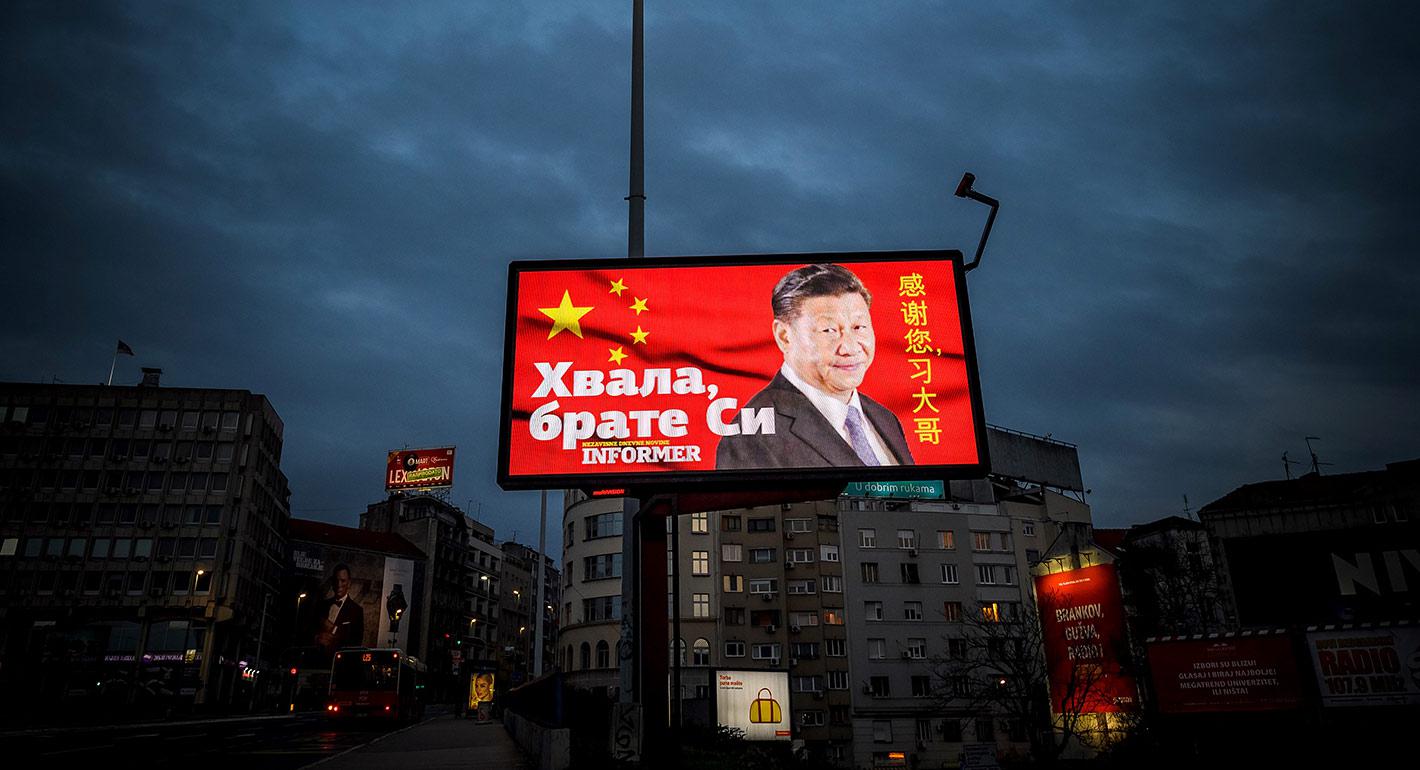
While the jury is still out as to whether Beijing’s public relations blitz will successfully cloud the global community’s recollection of the CCP’s role in worsening the crisis at home and abroad, the short-term results seem promising. China’s diplomacy toward EU-skeptic European nations has aimed to peel them further away from the union. In announcing a national state of emergency, Serbian President Aleksandar Vučić savaged the myth of EU solidarity and said help from the government of Chinese President Xi Jinping, his “friend and brother,” was Belgrade’s best bet to beat the virus. Just after Hungarian Prime Minister Viktor Orbán passed legislation that grants him sweeping emergency powers, Beijing and Budapest signed a $2.5 billion railway modernization deal, the terms of which will be kept secret for an unprecedented ten years. China has also sent supplies and teams of experts to Italy and Spain, although some medical equipment in its shipments turned out to be defective.
Beijing has also gained important ground in multilateral institutions over the last few years, and it is poised to further solidify its position. Last week, Chinese tech giant Tencent announced a partnership with the UN that will see the company host thousands of conversations on its platforms in honor of the UN’s seventy-fifth anniversary. This comes just a few months after it became clear Chinese tech companies are influencing the UN’s evolving facial recognition standards.
Despite its botched response at the outset of the pandemic, China is even exerting increased pressure on the WHO, which has been loath to criticize Beijing for its missteps. Indeed, the WHO has issued several fawning statements about China’s handling of the virus, leading some to accuse the organization of being Beijing’s “accomplice.” The lack of U.S. leadership in such institutions has made it easier for China to mold them to its liking.
Finally, the coronavirus has emboldened Beijing to carry out provocative actions in the Taiwan Strait and the South China Sea. In March, Beijing carried out a thirty-six-hour military exercise simulating combat conditions in a potential war with Taipei. On April 3, a day after Chinese Premier Li Keqiang and Vietnamese Prime Minister Nguyen Xuan Phuc agreed to “enhance cooperation,” a Chinese ship hit and sank a Vietnamese fishing vessel with eight crew members. Though Trump recently signed legislation strengthening ties with Taipei and sailed a ship through the Taiwan Strait, Beijing may see an opportunity to push the line and make further strategic gains given the United States’ weakened condition. Indeed, while China made strategic moves in the waters around its periphery, the U.S. Navy fired the captain of the USS Theodore Roosevelt, an aircraft carrier essential to combating Chinese actions in the South China Sea, for “poor judgment” after he requested to dock due to coronavirus infections on board.
Carnegie President William J. Burns has argued that international crises can speed up geopolitical trends, recently saying, “Just like a virus can worsen, accelerate, aggravate pre-existing health conditions . . . this pandemic can accelerate, worsen, aggravate pre-existing political conditions.” The United States should heed Burns’s words as the coronavirus threatens to hasten China’s ascent as a global superpower.
The Trump administration is locked in a competition with China not only for global supremacy, but also for the international community’s hearts and minds. As the journalist Michael Schuman has noted, the two superpowers are engaged in an “ideological war over which system is superior, democracy or autocracy.” At the moment, given the failures of the U.S. response, China’s system is looking more attractive to many countries, despite the lack of clear evidence that authoritarian systems handle pandemics better than democratic ones.
The critical point to understand is that Beijing will use its comparative success to boost the case for not only its authoritarian governance model, but also every facet of its system, including digital surveillance and state-directed economic policy. If Washington cannot right its ship, U.S. democracy and the post–World War II global governance system it built will be at risk of losing their credibility.
Several U.S. government officials have told the authors that the administration is uncomfortable working with China on the pandemic because of China’s attempts to capitalize strategically on the crisis. While this is a valid concern, the administration must figure out how to work with China to learn from its experience in containing and mitigating the spread of the virus and to procure necessary masks, medicines, and protective medical equipment—all while limiting Beijing’s strategic gains.
A better response by the United States starts at home. The administration must get the outbreak under control within its borders and then shift its attention to helping the international community fight the virus. While providing bilateral assistance where necessary, the United States should work through existing multilateral organizations and also consider establishing a new multilateral task force to oversee the global coronavirus response.
If Washington cannot get its act together, China may make critical gains in its march to global superpower status. China’s strength increased and reputation improved drastically after the 2008 financial crisis, when it helped pull the world out of recession, gaining public goodwill and demonstrating the strengths of its system. As the United States’ reputation falters yet again, the CCP leadership is feeling greater confidence about both the strengths of its system and its international appeal.
Sam Bresnick
Former Senior Research Analyst and Assistant Editor
Sam Bresnick was senior research analyst and assistant editor.

Former Maurice R. Greenberg Director’s Chair, Carnegie China
Paul Haenle held the Maurice R. Greenberg Director’s Chair at the Carnegie Endowment for International Peace and is a visiting senior research fellow at the East Asian Institute, National University of Singapore. He served as the White House China director on the National Security Council staffs of former presidents George W. Bush and Barack Obama.
Carnegie does not take institutional positions on public policy issues; the views represented herein are those of the author(s) and do not necessarily reflect the views of Carnegie, its staff, or its trustees.

Japan’s long-term security policy is driven by concerns about China, and there is little appetite for (or interest in) pursuing a confrontation with Moscow.

James D.J. Brown

Russia is testing the waters of NATO’s mutual defense clause. What do strikes in Romanian territorial waters mean for the alliance’s posture toward Moscow?

Dimitar Bechev

China has showcased its engineering prowess with small modular reactor demonstration projects. But turning these technological achievements into commercial success will be a greater challenge.

Tong Zhao
Why Pakistan, Saudi Arabia, and Turkey are joining forces on regional security.


Alper Coşkun, Amr Hamzawy

Despite public disputes over trade and immigration, the strategic partnership’s foundations remain sturdy.

Sameer Lalwani