

Commentary
Rahul Bhatia
{
  "authors": [
    "Rahul Bhatia"
  ],
  "type": "commentary",
  "centerAffiliationAll": "",
  "centers": [
    "Carnegie Endowment for International Peace",
    "Carnegie India"
  ],
  "collections": [],
  "englishNewsletterAll": "",
  "nonEnglishNewsletterAll": "",
  "primaryCenter": "Carnegie India",
  "programAffiliation": "",
  "programs": [],
  "projects": [
    "Security Studies"
  ],
  "regions": [
    "South Asia",
    "India"
  ],
  "topics": [
    "Foreign Policy",
    "Security",
    "Military"
  ]
}
Source: Getty
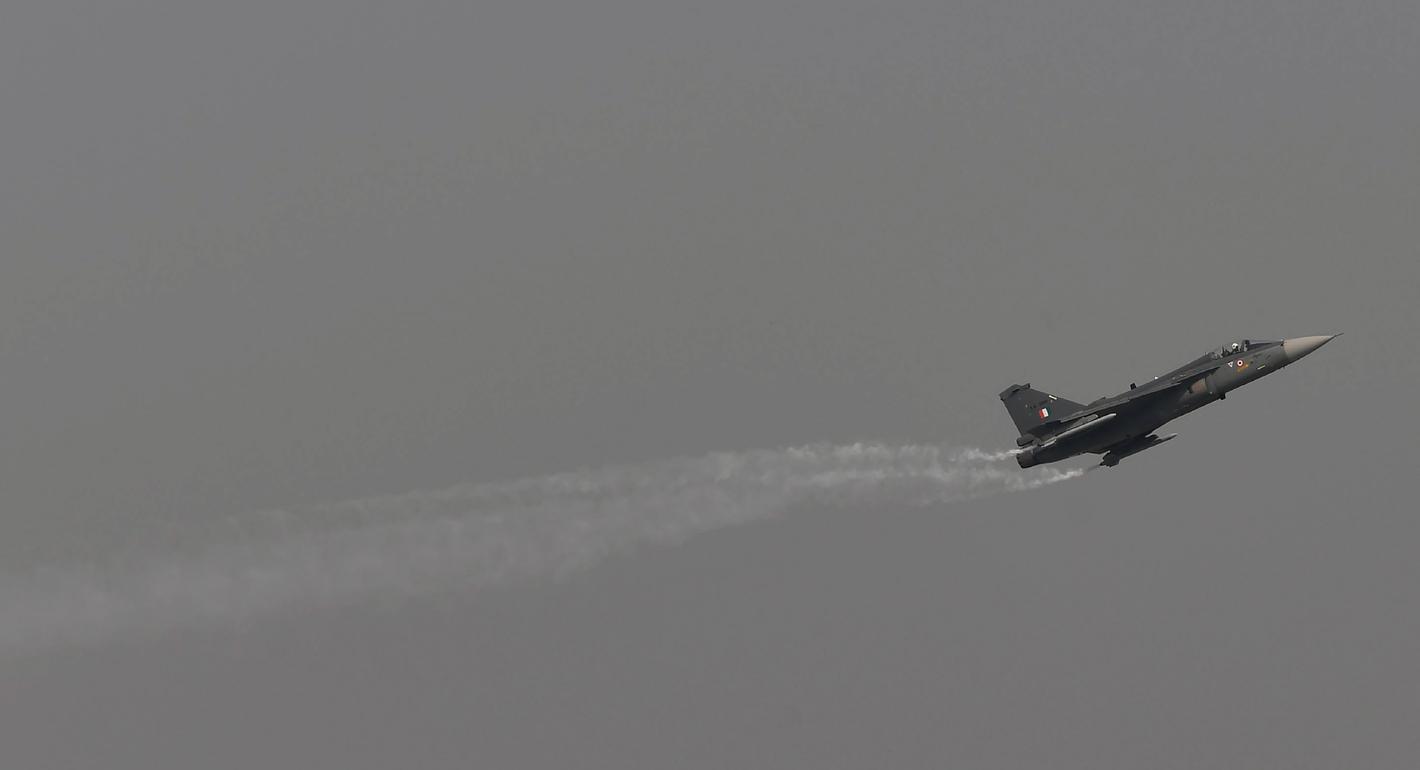
With India lacking the depth of research and design expertise required to build state-of-the-art stealth aircraft, the country needs to prioritize improving on its indigenous fighter, the Tejas.
India is set to launch its Advanced Medium Combat Aircraft (AMCA) program to build a fifth-generation stealth fighter jet in 2022. The fighter aims to serve as a force multiplier for the Indian Air Force (IAF) and to replace some of the older aircraft in its inventory. While the state-owned enterprises tasked with building the aircraft are confident that the new jet will be inducted into the IAF within the next decade, there are concerns over India’s limited capacity to design and manufacture indigenous fighters. Further, the IAF’s pressing need for more fourth-generation-plus conventional aircraft suggests that India should instead prioritize improving on its homegrown fighter, the Tejas.
The AMCA is the most ambitious indigenous aviation project India has undertaken, and its development is on a rather aggressive timeline. A prototype is slated for 2025-26, and its induction into the air force is to start from 2035. However, precedent suggests that it will not be delivered on schedule. The Defence Research and Development Organisation (DRDO), the state-owned enterprise responsible for designing India’s weapon systems, is infamous for overpromising and under-delivering.
While India has been developing some stealth-related technologies, it lacks the depth of research and design expertise required to build a successful stealth fighter. This raises serious questions about whether the DRDO can come up with the multirole, state-of-the-art stealth fighter featuring sixth-generation technologies that the IAF envisions. The AMCA program is also structured in a manner that makes it vulnerable to cost overruns and delays. The program to develop the Tejas was characterized by the same kind of technological overreach, and it took India over three decades to induct the fighter into its air force.
Even if the DRDO can build a stealth aircraft on schedule, India lacks a robust defense industrial base to manufacture the aircraft in large numbers. Although the Indian government has sought to augment the manufacturing capacity of the state-owned Hindustan Aeronautics Limited (HAL) by outsourcing components to the private sector, stealth technologies can be tricky, especially when India’s private defense ecosystem is still in its infancy.
Stealth fighters are undoubtedly the future, and the IAF will eventually require them. Its more immediate need, however, is the procurement of advanced conventional fourth-generation aircraft. The IAF has been understrength for years, and many aging aircraft in its inventory, such as the MiG-21, Jaguar, Mirage-2000, and MiG -29 will need to be retired intermittently. Thus, stealth fighters are desirable, but the induction of new conventional fighters is critical.
The easiest way to bolster the IAF’s numbers and enhance its capabilities is to procure fighters from abroad. Nevertheless, the Indian government has been reluctant to acquire large numbers of foreign aircraft. It famously canceled the deal to acquire 126 foreign multirole combat aircraft in 2015 and has made little progress on a similar deal to acquire 114 foreign fighter jets. It has instead emphasized indigenous development and production. Consequently, the Tejas would be best placed to fill the gap in the IAF; however, it is a less-than-perfect fighter in its current avatar. The IAF has long-held reservations about the capabilities of the Tejas, and its lack of faith in the aircraft is best demonstrated by its decision to deploy the fighter in Southern India, far from the northern frontiers with Pakistan and China.
This makes it imperative for India to double down on building the Tejas Mark II, a much-improved version of the Tejas featuring a more powerful engine, longer range, greater payload capacity, superior avionics, and an advanced electronic warfare suite. The Tejas Mark II is being developed parallel to the AMCA and on a similar timeline, but it is unlikely to face the same issues as the stealth fighter.
While there are doubts about whether the Tejas Mark II can be inducted on schedule, it is a much safer bet. Unlike the AMCA, the Tejas Mark II is not a brand-new aircraft being developed from scratch, but rather an improvement on an existing platform that involves a smaller leap in technology. Given the DRDO’s and HAL’s prior experiences with previous versions of the aircraft, developing and manufacturing the Tejas Mark II should be well within their wheelhouse.
Therefore, India should focus on building the best fourth-generation-plus aircraft it can in the short term, incorporating the most advanced technologies available to the DRDO. Here it is crucial that the Tejas Mark II meets the IAF’s requirements and enters service in a timely manner. India should also look to export the Tejas Mark II to subsidize its development cost. Malaysia has already expressed significant interest in procuring the Tejas Mark I, and a more advanced aircraft may draw additional customers.
Although the IAF has indicated that it is looking to procure some 140 AMCA fighters, it is evident that India will not be able to induct its indigenous stealth fighter by 2035. But the air force will still be in dire need of fighters within the next decade. India should look to fast-track the development and induction of the Tejas Mark II to make up for this gap. Meanwhile, the AMCA program should continue, albeit on a more realistic timeline. Not only will the experience of building the Tejas Mark II almost certainly assist in the development of the AMCA, but it will also serve to nurture India’s defense aerospace base and allow private players to absorb more advanced technologies.
Former Research Analyst Carnegie India
Rahul Bhatia was a research analyst with the Security Studies Program at Carnegie India. His research focuses on India’s borders and India’s foreign and defense policies.
Recent Work
Rahul Bhatia

Rahul Bhatia, Konark Bhandari
Carnegie does not take institutional positions on public policy issues; the views represented herein are those of the author(s) and do not necessarily reflect the views of Carnegie, its staff, or its trustees.
Despite public disputes over trade and immigration, the strategic partnership’s foundations remain sturdy.

Sameer Lalwani
It signals a new era of tech diffusion and warfare.

Steve Feldstein
With its public finances in shambles, the far right polling at 35 percent ahead of the 2027 presidential election, and a growing protest movement, is France’s crisis a threat to the EU’s geopolitical awakening?

Rym Momtaz, ed.

Russia’s AI-driven propaganda campaigns operate in a fragmented, chaotic, and often illogical manner. That’s not necessarily a problem for the Kremlin, though: It’s much easier to mimic genuine public debate that way.

Ilya Klishin

Ahead of a tough winter for Ukraine, Donald Trump’s swing back toward Russia bodes ill. But instead of panicking, Kyiv’s European allies are focusing on action.
Rym Momtaz