

Other
Stephen Wertheim
{
  "authors": [
    "Stephen Wertheim"
  ],
  "type": "commentary",
  "centerAffiliationAll": "dc",
  "centers": [
    "Carnegie Endowment for International Peace"
  ],
  "collections": [],
  "englishNewsletterAll": "americanStatecraft",
  "nonEnglishNewsletterAll": "",
  "primaryCenter": "Carnegie Endowment for International Peace",
  "programAffiliation": "ASP",
  "programs": [
    "American Statecraft"
  ],
  "projects": [],
  "regions": [
    "United States",
    "China",
    "Taiwan"
  ],
  "topics": [
    "Security",
    "Military",
    "Foreign Policy"
  ]
}
Source: Getty
Biden once scolded George W. Bush for pledging to defend Taiwan. Now he is making a worse mistake by chipping away at long-standing policy without a better alternative.
In May 2001, the new U.S. president told an interviewer that the United States was obligated to go to war with China if it attacked Taiwan. The United States would do “whatever it took” to defend the island, George W. Bush vowed.
Then-Senator Joe Biden was not impressed. Taking to the Washington Post to pen “Not So Deft On Taiwan,” Biden scolded the president. “Words matter, in diplomacy and in law,” he wrote. The fact was that the United States possessed no formal obligation to defend Taiwan. As Biden explained, the United States had purposefully abrogated such a commitment and adopted the Taiwan Relations Act, for which Biden had personally voted in 1979. True, the law required the United States to help Taiwan to defend itself and declared a threat to the peace and security of the region to be “of grave concern to the United States.” But it did not obligate American forces to fight on the island’s behalf.
To Biden, no small nuance was at stake. “There is a huge difference between reserving the right to use force and obligating ourselves, a priori, to come to the defense of Taiwan,” he wrote. “The president should not cede to Taiwan, much less to China, the ability automatically to draw us into a war across the Taiwan Strait.”
Bush soon learned the wisdom of following official U.S. policy on Taiwan. By 2003, he publicly opposed Taiwan’s plans to hold a referendum for fear it would stoke pro-independence sentiment. Two decades later, however, President Biden is making a potentially more consequential error than Bush ever did.
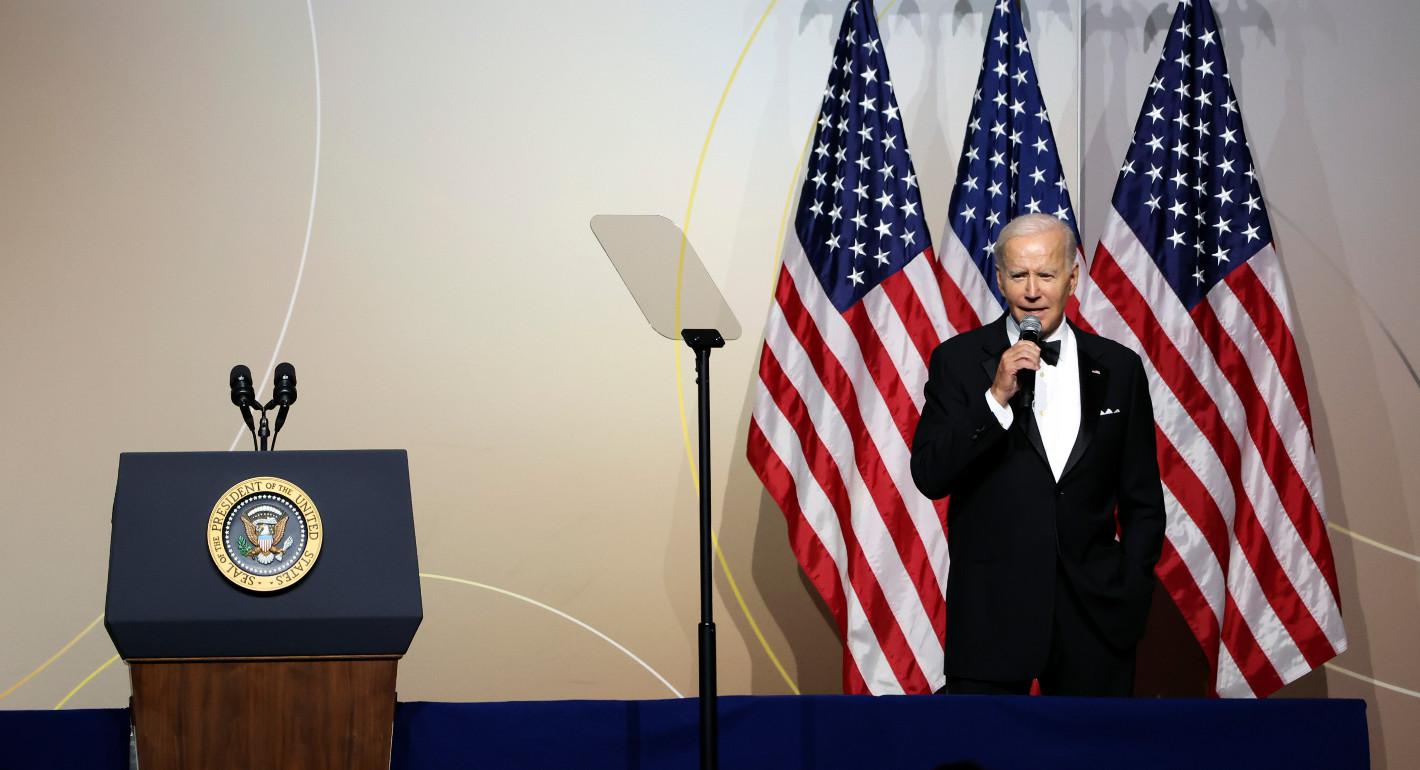
In comments that aired Sunday on 60 Minutes, Biden said that the United States had an obligation to defend Taiwan and would use force “if in fact there was an unprecedented attack.” This is his fourth such statement in a little over a year, rendering it less and less plausible that the president is merely committing a “gaffe,” as the now-ritual White House walk-backs issued each time would have one believe.
On this occasion, Biden went even further. While claiming that the United States continues to adhere to the One China policy forged in the 1970s, Biden in the same breath contradicted that policy. “Taiwan makes their own judgments about their independence,” he said. “We are not moving—we’re not encouraging their being independent. We’re not—that—that’s their decision.” Biden implied that the United States is indifferent to Taiwan’s declared political status, regards the issue as one for the people of Taiwan alone to decide, and would back whatever decision Taiwan makes.
Long-standing U.S. policy says otherwise. “We do not support Taiwan independence” is the decades-old position, uttered word for word by Secretary of State Antony Blinken just last month. Under the One China policy, the United States seeks to deter both China and Taiwan from upsetting the status quo—the former by using militarily force to bring about “reunification” and the latter by declaring independence and permanently severing itself from the mainland.
There is no reason to change this policy now. As America’s finest diplomats have appreciated, this awkward arrangement may be the only way the territorial status quo can be maintained and a ruinous war avoided. So far, every Chinese leader since Mao Zedong has proved willing to live with Taipei’s de facto separation from Beijing. Taiwan, for its part, has refrained from declaring independence, knowing the move would bring about a Chinese invasion while alienating the United States.
The One China policy was always dissatisfying. It is no one’s idea of justice. But it is effective, and no one has put forward an alternative that would not move the world’s two leading powers closer to war and 24 million Taiwanese people nearer to calamity.
Rather than attempt to put forward a better alternative, Biden has apparently opted to chip away at the One China policy and see what happens. He may hope to gain an extra dash of deterrence from seemingly cost-free rhetoric. Perhaps he worries that Chinese President Xi Jinping is contemplating an attack and that Taiwan has not adequately prepared its defenses. Even if so, his comments are counterproductive. Chinese officials already must account for the possibility that the United States could rally to Taiwan’s side if the People’s Liberation Army launched an unprovoked invasion. Biden’s statements probably add little to the military and economic dimensions of deterrence. They do more to undercut assurances to China that the United States will uphold the status quo and discourage Taiwanese moves toward independence. The president’s remarks are provocative to Beijing without providing security to Taiwan or the United States.
In this light, Biden is conveying anxiety rather than confidence when he grasps for additional deterrence through his so-called gaffes. He is inverting Theodore Roosevelt’s dictum to speak softly and carry a big stick.
Or as the Biden of 2001 wrote: “We now appear to have a policy of ambiguous strategic ambiguity. It is not an improvement.”

Senior Fellow, American Statecraft Program
Stephen Wertheim is a senior fellow in the American Statecraft Program at the Carnegie Endowment for International Peace.
Recent Work
Stephen Wertheim



Sophia Besch, Alper Coşkun, Nate Reynolds, …
Carnegie does not take institutional positions on public policy issues; the views represented herein are those of the author(s) and do not necessarily reflect the views of Carnegie, its staff, or its trustees.

Ahead of a tough winter for Ukraine, Donald Trump’s swing back toward Russia bodes ill. But instead of panicking, Kyiv’s European allies are focusing on action.

Rym Momtaz

Without a ceasefire with Ukraine on attacking each other’s energy infrastructure—to which the Kremlin is unlikely to agree—the diesel agreement between Putin and Trump is largely for show, rather than representing a genuine increase in the volumes of Russian diesel on the global market.

Sergey Vakulenko
Despite its flop at the box office, the film raises important questions for the climate community to answer.

Leonardo Martinez-Diaz

Funding Ukraine remains a priority for European leaders. As Russia’s war of aggression heads into another winter, two feasible options to mobilize support for Kyiv should be fast-tracked.


Vladyslav Rashkovan, Gregory P. Wilson

Russian strikes are weakening the economy sustaining Ukraine’s war effort. Closing the growing funding gap will require more European support and politically contentious reforms in Kyiv.

Balázs Jarábik