

Research
- +5
Herbert Crowther, Darcie Draudt-Véjares, Walter James, …
{
  "authors": [
    "Darcie Draudt-Véjares"
  ],
  "type": "commentary",
  "blog": "Emissary",
  "centerAffiliationAll": "dc",
  "centers": [
    "Carnegie Endowment for International Peace"
  ],
  "collections": [
    "Dynamic Governance Risks in Asia",
    "Korea: Emerging Player"
  ],
  "englishNewsletterAll": "asia",
  "nonEnglishNewsletterAll": "",
  "primaryCenter": "Carnegie Endowment for International Peace",
  "programAffiliation": "AP",
  "programs": [
    "Asia"
  ],
  "projects": [],
  "regions": [
    "East Asia",
    "South Korea"
  ],
  "topics": [
    "Democracy",
    "Civil Society"
  ]
}
Source: Getty
Traditional political divisions no longer dictate election outcomes in this vibrant democracy.
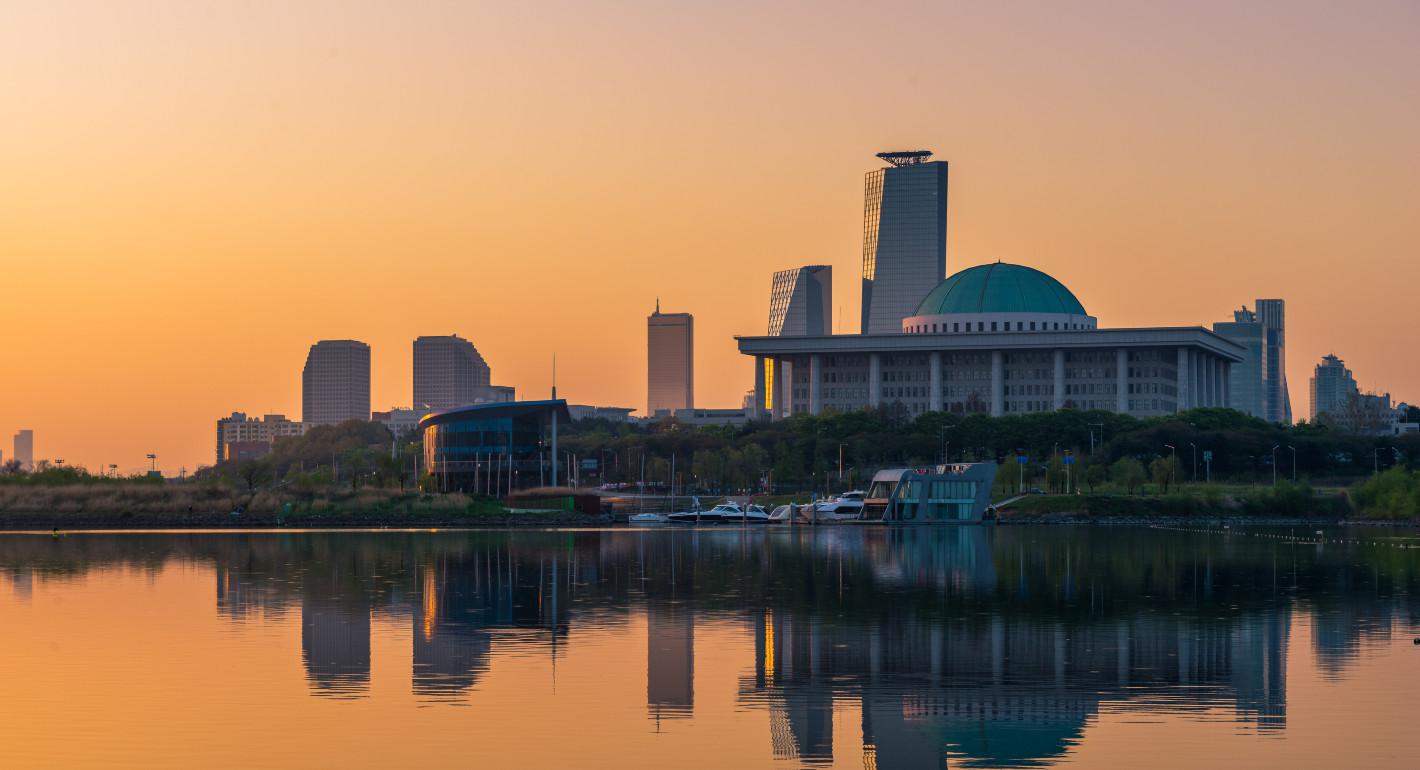
South Koreans will go to the polls in a general election on April 10, with all 300 seats in the National Assembly up for grabs. The country’s rapidly changing society is reshaping citizens’ political preferences, and traditional political divisions no longer dictate election outcomes. In addition, the broad sense of frustration with national politics in this vibrant democracy parallels others across the globe.
The players in the election are largely known entities in Korean politics. The Democratic Party Korea (DPK) currently controls the National Assembly and benefits from working with smaller parties on the left side of the political spectrum. But the People Power Party (PPP) claimed the presidency in the 2020 election. In Korea, the “imperial presidency” has outsized power in agenda-setting and policy implementation, so many policy issues are decided and governed within the executive branch.
Noteworthy in this upcoming vote are new patterns in terms of voter attitudes and policy preferences, according to recent polls. Traditionally, South Korean politics have followed regional lines, roughly cutting the southern part of the peninsula into west and east—with the east leaning conservative and the west leaning progressive.
Although these patterns are still palpable, new social schisms in the largely homogeneous society are becoming more apparent, particularly in terms of age and gender. The most current poll data suggests conservatives maintain a stronghold on the older cohort, but progressive-leaning voters have become more distributed across all age groups.
The news cycle is also driving electoral politics. The government is dealing with a doctor strike in a country with a shortage of medical access in a swiftly aging society—despite a high degree of medical expertise in the population. First Lady Kim Keon-hee has brought a slew of scandals to the president’s office, including allegations of involvement in stock manipulation and falsifying her resume in job applications. She’s been compared to Marie Antoinette for her receipt of luxury gifts, which violate Korean law prohibiting spouses of public officials from gifts valued at more than $750. Yoon also has grappled with approval ratings in the low thirties for the past year, and his performance certainly affects voters’ opinions toward the PPP as well.
This election could be characterized by two important factors. First, Koreans currently categorize their political landscape as a choice between the lesser of two evils. The catchphrase captures the frustration the general public has over the state of the partisan landscape, which is becoming more polarized, and faith in public officials. Issues ranging from economic recovery, unemployment, gender and minority rights, and foreign affairs are at the top of many voters’ concerns. The election results will have large implications on the direction of these policies, especially as politicians move further from the center on these issues.
Second, Korea also demonstrates the importance of institutional design and electoral rules shaping legislative politics. South Korea has a weak party system dominated by strong, charismatic politicians. Parties routinely have dissolved following failed presidential bids or scandal-ridden outgoing administrations, only to be reformed and rebranded under the leadership of a known figure poised for the next presidential election. This weak system means that Korea has suffered from a lack of accountability and policy gridlock—a problem amplified with a one-term limit on the five-year presidency.
In 2020, Korea adopted a new mixed-member proportional representation (MMPR) system, which is intended to improve representation of minor parties. But the National Assembly continues—and likely will continue—to be dominated by the two mainstream conservative and progressive parties. Despite the reformers’ best intentions, the MMPR system has retrenched the dominant two parties, as leaders took advantage of the rule by helping to set up satellite parties, which can be disbanded after the election and the politicians rejoin the mainstream party. Despite a weak party system, strong personal connections among politicians serve as a form of informal discipline in the National Assembly.
The number of undecided voters has been shrinking since December, yet polling numbers are so close that it’s not possible to predict the outcome. Both major parties are trending in the upper 30 to lower 40 percentiles in terms of National Assembly share. Combined with a near-daily cycle of political scandals reported and manipulation of the MMPR system, the policy priorities for the next parliamentary session won’t be clear until well after the votes are counted.
Previously in this series:
Fellow, Asia Program
Darcie Draudt-Véjares is a fellow for Korea studies in the Asia Program at the Carnegie Endowment for International Peace. Her research focuses on South Korean political economy, governance, and foreign policy, particularly the intersection of economics, technology, and geopolitics.
Recent Work


Herbert Crowther, Darcie Draudt-Véjares, Walter James, …
Darcie Draudt-Véjares
Carnegie does not take institutional positions on public policy issues; the views represented herein are those of the author(s) and do not necessarily reflect the views of Carnegie, its staff, or its trustees.

Despite its flop at the box office, the film raises important questions for the climate community to answer.

Leonardo Martinez-Diaz
Fatima El Mansouri is the country’s first female prime minister. She’s also a privileged insider in a largely ceremonial position.

Sarah Yerkes

U.S. trading partners in Asia are closely watching the dispute for signs of how it may affect their own interests.

Barbara Weisel
Xi, Putin, and other regional leaders are back-slapping in Bishkek, but the SCO has yet to answer the most serious questions about continental Asia's economic future.

Evan A. Feigenbaum

Over the past decade, China has moved from marginal player to major producer of all things batteries. The United States, Europe, and others are aiming to balance the market.

Milo McBride