

Q&A
- +1
Sheena Chestnut Greitens, Oriana Skylar Mastro, Yukon Huang, …
{
  "authors": [
    "Tong Zhao"
  ],
  "type": "commentary",
  "blog": "Emissary",
  "centerAffiliationAll": "",
  "centers": [
    "Carnegie Endowment for International Peace"
  ],
  "englishNewsletterAll": "",
  "nonEnglishNewsletterAll": "",
  "primaryCenter": "Carnegie Endowment for International Peace",
  "programAffiliation": "",
  "programs": [],
  "projects": [],
  "regions": [
    "China",
    "Taiwan",
    "Venezuela",
    "United States"
  ],
  "topics": [
    "Security",
    "Defense",
    "Military",
    "Foreign Policy"
  ]
}
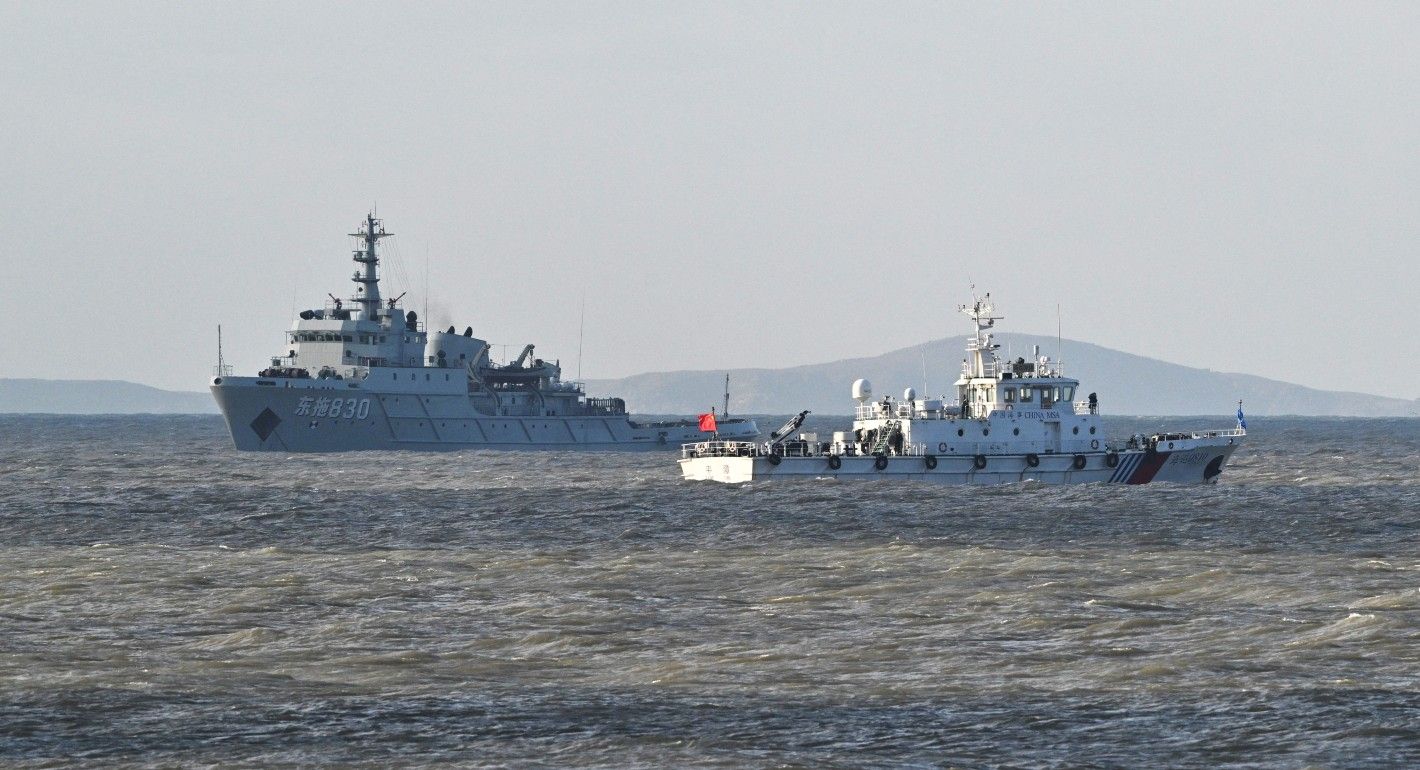
Chinese ships patrol during military drills near Taiwan on December 30, 2025. (Photo by Adek Berry/AFP via Getty Images)
The United States’s attack on Venezuela has raised questions about domestic checks on power and signaled a challenge to international law and longstanding norms of sovereignty and the use of force. The priority given to securing U.S. access to Venezuelan oil and other resources further underscores the material interests underlying the operation. Combined with President Donald Trump’s open flirtation with territorial ambitions elsewhere—toward Greenland, if not Canada—the episode has reinforced growing international concern that the administration has taken a significant illiberal turn in foreign policy, shifting away from rule-based order to raw power projection.
Many international analysts argue that illiberal states already disregard international law, so U.S. norm-breaking has little effect on their behavior. A close reading of Chinese expert analyses and Beijing’s existing security mindset suggests otherwise.
Chinese analysts are updating their assessments of both U.S. military capabilities and, more importantly, Trump’s willingness to deploy them. The emerging conclusion is sobering: The United States may often appear a paper tiger, but its fangs can still bite. Beijing is not alarmed about any increased risk of direct U.S. attack against China. Rather, Chinese strategists believe Washington dared to execute such a bold operation in Caracas because of its overwhelming military superiority over a weaker adversary. The lesson Beijing draws is not reassuring: In an international system where major powers more openly practice the principle that “might makes right,” China must further prioritize the accumulation and readiness of hard power. As Chinese realpolitik beliefs grow more rigid, the hard power competition between China and the United States is likely to deepen rather than stabilize.
The claim that the erosion of international law and norms does not affect the behavior of illiberal states such as China underestimates the universal human need to feel righteous—and the particular intensity with which illiberal systems manufacture self-righteousness.
Policymakers and the broader public in illiberal states may occasionally acknowledge their own country’s double standards in private. Yet through tight information control and self-reinforcing echo chambers, they often sincerely believe that their government’s policies are morally responsible and legally righteous—sometimes even more so than those of Western democracies. Russian President Vladimir Putin would not lecture at length on his version of history—his sense of historical justice and legality—if he did not feel profoundly self-righteous. Chinese President Xi Jinping likewise appears genuinely convinced that he stands on the right side of history. These public expressions are less calculated posturing than deeply held beliefs.
In this context, controversial U.S. actions such as the Venezuela operation—and the international community’s tacit acceptance—matter greatly. They allow authoritarian leaders to lower their perceived thresholds of acceptable behavior. Norms need not disappear entirely for the standard to become comparative rather than absolute. Illiberal states do not seek universal moral legitimacy. They need only believe they are no worse than their Western rivals—or, in their own view, slightly better.
Washington’s increasingly blunt disregard for international norms it once championed has also disillusioned the remaining dissenting voices within China. Many of the supporters of democratic governance are now indifferent, or have begun to appreciate the apparent stability and effectiveness of authoritarian rule at growing power and providing security—especially when power starts to matter more than norms. The fading of these last critical voices and the erosion of meaningful internal debate are likely to give way to a more self-righteous and assertive security policy. If illiberal convictions continue to harden within China’s system, the prospects for genuine and durable reconciliation between Washington and Beijing may further diminish over the long run.
When it comes to Taiwan, Beijing is increasingly explicit that it is no longer content with maintaining the status quo. China has shifted the focus of its Taiwan policy from primarily opposing independence to actively pursuing unification. Despite extensive preparations for military coercion, international reaction remains a central consideration in Beijing’s calculations. China already does not view a military takeover as violating international law, since it defines Taiwan as an internal matter. Still, watching the international community accept recent U.S. actions will almost certainly convince Beijing that a military move against Taiwan—potentially beginning with the removal or capture of Taiwanese leaders in a so-called law enforcement operation—would be far more justifiable and far easier for the world to swallow than the U.S. attack on Venezuela.
International response would directly shape Beijing’s military and political calculations. A forceful pushback by a U.S.-led coalition, supported by key Global South countries, could impose severe economic sanctions and diplomatic isolation, constraining China’s ability to fight and sustain a prolonged war. Even if China were to secure a swift, decisive military victory, international acquiescence would remain essential for postwar governance, suppression of resistance, and preservation of a broadly favorable external environment for a unified China. After all, unification is meant to advance, not derail, Xi’s stated goal of achieving “national rejuvenation” by 2049.
Washington’s framing of the Venezuela operation as law enforcement closely mirrors China’s own legal characterization of its plans against Taiwan. (Beijing increasingly practices “law enforcement” operations near Taiwan.) The Venezuela episode may not accelerate China’s unification timetable, but it will probably reinforce its expectation that international resignation, rather than coordinated resistance, may follow decisive action, allowing it to concentrate primarily on countering U.S. military intervention rather than managing a united global response.
Absent a strong international coalition anchored in shared principles, Washington may still hope to deter China on its own. That strategy, however, depends on successful U.S. industrial revitalization, including in the defense sector, and on avoiding prolonged distraction elsewhere. Yet uncertainty surrounding Venezuela’s internal trajectory and broader regional stability raises the risk of a more overstretched United States—less able to intervene decisively in the Taiwan Strait.
To be sure, the Venezuela attack signals a greater U.S. willingness to employ hard power, particularly in the Western Hemisphere. This is consistent with the so-called Trump Corollary to the Monroe Doctrine outlined in the latest National Security Strategy. But the strategy ultimately places heavy reliance on “presidential diplomacy,” assuming that peace in regions deemed peripheral to U.S. “immediate core interests” can be preserved at minimal cost of presidential time and attention. Beijing may well interpret this thinly articulated commitment as an invitation to test, through both diplomatic and military means, whether the Taiwan Strait truly qualifies as an “immediate core interest” in Trump’s strategic perception.
At the strategic level, Trump’s desire for U.S. dominance in the Western Hemisphere opens a potential transactional opportunity. Apparently interested in exploring the possibility of favorable U.S. shifts on Taiwan and technology restrictions, Beijing faces a decision over whether to yield some ground in the hemisphere. Shortly before the Venezuela attack, China released a high-level policy paper on Latin America and the Caribbean, signaling intent to further expand its influence in the region. Yet Beijing could still slow its implementation, soften competition over critical port facilities near the Panama Canal, and mute diplomatic attacks to accommodate Trump’s revived Monroe Doctrine. In addition, the restrained tone of China’s official response to the Venezuela attack, along with the absence of full mobilization of state media and UN diplomacy, suggests Beijing is keeping its options open.
Where China ultimately lands between accommodating and resisting U.S. dominance in the hemisphere will hinge on at least two factors: Trump’s willingness to make concessions in East Asia, and Beijing’s assessment of whether Washington’s push for hemispheric dominance strengthens or weakens U.S. long-term competitiveness. From a hardened realpolitik perspective, Chinese strategists are reluctant to acquiesce to any revival of American hemispheric power that meaningfully contributes to broader U.S. revitalization and could pose a greater strategic threat over time.
By contrast, Chinese leaders may respond with greater patience and restraint if they conclude that Washington’s attempt at hemispheric dominance is more likely to bog it down and erode its long-term competitiveness. In this sense, China’s next moves in the Western Hemisphere will be a revealing indicator of its broader strategic judgment. Greater deference to U.S. priorities there would not necessarily signal renewed American strength or successful coercion but instead reflect Beijing’s growing confidence that time and structural trends favor China in long-term competition.
Either way, the trajectory points toward a more Machiavellian global competition between Washington and Beijing. Transactions may proliferate, but distrust will deepen. Tone-deaf rhetoric will intensify, but durable cooperation may recede. And as illiberalism and self-righteousness spread on both sides, the risk of miscalculation will rise. The paper tigers’ fangs may make everyone bleed.
The latest from Carnegie scholars on the world’s most pressing challenges, delivered to your inbox.

Senior Fellow with the Nuclear Policy Program and Carnegie China
Tong Zhao is a senior fellow with the Nuclear Policy Program and Carnegie China, Carnegie’s East Asia-based research center on contemporary China. Formerly based in Beijing, he now conducts research in Washington on strategic security issues.
Recent Work



Sheena Chestnut Greitens, Oriana Skylar Mastro, Yukon Huang, …
Carnegie does not take institutional positions on public policy issues; the views represented herein are those of the author(s) and do not necessarily reflect the views of Carnegie, its staff, or its trustees.

The acknowledgment has sparked fears of a new arms race with China and Russia.

Chris O’Meara

The summit may be remembered as a fatal blunder, when Washington, Beijing, and the AI industry collectively chose ceremony over action.

Jeffrey Prescott
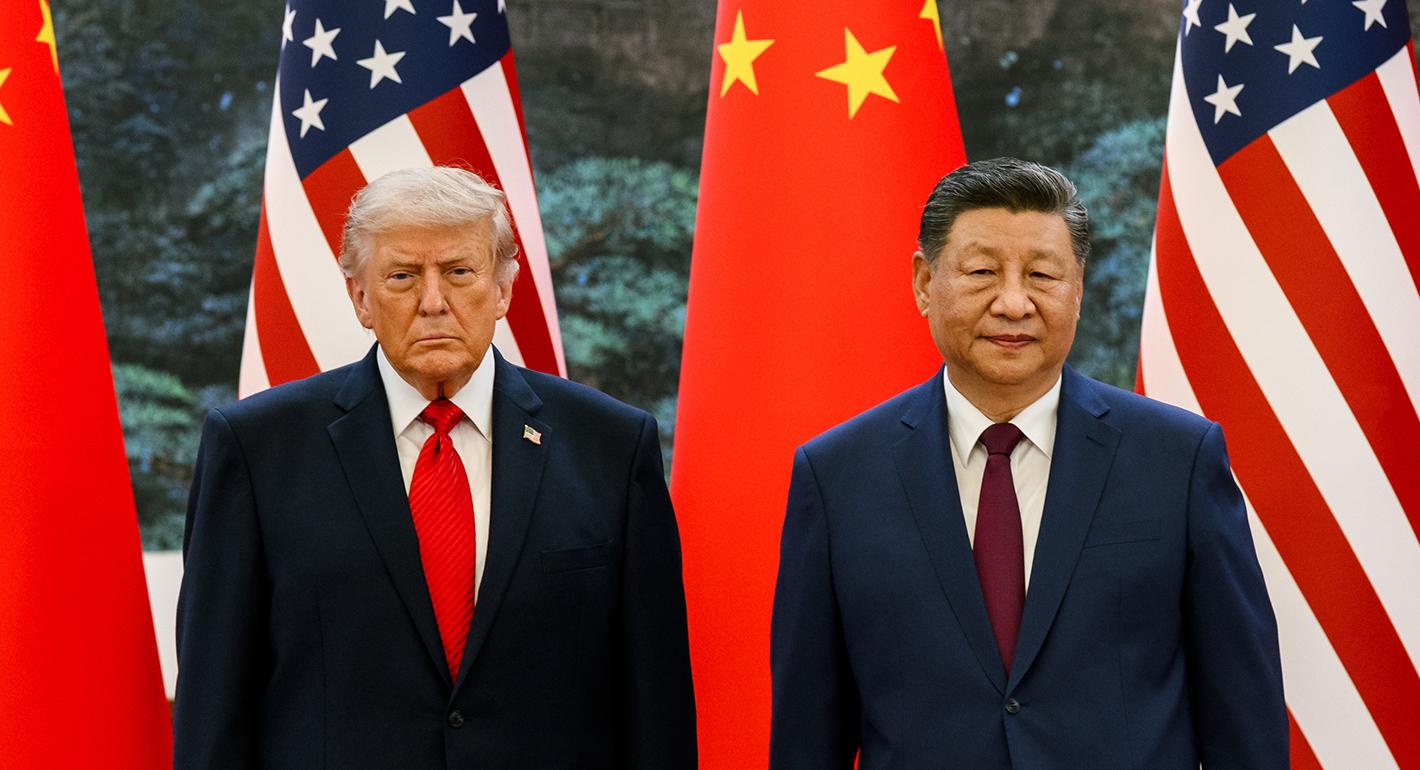
The real test may come after the leaders leave the room.
Sheena Chestnut Greitens, Oriana Skylar Mastro, Yukon Huang, …
The Horn of Africa countries are among those facing a new security calculus.


Andrew Leber, Lesley Anne Warner
Why governance of rapidly evolving technology will be distributed and complex.


Stewart Patrick, Scott Singer