

Commentary
Rosa Balfour
{
  "authors": [
    "Rosa Balfour"
  ],
  "type": "commentary",
  "blog": "Strategic Europe",
  "centerAffiliationAll": "",
  "centers": [
    "Carnegie Endowment for International Peace",
    "Carnegie Europe"
  ],
  "collections": [
    "Transatlantic Cooperation"
  ],
  "englishNewsletterAll": "",
  "nonEnglishNewsletterAll": "",
  "primaryCenter": "Carnegie Europe",
  "programAffiliation": "",
  "programs": [],
  "projects": [],
  "regions": [
    "Europe",
    "North America",
    "United States",
    "Western Europe"
  ],
  "topics": [
    "Foreign Policy",
    "Economy",
    "Democracy",
    "EU",
    "Climate Change",
    "Global Governance"
  ]
}
Source: Getty
The Americans and Europeans have to reconcile their differences in dealing with authoritarian regimes. This is an immense challenge facing these democracies.
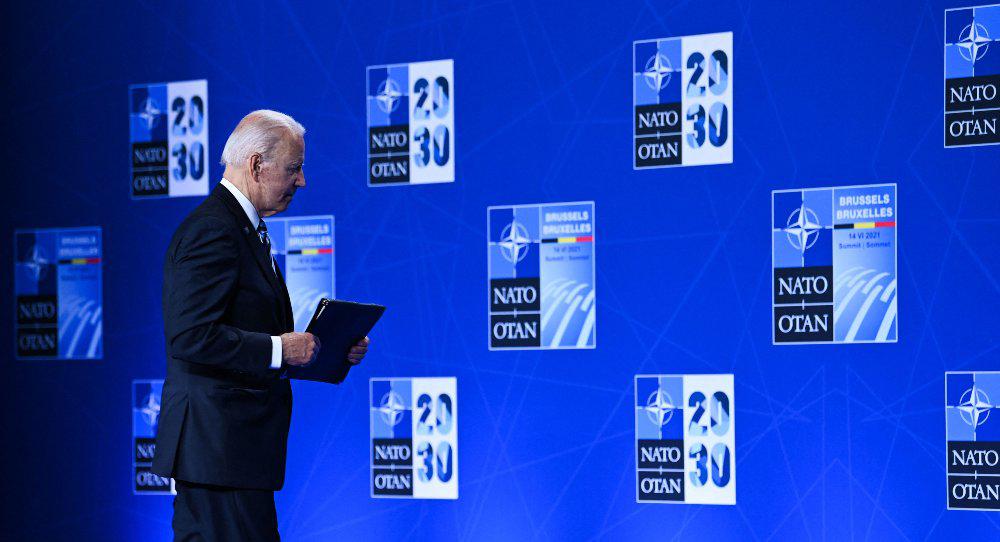
America is back, the West can still lead, and the transatlantic relationship is alive and kicking. This is the message delivered by some of the world’s leaders at the G7 and NATO summits. These will be followed by today’s EU-U.S. summit and the June 16 meeting between U.S. President Joe Biden and Russian President Vladimir Putin in Geneva.
Biden left Washington for his first trip abroad on a mission to rally partners to work together, “demonstrating the capacity of democracies to both meet the challenges and deter the threats of this new age.” These challenges include the coronavirus pandemic and the climate crisis—on both of which G7 leaders failed to be truly ambitious—as well as the need to “[confront] the harmful activities of the governments of China and Russia.”
The atmosphere at the G7 was of determination to show leadership and of warmth among leaders—with the exception of the host, British Prime Minister Boris Johnson, who was under pressure from pretty much everyone to avoid a trade war with the EU over the implementation of the Northern Ireland Protocol. Brexit yet again tainted the unity of the West.
Of these summits, the U.S.-EU appointment today, June 15, is the least glamorous and the most under-reported. Yet it is the first summit between the two sides since 2014 and the first test of what can be achieved through U.S.-EU cooperation.
It is clear that the United States’ new method is to work with its partners to forward its goals, starting with containing China’s expansion. What has received less elaboration are its goals with regard to Europe.
Biden had warm words for the EU as “strong and vibrant,” but the details of what the two can do together are yet to emerge.
Key positions relevant to Europe also are awaiting appointments, such as the U.S. ambassadors to NATO and the EU.
The EU, on the other hand, has been quite disciplined on the transatlantic agenda, showing that it has learned a few lessons from the recent past.
First of all, EU leaders have avoided squabbling to get the first photo shot with Joe Biden, the first invitation to the White House—it will be Angela Merkel in July—, and gracefully accepted that the EU institutions would be the first port of call after NATO and G7.
Secondly, they have been remarkably united in their public messaging and avoided trumpeting unrealistic wishlists or grandstanding big ideas.
Thirdly, the EU has been quietly but proactively working on a bilateral agenda to translate good intentions into practical steps and deeds. This is not news headline material, but it displays a more mature approach to the transatlantic relationship.
What then to expect of the EU-U.S. summit?
Today’s summit will echo some of the commitments made by leaders at the G7 on ending the pandemic and supporting all countries in investing in a green economy.
But the flesh on the bones is to be found in what the EU and the United States decide to pursue bilaterally.
Back in December the EU had proposed to create an EU-U.S. Trade and Technology Council (TTC). This is likely to be one of the most significant deliverables of today’s summit. There are multiple reasons why this decision is important. Two stand out.
Firstly, it represents a practical response to the United States’ call to cooperate on the challenges posed by China, a politically controversial quest from the European perspective, where views on China differ from those of the United States and among EU members. Deconstructing the challenges posed by China will help EU member states deal with specific issues rather than accept the overarching narrative of democracy versus authoritarianism that the Biden administration is embracing.
Secondly, it will provide a semi-institutionalized space for dialogue through which the EU and the United States can reach constructive consensus but also manage their differences, which are many, complex, and require the mobilization of several departments of government, which is complicated in itself.
A commitment to greater systematic cooperation on a wider range of international issues is also likely to emerge from the summit. The EU-U.S. dialogue on China is seen as a positive initiative and the precedent of the EU, United States, UK, and Canada coordinating sanctions against China for the treatment of the Uighur minority earlier this year also speaks in favor of more regular and institutionalized dialogue. It could provide a format relevant to other issues, such as coordinating positions on dealing with Russia.
Then there are things to watch out for.
The TTC and, potentially, an EU-U.S. dialogue on Russia in the mold of the existing dialogue on China are ways for the EU to respond to Washington’s call for action on China and Russia. The broader narrative framing global politics as a struggle between authoritarianism and democracy is much harder for the EU as a whole to embrace.
There have been significant shifts in the EU’s views of China during the past couple of years, part at the urging of the United States, part as a growing realization that China’s economic and financial investments in the European continent have the political objectives of sowing divisions and building vulnerabilities to and dependencies on China, and part as a result of Beijing’s wolf warrior diplomacy, which has taken an explicitly aggressive turn since the coronavirus pandemic.
Yet views in the EU on the democracy versus authoritarian paradigm differ widely—from countries that are firm transatlanticists but are abandoning democracy domestically to those whose democracies are thriving but which are deeply interconnected with the Chinese economy and/or Russian energy.
Hesitancy about the United States also continues to hover over the constructive agenda and the optimism that will come out of today’s summit.
The EU is painfully aware that the window of opportunity for the transatlantic reset could be narrow and must prepare for the eventuality that after 2024 it might be left out in the cold—again. The union needs to simultaneously build back better with the United States and on its own.
This blog is part of the Transatlantic Relations in Review series. Carnegie Europe is grateful to the U.S. Mission to the EU for its support.

Director, Carnegie Europe
Rosa Balfour is the director of Carnegie Europe. Her fields of expertise include European politics, institutions, and foreign and security policy.
Recent Work
Rosa Balfour

Rosa Balfour, Stefan Lehne, Elena Ventura
Carnegie does not take institutional positions on public policy issues; the views represented herein are those of the author(s) and do not necessarily reflect the views of Carnegie, its staff, or its trustees.
Defense tech innovations will be at the heart of Europe’s new security strategy. But so far, Brussels has been making moves without a broader plan, undermining readiness and credibility.

Raluca Csernatoni

When the U.S.-Iran memorandum of understanding was announced, the UK, France, Germany, and Italy declared their readiness to help demine the Strait of Hormuz and lift nuclear sanctions on Tehran. But does Europe need new tools to recover a diplomatic role?

Rym Momtaz, ed.
The Franco-German relationship is on the rocks again. But unlike previous moments of tension, the epochal changes on the world stage require that both step up investment in their bilateral ties.
Rym Momtaz

The EU is putting together a new security strategy to meet today’s myriad challenges. But for any proposal to be effective, the union needs to grapple with its identity and ambitions.

Pierre Vimont

The EU’s new migration policy is not suited to today’s realities. With climate change increasingly becoming a driver of displacement, Europe needs to rethink its deterrence-focused approach.

Shana Tabak