

Report
- +9
Richard Youngs, Erik Jones, Dan Baer, …
{
  "authors": [
    "Rosa Balfour"
  ],
  "type": "commentary",
  "blog": "Strategic Europe",
  "centerAffiliationAll": "",
  "centers": [
    "Carnegie Endowment for International Peace",
    "Carnegie Europe"
  ],
  "collections": [
    "Europe’s Eastern Neighborhood",
    "EU Integration and Enlargement"
  ],
  "englishNewsletterAll": "",
  "nonEnglishNewsletterAll": "",
  "primaryCenter": "Carnegie Europe",
  "programAffiliation": "",
  "programs": [],
  "projects": [],
  "regions": [
    "Russia",
    "Europe",
    "Eastern Europe",
    "Ukraine",
    "Western Europe"
  ],
  "topics": [
    "Foreign Policy",
    "Security",
    "Economy",
    "Political Reform",
    "EU",
    "Climate Change"
  ]
}
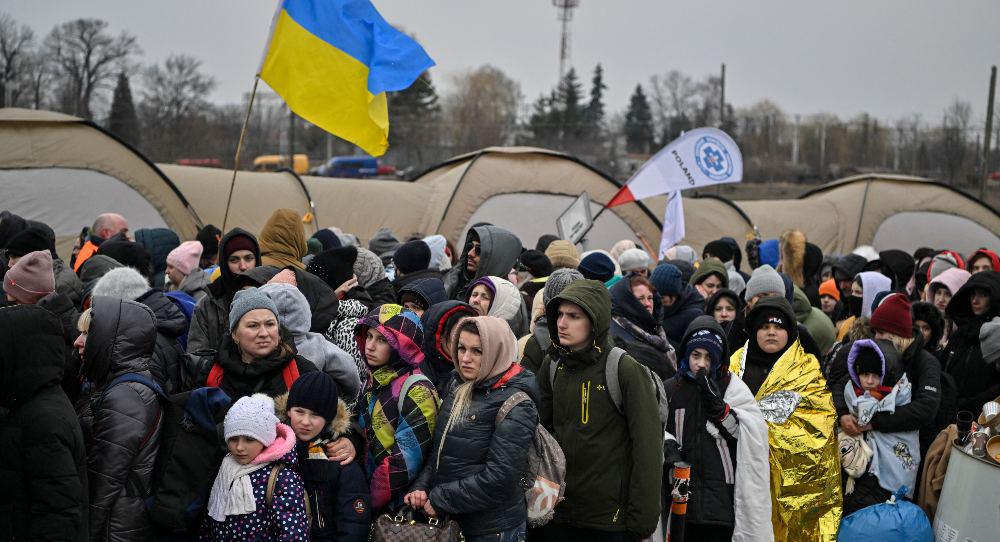
Source: Getty
Russia’s invasion of Ukraine marks a turning point for the EU. When boosting its capabilities and resilience, Europe must not neglect engagement with the wider world.
On February 24, 2022, Europe’s wake-up call finally came. None of the past events that warranted this appellation—the wars in former Yugoslavia, 9/11, the Arab Spring, wars in Syria and Libya, the annexation of Crimea—provoked the remarkable historical shift that took place since Putin chose the path of a full-blown invasion of Ukraine.
In the escalation of the crisis, Europeans had been preparing for the announced “massive” sanctions package, which enabled the EU to respond with unexpected speed. Washington’s very public strategy of announcing the Kremlin’s plans for aggression could not be dismissed. For weeks, the United States has been declassifying non-disputable intelligence about the military buildup. Antony Blinken’s speech at the United Nations on February 17 was precisely worded to acknowledge past military action falsely justified by the United States. Sharing intelligence was part of a wider engagement with Europeans to urge them to take the threat of the military buildup very seriously.
Yet among European leaders, incredulity still dominated until they woke up on February 24. Had the Kremlin chosen to continue subverting Ukraine through hybrid, cyber, and military interventions in the Donbas region, Europe would not have considered such a historical turnaround of its deeply entrenched views of Russia.
Overnight, Putin squandered the extensive influence he had in Europe. How to deal with Russia had been the single most divisive issue for the EU at least since it enlarged to Central Europe and the Baltics in 2004. Strategic convergence around a shared risk assessment has been the most elusive aspiration of those pushing for a stronger EU in global politics. The invasion of Ukraine has finally put the member states on the same page.
The strategic shift will last beyond the pressing emergency of the war against Ukraine. It helped bridge a wide gap in trust between Central and Western Europe that has plagued any discussions about the EU’s role in security.
Germany’s three-party coalition government made a remarkable U-turn by announcing increased defense spending and ending energy dependence on Russia. In one go, each party dropped long-held ideological positions: the Social Democratic Party its historic Ostpolitik, the Greens their opposition to defense spending, and the liberal Free Democratic Party its opposition to public debt.
The list goes on. French President Emmanuel Macron is now even more likely to win the April presidential election while three of the other candidates are scrambling to justify their hitherto pro-Putin positions. The countries that had opposed opening the EU to refugees from Syria and Afghanistan are among those on the frontline welcoming refugees from Ukraine. Finland and Sweden may join NATO. Poland is mending fences with Brussels. The UK is cooperating with the EU.
In the EU, these strategic shifts are already being translated into policy, giving a new momentum to long-stalled good intentions in security and defense, with a revised Strategic Compass to be approved later in March, a few months ahead of NATO’s new Strategic Concept in June.
Efforts aimed at energy diversification are striding ahead after years of ignoring the problem of Russian dependence. The EU’s economic statecraft is being significantly sharpened. It may be possible to find some new understanding on migration policy after years of paralysis. Policies toward Eastern Europe will inevitably be beefed up after a long stagnation. And the demand from Ukraine, Georgia, and Moldova for a membership perspective will trigger a new discussion on the dwindling process of EU enlargement.
The EU crossed many necessary thresholds over the past ten days in standing united and building its resilience and capacity to respond, but it should not lose sight of the bigger picture. The end game is not yet in sight and the tenure of Europeans will be hard as they begin to feel the repercussions of the sanctions. The energy transition will have winners and losers. As in 2015–16, refugees may become scapegoats for populist politics. European leaders need to prepare citizens for a long war.
As escalation mounts and if the Kremlin does not retreat under the weight of sanctions, a path toward ending the war and avoiding a nuclear confrontation needs to be plotted. What that path may look like we do not know, but it needs to include communication aimed at Russian society and avoid its demonization.
As Europe is sucked into its worst crisis since the Second World War, the world is watching its response. Thirty-five states abstained from voting on the UN General Assembly resolution condemning Russia. This is not just because of a history of close relations with Russia and previously the Soviet Union, nor because some countries, such as Mali, have Russian mercenary groups controlling its security.
The world is also seeing how Europe treats the refugees fleeing Ukraine, including the racism that many Africans and Asians experienced at the border. It will be concerned that the humanitarian efforts in Ukraine and Eastern Europe may be to the detriment of commitments elsewhere. It will ask questions about Europe’s solidarity in crises geographically further afield.
When Europe asks the world for solidarity, the world wonders about European solidarity in many other recent conflicts. In offering Kenya’s support for Ukraine at the UN, its ambassador offered the most scathing critique of Europe’s double standards by drawing parallels between Putin’s move to redraw borders and the colonial drawing of borders in Africa.
The EU’s geopolitical awakening must not lead to a more introverted gaze, focusing on European capabilities and resilience, at the expense of engagement with the wider world.

Director, Carnegie Europe
Rosa Balfour is the director of Carnegie Europe. Her fields of expertise include European politics, institutions, and foreign and security policy.
Recent Work


Richard Youngs, Erik Jones, Dan Baer, …
Rosa Balfour
Carnegie does not take institutional positions on public policy issues; the views represented herein are those of the author(s) and do not necessarily reflect the views of Carnegie, its staff, or its trustees.

As we close out another season of Strategic Europe, it is worth taking stock of the deep shifts underway.

Rym Momtaz
The EU had to compromise to adopt a twenty-first sanctions package against Russia, exposing growing cracks in the union’s resolve. Is this latest, weaker round worth it to keep pressure on Moscow?
Rym Momtaz, ed.

Trump is distracted and Ukraine wants Europe to step up. The continent’s leaders must find their voice and assert it in talks with Russia.

Alissa de Carbonnel

Mounting economic strain and battlefield losses will not necessarily make the Kremlin less dangerous. They could instead push Moscow toward a more aggressive hybrid campaign designed to test NATO’s Eastern flank, exploit allied hesitation, and fracture European resolve.

Maksym Beznosiuk
Over the past ten years, NATO has held almost as many summits as it did during the entirety of the Cold War. Are they still useful, or is it time to stop holding annual meetings?
Rym Momtaz, ed.