Article
Thomas Carothers, McKenzie Carrier
{
  "authors": [
    "Thomas Carothers"
  ],
  "type": "legacyinthemedia",
  "centerAffiliationAll": "dc",
  "centers": [
    "Carnegie Endowment for International Peace"
  ],
  "collections": [],
  "englishNewsletterAll": "democracy",
  "nonEnglishNewsletterAll": "",
  "primaryCenter": "Carnegie Endowment for International Peace",
  "programAffiliation": "DCG",
  "programs": [
    "Democracy, Conflict, and Governance"
  ],
  "projects": [],
  "regions": [
    "United States",
    "Middle East",
    "Iraq"
  ],
  "topics": [
    "Political Reform",
    "Democracy",
    "Foreign Policy"
  ]
}
REQUIRED IMAGE
Source: Carnegie
Originally published July 20, 2003 in the Washington Post.
The most urgent political task in Iraq today is not building democracy. Iraqis are suffering from something much more basic than the lack of democracy -- the lack of state administration. Before Iraq can be a democracy it must have at least a somewhat coherent, effective administration capable of keeping order, providing services and running the economy. The engine of democracy is useless without the chassis of the state to put it in.
The Coalition Provisional Authority has been laboring mightily to rebuild Iraqi administrative capacities. And the formation of an Iraqi governing council is a vital step. But the governing council will gain credibility with Iraqis and serve as a genuine base for democratization only if it quickly takes on real responsibility for the urgent state-building tasks at hand, such as rebuilding the Iraqi police, judiciary, tax authority, customs systems, oil authority and even the national army.
In its present form, the governing council cannot do that. What was, only a few months ago, designed as a loose-knit advisory group cannot function as the interim administration that Iraq so badly needs. The Coalition Provisional Authority, led by L. Paul Bremer, should expand the powers and capacities of the council as rapidly as possible or create a larger Iraqi commission charged with selecting a full interim administration.
All this does not mean democracy-building should be put off. It can and should get under way now, and a new constitution is a good place to start. But given Iraq's repressive history and profound ethnic and religious cleavages, democratization will be lengthy, messy, and full of twists and turns.
The process of constitution-drafting should be an opportunity for the country to carry out a series of debates, arguments and negotiations over fundamental issues for the new Iraq. These include hot buttons such as the appropriate role of Islam both in politics and in society, as well as the question of Kurdish autonomy. New Iraqi activists need time to form political parties and give Iraqis a wider array of choices than just the few well-organized groups that exist today.
On Thursday, in an interview with the New York Times, Bremer said he thought Iraqi elections ought to be possible next year. But hurrying toward a vote without involved and lengthy national dialogue, consensus-building and political party-building could lead to chaotic elections that tear apart the fragile new political fabric or to an unrepresentative exercise that freezes into power opportunistic, undemocratic figures.
By linking the eventual withdrawal of U.S. troops to the holding of elections, Bremer risks undermining the very process of democracy-building that he wants to guarantee. In the coming months, both in America and Iraq, pressure will inevitably build for coalition troops to leave Iraq. Operating from an election exit strategy, the administration will likely end up urging the Iraqis to speed up the their constitution-writing and their elections, even if it means short-circuiting the crucial preparatory work. It is not hard to imagine President Bush's domestic political advisers telling him that Iraq has to move ahead with elections, ready or not, by, say, October 2004, so that Bush can announce a major troop withdrawal before he faces voters that November.
But building democracy in Iraq should be about their political imperatives -- not ours.

Harvey V. Fineberg Chair for Democracy Studies; Director, Democracy, Conflict, and Governance Program
Thomas Carothers, director of the Carnegie Endowment for International Peace’s Democracy, Conflict, and Governance Program, is a leading expert on comparative democratization and international support for democracy.
Recent Work

Thomas Carothers, McKenzie Carrier
Thomas Carothers, McKenzie Carrier
Carnegie does not take institutional positions on public policy issues; the views represented herein are those of the author(s) and do not necessarily reflect the views of Carnegie, its staff, or its trustees.
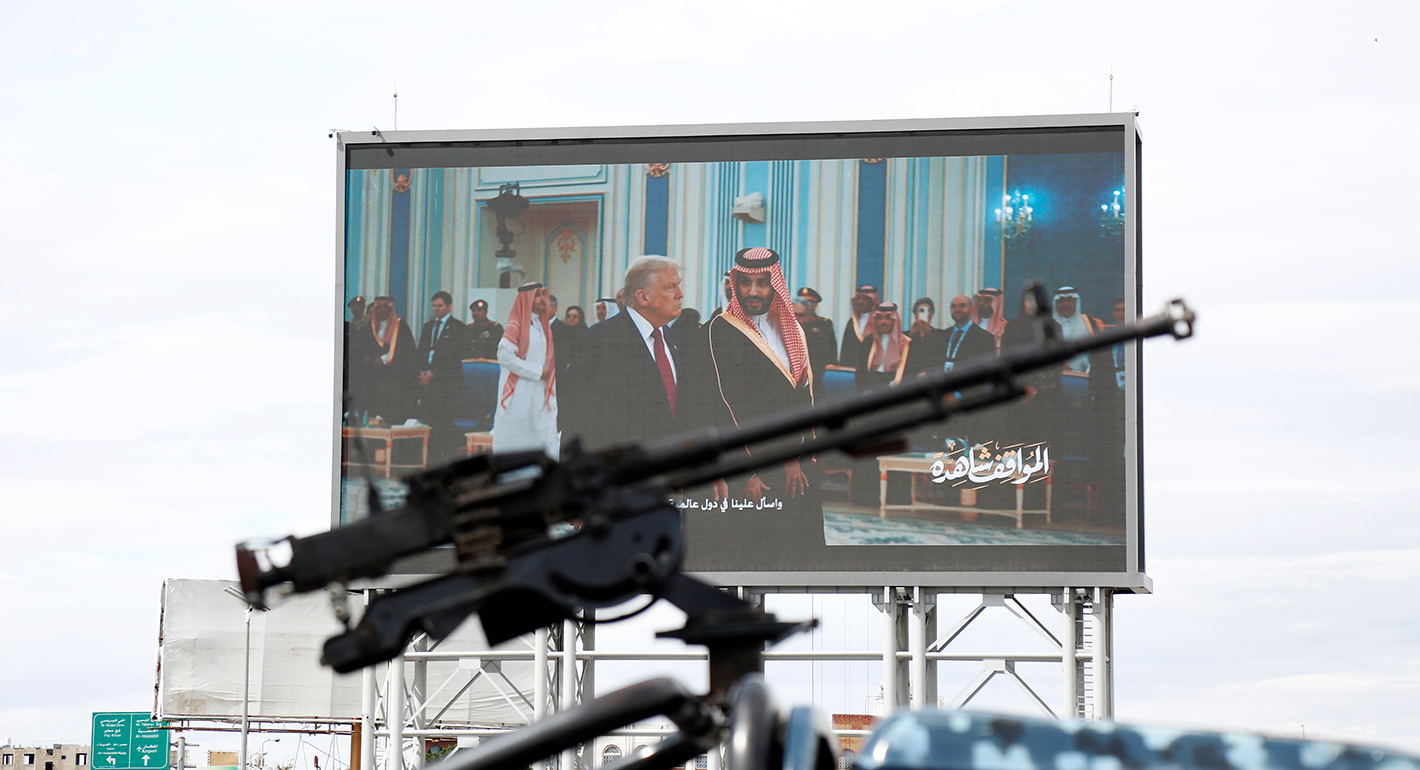
As the war between the United States, Israel, and Iran continues, Carnegie scholars contribute cutting-edge analysis on the events of the war and their wide-reaching implications. From the impact on Iran and its immediate neighbors to the responses from Gulf states to fuel and fertilizer shortages caused by the effective shutdown of the Strait of Hormuz, the war is reshaping Middle East alliances and creating shockwaves around the world. Carnegie experts analyze it all.
The return of war as the organizing factor in Middle Eastern politics has predictable consequences: governments are prioritizing regime stability and becoming averse to political and social reform.

Sarah Yerkes, Amr Hamzawy
Central Asia’s digital ambitions are achievable, but only if policy is aligned with the region’s physical constraints.

Aruzhan Meirkhanova
Donald Trump has repeatedly bashed NATO and European allies, threatening to annex Canada and Greenland and deploring their lack of enthusiasm for his war of choice in Iran. Is this latest round of abuse the final straw?

Rym Momtaz, ed.
The future looks bleak for independent media worldwide, but there is a robust infrastructure of knowledge, organizations, and people to build upon.

Daniel Sabet, Susan Abbott