

Report
Mr. Husain Haqqani, Ashley J. Tellis
{
  "authors": [
    "Husain Haqqani"
  ],
  "type": "legacyinthemedia",
  "centerAffiliationAll": "dc",
  "centers": [
    "Carnegie Endowment for International Peace"
  ],
  "collections": [],
  "englishNewsletterAll": "ctw",
  "nonEnglishNewsletterAll": "",
  "primaryCenter": "Carnegie Endowment for International Peace",
  "programAffiliation": "russia",
  "programs": [
    "Russia and Eurasia"
  ],
  "projects": [],
  "regions": [
    "South Asia",
    "India",
    "Pakistan"
  ],
  "topics": [
    "Security"
  ]
}
REQUIRED IMAGE
Source: Carnegie
Reprinted from the Asian Wall Street Journal, July 29, 2002, © 2002 Dow Jones & Company, Inc. All rights reserved.
U.S. Secretary of State Colin Powell's just-completed diplomatic mission to South Asia reflects continued international concern about the risk of war in South Asia. Mr. Powell urged India to ease tension caused by its build-up of troops on the border with Pakistan, as well as to free political prisoners and allow international observers in Kashmir ahead of an election in October. At the same time, he put pressure on Pakistan's Gen. Musharraf to stop the infiltration of Islamic militants into Indian-controlled Kashmir.
Mr. Powell acknowledged a decline in that infiltration, but India is far from fully convinced. It is trying to keep Pakistan under pressure to take advantage of a global environment that is hostile to all militant or terrorist movements. The U.S. must now impress upon India the importance of dialogue and normalization of relations with Pakistan. India has removed some of its forces along the Pakistan border but has refused to withdraw all its troops to peacetime locations. As a result, brinkmanship between the nuclear rivals continues despite some de-escalation since May, when war seemed imminent.
Gen. Musharraf's decision to move Pakistan away from Islamic extremism after Sept. 11 was an act of courage that has endangered his life. Since then, he has made several mistakes in handling Pakistan's return to democracy. His approach to India-Pakistan relations is also not without fault. But he still deserves U.S. support, qualified with nudges in the right direction, to complete the mission of tackling Islamic extremism.
Pakistan has helped arrest several al Qaeda figures escaping from Afghanistan. Its military bases were critical to the U.S. war effort and its intelligence cooperation remains useful. If the U.S. does not use its influence to help Pakistan start a political process over its deadlock with India in the dispute over the Himalayan territory of Kashmir, it would be making things unbearably difficult for its ally.
Gen. Musharraf cannot risk making further concessions to India without some quid pro quo over Kashmir. Pakistan's Islamists hold him responsible for abandoning Afghanistan's Taliban. A perceived sell-out over Kashmir would be just too much for Pakistani public opinion to swallow. It is also unfair to make all the demands on Pakistan and ask for nothing from India.
Until now the United States has focused on pressuring Pakistan into withdrawing support for Islamic militants responsible for attacks inside Kashmir and India. It is time to exhort India to start a process of dialogue with Pakistan. Pakistan has already paid a price for not confronting the terrorists in the past. They brought their battles to Pakistan, while holding out the promise of helping in Pakistan's conflict with India.
But now that phase is over. India needs a settlement over Kashmir as much as Pakistan. In return for helping India get rid of the violence, the U.S. must help Pakistan secure a political process. Until such time as Musharraf can win India's trust, Washington could act as guarantor for its ally's word.
An end to terrorism and militancy is a legitimate demand, but India should not use it to close discussion over another equally legitimate demand -- the rights of the Kashmiri people as recognized by the United Nations. The induction of Islamic militants from around the world has linked the violence in Kashmir to the international jihad movement. But the insurrection in Muslim-majority Kashmir was indigenous in its initial phase and still has support there. It represents genuine Kashmiri frustration with Indian rule.
Since the beginning of the insurgency in 1989, India has denied international media and human rights groups access to Jammu and Kashmir. This has limited the potential for Kashmiris to agitate for their rights through political means. India's refusal to discuss Kashmir's future with Pakistan has also been accompanied by international indifference over the issue, which has led many Pakistanis to think of violence as the only means of securing international attention. A balanced acknowledgement from New Delhi -- "While Pakistan was at fault in the way it handled militancy, India has not handled Kashmir as a political issue the way it should have" -- would go a long way toward starting a reasoned dialogue that reduces the incentives for resorting to violence.
The international community intervened in January and then again in May to prevent war, after India massed troops on the border to retaliate against terrorist attacks, including one on the Indian Parliament and another on the families of Indian troops. The focus of international diplomacy on both occasions was to demand that Pakistan stop infiltration of militants across the line of control that divides Kashmir between Indian and Pakistani controlled parts.
But there are at least seven militant groups that are completely indigenous to Indian-controlled Kashmir. Even if it wanted to, Pakistan cannot control the behavior of all groups operating in the region. Pakistan has a terrorism problem of its own, which requires firm action by its government. It may take years for terrorist networks to be completely eliminated. Peace between India and Pakistan should not be put on hold for that indefinite period.
The problem that India and Pakistan have failed so far to address is mutual mistrust, and it is here that America can help most. Even without a breakthrough during the Powell visit, the U.S. must continue its efforts to bring India and Pakistan to the negotiating table. India feels it cannot trust Gen. Musharraf, in view of his strong commitment to seeking an end to Indian rule over the disputed Himalayan territory of Kashmir. New Delhi sees this as hostility towards India and points to Gen. Musharraf's role in the Kargil conflict in 1999 as well as to his belligerent pronouncements. Pakistan, on the other hand, is convinced that India will use every excuse available to avoid negotiations leading to Kashmiri self-determination.
After Secretary Powell's visit, the U.S. must also play a more direct role in ensuring Pakistan's transition to democracy. The U.S. understandably does not want to be seen as interfering in the domestic affairs of an ally. But Gen. Musharraf has taken U.S. support to mean he can change labels on his military regime without actually relinquishing power to an elected parliament. He is proposing to change Pakistan's constitution by decree and exclude major political figures from a stage-managed parliamentary election.
Such moves could create unrest in Pakistan, which might take an anti-American turn. As a friend, the U.S. must advise Gen. Musharraf to allow a genuine (as opposed to manipulated) democratic process, which would restore Pakistan's credibility. The U.S. needs a stable Pakistan as its ally. It should use its leverage with India over Kashmir and with Musharraf on democracy to ensure that stability.
Mr. Haqqani is a visiting scholar at the Carnegie Endowment for International Peace in Washington D.C. He served as adviser to Pakistani Prime Ministers Nawaz Sharif and Benazir Bhutto and as Pakistan's ambassador to Sri Lanka.
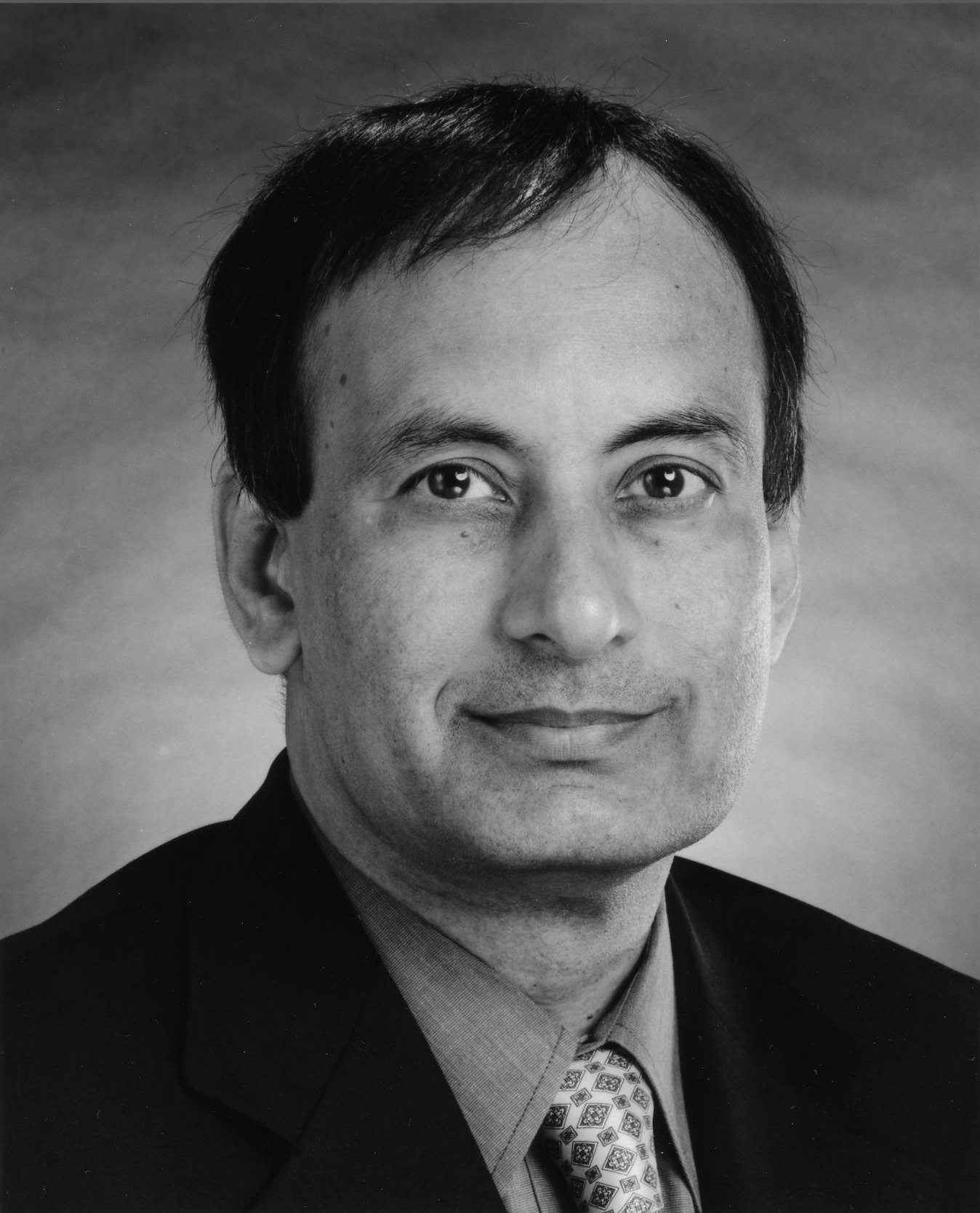
Former Visiting Scholar
Recent Work
Mr. Husain Haqqani, Ashley J. Tellis
Mr. Husain Haqqani
Carnegie does not take institutional positions on public policy issues; the views represented herein are those of the author(s) and do not necessarily reflect the views of Carnegie, its staff, or its trustees.

The Horn of Africa countries are among those facing a new security calculus.


Andrew Leber, Lesley Anne Warner

The European far right might fail to steer EU policy in the direction Russia wants, but they will create enough chaos inside Europe to benefit the Kremlin.

Dimitar Bechev

The new U.S.–Denmark–Greenland agreement will help Washington exert political, economic, and financial dominance under the guise of security. Yet, it acknowledged Copenhagen’s and Nuuk’s sovereignty on the island.

Marc Pierini

A summer of escalation in the Black Sea has hurt Ukraine economically and is exacerbating world food security. A truce is needed—as is a broader reframing of Europe’s Ukraine strategy.

Thomas de Waal

Are Germany’s economic, industrial, and political struggles becoming a liability for the EU’s ability to rise to the geopolitical moment?

Rym Momtaz, ed.