

Commentary
It should address the shortcomings of previous crisis communication efforts and adapt to the demands of frontier AI.
Lucy Luo
{
  "authors": [],
  "type": "pressRelease",
  "centerAffiliationAll": "dc",
  "centers": [
    "Carnegie Endowment for International Peace"
  ],
  "collections": [],
  "englishNewsletterAll": "ctw",
  "nonEnglishNewsletterAll": "",
  "primaryCenter": "Carnegie Endowment for International Peace",
  "programAffiliation": "russia",
  "programs": [
    "Russia and Eurasia"
  ],
  "projects": [],
  "regions": [
    "North America",
    "United States",
    "Caucasus",
    "Russia",
    "Eastern Europe",
    "Western Europe",
    "Belarus",
    "Moldova"
  ],
  "topics": [
    "Security"
  ]
}
REQUIRED IMAGE
A group of distinguished contributors from both East and West examines the complicated and multi-faceted process of NATO and EU enlargement in the context of the changed global situation since the terrorist attacks of September 11, 2001.
Source: Carnegie
AMBIVALENT NEIGHBORS
The EU, NATO and the Price of Membership
 | Anatol Lieven and Dmitri Trenin, Editors | |
| Price: $24.95 | Price: $45.00 | |
| Paperback, 352 pp. | Cloth, 352 pp. | |
| ISBN: 0-87003-199-6 | ISBN: 0-87003-200-3 | |
| Pub. Date: Jan. 2003 | ||
| Order the book from Carnegie's distributor. | ||
Table of Contents
Introduction (PDF)
Index
About the Book
Almost fifteen years after the end of the Cold War, the process of creating a "Europe whole and free" is incomplete and likely to be so for the foreseeable future. In this volume, a group of highly distinguished contributors from both East and West examines the complicated and multi-faceted process of NATO and EU enlargement in the context of the changed global situation since the terrorist attacks of September 11, 2001.
These essays examine the enlargement processes not only from the perspective of the West and western institutions, but also from the point of view of the former communist countries themselves. This approach reflects the conviction that the eastward movements of NATO and the EU should not be regarded simply as western-led processes to which the eastern states must adapt as best they can. If an enlarged NATO and EU are to be stable and successful in the long run, they must take account of the wishes and interests of both their new, former-communist members and those European states which will not for the foreseeable future be members of NATO, the EU, or both.
Contributors: Christopher Bobinski (Unia & Polska), Vladimir Baranovsky (Institute of the World Economy and International Relations), Heather Grabbe (Center for European Reform), Karl-Heinz Kamp (Konrad Adenauer Foundation), Charles King (Georgetown University), Alexander J. Motyl (Center for Global Change and Governance (Rutgers University), Zaneta Ozolina (University of Latvia), Alexander Sergounin (Nizhny Novgorod Linguistic University), William Wallace (London School of Economics), Leonid Zaiko (Strategy Center)
About the Editors
Anatol Lieven is senior associate in the Russian and Eurasian Program at the Carnegie Endowment. He is the author of several books including Chechnya: Tombstone of Russian Power.
Dmitri Trenin is deputy director of the Carnegie Moscow Center, where he specializes in foreign and security policy. He is the author of The End of Eurasia: Russia on the Border Between Geopolitics and Globalization and coauthor of the forthcoming book Russia's Restless Frontier: The Chechnya Factor in Post-Soviet Russia (March 2004).
Carnegie does not take institutional positions on public policy issues; the views represented herein are those of the author(s) and do not necessarily reflect the views of Carnegie, its staff, or its trustees.

It should address the shortcomings of previous crisis communication efforts and adapt to the demands of frontier AI.

Lucy Luo

If the Russian-speaking community in Latvia cannot articulate their interests without being seen as disloyal, they could end up embracing a pro-Kremlin agenda.

Sergejs Potapkins
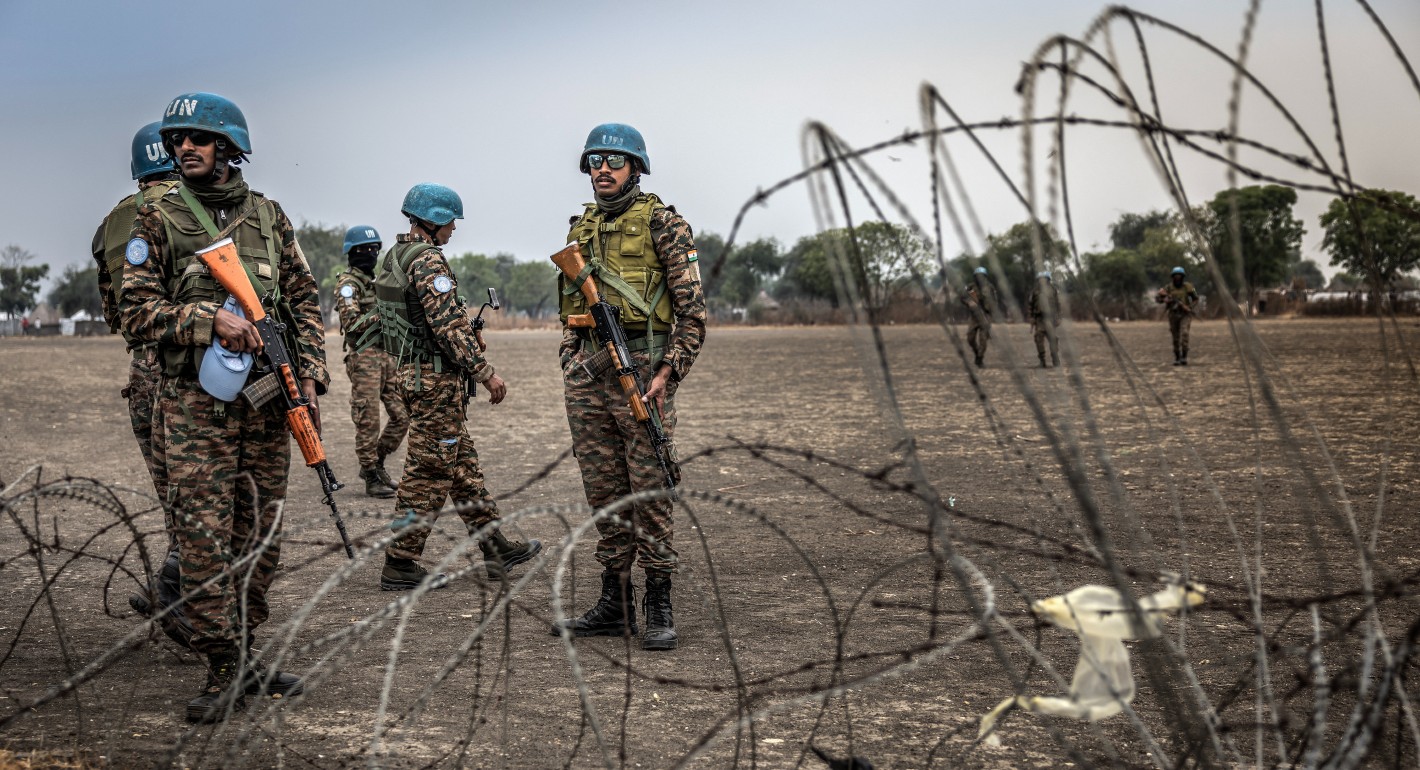
Washington’s decision to support some UN functions while letting others wither is pulling the organization apart at the seams.

Stewart Patrick, Theodore Zaritsky

While there are notable demographic, economic, and geographic divides over AI, there is also substantial alignment between Republicans and Democrats.



Ian Klaus, Mark Baldassare, Rachel George, …

Are Germany’s economic, industrial, and political struggles becoming a liability for the EU’s ability to rise to the geopolitical moment?

Rym Momtaz, ed.