Article
Dr. Albert Keidel
{
  "authors": [
    "Albert Keidel"
  ],
  "type": "legacyinthemedia",
  "centerAffiliationAll": "dc",
  "centers": [
    "Carnegie Endowment for International Peace"
  ],
  "collections": [],
  "englishNewsletterAll": "asia",
  "nonEnglishNewsletterAll": "",
  "primaryCenter": "Carnegie Endowment for International Peace",
  "programAffiliation": "AP",
  "programs": [
    "Asia"
  ],
  "projects": [],
  "regions": [
    "China"
  ],
  "topics": [
    "Political Reform",
    "Economy"
  ]
}
REQUIRED IMAGE
Source: Foreign Policy
Please note that a sentence has been changed in this version because as first published it had been shortened by Foreign Policy editors in ways that changed its meaning from that of the author's original draft.
For China today, the questions on everybody’s lips are: Can the People’s Republic survive so much change? Can China’s performance sustain its pace? What steps are needed next? Minxin Pei addresses the first two of these three questions, and his answers are not flattering. Actual conditions on the ground in China, however, suggest there is little reason to be so pessimistic.
China’s gross domestic product (GDP) growth has now outperformed other Asian “miracle” economies. Last year’s economic census, conducted after several decades of improvement to China’s statistical system, presents a clearer picture of the country’s economic performance than was available a decade ago, when Western scholars “improved” official statistics by shaving them. China grew, on average, 10 percent a year during the past 15 years. World Bank and Organisation for Economic Co-operation and Development data show that the best 15-year average performances for South Korea, Singapore, and Taiwan never reached 10 percent. Furthermore, China’s growth potential is huge. Its per capita GDP is just 5 percent of the U.S. level. South Korea had roughly the same growth gap with the United States in the 1960s, and continued rapid growth is even more likely in China today than it was in Korea then, thanks to new technologies.
Can China continue this incredible pace? Five factors suggest it can. First, China is good at investing in things that feed its growth. It gets roughly the same growth bang for its investment buck as India. But China’s financial system mobilizes more money than India’s, and it allocates a much larger share to private-sector-friendly infrastructure such as roads, ports, and sewage systems. Second, China has created incentives that reward hard work, knowledge, and risk-taking. Fifty million layoffs eased urban workers out of their cradle-to-grave jobs. Rural workers can now move to towns and compete for urban jobs. Compulsory education was extended to nine years, and China’s high literacy rate underpins its increasing worker productivity. Third, China’s daring openness to global commerce has enhanced its economic flexibility and financed new technologies, while judiciously managing key areas such as foreign investment. Japan and Korea never risked opening this fast. Fourth, foundations for a lasting middle class have emerged, thanks to land reforms, improvements in education, and new social safety nets. Lastly, China is a relatively low-crime society, where unthreatened physical safety enhances economic opportunities. Corruption exists, but at levels lower than those in India, Indonesia, and the Philippines—and it is vigorously prosecuted.
This performance suggests that Chinese officials are leading an agile, energetic government. It is implementing a wide range of reforms and adjusting well to unexpected developments. Social unrest is a good example. Discontent is guaranteed in any country converting privilege to productivity as quickly as China. The issue is how to manage that unrest. China’s approach is to compensate displaced people, discipline losers who cause trouble, and punish local governments’ malfeasance. That process is hardly perfect. But speech and assembly critical of government are widespread and largely peaceful.*
The regime does crack down harshly on political movements that threaten government authority, social stability, or continued reform. These are policies of a confident leadership implementing a sophisticated and balanced policy. Hardly frail, China’s government has peacefully refreshed its ranks with younger, better- educated leaders who increasingly make decisions based on practical compromise.
Could a crisis sink China’s ship of state? It hasn’t so far. Both the Asian financial crisis and the sars epidemic had the potential to do so. In both cases, the government learned from its mistakes and recovered quickly. Yes, China must continue expanding the choices available to ordinary citizens about where they work and live, and it must increase the number of ways people can seek redress for their grievances. But China is already a hive of reform proposals, test projects, and nationwide rollouts. The expansion of local nongovernmental organizations, for instance, is being encouraged to help care for the needy. The government is also pursuing higher educational standards, new approaches to rural poverty, and the modernization of its tax system. Consumer credit for homes and cars is just one example of the new opportunities available to its citizens.
Pei says China is a “neo-Leninist state” and condemns it to frailty. The facts on the ground, however, suggest a political system that is far more nimble and robust.
Albert Keidel is senior associate at the Carnegie Endowment for International Peace. From 2001 to 2004, he was deputy director of the Office of East Asian Nations at the U.S. Treasury Department.
*This sentence has been revised subsequent to publication to reflect the author's original phrasing.

Former Senior Associate, China Program
Keidel served as acting director and deputy director for the Office of East Asian Nations at the U.S. Department of the Treasury. Before joining Treasury in 2001, he covered economic trends, system reforms, poverty, and country risk as a senior economist in the World Bank office in Beijing.
Recent Work
Dr. Albert Keidel
Dr. Albert Keidel
Carnegie does not take institutional positions on public policy issues; the views represented herein are those of the author(s) and do not necessarily reflect the views of Carnegie, its staff, or its trustees.
Five problems—and solutions—to make it actually work as a tool of great power competition.

Afreen Akhter

It’s true that many Armenians would vote for anyone just to be rid of Pashinyan, whom they blame for the loss of Nagorno-Karabakh, but the pro-Russia opposition is unlikely to be able to channel that frustration into an electoral victory.

Mikayel Zolyan

Montenegro and Albania are frontrunners for EU enlargement in the Western Balkans, but they can’t just sit back and wait. To meet their 2030 accession ambitions, they must make a strong positive case.


Dimitar Bechev, Iliriana Gjoni
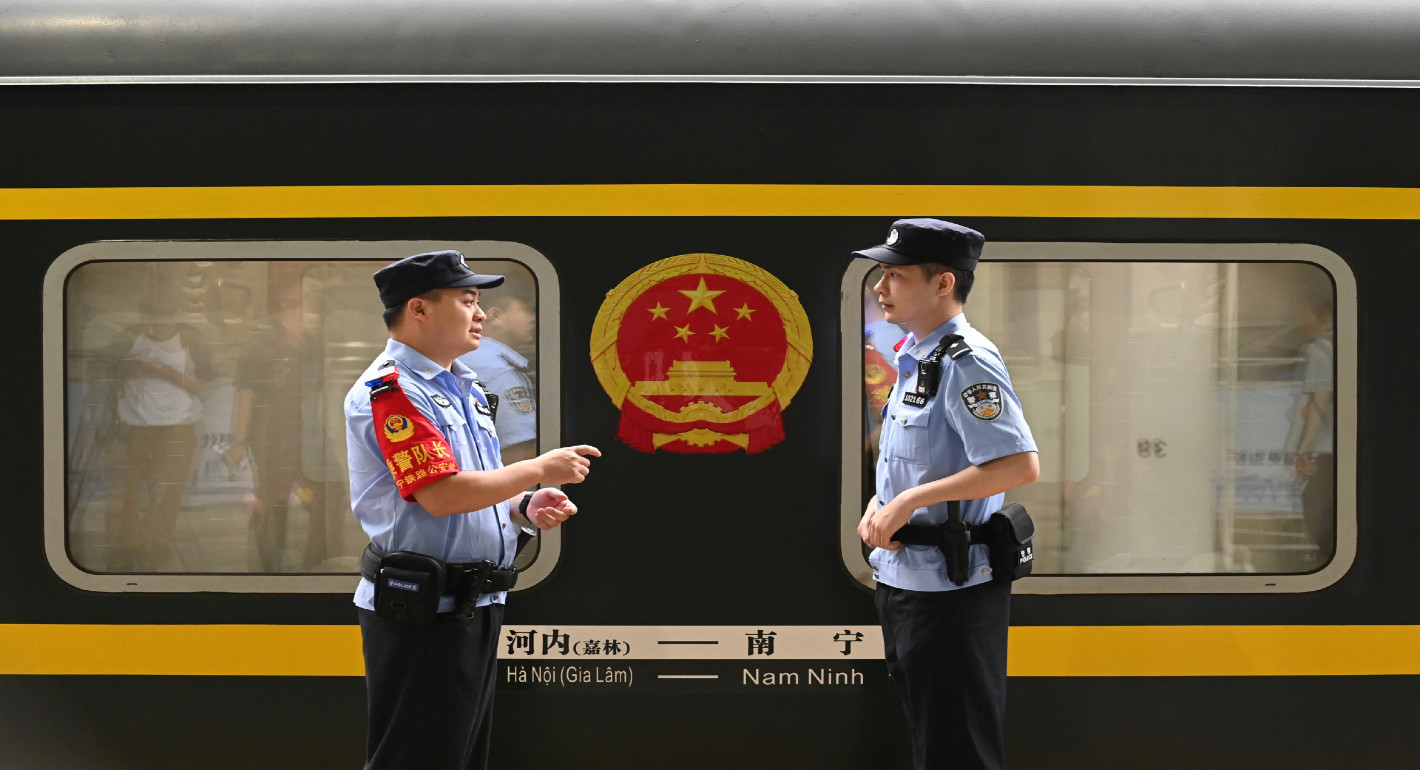
Despite long-standing differences, China and Vietnam are reinforcing common ground for collaboration, especially in public security. This internal security–centered diplomacy offers a strengthened road map for how China moves forward with Southeast Asia.
Sophie Zhuang

As the war between the United States, Israel, and Iran continues, Carnegie scholars contribute cutting-edge analysis on the events of the war and their wide-reaching implications. From the impact on Iran and its immediate neighbors to the responses from Gulf states to fuel and fertilizer shortages caused by the effective shutdown of the Strait of Hormuz, the war is reshaping Middle East alliances and creating shockwaves around the world. Carnegie experts analyze it all.