

Paper
Paul Salem
{
  "authors": [
    "Paul Salem"
  ],
  "type": "legacyinthemedia",
  "centerAffiliationAll": "dc",
  "centers": [
    "Carnegie Endowment for International Peace",
    "Malcolm H. Kerr Carnegie Middle East Center"
  ],
  "collections": [],
  "englishNewsletterAll": "democracy",
  "nonEnglishNewsletterAll": "",
  "primaryCenter": "Malcolm H. Kerr Carnegie Middle East Center",
  "programAffiliation": "DCG",
  "programs": [
    "Democracy, Conflict, and Governance",
    "Middle East"
  ],
  "projects": [],
  "regions": [
    "Middle East",
    "Israel"
  ],
  "topics": [
    "Political Reform",
    "Democracy",
    "Foreign Policy"
  ]
}
Source: Getty
It took a United Nations resolution to end the fighting between Israel and Hizballah, but that hasn't stopped each side from claiming victory. RFE/RL correspondent Heather Maher asked Paul Salem, director of the Middle East Center at the Carnegie Endowment for International Peace, to tally up the wins and losses.
Source: Radio Free Europe

RFE/RL: Both sides, Hizballah and Israel, are declaring themselves the winner. Who do you think really won?
Paul Salem: I think all the parties are losers, to a considerable degree. Israel lost its sense of invincibility and formidable force. Hizballah lost a lot of its missiles, and a lot of its political position inside Lebanon. Iran has lost part of its deterrent force inside Lebanon, and the United States has further lost much of its image in the region.
RFE/RL: If no one definitively won, did one side at least come out slightly ahead of the other?
Salem: It depends, I think, to a large degree to the extent of the implementation, or not, of the various provisions of this resolution. If it is applied as written, I think Hizballah would be more the loser and the U.S. and the international community -- Israel to some degree -- would be somewhat the winner, if it's fully implemented.
While it's not clear in the long run what politically has been gained, [Hizballah is] trying to paint this as a strong showing against Israel to give people a sense of pride, that it was worth it, in a sense.I think it's also important to note that Lebanon has been the biggest loser, as a country. Both as a society -- suffering much loss of life and loss of material infrastructure and such -- and with the massive blow to its fragile political system. There are a lot of worries of civil unrest, civil war, so Lebanon has really been the biggest loser throughout all of this.
RFE/RL: Hizballah is reportedly distributing leaflets to returning Lebanese, congratulating them on the victory against Israel. What are they trying to achieve with this public relations move?
Salem: Well, certainly Hizballah needs to paint this -- with all the suffering and with all the loss that took place -- as a kind of a political and military victory of sorts, which it is, at some level. Hizballah may be the only Arab force, or Arab army, that resisted a full month of Israel's might and didn't lose, really. And the war was stopped by a cease-fire, not by an abject defeat.
And they of course want to emphasize that, and to give people coming back to their villages a sense that, yes, despite the losses to their homes and villages and families, perhaps, that something has been gained by this. While it's not clear in the long run what politically has been gained, they're trying to paint this as a strong showing against Israel to give people a sense of pride, that it was worth it, in a sense.
RFE/RL: Did the UN resolution give Israel everything it asked for -- in terms of getting Hizballah to pull back, delaying its withdraw until the arrival of the UN force, and ordering Hizballah's disarming? What did Hizballah get?
Israeli soldiers carrying Lebanese and Hizballah flags as they march back to Israel on August 14 (epa) Salem: What has been asked for in the resolution is close to what had been asked for in Resolution 1559 previously, and what had been asked for in the Taif Agreement of Lebanon itself [the 1989 agreement that restructured Lebanon's political power-sharing agreement], which is the disarmament of groups within Lebanon. This is something that the United States itself had been pushing. So it's not necessarily that Israel got what it wanted, but I think the international community is reaffirming what it had already asked for a year ago.
Hizballah, it is true, has not gotten anything that it asked for necessarily, but at the same time, all it had been asking for is the exchange of three Lebanese captives in Israeli jails. That is hinted at in the agreement, so that is somewhat taken into account. Otherwise, Hizballah had no major demands itself.
RFE/RL: What about the two Israeli soldiers whose capture last month by Hizballah set off Israel's military reaction?
Salem: In the UN resolution, [the soldiers] are supposed to be released unconditionally. There is no indication yet as to whether that will happen or not.
RFE/RL: There has been much criticism in Israel of the government: that Israeli Prime Minister Olmert didn't hit Hizballah hard enough and should not have postponed last week's major new offensive. Is the criticism valid?
Salem: There's no doubt that there's a lot of controversy within Israel regarding the [military] response: the air war versus the ground war, the timing of it, the organization of it, the prime minister's qualifications of it, and so on and so forth. And I think that will be an aspect that will be resolved partly in debates in the coming weeks, and in political elections, which will be upcoming.
But it is also accurate to say that this was kind of a surprise war, it wasn't preplanned by either party. Hizballah staged a rather limited cross-border operation against a group of Israeli soldiers, essentially with the objective of forcing negotiations on captives. And it turned into a full-blown war to try and eliminate one of the parties, in this case, Hizballah.
RFE/RL: Has Iran come out of this conflict looking better or worse?
Salem: Well, mixed. Initially, the attack by Hizballah, or the cross-border operation, was roundly criticized by a number of Arab governments as an adventurous move, a foolhardy move. But then the extent of the Israeli reaction -- and the U.S. backing for that reaction -- and the sort of rallying of Islamic and Arab reaction around Hizballah because of the extent of the Israeli attack, shifted Arab opinion once again.
But I think Iran's situation at the end of this is complicated. On the one hand, I think it has gained some popularity on the Arab-Islamic street as backing an organization which stood up to the Israelis. On the other hand, the blow to Hizballah, militarily and so on, certainly reduces the capacity of Hizballah to act as a deterrent on behalf of Iran. And Hizballah was one of Iran's main deterrents against a potential Israeli or American strike.
On that front, I think they've lost a lot. And their situation is compromised. And they might be more exposed on the nuclear issue in the international community. And I think that is likely to be the next political pressure point.
RFE/RL: Will the cease-fire hold?
Salem: I do think it will hold. It may take a while for the dust to settle but in the end I think both parties want it to hold, and the international community wants it to hold. I don't think there's any benefit from either party taking it further. So, yes, I expect it to hold but it might take a while to get the dust to settle.
Copyright (c) 2006. RFE/RL, Inc. Reprinted with the permission of Radio Free Europe/Radio Liberty, 1201 Connecticut Ave., N.W. Washington DC 20036. http://www.rferl.org
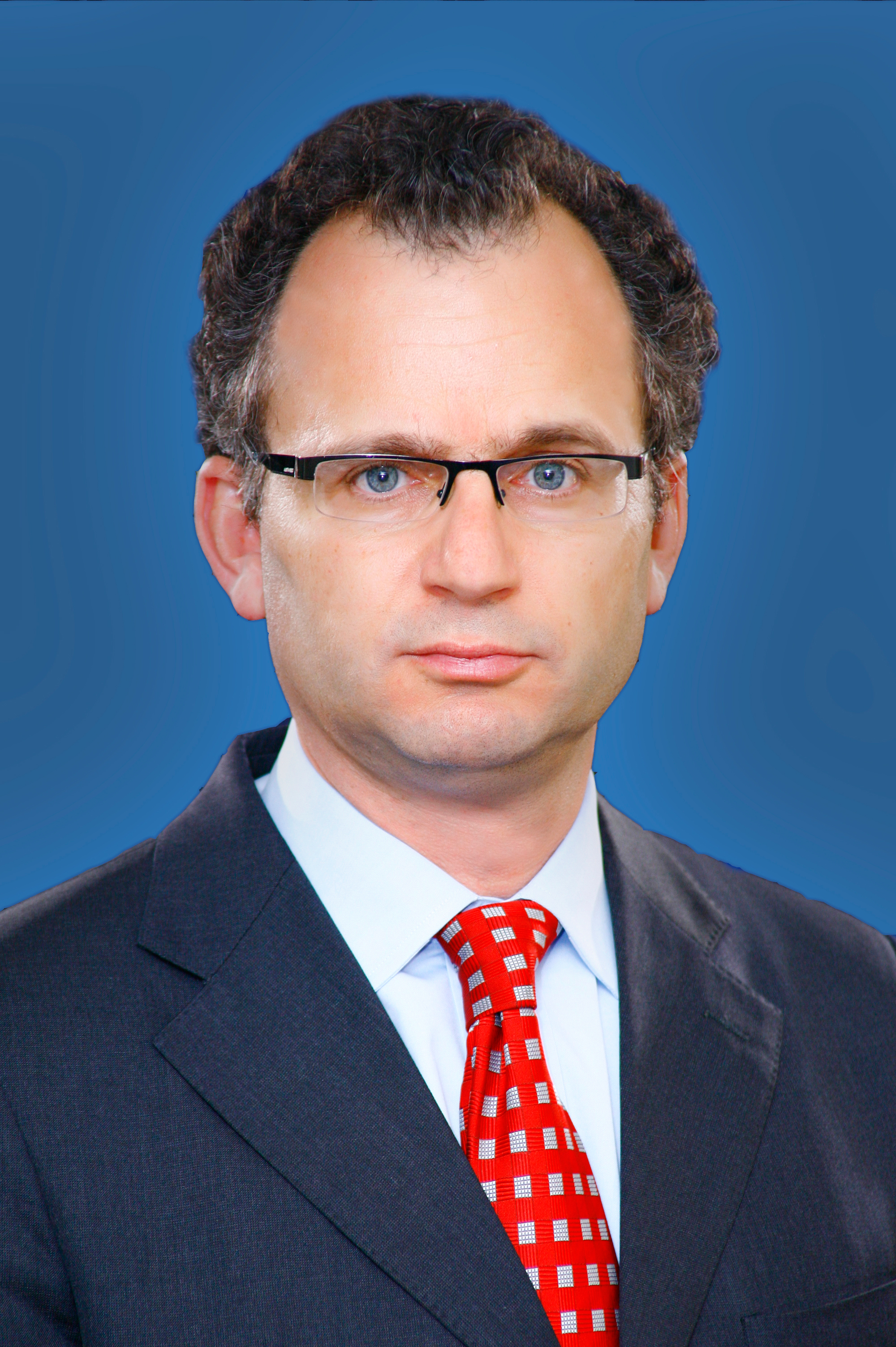
Senior Fellow at the Middle East Institute
Paul Salem is a senior fellow at the Middle East Institute.
Recent Work
Paul Salem
Paul Salem
Carnegie does not take institutional positions on public policy issues; the views represented herein are those of the author(s) and do not necessarily reflect the views of Carnegie, its staff, or its trustees.
Europe has an interest in supporting Armenian leader Nikol Pashinyan as he tries to make peace with neighbors and loosen ties with Russia. But it is depersonalized support in the long term, not quickfire flash, that will win the day.

Thomas de Waal

In its version of an AI middle power strategy, Seoul is pursuing alignment with the United States not as an endpoint but as a strategy to build industrial and geopolitical leverage. Whether this balance holds remains an open question.

Darcie Draudt-Véjares, Seungjoo Lee
If Washington cannot adapt to the ongoing transformations of a multipolar world, its superiority will become a liability.

Amr Hamzawy
A prerequisite of serious talks is that the country’s leadership consolidates majority national support for such a process.

Michael Young
Following Ursula von der Leyen’s gaffe equating Turkey to Russia and China, relations with Ankara risk deteriorating even further. Without better, more consistent diplomatic messaging, how can the EU pretend to be a geopolitical power?

Sinan Ülgen