• Research
  • Emissary
  • About
  • Experts
Carnegie Global logoCarnegie lettermark logo
DemocracyIran
  • Donate
{
  "authors": [
    "Jessica Tuchman Mathews"
  ],
  "type": "legacyinthemedia",
  "centerAffiliationAll": "",
  "centers": [
    "Carnegie Endowment for International Peace"
  ],
  "collections": [],
  "englishNewsletterAll": "",
  "nonEnglishNewsletterAll": "",
  "primaryCenter": "Carnegie Endowment for International Peace",
  "programAffiliation": "",
  "programs": [],
  "projects": [],
  "regions": [
    "North America",
    "United States",
    "Middle East",
    "Iraq"
  ],
  "topics": [
    "Political Reform",
    "Democracy",
    "Security"
  ]
}
Source: Getty

In The Media

President Bush's Plan to Boost Troops in Iraq

Link Copied
By Jessica Tuchman Mathews
Published on Jan 11, 2007

Source: NPR's All Things Considered

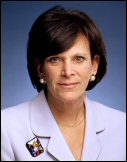
In his address to the nation on January 10, 2007, President Bush called for an increase of more than 20,000 U.S. troops on the ground in Iraq. But his plan is already attracting skeptics on Capitol Hill and elsewhere. Carnegie President Jessica T. Mathews joined commentators on a special edition of NPR’s All Things Considered to provide analysis immediately following the President’s speech.

Click here to listen to the segment.
(Select "Special Coverage: Speech, Analysis"; Mathews' segment begins at 22:40.) 

About the Author

Jessica Tuchman Mathews

Distinguished Fellow

Mathews is a distinguished fellow at the Carnegie Endowment for International Peace. She served as Carnegie’s president for 18 years.

    Recent Work

  • In The Media
    Washington Already Knows How to Deal with North Korea

      Jessica Tuchman Mathews

  • Commentary
    Trump Wins—and Now?

      Jessica Tuchman Mathews

Jessica Tuchman Mathews
Distinguished Fellow
Jessica Tuchman Mathews
Political ReformDemocracySecurityNorth AmericaUnited StatesMiddle EastIraq

Carnegie does not take institutional positions on public policy issues; the views represented herein are those of the author(s) and do not necessarily reflect the views of Carnegie, its staff, or its trustees.

More Work from Carnegie Endowment for International Peace

  • Commentary
    Carnegie Politika
    Parliamentary Elections in Occupied Ukraine Risk Backfiring for the Kremlin

    Despite unhappiness on the ground, Moscow is determined to use both carrot and stick to ensure there is record support for United Russia in occupied Ukraine.

      Konstantin Skorkin

  • Commentary
    Strategic Europe
    The Le Pen Verdict: How French Politics Turned MAGA

    Far-right leader Marine Le Pen can—and will—run in France’s next presidential election. What does the outcome of her appeal against a 2025 embezzlement conviction mean for the country’s political future?

      Catherine Fieschi

  • Article
    From Hormuz to the Maghreb: The Geopolitical Reach of a Gulf Crisis

    Morocco and Algeria, each in its own way, are having to navigate the global economic fallout of the U.S.-Israeli military campaign against Iran.

      Yasmine Zarhloule

  • Commentary
    Emissary
    Nolan’s "The Odyssey" Has a Colonialism Problem

    Despite Morocco’s hopes that its film industry would reap rewards, the blockbuster’s success will be tainted by controversy surrounding filming in occupied Western Sahara.

      • Sarah Yerkes

      Sarah Yerkes

  • Paper
    Securing America’s Near Abroad: Recalibrating U.S. Policy Toward Haiti

    Helping to stabilize Haiti is in the United States’ national interest and can be done by making wise use of various foreign policy tools in addition to supporting international security forces.

      Christopher Shell

Get more news and analysis from
Carnegie Endowment for International Peace
Carnegie global logo, stacked
1779 Massachusetts Avenue NWWashington, DC, 20036-2103Phone: 202 483 7600
  • Research
  • Emissary
  • About
  • Experts
  • Donate
  • Programs
  • Events
  • Blogs
  • Podcasts
  • Contact
  • Annual Reports
  • Careers
  • Privacy
  • For Media
  • Government Resources
Get more news and analysis from
Carnegie Endowment for International Peace
© 2026 Carnegie Endowment for International Peace. All rights reserved.